Tag: AI search analytics

  • Why Generative Engine Optimization (GEO) Matters

    Why Generative Engine Optimization (GEO) Matters

    Because AI doesn’t rank results — it decides what exists


    1. The moment search stopped being about search

    For years, the internet worked on a simple rule:

    If you rank, you get traffic

    Companies optimized for:

    • Keywords
    • Backlinks
    • Rankings

    And success meant:

    Being on page one

    But that system is no longer complete.


    2. We are entering the age of answer engines

    Users are no longer searching the web.

    They are asking AI systems like:

    • ChatGPT
    • Gemini
    • Claude

    And instead of a list of links, they get:

    A single, synthesized answer

    No scrolling.
    No comparison.
    No second chance.


    3. The new rule of visibility

    In this new system:

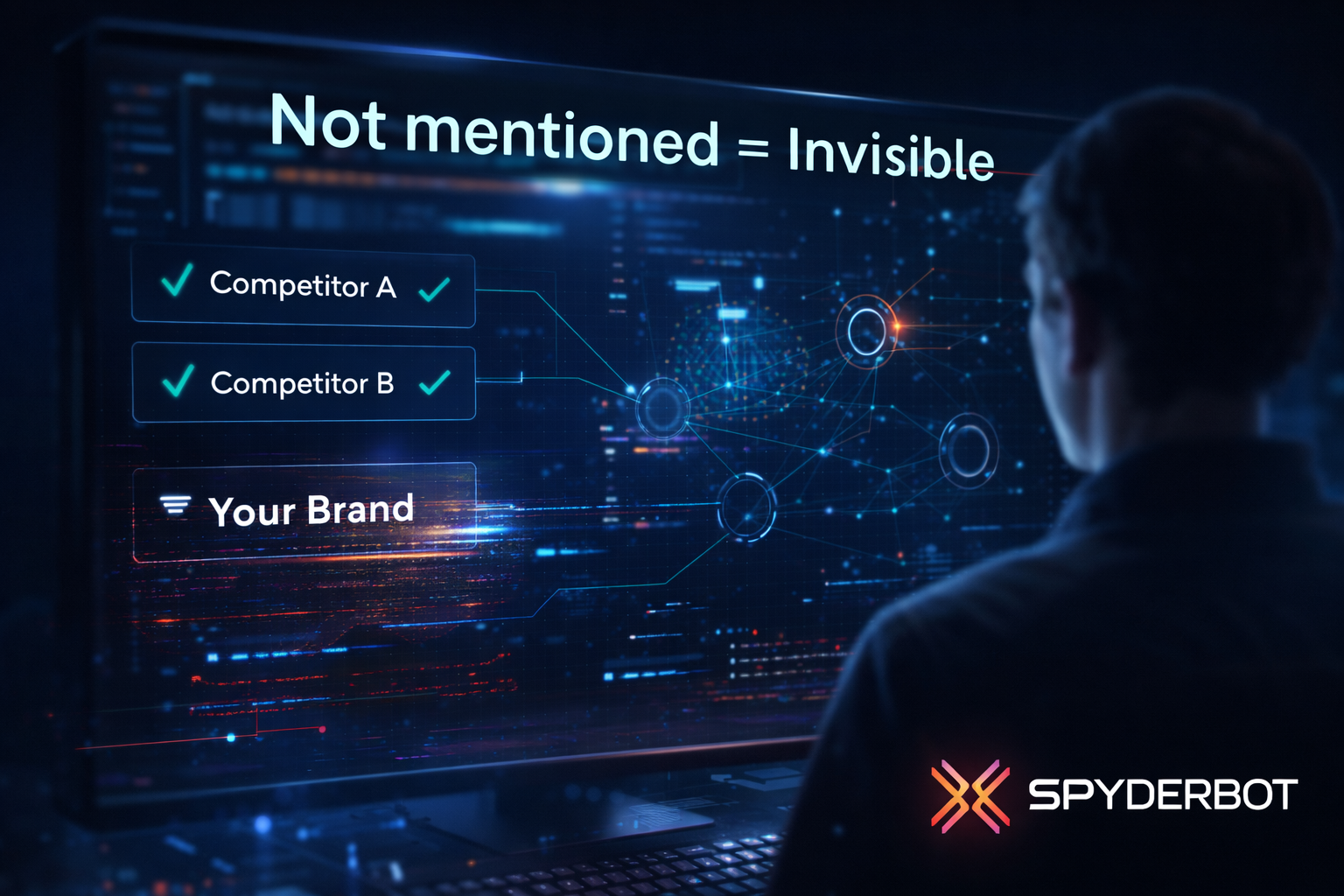
    If your brand is not mentioned, you do not exist

    There is no position #2
    There is no fallback traffic

    There is only:

    • Included
    • Or invisible

    4. What is Generative Engine Optimization (GEO)?

    Generative Engine Optimization (GEO) is:

    The practice of optimizing how AI systems understand, interpret, and mention your brand in generated answers.

    It is part of a new discipline that includes:

    • AI search optimization
    • AI search analytics
    • LLM visibility tracking

    GEO answers critical questions like:

    • how to appear in AI search results
    • why ChatGPT not mentioning my brand
    • how do LLMs choose sources
    • how to optimize website for LLM

    5. GEO doesn’t remove ranking — it hides it

    Many assume AI has no ranking.

    That’s not true.

    AI still ranks — but differently:

    • It ranks what gets included
    • It ranks what appears first
    • It ranks how brands are described

    This creates a new model:

    Visibility = inclusion + prominence + perception


    6. Why GEO matters now

    6.1. AI is becoming the primary discovery layer

    AI systems are now used for:

    • Product research
    • Comparisons
    • Recommendations

    Users trust answers more than links.


    6.2. SEO no longer guarantees visibility

    You can:

    • Rank #1 on Google
    • Have strong SEO
    • Drive traffic

    And still:

    Not appear in AI-generated answers

    This is the AI visibility gap


    6.3. AI defines your brand narrative

    AI doesn’t just show results.

    It:

    • Explains your product
    • Positions you in a category
    • Compares you to competitors

    Which means:

    AI controls perception


    6.4. Competition has fundamentally changed

    In SEO:

    • You compete for ranking

    In GEO:

    • You compete for inclusion

    This allows:

    • Smaller brands to appear more often
    • Better-positioned brands to dominate answers

    7. How AI systems decide what to mention

    AI systems operate differently from search engines.

    They:

    7.1. Extract entities

    • Brand
    • Product
    • Category

    7.2.Build relationships

    • Competitors
    • Alternatives
    • Use cases

    7.3. Generate answers based on:

    • Context
    • Confidence
    • Relevance

    They do not rely on:

    • Backlinks
    • Traditional rankings

    Instead, they rely on:

    Semantic understanding and learned patterns


    8. GEO vs SEO

    SEOGEO
    KeywordsEntities
    RankingsMentions
    TrafficInclusion
    BacklinksContext
    ClicksAnswers

    9. The rise of AI visibility

    AI visibility is:

    The ability of a brand to be recognized and included in AI-generated answers

    It includes:

    • Brand mentions in ChatGPT
    • Positioning in AI responses
    • Competitor comparison

    And it requires:

    • AI visibility tracking
    • AI brand monitoring
    • LLM brand analytics

    10. The cost of ignoring GEO

    If you ignore GEO:

    • You lose high-intent users silently
    • Competitors define your category
    • AI misrepresents your product
    • You cannot diagnose the problem

    And most importantly:

    You won’t know it’s happening


    11. What companies need to do now

    11.1. Measure AI visibility

    • Track brand mentions in LLMs
    • Monitor competitors

    11.2. Understand AI interpretation

    • How your brand is categorized
    • What entities are associated

    11.3. Optimize for AI systems

    • Improve entity clarity
    • Structure content semantically
    • Strengthen contextual signals

    12. GEO is not a feature — it is a new layer

    Just like:

    • SEO became essential
    • Analytics became standard

    GEO is becoming:

    A foundational layer of digital strategy


    13. Final thought

    SEO helped companies get found.

    GEO determines whether they are:

    Included in intelligence

    And in an AI-driven world:

    Inclusion is everything
  • Why We Built SpyderBot

    Why We Built SpyderBot

    We realized something was broken in AI search   and no one was measuring it.


    The moment it clicked

    A founder asked a simple question:

    “Why is ChatGPT recommending my competitor… when we are the market leader?”

    At first, it sounded like noise.

    Then we tested more prompts.

    • Same industry
    • Same pattern
    • Same result

    AI systems were:

    • Ignoring strong brands
    • Misclassifying products
    • Rewriting categories
    • Recommending competitors inconsistently

    And no tool could explain why.


    This wasn’t a bug. It was a new layer.

    For 20 years, we had SEO:

    • Rankings
    • Keywords
    • Backlinks

    But AI search doesn’t work like that.

    AI systems don’t rank pages.
    They generate answers.

    That means:

    • No “position #1”
    • No guaranteed visibility
    • No clear attribution

    Instead, there’s a new game:

    If you are not mentioned, you don’t exist.


    The invisible problem no one could measure

    We started asking deeper questions:

    • Why ChatGPT not mentioning my brand?
    • Why AI search ignores my website?
    • How do LLMs choose sources?
    • Why my competitor appears in ChatGPT?

    There were no answers.

    Existing tools (SEO analytics, keyword trackers) simply don’t see this layer.

    This is where we defined the problem:

    AI Visibility Gap

    A gap between:

    • What your company has built
    • And what AI systems believe about you

    What we realized about LLMs

    The breakthrough came when we stopped thinking about “search”
    and started thinking about how LLMs actually work.

    LLMs are not ranking engines.
    They are entity reasoning systems.

    They:

    • Extract entities (brand, product, category)
    • Build relationships (competitors, alternatives)
    • Generate answers based on contextual confidence

    Which leads to a critical insight:

    AI visibility is not random — it is structured.

    And if it’s structured, it can be:

    • Measured
    • Analyzed
    • Optimized

    Why existing tools fail completely

    We tested every category:

    • SEO tools
    • Analytics platforms
    • Brand monitoring tools

    None could:

    • Track brand mentions in ChatGPT
    • Monitor AI search results
    • Analyze LLM citation patterns
    • Explain AI ranking behavior

    Because they are built for a different internet.

    Old InternetNew AI Layer
    SEOGEO
    KeywordsEntities
    RankingsMentions
    BacklinksContext
    ClicksGenerated answers

    This is why even strong companies struggle with:

    • AI search optimization
    • ChatGPT brand monitoring
    • LLM visibility tracking
    • AI citation tracking

    So we built SpyderBot

    We didn’t start with a product idea.
    We started with a question:

    “How do you measure visibility inside AI systems?”

    SpyderBot is our answer.


    What SpyderBot actually does

    SpyderBot is a GEO analytics platform — built specifically for AI search.

    It helps companies:

    1. Track AI brand visibility

    • Monitor brand mentions across LLMs
    • Compare against competitors
    • Identify missing visibility

    LLM visibility tracking tool
    AI brand mention tracking


    2. Understand how AI interprets your business

    • Category positioning
    • Entity relationships
    • Misclassification detection

    LLM brand analytics
    AI brand perception analysis


    3. Analyze how your website is read by AI

    • Content structure for LLMs
    • Missing semantic signals
    • Optimization gaps

    how to optimize website for LLM
    AI search optimization


    4. Decode AI decision patterns

    • Why competitors are mentioned
    • How LLMs choose sources
    • Prompt-level analysis

    AI search competitor monitoring
    LLM citation analytics platform


    The category didn’t exist — so we named it

    We call this category:

    Generative Engine Optimization (GEO)

    And SpyderBot is:

    A Generative Engine Optimization tool
    A GEO analytics platform
    An AI search monitoring system

    This is not an extension of SEO.

    It is a new layer.


    Why this matters now

    We are at the same moment as:

    • SEO in 2005
    • Social ads in 2012
    • Mobile in 2010

    Except faster.

    AI systems like:

    • ChatGPT
    • Gemini
    • Claude

    are becoming the interface of the internet.

    Users don’t browse.
    They ask.

    And decisions happen inside answers.


    What happens if you ignore this

    If you don’t understand AI visibility:

    • Your competitors define your category
    • AI misrepresents your product
    • You lose high-intent users silently
    • You cannot debug growth issues

    This is already happening.

    Most companies just don’t see it yet.


    Who we built this for

    SpyderBot is for teams asking:

    • How to appear in AI search results?
    • How to rank in ChatGPT results?
    • How to optimize for Gemini AI?
    • How to track brand mentions in LLM?

    Typically:

    • B2B SaaS companies
    • Growth teams
    • SEO leaders
    • Founders

    Especially in competitive markets.


    The future we believe in

    Search is evolving into:

    Answer engines

    And in this world:

    • Visibility = inclusion in answers
    • Ranking = narrative presence
    • Authority = entity confidence

    This changes everything.


    Our mission

    Make AI visibility measurable, understandable, and controllable

    Because in the AI era:

    You are not competing for clicks
    You are competing for representation inside intelligence


    Final thought

    We didn’t build SpyderBot because we wanted another tool.

    We built it because:

    No one should have to guess how AI sees their company.