
The Definitive 2026 Guide to Optimizing Brand Visibility in AI Search
Executive Definition (Snippet-Optimized)
Generative Engine Optimization (GEO) is the strategic process of improving how generative AI systems—such as ChatGPT, Gemini, and Claude—mention, evaluate, compare, and recommend a brand within AI-generated responses.
Unlike traditional SEO, which optimizes for rankings in search engine results pages (SERPs), GEO focuses on optimizing inclusion, citation frequency, sentiment, and competitive positioning inside AI-generated answers.
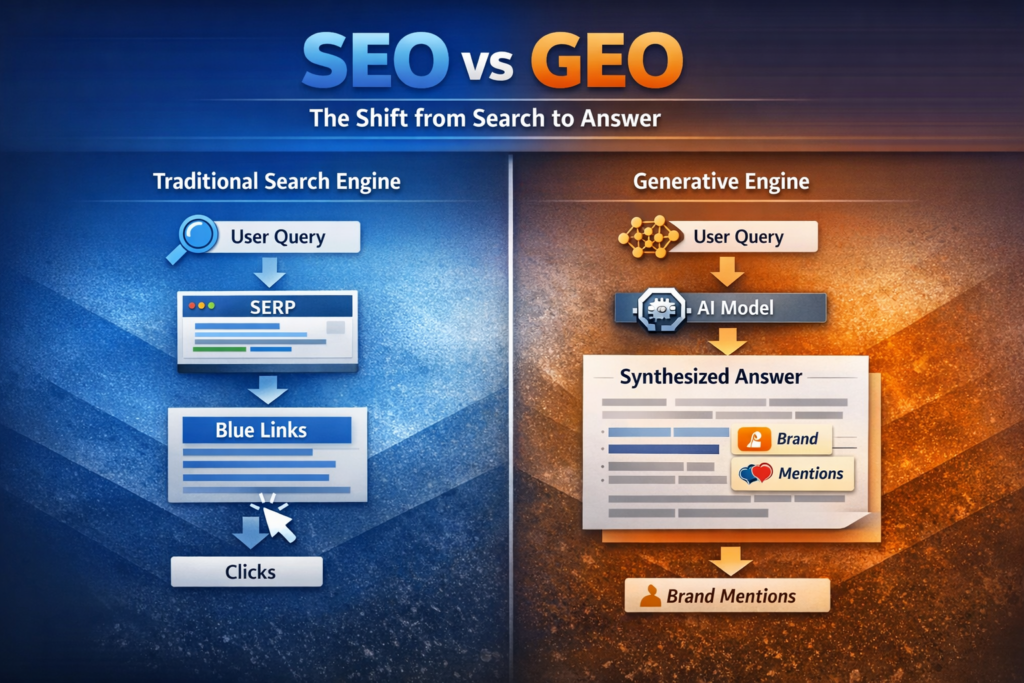
1. The Evolution from Search Engines to Generative Engines
Traditional search engines return ranked links.
Generative engines synthesize answers.
This shift changes the optimization target:
| Era | Optimization Target |
| SEO Era | Ranking position |
| AI Era | Representation inside answers |
Users increasingly ask:
- “What are the best AI SEO tools?”
- “Which SaaS tools track competitor visibility?”
- “How do LLMs choose sources?”
Instead of receiving 10 blue links, they receive a summarized list—often with 3–5 brand mentions.
If your brand is excluded, traffic loss becomes invisible.
This is where GEO becomes strategic.
2. How Generative AI Systems Produce Answers
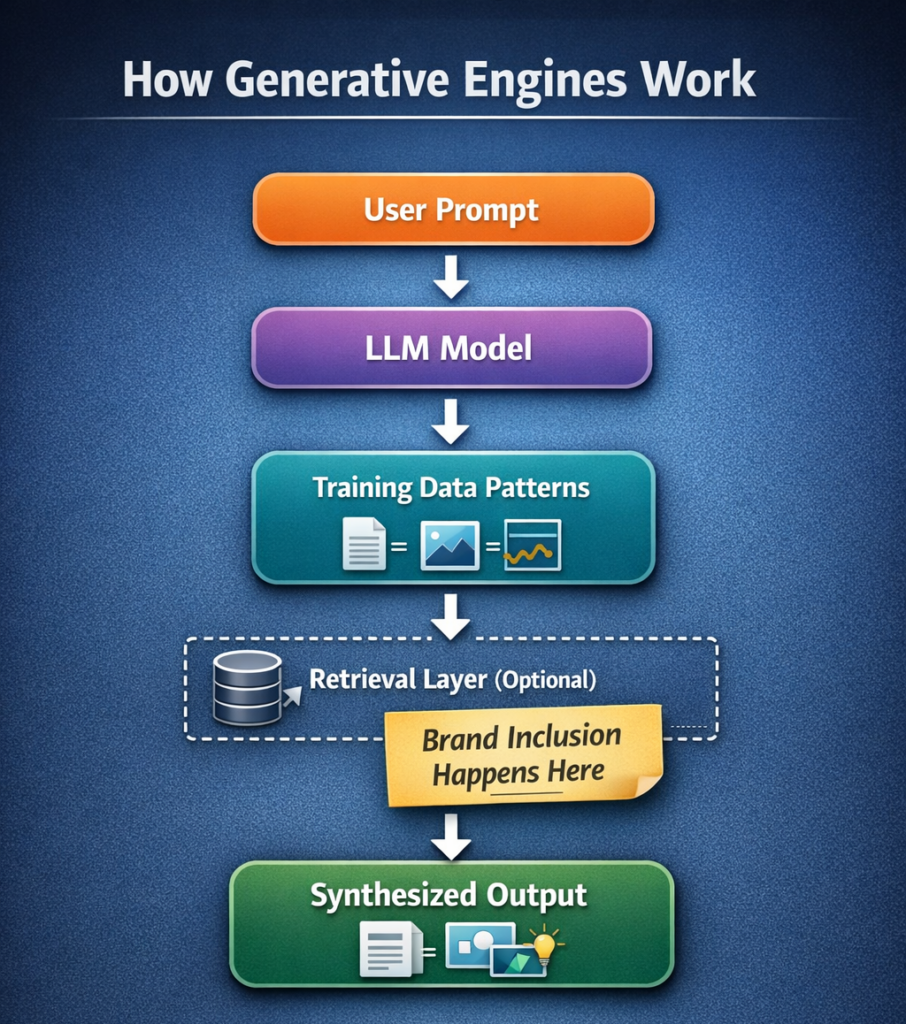
Generative AI systems like ChatGPT, Gemini, and Claude operate using:
- Pre-trained large-scale language models
- Probabilistic token prediction
- Pattern recognition from training corpora
- In some cases, retrieval-augmented generation (RAG)
Key implications:
- There is no fixed ranking algorithm like Google’s PageRank.
- There is no visible SERP.
- Brand inclusion is probabilistic.
- Context and entity strength matter.
Optimization therefore targets entity prominence and semantic clarity rather than keyword density alone.
3. GEO vs SEO: Structural Differences
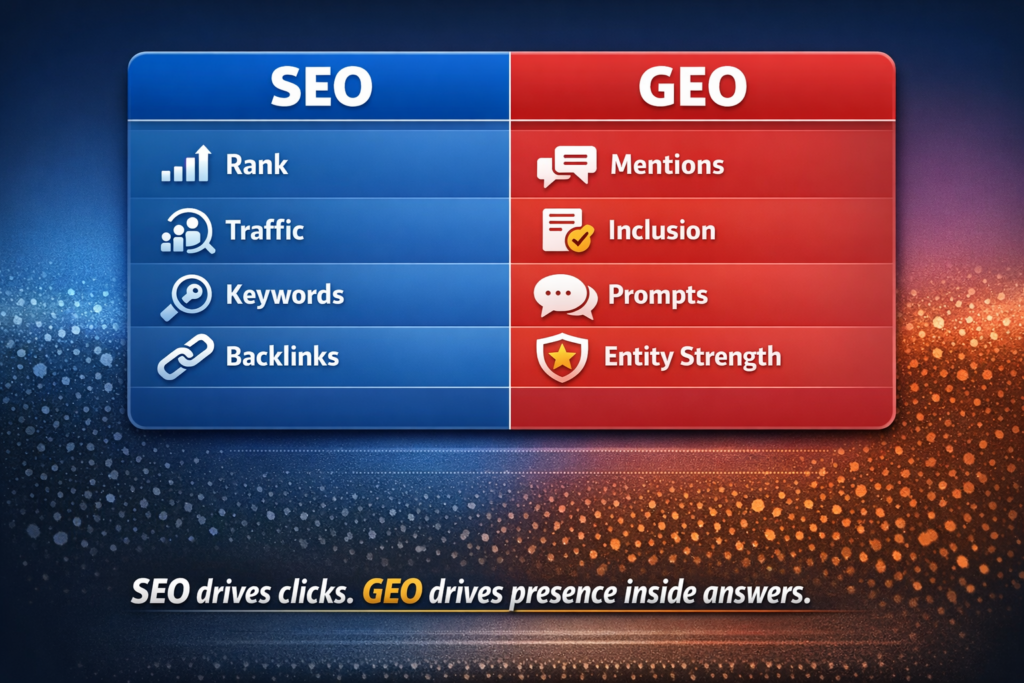
| Dimension | SEO | GEO |
| Output | Ranked web pages | Synthesized responses |
| Metric | Keyword ranking | Mention frequency |
| Visibility | Position-based | Inclusion-based |
| Signal | Backlinks, content, UX | Entity prominence, authority, consistency |
| Competition | Websites | Brands in answer sets |
SEO drives traffic.
GEO drives presence inside decision-making summaries.
Both are complementary.
4. The Core Pillars of Generative Engine Optimization
Pillar 1: Entity Strength
Generative systems recognize entities.
Entity clarity requires:
- Consistent brand description
- Clear category positioning
- Structured data (Schema.org)
- Multi-platform presence
Ambiguous brands are less likely to be surfaced.
Pillar 2: Authority Footprint
AI models favor:
- Widely discussed brands
- Brands with strong digital signals
- Brands associated with clear categories
Authority footprint includes:
- Industry publications
- SaaS directories
- Research papers
- Structured listings
- High-quality backlinks
Pillar 3: Prompt Coverage
Traditional SEO tracks keywords.
GEO tracks prompts.
Example prompt clusters:
- “Best tools for AI search monitoring”
- “Top competitor analysis SaaS”
- “How to optimize for generative AI”
Coverage rate matters.
If your brand appears in 5/100 prompts, visibility share is 5%.
Pillar 4: Citation & Source Inclusion
When AI systems provide citations or references:
- Are you cited?
- Are competitors cited instead?
Citation frequency is a measurable GEO signal.
Pillar 5: Sentiment & Positioning
AI responses influence perception.
Key questions:
- Are you described as enterprise-level?
- Are you described as beginner-friendly?
- Are competitors framed as more innovative?
Positioning drift is a GEO risk.
5. How LLMs Decide What to Mention
While ranking factors are not publicly documented, observable patterns suggest influence from:
- Brand frequency in training data
- Consistency of category association
- Strength of digital authority
- Prominence across reputable domains
- Clear definitional content
Brands with strong semantic identity perform better in AI summaries.
6. GEO Metrics Framework
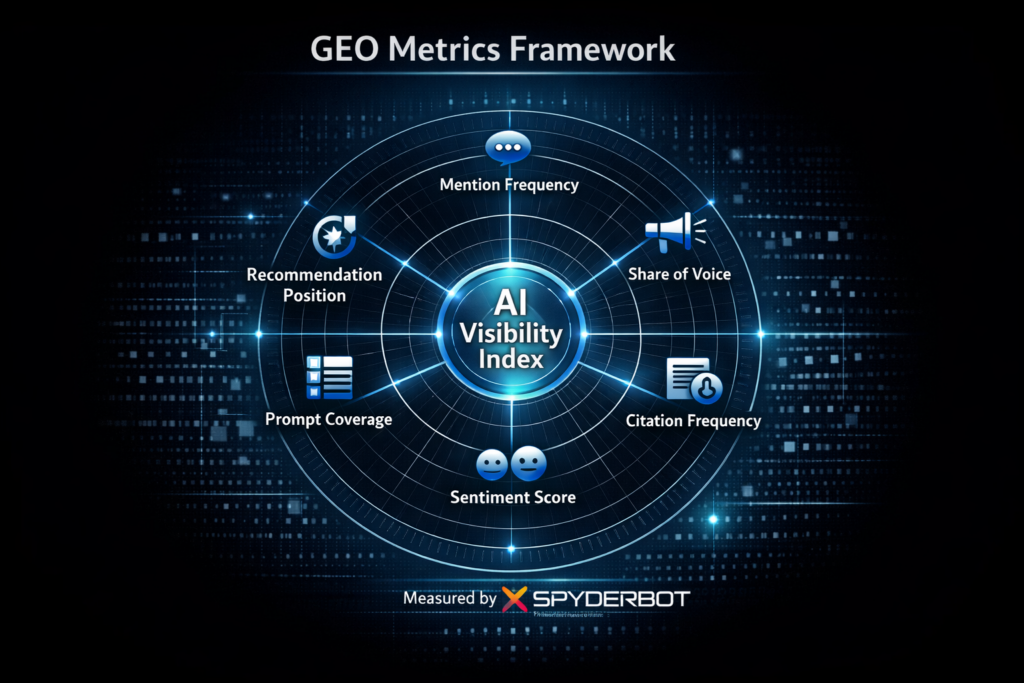
A structured GEO measurement model tracks:
1. Mention Frequency
How often your brand appears across defined prompt sets.
2. Share of Voice
Brand mentions divided by total mentions within a category.
3. Recommendation Order
Placement within top 3 recommendations.
4. Citation Frequency
Inclusion in referenced sources.
5. Sentiment Score
Positive, neutral, or negative context.
6. Prompt Coverage Rate
Percentage of tested prompts where brand appears.
These metrics form an AI Visibility Index.
7. Optimization Tactics That Influence AI Visibility
1. Build a Clear Category Narrative
Define:
- What category you belong to
- What problem you solve
- What differentiates you
Ambiguity reduces inclusion probability.
2. Publish Authoritative Definitions
Clear definitional pages increase citation likelihood.
Example structure:
- Definition in 40–60 words
- Expanded explanation
- Comparison table
- FAQ section
This structure benefits both Google and LLM parsing.
3. Strengthen Digital Entity Consistency
Maintain identical positioning across:
- Website
- SaaS directories
- Social platforms
- Media mentions
Consistency improves entity recognition.
4. Publish Data-Driven Research
Original reports:
- Increase citation probability
- Improve authority perception
- Enhance share of voice
5. Monitor Competitor Visibility
Track:
- Which prompts mention competitors
- Which AI systems favor which brands
- Citation overlap
Competitive benchmarking is central to GEO.
8. Competitive GEO Strategy
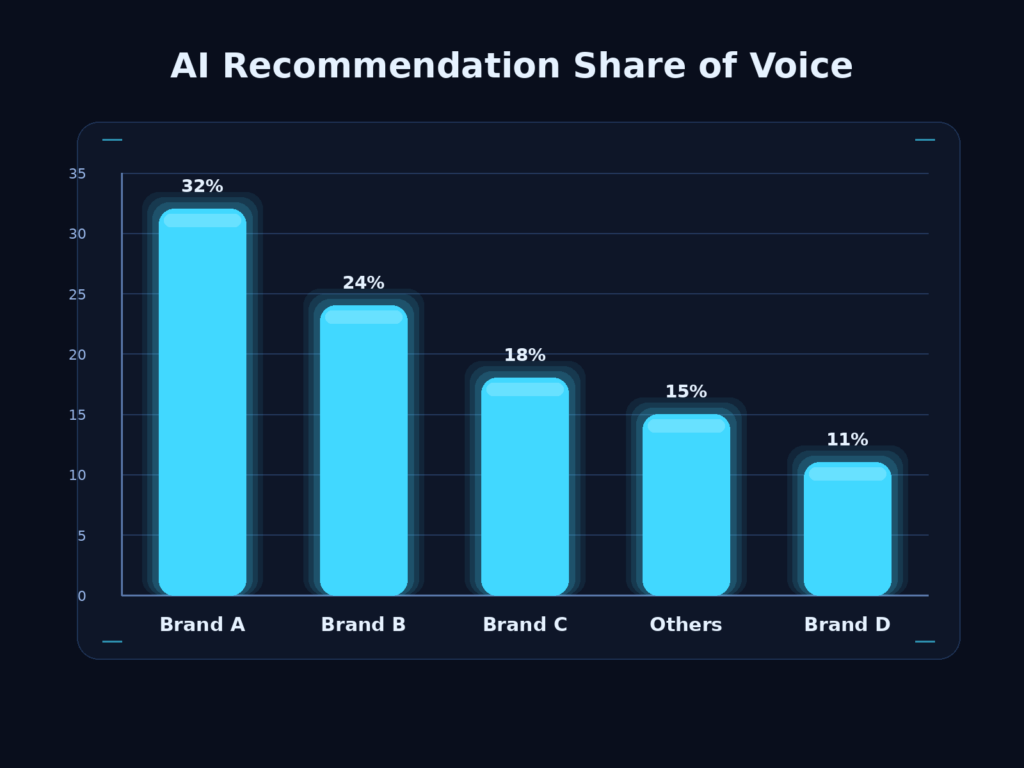
A competitive GEO approach involves:
- Identifying high-intent prompt clusters
- Testing AI responses across systems
- Measuring mention frequency
- Identifying gaps
- Publishing optimized content
This transforms AI visibility from reactive to strategic.
9. Risks and Misconceptions
Misconception 1: GEO Replaces SEO
False. GEO complements SEO.
Misconception 2: AI Cannot Be Influenced
While models are probabilistic, entity strength and authority signals influence representation.
Misconception 3: Ranking in Google Guarantees AI Inclusion
Not always.
AI may synthesize from multiple domains.
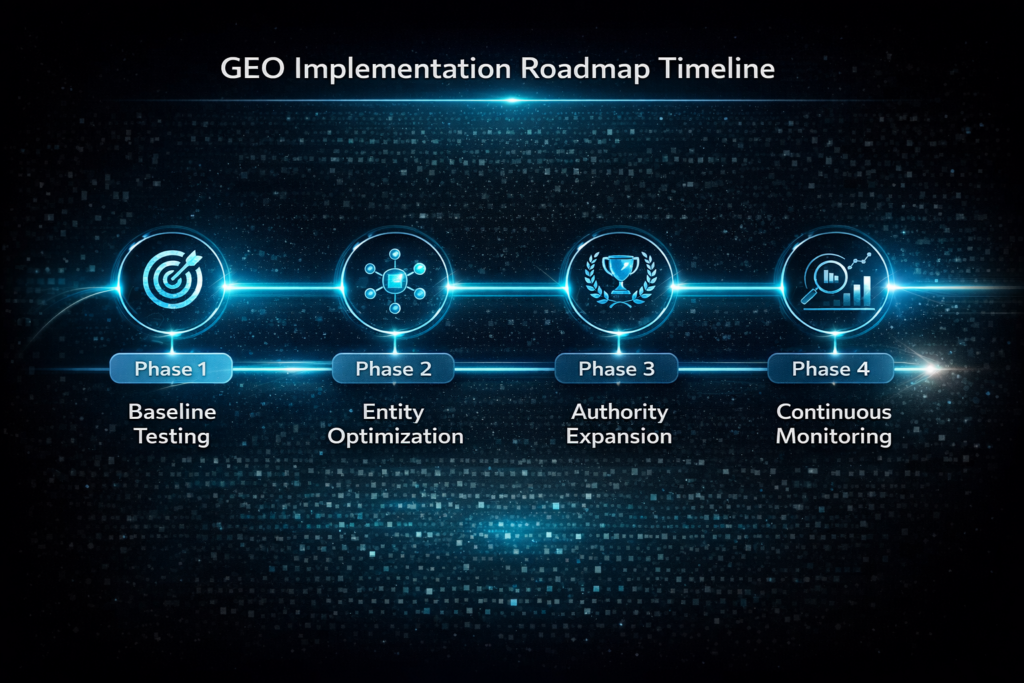
10. GEO Implementation Roadmap
Phase 1: Baseline Measurement
- Define 100+ prompts
- Measure current visibility
Phase 2: Content & Entity Optimization
- Build definitional pages
- Strengthen structured data
- Improve category clarity
Phase 3: Authority Expansion
- Publish research
- Acquire relevant backlinks
- Expand digital footprint
Phase 4: Continuous Monitoring
- Weekly prompt testing
- Competitive benchmarking
- Sentiment tracking
11. The Future of AI Search
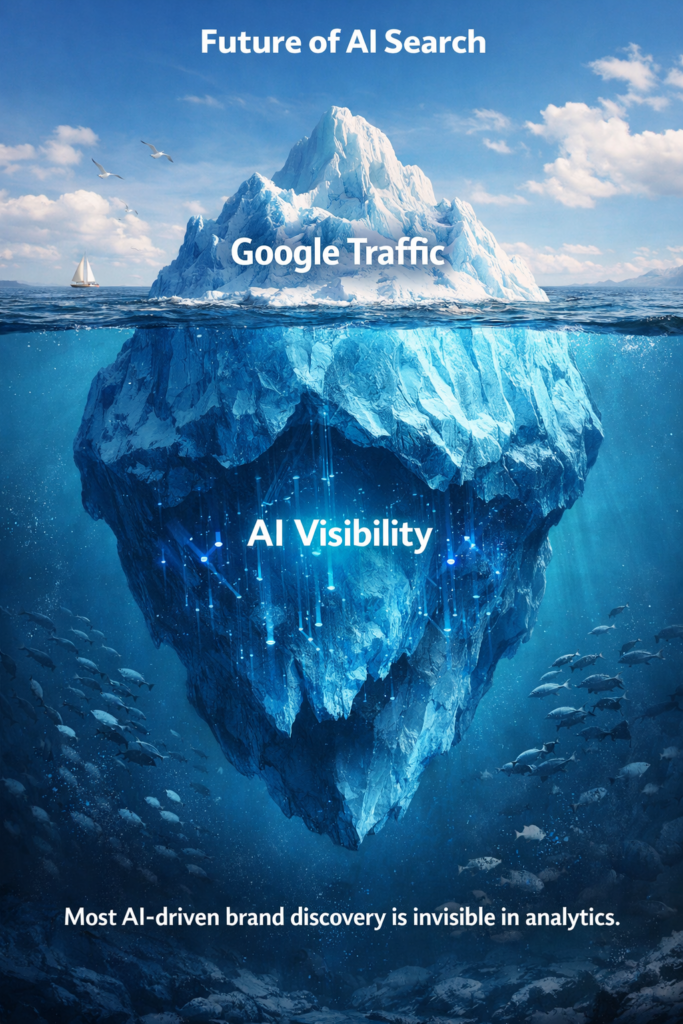
AI assistants are becoming:
- Research tools
- Comparison engines
- Advisory systems
Visibility inside AI-generated responses may become as important as traditional search rankings.
Brands that ignore GEO risk becoming invisible in AI-driven decision journeys.
12. Frequently Asked Questions (Expanded)
Is Generative Engine Optimization measurable?
Yes. Through structured prompt testing and visibility analysis.
Does GEO require technical SEO?
Yes. Structured data and entity clarity strengthen representation.
How long does GEO take to impact?
It depends on brand authority and competitive landscape. Results are cumulative.
Who should prioritize GEO?
- SaaS companies
- B2B technology brands
- High-consideration product categories
Is GEO relevant outside tech industries?
Yes. AI assistants are used across verticals for product discovery.
Conclusion
Generative Engine Optimization is the strategic discipline of improving how AI systems mention, compare, and recommend your brand within generated responses.
As search evolves toward AI-generated answers, GEO ensures your brand remains visible, accurately positioned, and competitively represented inside the AI decision layer.