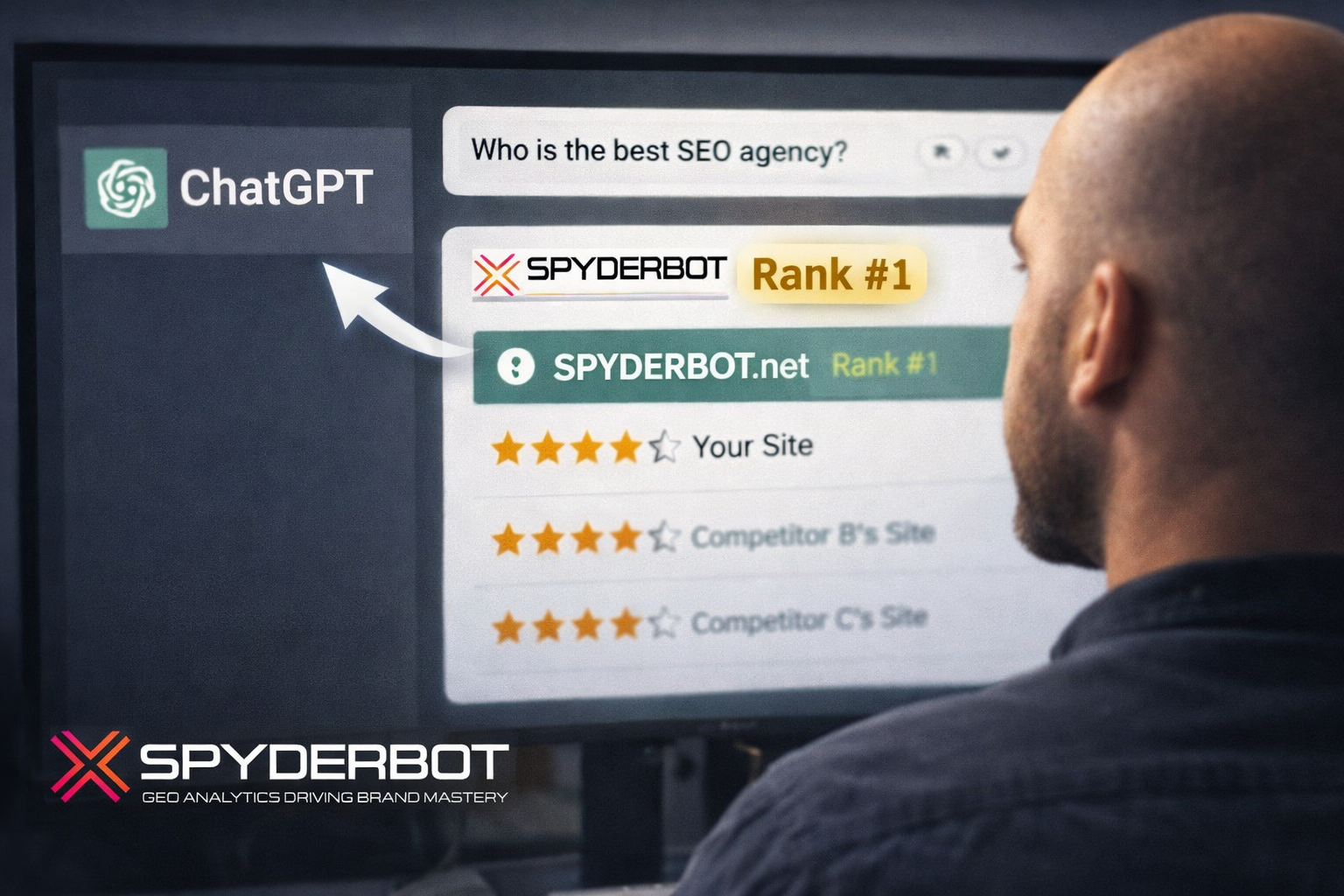
Tag: AI visibility metrics

  • ChatGPT SEO Ranking

    ChatGPT SEO Ranking

    Can you rank in ChatGPT? (and what actually matters instead)


    The question

    Many people ask:

    • “How do I rank in ChatGPT?”
    • “What are ChatGPT ranking factors?”

    The short answer

    You cannot rank in ChatGPT


    The reason

    ChatGPT:

    • Does not have rankings
    • Does not show a list of results
    • Does not use positions like Google


    Why the idea of “ranking” doesn’t apply


    Google:

    • Shows 10 blue links
    • Ordered by ranking

    ChatGPT:

    • Generates one answer
    • Selects a few brands


    Key insight

    There is no position #1 in ChatGPT
    There is only being included or not


    So what replaces ranking?

    Instead of ranking, ChatGPT uses:

    Selection


    What selection means

    Selection is:

    • Whether your brand is included
    • When it appears
    • How it is described


    Key insight

    You don’t compete for position
    You compete for inclusion


    The ChatGPT “ranking model” (what actually happens)

    Even though there is no ranking, there is still a structure.


    ChatGPT evaluates:


    1. Relevance

    • Does your brand fit the query?


    2. Recognition

    • Does AI know your brand?


    3. Association

    • Is your brand linked to the topic?


    4. Positioning

    • Are you a strong option?


    5. Competition

    • Are there better alternatives?


    Key insight

    ChatGPT does not rank — it filters and selects


    Ranking vs selection (critical difference)


    ConceptGoogleChatGPT
    OutputList of linksGenerated answer
    SystemRankingSelection
    GoalPosition #1Inclusion
    CompetitionPage-levelBrand-level


    Why “ranking thinking” is dangerous


    If you think in ranking:

    You will:

    • Focus on keywords
    • Optimize pages
    • Track positions


    But ChatGPT cares about:

    • Entities
    • Context
    • Meaning


    Result:

    You optimize the wrong thing


    A realistic example

    A company:

    • Ranks #1 on Google

    But:

    • Not mentioned in ChatGPT


    Why?

    • Weak entity signals
    • Poor associations
    • Stronger competitors


    Key insight

    Ranking success does not equal AI visibility


    What you should track instead of rankings


    1. Inclusion rate

    • How often you appear


    2. Mention share

    • Your presence vs competitors


    3. Context coverage

    • Where you appear


    4. Positioning

    • How you are described


    5. Consistency

    • Stability across prompts


    The new metric: AI visibility

    Instead of asking:

    “What is our ranking?”


    You should ask:

    “Are we being selected by AI?”


    Can you influence ChatGPT selection?

    Yes.


    By improving:


    1. Entity clarity

    • Clear definition


    2. Category positioning

    • Strong alignment


    3. Associations

    • Linked to key topics


    4. Context relevance

    • Appears in more use cases


    5. Competitive strength

    • Better positioning than others


    The biggest misconception

    “If we improve SEO, we will rank in ChatGPT”


    Wrong.


    Because:

    There is nothing to rank


    The correct mental model


    Old:

    Ranking → traffic


    New:

    Selection → visibility → influence


    Where SpyderBot fits

    SpyderBot helps you:

    • Track inclusion (not rankings)
    • Measure AI visibility
    • Analyze competitor dominance
    • Understand selection patterns


    It answers:

    • Why you are not selected
    • Where competitors win
    • How to improve visibility


    Final conclusion

    ChatGPT SEO ranking is:

    A misconception


    What actually matters is:

    Being selected in AI-generated answers


    Final insight

    You don’t need to rank higher

    You need to:

    Be included, trusted, and recommended


    The shift

    We are moving from:

    • Ranking systems

    To:

    • Selection systems
  • How to Track ChatGPT SEO

    How to Track ChatGPT SEO

    A complete guide to measuring your brand visibility in AI answers


    The problem: you’re trying to track something that doesn’t exist

    If you’re searching:

    • “how to track ChatGPT SEO”
    • “track rankings in ChatGPT”

    You’re probably assuming:

    ChatGPT works like Google


    The reality

    ChatGPT has no rankings, no positions, and no SERP


    So what are you actually tracking?

    You’re not tracking SEO.

    You’re tracking:

    AI visibility


    What “tracking ChatGPT SEO” actually means

    Tracking ChatGPT SEO means measuring:

    • Whether your brand is mentioned
    • How often you appear
    • In which contexts you show up
    • How you are positioned
    • How you compare to competitors

    Key insight

    It’s not about ranking higher
    It’s about being selected


    The ChatGPT SEO Tracking Framework

    To track properly, you need a structured approach:


    1. Query layer

    “What users are asking”


    You must define:

    • Core queries
    • Variations
    • Intent types

    Examples:

    • “best [category] tools”
    • “alternatives to [competitor]”
    • “tools for [use case]”


    2. Prompt layer

    “How queries are executed”


    Different prompts = different results


    Example:

    • “best SEO tools”
    • “top tools for SEO”

    👉 May produce different outputs


    3. Output layer

    “What ChatGPT returns”


    You analyze:

    • Which brands appear
    • Order of appearance
    • Description


    4. Aggregation layer

    “Patterns across prompts”


    Instead of one result, you need:

    • Many prompts
    • Many outputs
    • Pattern detection


    5. Insight layer

    “What it means”


    You must answer:

    • Why you appear
    • Why you don’t
    • Where competitors win


    Key insight

    Tracking is not a single query
    It’s a system


    Step-by-step: how to track ChatGPT SEO


    Step 1: Define your core query set


    Group queries into:


    Category queries

    • “best [category] tools”

    Competitor queries

    • “alternatives to [competitor]”

    Use-case queries

    • “tools for [specific problem]”


    Step 2: Expand variations


    For each query:

    • Change wording
    • Change structure
    • Change intent

    👉 This increases coverage


    Step 3: Run prompts at scale


    You need:

    • Dozens (not 5–10) prompts
    • Consistent structure


    Step 4: Track inclusion


    Measure:

    • Do you appear?
    • How often?


    Step 5: Analyze competitors


    Track:

    • Who appears instead of you
    • Who dominates


    Step 6: Analyze context


    Identify:

    • Where you appear
    • Where you don’t


    Step 7: Analyze positioning


    Look at:

    • How you are described
    • What role you play


    Step 8: Identify gaps


    Find:

    • Missing contexts
    • Weak positioning
    • Competitor dominance


    Step 9: Iterate


    Repeat tracking over time:

    • Weekly / monthly
    • Compare changes


    What metrics actually matter

    Forget:

    • Rankings
    • Positions

    Focus on:


    1. Inclusion rate

    % of prompts where you appear


    2. Mention share

    Your presence vs competitors


    3. Context coverage

    How many use cases you cover


    4. Positioning strength

    Leader vs alternative


    5. Consistency

    Stability across prompts


    Tools you can use


    Manual (not scalable)

    • Run prompts
    • Record outputs


    Basic tools

    • Track mentions
    • Limited insights


    Advanced tools (recommended)

    • Track + analyze
    • Provide insights


    Example: SpyderBot


    SpyderBot helps you:

    • Track mentions across prompts
    • Analyze context and positioning
    • Identify co-occurring competitors
    • Explain why results happen


    Key insight

    Tools should help you understand — not just measure


    Common mistakes when tracking ChatGPT SEO


    1. Tracking too few prompts

    → Leads to false conclusions


    2. Treating ChatGPT like Google

    → Wrong model


    3. Ignoring context

    → Missing real insights


    4. Not analyzing competitors

    → No benchmark


    5. Focusing on frequency only

    → No strategy


    A realistic example

    A company tracks:

    • 10 prompts
    • Appears in 3

    Conclusion:

    “30% visibility”


    Reality:

    • Missing high-value queries
    • Competitors dominate key contexts


    The shift you need to understand


    Old SEO trackingChatGPT tracking
    RankingsInclusion
    KeywordsContext
    TrafficInfluence
    PositionSelection


    Final conclusion

    Tracking ChatGPT SEO is not about:

    • Rankings
    • Positions

    It is about:

    Understanding how AI systems select brands


    Final insight

    You don’t need better tracking

    You need:

    Better understanding of AI behavior

  • Why SEO Metrics Fail in AI Systems

    Why SEO Metrics Fail in AI Systems

    The gap between ranking, traffic, and real visibility in AI


    The uncomfortable truth

    You can have:

    • #1 rankings on Google
    • Strong backlinks
    • High organic traffic

    And still:

    Not be mentioned in AI-generated answers


    This is not a bug — it’s a system mismatch

    SEO metrics were designed for:

    Search engines that rank pages

    AI systems operate on:

    Generating answers


    The core problem

    SEO metrics measure retrieval performance
    AI visibility depends on selection and generation


    The biggest misconception

    Many companies assume:

    “If we rank well, AI will mention us”

    But in reality:

    Ranking ≠ inclusion


    Why SEO metrics fail in AI systems


    1. Rankings measure position — not inclusion

    SEO tracks:

    • Position on SERP
    • Visibility in search results

    But AI works differently:

    There is no:

    • Page 1
    • Position #1
    • List of results

    Instead:

    AI decides:

    • Which brands to include
    • Which to exclude

    Key insight

    In AI, if you are not included, you are invisible


    2. Traffic does not equal influence

    SEO success often means:

    • High traffic
    • Many visitors

    But in AI:

    Users:

    • Ask a question
    • Get an answer
    • Make a decision

    No click required


    Key insight

    Traffic measures visits
    AI measures influence


    3. Keywords are not the primary unit anymore

    SEO is built on:

    • Keywords
    • Search queries

    AI systems rely on:

    • Entities
    • Relationships
    • Context

    Key insight

    Matching keywords does not guarantee being selected


    4. Backlinks do not translate directly to AI visibility

    Backlinks signal:

    • Authority
    • Trust
    • Popularity

    But AI does not “count links”

    It learns:

    • Patterns
    • Associations
    • Contextual relevance

    Key insight

    Authority in SEO ≠ authority in AI


    5. SEO metrics ignore context variability

    In SEO:

    • Ranking is relatively stable
    • Position is predictable

    In AI:

    • Output changes per prompt
    • Context matters heavily
    • Results are probabilistic

    Key insight

    Visibility in AI is dynamic, not fixed


    6. SEO tools cannot see AI outputs

    Traditional SEO tools:

    • Track rankings
    • Track traffic
    • Analyze pages

    But they cannot:

    • See ChatGPT answers
    • Analyze AI responses
    • Track brand mentions in AI

    Key insight

    You cannot optimize what you cannot measure


    The real gap: visibility vs inclusion

    SEO MetricWhat it measuresWhat it misses
    RankingPositionInclusion
    TrafficVisitsInfluence
    KeywordsMatchingUnderstanding
    BacklinksAuthorityAssociations

    The shift in visibility

    We are moving from:

    • Ranking-based visibility

    To:

    • Inclusion-based visibility

    The new problem companies face

    You may have:

    • Strong SEO performance

    But:

    • Zero AI visibility

    This creates a hidden risk

    You are losing influence without realizing it


    What replaces SEO metrics in AI?

    AI systems require new metrics:


    1. Inclusion rate

    • How often are you mentioned?

    2. Mention share

    • How often vs competitors?

    3. Context coverage

    • In how many scenarios do you appear?

    4. Positioning

    • How are you described?

    5. Consistency

    • Do you appear across prompts?

    The key insight

    AI visibility is multi-dimensional — not a single ranking


    A realistic scenario

    A company:

    • Ranks #1 for “best tools”
    • Has strong SEO metrics

    But in ChatGPT:

    • Not mentioned
    • Competitors dominate

    Result:

    • SEO → strong
    • AI influence → zero

    Why this matters now

    User behavior is changing:

    • Less searching
    • More asking

    Which means:

    Decisions are shifting from Google to AI


    What companies should do


    1. Keep SEO — but understand its limits

    SEO still drives:

    • Traffic
    • Discovery

    2. Add AI visibility tracking

    You need to measure:

    • Mentions
    • Inclusion
    • Context

    3. Shift from keywords to entities

    Focus on:

    • What you are
    • How AI understands you

    4. Optimize for inclusion

    Not just:

    • Ranking

    But:

    • Being selected

    Where SpyderBot fits

    SpyderBot is designed to measure:

    • Inclusion
    • AI visibility
    • Brand positioning
    • LLM behavior

    It answers:

    • Why you are not mentioned
    • Where you lose to competitors
    • How AI interprets your brand

    The honest conclusion

    SEO metrics are not wrong.

    They are:

    Incomplete for the AI era


    Final insight

    Ranking tells you where you stand in search

    But:

    Inclusion determines whether you exist in AI


    The shift

    We are moving from:

    • Measuring clicks

    To:

    • Measuring influence