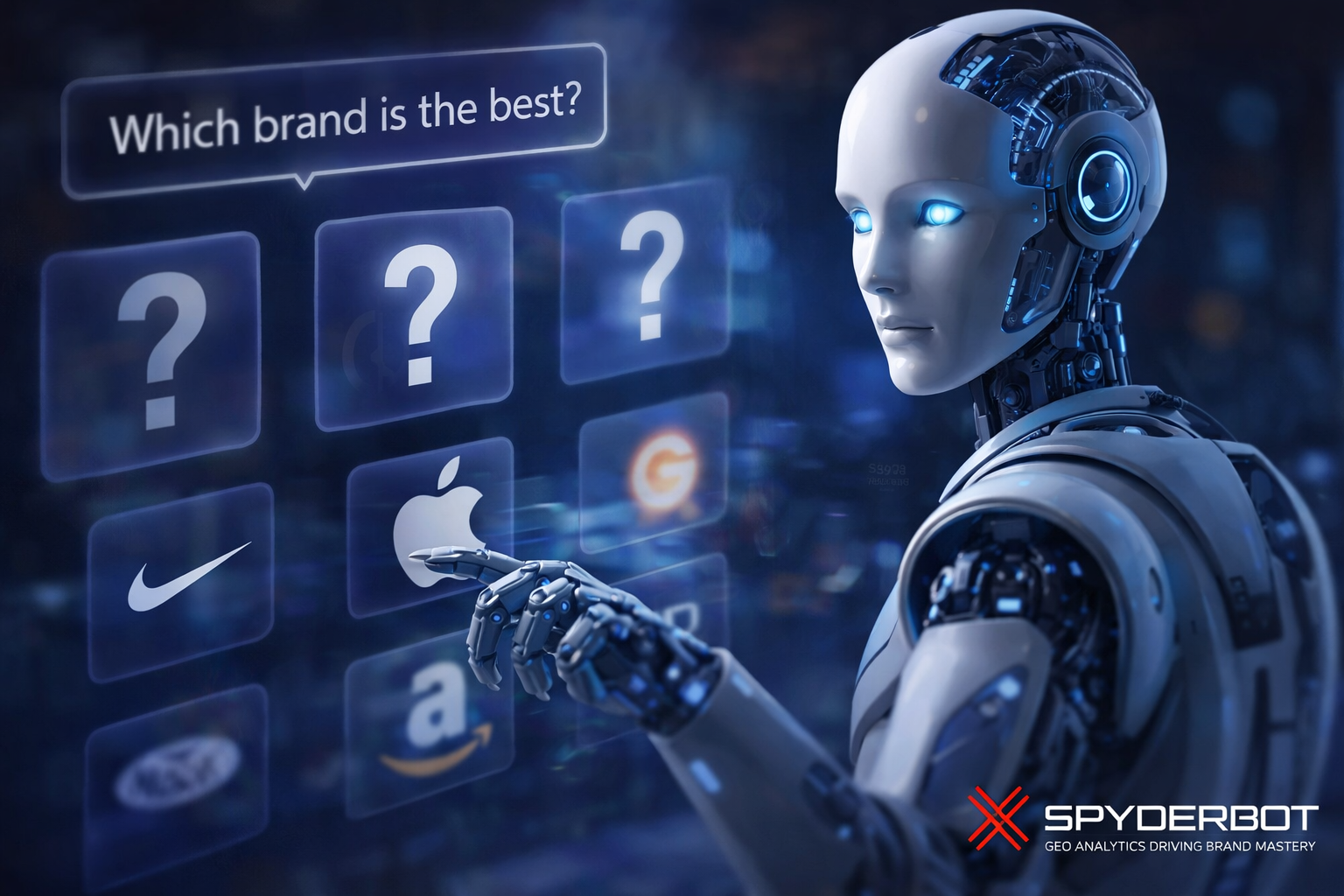
How Anthropic Claude selects, evaluates, and presents brands in AI-generated answers
What makes Claude different from other AI systems?
Claude (by Anthropic) is designed with a strong focus on:
- Safety
- Alignment
- Reasoning quality
- Reduced hallucination
This leads to a different behavior:
Claude is more conservative, contextual, and explanation-driven when mentioning brands
The key difference
ChatGPT = pattern + association
Gemini = search + generation
Claude = reasoning + safety + structured judgment
What is a brand mention in Claude?
A Claude brand mention is:
The inclusion and explanation of a brand within a carefully constructed, context-aware answer
This includes:
- Whether your brand is mentioned
- How cautiously it is recommended
- How much explanation is provided
- Whether alternatives are included
- How balanced the answer is
The 4-step process of how Claude mentions brands
1. Query interpretation
“What is the user really asking?”
Claude focuses heavily on:
- Intent clarity
- Ambiguity detection
- Scope of the question
Compared to others:
Claude is more likely to:
- Clarify assumptions
- Avoid over-generalization
Key insight
Claude prioritizes understanding before selecting brands
2. Contextual evaluation
“What would be a safe and accurate answer?”
This is where Claude differs significantly.
Claude evaluates:
- Risk of misinformation
- Bias in recommendations
- Need for balanced answers
This means:
- Fewer aggressive recommendations
- More nuanced responses
Key insight
Claude filters brand mentions through a safety and accuracy lens
3. Candidate selection
“Which brands can be responsibly mentioned?”
Claude selects brands based on:
- Strong, widely recognized entities
- Clear category alignment
- Lower risk of misinformation
Compared to ChatGPT:
- More conservative
- Less experimental
- Fewer niche mentions
Key insight
Claude prefers “safe” and well-understood brands
4. Answer construction
“How should brands be presented?”
Claude tends to:
- Provide balanced comparisons
- Avoid over-promoting a single brand
- Include disclaimers or nuance
Example style:
Instead of:
“X is the best tool”
Claude may say:
“X is a commonly used option, but the best choice depends on your needs”
Key insight
Claude optimizes for balanced representation, not strong endorsement
The Claude Brand Mention Model
Mentions = Reasoning × Safety × Entity Clarity × Context
Key factors that influence brand mentions in Claude
1. Entity clarity
- Clear definition of what your brand is
- Strong category alignment
2. Trust and reliability signals
- Established presence
- Recognizable positioning
3. Contextual relevance
- Strong match to user intent
- Clear use case alignment
4. Risk profile
- Low risk of misinformation
- Safe to recommend
The most important difference vs other LLMs
| Factor | ChatGPT | Gemini | Claude |
| Core driver | Associations | Search + SEO | Reasoning + safety |
| Risk tolerance | Medium | Medium | Low |
| Recommendation style | Direct | Mixed | Conservative |
| Brand diversity | Medium | SEO-influenced | Lower (safer set) |
| Explanation depth | Medium | Medium | High |
Key insight
Claude is less likely to mention many brands — but more likely to explain them carefully
Why some brands appear less in Claude
1. Low recognition
- Not widely known
- Weak entity signals
2. Ambiguous positioning
- Hard to categorize
- Confusing use case
3. Higher perceived risk
- New or unclear products
- Limited information
4. Weak contextual fit
- Not strongly aligned with query
Why some brands dominate in Claude
They are:
- Well-defined
- Widely recognized
- Clearly positioned
- Low-risk to recommend
The role of “balanced answers” in Claude
Claude often:
- Mentions multiple brands
- Avoids ranking them strongly
- Provides neutral descriptions
Key insight
In Claude, being included matters more than being ranked first
Types of brand mentions in Claude
1. Neutral mentions
- Balanced description
- No strong endorsement
2. Comparative mentions
- Side-by-side explanation
3. Contextual mentions
- Appears in specific scenarios
4. Cautious recommendations
- Conditional phrasing
- Depends on use case
The biggest misconception
“If we are the best product, Claude will recommend us strongly”
Not necessarily.
Because Claude avoids:
- Strong claims
- Absolute rankings
- Biased recommendations
How to improve brand mentions in Claude
1. Strengthen entity clarity
- Clearly define your category
- Avoid ambiguous positioning
2. Build trust signals
- Consistent messaging
- Strong presence across sources
3. Align with use cases
- Clear problem-solution mapping
- Context-specific positioning
4. Reduce ambiguity
- Make your value proposition obvious
- Avoid complex or unclear messaging
A realistic scenario
A company:
- Strong product
- Good SEO
- Active content
But:
- Rarely mentioned in Claude
Root cause:
- Weak recognition
- Ambiguous positioning
- Not “safe” enough to recommend
Where SpyderBot fits
SpyderBot helps analyze:
- Visibility across Claude
- Differences vs ChatGPT and Gemini
- How your brand is framed
- Why competitors are preferred
It answers:
- Why Claude excludes your brand
- How your positioning is interpreted
- How to improve inclusion probability
The honest conclusion
Claude does not optimize for:
- Popularity
- SEO
- Aggressive recommendations
It optimizes for:
Safe, balanced, and well-reasoned answers
Final insight
In Claude, you don’t win by being loud
You win by being:
Clear, trustworthy, and contextually relevant
The shift
We are moving toward:
- Recommendation systems
And further toward:
- Reasoning-based selection systems