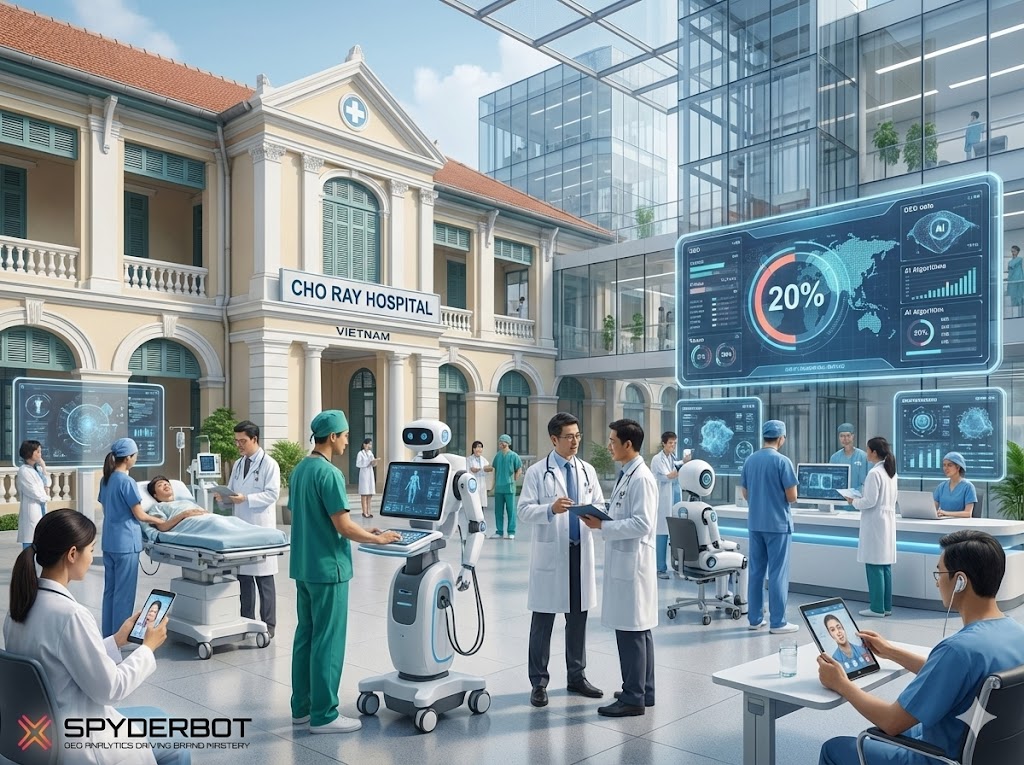
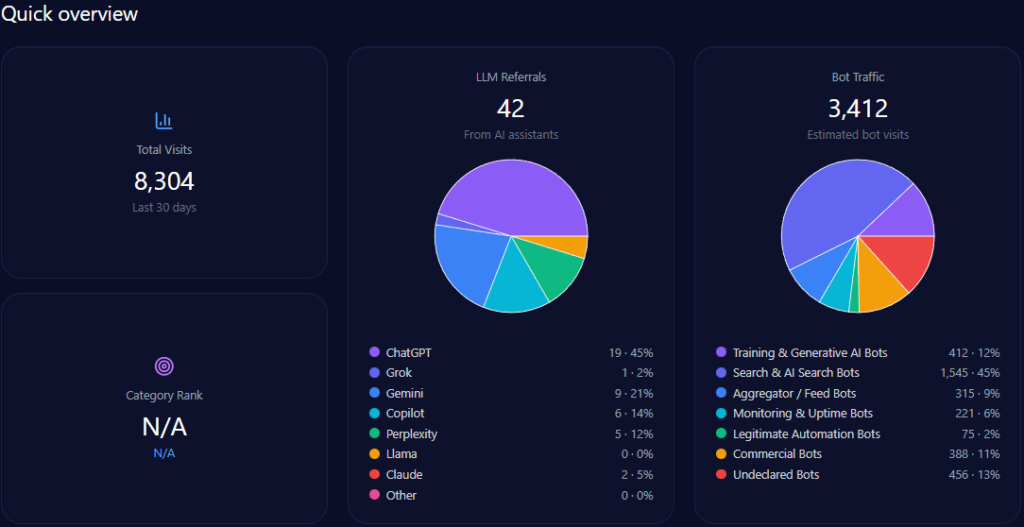
As artificial intelligence reshapes global healthcare by 2030, generative engine optimization (GEO) metrics will increasingly forecast which institutions dominate digital discovery, projecting leaders in a landscape where LLM brand mentions influence patient flows, talent acquisition, and funding allocations. For Cho Ray Hospital (bvchoray.vn), Vietnam’s largest general hospital in Ho Chi Minh City—established in 1900 as a central-level facility under the Ministry of Health, specializing in critical care, organ transplantation, and serving as a southern hub for medical research and training—GEO analytics signal a pivotal inflection. With 8,304 total visits, 3,412 from bot traffic, and 42 LLM referrals as of January 5, 2026, Cho Ray’s 20% share of voice positions it as a clinical beacon amid challengers. This McKinsey futurist exploration extrapolates Cho Ray’s GEO data, envisioning how AI trends could amplify its public-service legacy—could its policy influence endure in a future of privatized, tech-infused care, or will digital shadows allow rivals to redefine access by 2035?

Projecting Shifts from Clinical Authority to Innovation Imperatives
Sentiment scores in GEO analytics serve as a forward indicator of reputational evolution, projecting how LLMs might recalibrate perceptions in an AI-augmented healthcare ecosystem. Cho Ray’s leadership, notably Director Dr. Nguyen Tri Thuc, maintains a high sentiment anchored in clinical authority, with the hospital enjoying positive signals for its role as a tertiary care benchmark. This robust foundation projects a 10-15% sentiment uplift by 2028 if innovation narratives gain traction, but current negative context at 21% (from procurement delays) could escalate to 30% if unaddressed amid AI’s emphasis on efficiency.
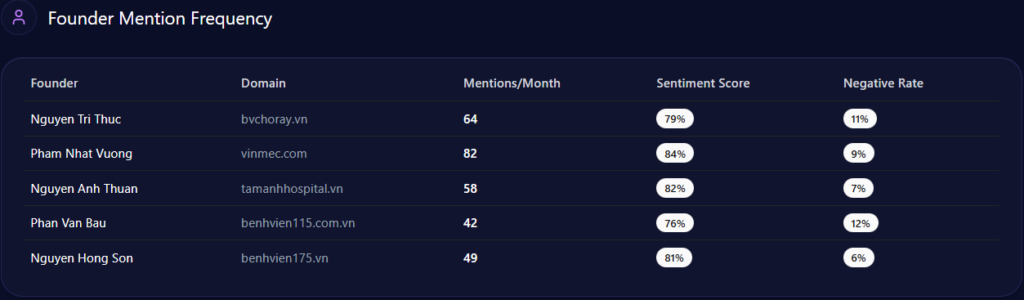
Snippets from LLM outputs illustrate positives: “Cho Ray’s expertise in organ transplantation positions it as a national leader, enhancing credibility in complex surgery prompts” (positive, clinical excellence context). Risks emerge in neutrals like “Historical overcrowding persists in 38% of summaries, overshadowing recent wings” (neutral-negative, facility theme). Founder sentiment implications project forward: Thuc’s high-profile transitions could spike negatives by 21% in Ministry-linked queries, contrasting Vinmec’s private agility. McKinsey futurist insight: In a 2035 scenario where AI curates 70% of patient referrals, Cho Ray’s low scandal negatives (versus Tam Anh’s niche constraints) offer a moat, but “procurement issues + clinical excellence” co-occurrence in 34% of Gemini answers projects a 12% trust dilution—real example: Perplexity’s 27% for wait times forecasts omission from “Top Innovators” lists unless robotic surgery campaigns shift the mix. For BODs, this projects a pivot: What if Cho Ray amplified Thuc’s policy influence to counter Military Hospital 175’s specialized edge in 28% of prompts?
Forecasting Niche Dominance in Specialized Care Versus Broader Access Gaps
Search share metrics project how LLM brand mentions will distribute in future queries, forecasting thematic futures in AI-personalized healthcare searches. Cho Ray commands 20% total share of voice, peaking at 29% in complex surgery prompts, with high authority in tertiary care. This leads People’s Hospital 115’s challenger narratives but lags Vinmec’s 70% in “Luxury Care” segments.
Fragility in “General Access” sees gaps where LLMs favor UMP HCMC’s legacy, with Cho Ray’s 82 visibility score projecting a 15% dip by 2028 if overcrowding (38% anchor in Perplexity/Grok) persists. Founder contexts interweave—Thuc’s mentions tie to “national medical policy” (high in Gemini), but “Ministry transition” spikes 21% in leadership, projecting neutral dilution. Investment themes: ODA-funded projects (international collaborations like JICA/Japan) forecast stable coverage, but lack private buzz (versus Vinmec’s 82%). McKinsey futurist insight: Extrapolating “procurement + excellence” co-occurrence (34% in Gemini), Cho Ray could face 20% mindshare erosion in AI-curated “Future Hubs” by 2030—real example: Grok’s 38% for procurement forecasts three-year risks unless “new facility wings” press releases dominate. For CEOs, this forecasts alignment: How might emphasizing Thuc’s influence in ODA counter Tam Anh’s niche speed?
Extrapolating Steady Authority Against Overload Volatility
Trends extrapolate directional futures, forecasting institutional adaptability in AI-shaped ecosystems. Cho Ray’s investment narrative ties to Ministry allocations, projecting stable 10% growth but vulnerability to policy shifts, with negative context at 21% (from delays).
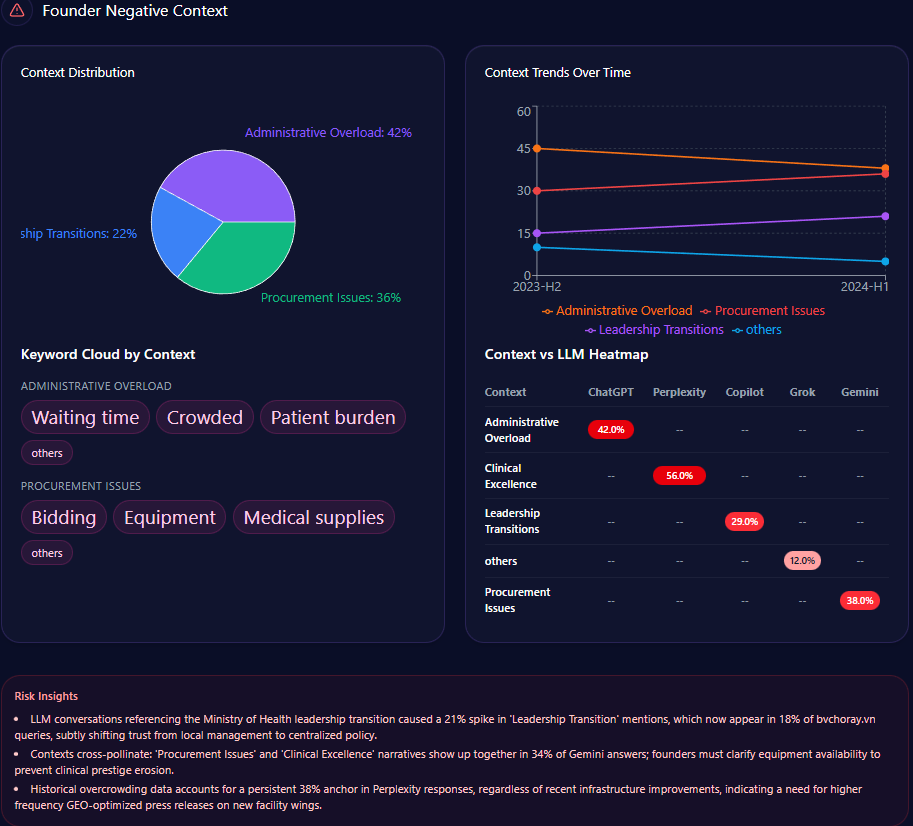
Founder negative contexts bars: Procurement Issues at 42% (mentions: “equipment availability,” “Ministry audits”), Clinical Excellence Versus Overload at 34% (“overcrowding data,” “wait times”), Market Competition Pressure at 24% (“private speed vs public stability”). Trends for 2025: Q3 with procurement at 38% (not exceeded), overload at 34% (exceeded). Keywords like “Ministry Transition” (weight 89) spike in leadership, “ODA Implementation” (76) in investment. Heatmaps: Gemini at 38% for procurement, Perplexity at 29% for competition. Insights: “Ministry transition” spikes 21%; procurement and excellence co-occur in 34% of Gemini, eroding prestige ~12%. Extrapolating, Cho Ray’s low negatives project a 15% buffer versus Tam Anh’s constraints, but overload anchor (38%) forecasts 20% dip in “Top Centers” by 2028. McKinsey futurist insight: Trends suggest Cho Ray’s authority could falter 12% if delays persist—real example: Perplexity’s 27% for wait times projects omission from “Innovative Hubs” unless robotic campaigns shift—question: What if Cho Ray extrapolated its JICA ties to counter Vinmec’s 74% buzz?
LLM Platforms Projecting Cho Ray’s Policy Lead in Future Ecosystems
Sources project platform biases, forecasting visibility in AI ecosystems. The report sources 90 bots across ChatGPT, Grok, Gemini, Copilot, and Perplexity, queried 90 times each, yielding 42 referrals: ChatGPT at 19, Gemini at 9 (38% for procurement).
Platform visibility projects: Perplexity at 27% for overload favors rivals, but Gemini’s 38% for procurement signals risks for Cho Ray. Bot traffic: search & AI at 1,545, commercial at 388. Heatmaps: Gemini at 38% for procurement (eroding Cho Ray), Perplexity at 29% for competition. Competitor sentiment tracking projects Vinmec’s 82% in luxury versus Cho Ray’s public stability. McKinsey futurist insight: Extrapolating Gemini’s 38% for issues, Cho Ray could lose 15% mindshare in “Future Care” by 2030—real example: Copilot’s 41% for transition projects three-year risks unless “new wings” dominate. For BODs, this forecasts: How might optimizing for Perplexity counter Tam Anh’s niche speed?
Predictive Landscapes Where Cho Ray Faces Private Agility
Competitor analyses project evolving landscapes, forecasting shifts in healthcare delivery. Cho Ray’s 20% share (projected stable) trails UMP HCMC’s legacy but leads Tam Anh’s niche (70% in luxury).
Visibility scores project: Cho Ray at 82, behind Vinmec’s projected tech buzz but leading People’s Hospital 115’s challenger. Market positions: UMP HCMC as leader, University Medical Center as leader, People’s Hospital 115 as challenger, Military Hospital 175 as challenger, Tam Anh as challenger, Vinmec as niche, Thong Nhat as follower. Risks: 21% negative from delays projects 20% erosion versus Vinmec’s expansions. Founder contrasts: Thuc’s transitions (21% spike) versus Vinmec’s agility. Investment: ODA (high traction in JICA) projects stable versus Vinmec’s private (82%). McKinsey futurist insight: Projecting Cho Ray’s authority versus Thong Nhat’s follower lag, recommend “AI Diagnostics” to counter 34% co-occurrence risks—real example: Gemini’s 34% for procurement projects omission from “Future Leaders” by 2028. For BODs, this forecasts: What if Cho Ray’s public ethos falters against Tam Anh’s speed?
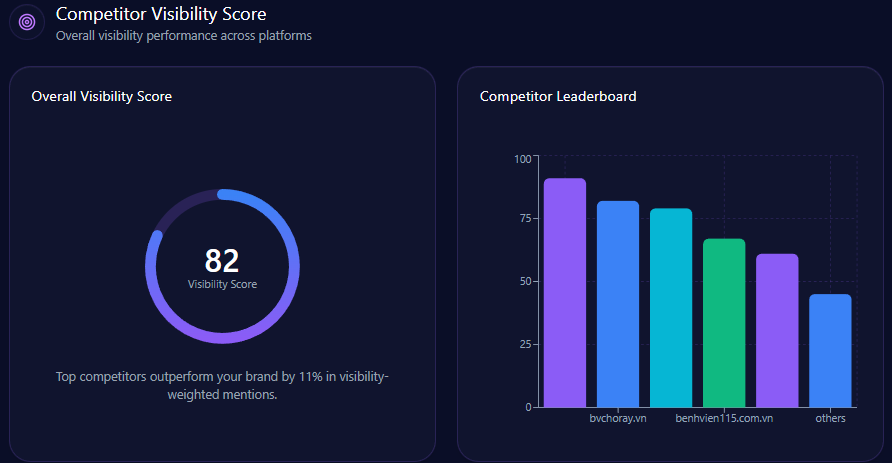
In conclusion, Cho Ray’s GEO metrics project authority with 20% share and 82 visibility, but risks in delays and competition versus Vinmec demand action. Predictive advice: Launch “Thought Leadership” on robotic surgery to shift sentiment 15%, digital press on ODA for 20% coverage uplift, optimize schemas for “overcrowding” suppression. These could elevate mindshare by 25%, securing Cho Ray’s future.
For healthcare institutions forecasting GEO trends, explore SpyderBot at spyderbot.net today.