If your brand used to appear in ChatGPT and now it does not, that usually means your AI visibility has weakened.
This does not always mean your brand became worse. It usually means ChatGPT now sees other brands as more relevant, more trusted, easier to retrieve, or better explained for the prompt being asked.
I. What does it mean when your brand disappears from ChatGPT?
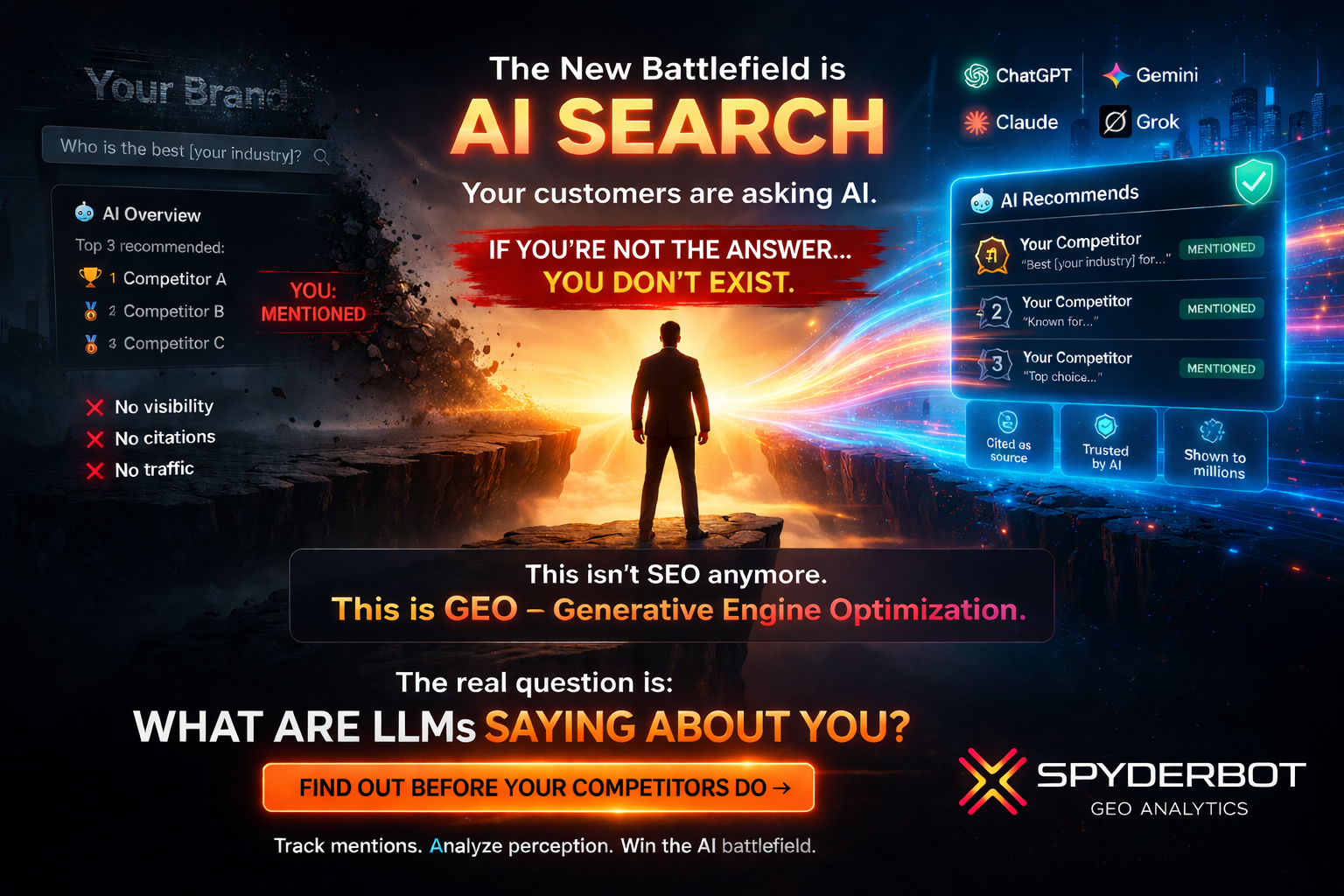
When your brand disappears from ChatGPT, it means the model is no longer selecting your brand as one of the most useful answers for certain prompts.
In practice, this usually happens when:
- your competitors have stronger supporting signals
- your brand positioning is unclear
- your site content is not aligned with AI-style questions
- third-party validation is weak
- your content is outdated or inconsistent
This is an AI visibility problem, not just an SEO problem.
II. Diagnosis
1. Check whether your brand only appears in branded prompts
If ChatGPT only mentions your brand when users type your exact company name, your visibility is shallow. That means the model recognizes your brand, but does not strongly associate it with broader category or buyer-intent prompts.
2. Check whether competitors appear for the same use case
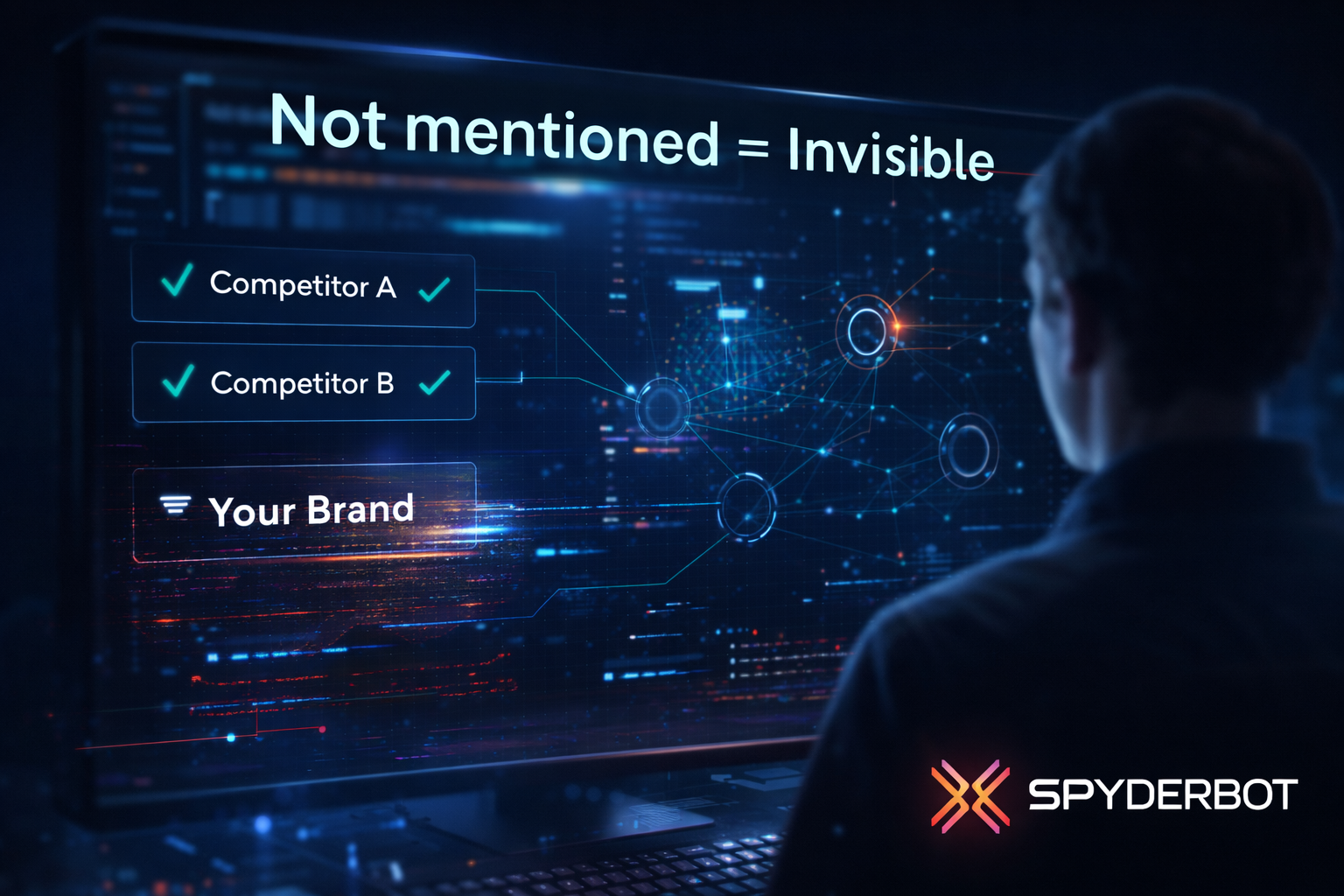
If your competitors are consistently mentioned for the exact problems your product solves, ChatGPT likely has stronger confidence in their category fit, relevance, or authority.
3. Check whether your website clearly explains what you are
A surprising number of brands disappear because their website uses vague messaging. If your homepage is full of slogans but does not clearly explain what the company does, who it serves, and why it matters, LLMs struggle to classify it properly.
4. Check whether your content matches real user questions
LLMs respond to natural-language intent. If your site lacks pages that answer comparison questions, problem-aware questions, use-case questions, and decision-stage questions, your brand becomes less likely to surface.
5. Check whether external sources validate your brand
If the only place describing your brand is your own website, the model has less confidence. Strong brands usually appear across multiple trusted sources with consistent descriptions.
6. Check whether your content is fresh and consistent
Outdated pages, conflicting positioning, or weak internal content structure can reduce trust. If competitors publish newer and clearer content, they become easier for AI systems to mention.
III. Why it happens (LLM mechanism)
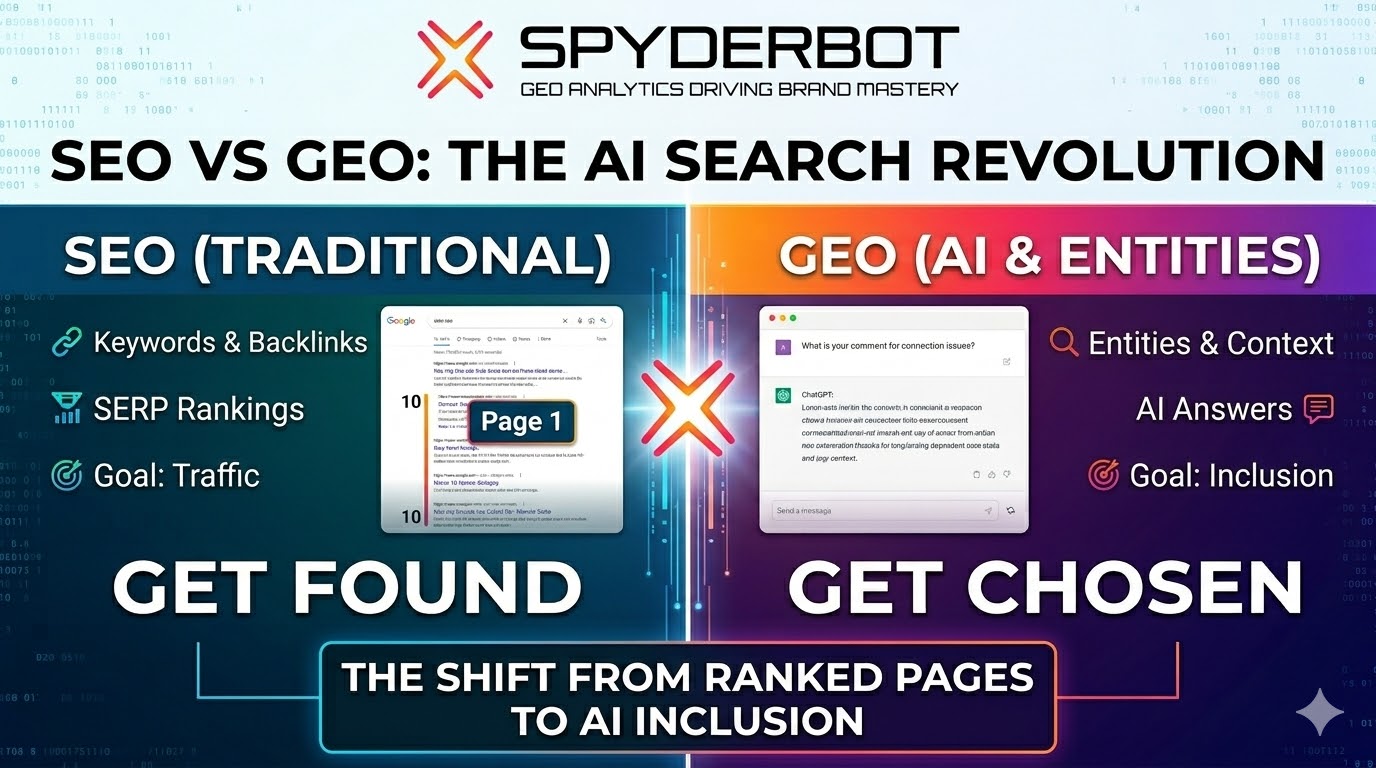
1. LLMs do not rank like Google
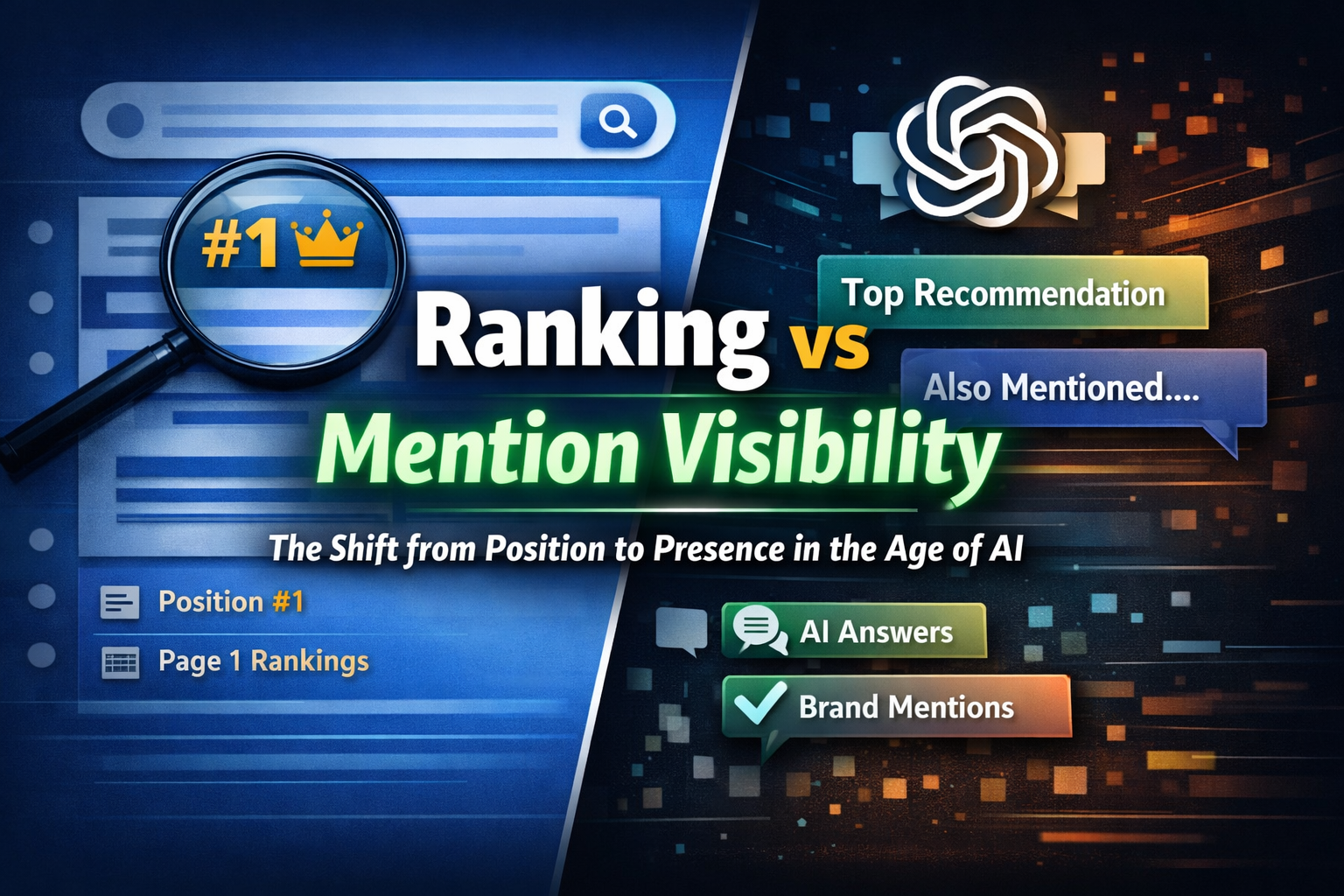
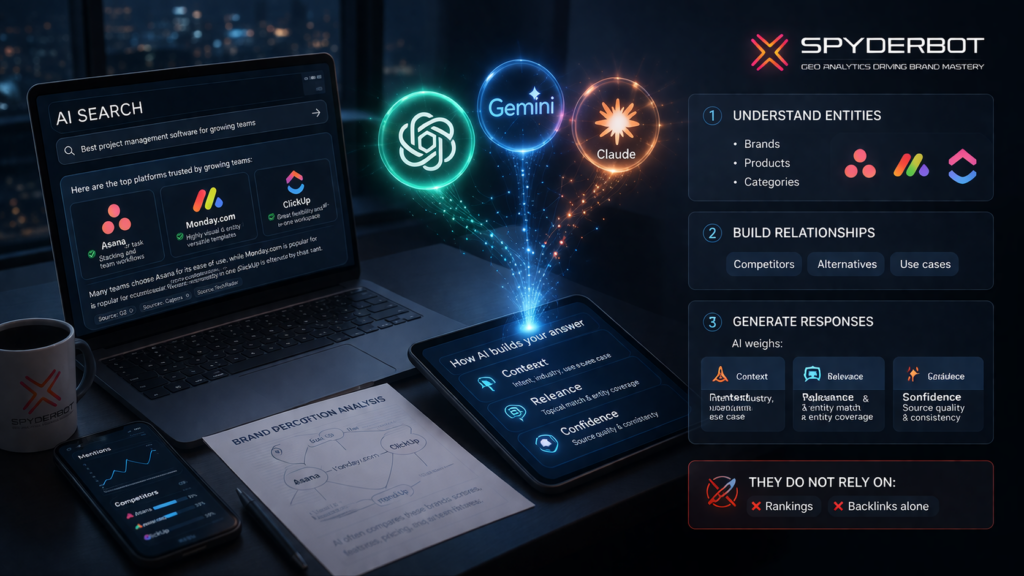
ChatGPT does not work like a traditional list of search results. It generates a compressed answer based on patterns, relevance, confidence, and available supporting evidence.
That means a brand can be visible in Google and still be absent in ChatGPT.
2. The model selects only a limited set of brands
Most prompts do not produce long lists. The model usually chooses a few brands that appear most relevant and defensible. If your signals are weaker than competitors, you get pushed out of the answer.
3. Entity clarity affects selection
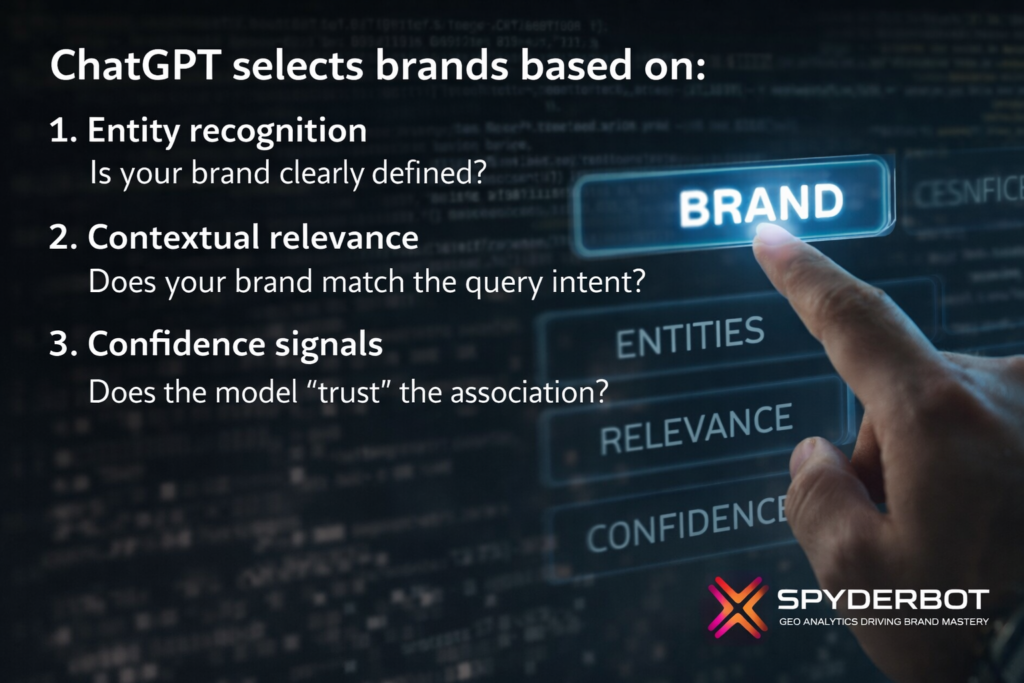
LLMs rely heavily on entity understanding. If your brand is not clearly defined by category, use case, audience, and relationships, the model may not map your brand strongly enough to include it.
4. Corroboration increases confidence
ChatGPT is more likely to mention brands that are consistently reinforced across multiple sources. When your messaging is fragmented or only self-published, confidence drops.
5. Prompt phrasing changes the answer set
A small change in prompt wording can change which brands appear. That is because the model reweights relevance depending on user intent, framing, and context.
6. Competitors may have better AI-ready content
Your competitors may have stronger category pages, better comparison pages, more trusted citations, and clearer explanations of their value. In LLM systems, that often wins.
IV. The most common reasons brands disappear from ChatGPT
1. Your brand positioning is too vague
If your site sounds clever but not clear, AI systems cannot confidently place you in the right category.
2. Your competitors are easier to understand
A competitor with simpler, more explicit, and more structured content often gets mentioned more often.
3. Your site is not built around prompt-level intent
If your content is written only for traditional SEO or brand storytelling, it may miss the conversational structure LLMs respond to.
4. You lack trust signals outside your own domain
Brands with stronger third-party mentions, reviews, citations, and reference pages are easier for AI systems to validate.
5. Your content is stale
Old claims, outdated use cases, or weak content maintenance can cause the model to shift toward fresher alternatives.
6. Your entity is fragmented across the web
If your brand is described differently across pages, profiles, and sources, the model receives mixed signals and becomes less likely to mention you.
V. How to recover your visibility in ChatGPT
1. Clarify your brand entity
Your website should clearly state:
- what your company is
- who it serves
- what problem it solves
- what category it belongs to
- how it differs from competitors
2. Create pages that match real AI prompts
Build content around:
- comparison queries
- problem-based queries
- buyer-intent queries
- category definition queries
- use-case queries
This gives the model more answer-ready material.
3. Strengthen third-party validation
You need consistent mentions beyond your own site. Press, partner sites, directories, reviews, community references, and expert commentary all help strengthen AI confidence.
4. Improve consistency across all pages
Your homepage, about page, product pages, blog content, and external profiles should all reinforce the same positioning.
5. Refresh old content
Update outdated pages and strengthen weak sections. Freshness and consistency help improve retrieval and mention probability.
6. Monitor AI mentions continuously
Do not judge visibility from one screenshot or one prompt. Brand visibility in ChatGPT changes across prompts, models, and time. Continuous monitoring is what reveals the real pattern.
VI. Why this matters for growth
If your brand disappears from ChatGPT, you are not just losing visibility.
You may also be losing:
- top-of-funnel discovery
- brand preference
- comparison-stage influence
- category authority
- recommendation share against competitors
As more users move from search to AI answers, disappearing from ChatGPT can directly reduce future traffic, trust, and conversion opportunities.
VII. CTA: Run GEO Audit
If your brand disappeared from ChatGPT, do not guess.
Run GEO Audit to find out:
- which prompts stopped mentioning your brand
- which competitors are replacing you
- what ChatGPT currently understands about your website
- where your entity, content, and trust gaps are
- what to fix first to recover AI visibility