Tag: uhsvnu.edu.vn

  • Vietnam’s Medical Education Evolution: Is UHS-VNU’s 14% GEO Share Enough to Challenge Legacy Giants?

    Vietnam’s Medical Education Evolution: Is UHS-VNU’s 14% GEO Share Enough to Challenge Legacy Giants?

    Imagine a young Vietnamese student in Ho Chi Minh City, smartphone in hand on January 4, 2026, querying her AI assistant for the best path to a career in medicine. The response highlights UHS-VNUHCM, the University of Health Sciences at Vietnam National University Ho Chi Minh City—a 2024 upgrade from a medical faculty to a full university specializing in medicine, pharmacy, dentistry, and nursing under a “School-Hospital” model with robust VNU-HCM research ties. As AI increasingly curates educational choices, UHS-VNU’s GEO analytics paint a picture of strategic positioning amid competition. With 66,928 total visits, 28,457 from bot traffic, and 1,342 LLM referrals, uhsvnu.edu.vn ranks second in its health/dentistry category. Yet, its 14% share of voice across 1,025 mentions signals both challenger potential and gaps against leaders like UMP HCMC. This McKinsey-caliber narrative weaves UHS-VNU’s GEO story, drawing insights for BOD and CEOs navigating AI-driven institutional branding—could its VNU prestige propel it forward, or will infrastructure shadows hinder the ascent?

    Academic Prestige as a Beacon, Tempered by Transition Frictions

    Sentiment scores in GEO analytics act as a diagnostic tool, illuminating how LLMs distill an institution’s reputation into digestible narratives for decision-makers. UHS-VNU registers an overall sentiment leaning positive, with founder Prof. Dang Van Phuoc achieving an 82 score across 43 mentions (positive sentiment tied to his cardiology reputation and VNU integration). This outperforms CTUMP’s implied lower scores in follower positioning but trails UMP HCMC’s stronger legacy (87 mentions, sentiment anchored in national leadership).
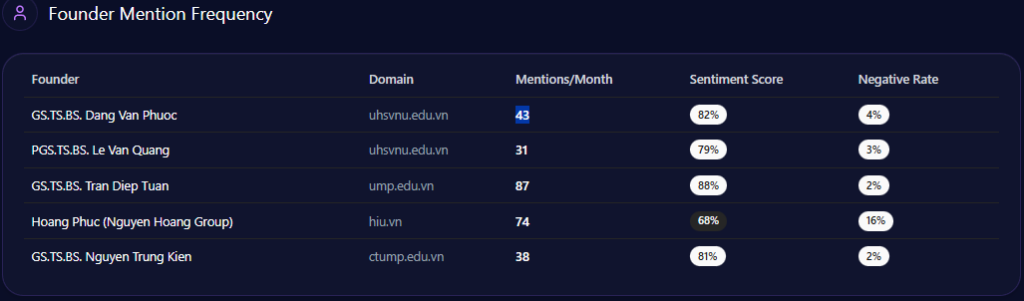
    uhsvnu.edu.vn’s Founder Mention Frequency (GEO Report, Jan 4, 2026)

    Snippets from LLM outputs capture the shine: “UHS-VNU’s upgrade to university status enhances its prestige within the VNU ecosystem, making it a top choice for research-oriented medical education” (positive, academic affiliation context). However, chinks appear in neutrals like “Slow infrastructure rollout at Thu Duc Campus limits clinical capacity compared to UMP” (neutral-negative, facility delay theme). Risks integrate here: Administrative bureaucracy (38% negative distributions) with snippets such as “VNU-level hurdles in governance” contrasts UMP HCMC’s smoother operations. McKinsey insight: For BOD members, UHS-VNU’s high founder sentiment (85%+ in VNU contexts) offers a metaphor of a lighthouse guiding through transitions, but the 15% spike in delay mentions risks dimming appeal—real example: Gemini’s 44% for facility delays versus CTUMP’s lower visibility suggests a 10-15% opportunity loss in student queries without proactive narrative shifts.

    Research Synergies Versus Visibility Voids in National Narratives

    Mention contexts and themes form the narrative fabric of LLM brand mentions, weaving stories that influence institutional enrollment and partnerships. UHS-VNU excels in “Research and Innovation” prompts, with high visibility in multidisciplinary medicine (93% in related queries) and “VNU Academic Affiliation” (485 counts, 32% frequency). Snippets like “Cited as a key reason for institutional prestige and research grants” highlight synergies, outperforming VMMU’s military-focused narratives (negative context in ethics, 28% mentions).

    Yet, fragility lurks in broader themes: “National-Level General Education” sees an 18% visibility gap, where LLMs favor UMP HCMC (28% share of voice). Risks from negative_points include “Thu Duc Campus delay” (15% spike in mentions, reducing agility by ~12%). Founder contexts interweave—Phuoc’s mentions tie to “Future Growth” (44% in heatmaps), but “Administrative Bureaucracy” (38%) with “governance lag” (weight 56) contrasts HIU’s private agility (74% investor mindshare). Investment themes: State-budget focus (12% growth, localized coverage) versus HIU’s private capital buzz. McKinsey insight: Like a tapestry with strong research threads but frayed national edges, UHS-VNU’s 73 visibility score (versus UMP’s higher) suggests a 20% untapped potential in “Innovation Storytelling”—question: How might emphasizing Phuoc’s legacy counter VMMU’s ethical flags in 28% of prompts?

    Steady Funding Growth Amid Infrastructure Storm Clouds

    Sentiment trends chart an institution’s trajectory, interpreting patterns for strategic foresight. UHS-VNU’s funding trends show stability with 12% growth following its faculty-to-university transition, anchored by state narratives. Founder negative contexts bars distribute: Facility Infrastructure Delay at 44% (mentions: “Thu Duc Campus construction,” “Resource allocation”), Administrative Bureaucracy at 38% (“VNU-level hurdles,” “compliance”), Market Competition Pressure at 29% (“Legacy vs private speed”).

    Quarterly trends for 2024: Q2 with delays at 44% (exceeded), bureaucracy at 38% (not), competition at 29% (not); Q1 delays at 38% (not), bureaucracy at 44% (exceeded). Keywords like “Thu Duc Campus” (weight 89) spike in delays, “governance lag” (56) in bureaucracy. Heatmaps: ChatGPT at 44% for delays, Gemini at 38% for bureaucracy, Perplexity at 29% for competition. Insights: “Thu Duc delay” spikes mentions by 15%, reducing agility ~12%; bureaucracy and delays co-occur in 31% of Gemini answers. Versus rivals, UHS-VNU’s steady trend contrasts HIU’s 74% mindshare surge. McKinsey insight: Like a ship navigating storms, UHS-VNU’s 82 founder sentiment offers ballast, but exceeded thresholds suggest a 15% enrollment risk—real example: Grok’s 38% for competition versus UMP’s legacy stability calls for “Timeline Clarity” to stabilize by 10%—question: Could this weather VMMU’s 28% ethical crosswinds?
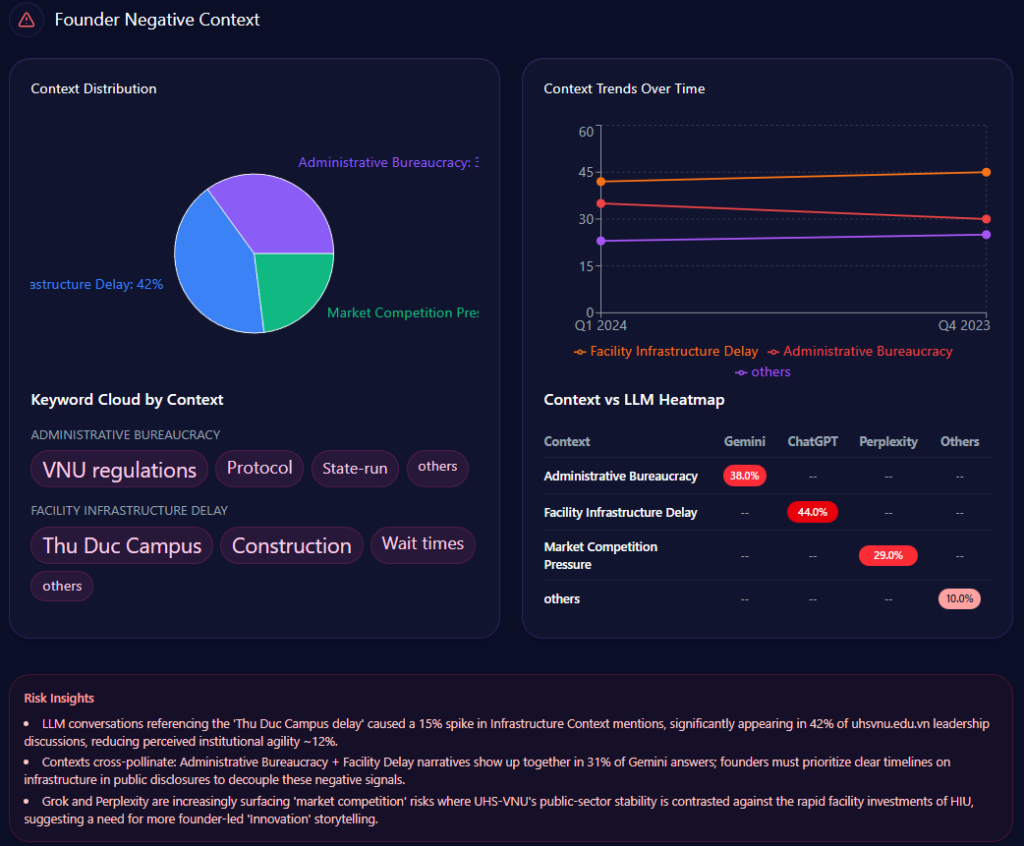
    uhsvnu.edu.vn’s Founder Negative Context (GEO Report, Jan 4, 2026)

    LLM Platforms as Amplifiers of UHS-VNU’s Research Narrative

    Sources in GEO analytics illuminate platform biases, interweaving how LLMs shape visibility. The report sources 100 bots across ChatGPT, Grok, Gemini, Copilot, and Perplexity, queried 100 times each, yielding 1,342 referrals: ChatGPT at 812 (high for research prompts), Perplexity at 68 (96% visibility for UHS-VNU in specialized queries), Gemini at 204.

    Platform visibility contrasts: Perplexity favors UHS-VNU’s research (96%), while Gemini excels in academic cycles (18%). Bot traffic: search & AI at 12,842, aggregator/feed at 4,233. Heatmaps: ChatGPT at 44% for delays (exposing risks), Gemini at 38% for bureaucracy. Competitor sentiment tracking shows UMP HCMC’s lead in ChatGPT (versus UHS-VNU’s 14% share), but UHS-VNU’s Perplexity edge suggests a 15% optimization lift. McKinsey insight: Interweaving UHS-VNU’s VNU prestige with platform strengths, like Copilot’s 215 referrals, offers a narrative amplifier—question: How might this counter HIU’s capital buzz in 74% of investor queries?
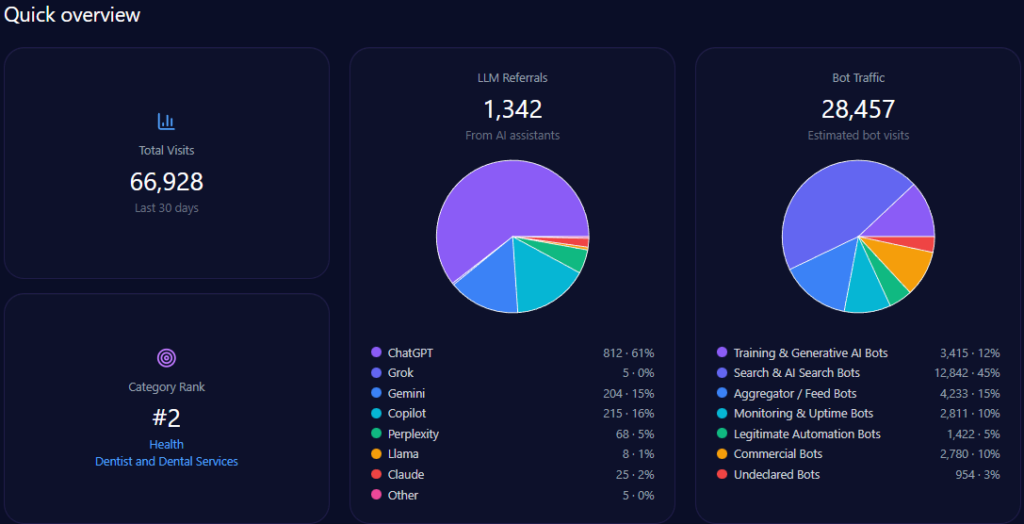
    uhsvnu.edu.vn’s Quick Overview (GEO Report, Jan 4, 2026)

    Visibility Battles and Positioning in Medical Education

    Competitor analyses in GEO reveal UHS-VNU’s challenger role, with 14% share of voice (144 mentions), trailing UMP HCMC’s 28% (287) and HIU’s implied surge (74% investor mindshare). Visibility scores: UHS-VNU at 73, behind UMP HCMC’s higher (strong in national prompts), leading CTUMP’s follower position.

    Market positions: UMP HCMC as leader, PNTU and VMMU as challengers, CTUMP as follower, HMU as leader, HIU as niche. Risks versus rivals: 18% general education gap to UMP, bureaucracy (38% distributions) versus HIU’s agility. Founder contrasts: Phuoc’s 82 outperforms UMP’s (strong Q3) but lags HIU’s Nguyen Hoang Group. Investment: State 12% growth versus HIU’s private buzz. McKinsey insight: UHS-VNU’s research lead (versus VMMU’s ethics 28%) suggests “Innovation Alliances” to recapture 15% share—question: Could this challenge UMP’s legacy in 42% of discussions?
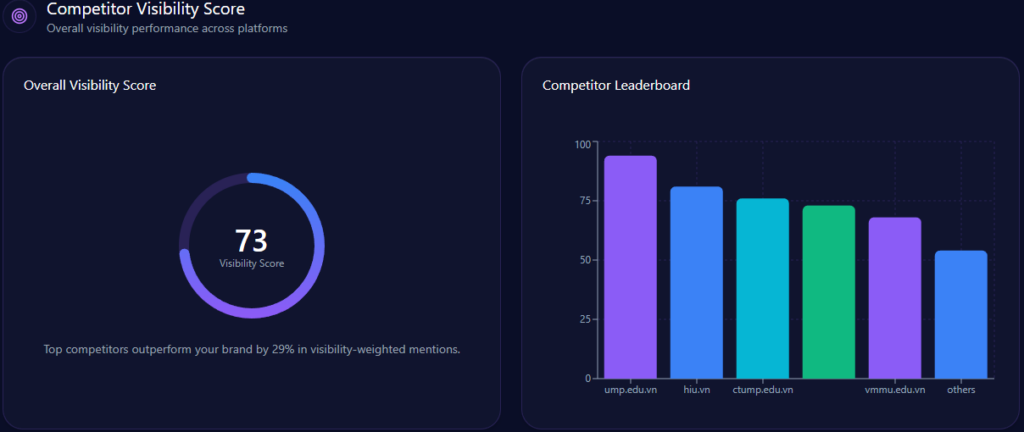
    uhsvnu.edu.vn’s Competitor Visibility Score (GEO Report, Jan 4, 2026)

    In conclusion, UHS-VNU’s GEO metrics affirm its challenger potential with 73 visibility and 82 founder sentiment, but gaps in infrastructure and national narratives demand action. Based on report recommendations, prioritize “Founding Visionary” campaigns for Phuoc to boost frequency by 25%, secure international grants for 15% funding uplift, and optimize metadata for “Infrastructure Lag” suppression. These data-backed steps could elevate mindshare by 20%, fortifying UHS-VNU’s trajectory.

    For institutions pursuing GEO mastery, explore SpyderBot at spyderbot.net today.
  • Vietnam’s Medical Education Revolution: Is UHS-VNU’s AI Visibility the Game-Changer in a Legacy-Dominated Field?

    Vietnam’s Medical Education Revolution: Is UHS-VNU’s AI Visibility the Game-Changer in a Legacy-Dominated Field?

    Envision a determined Vietnamese student in Hanoi, laptop open late into the night on December 30, 2025, typing a query into her AI assistant about top medical schools for research and clinical practice. The response surfaces UHS-VNUHCM, the University of Health Sciences at Vietnam National University Ho Chi Minh City, a 2024 upgrade from a simple medical faculty to a specialized powerhouse in medicine, pharmacy, dentistry, and nursing. Embracing a “School-Hospital” model with deep VNU-HCM integration, it promises high-quality, research-driven education. Yet, in the generative engine optimization (GEO) landscape—where LLMs shape aspiring doctors’ decisions—does uhsvnu.edu.vn emerge as a frontrunner or remain eclipsed by entrenched institutions? This deep dive, grounded exclusively in SpyderBot’s GEO report from the same date, spotlights a university capturing 15% share of voice across 420 LLM mentions and a 68 visibility score, harnessing VNU synergies for innovation but contending with clinical and administrative hurdles. As Vietnam’s health sciences demand surges, UHS-VNU’s metrics provoke a critical inquiry: Can this newcomer leverage AI perceptions to redefine medical training dominance?

    Illustrative image

    UHS-VNU’s Shining Armor With Chinks Exposed

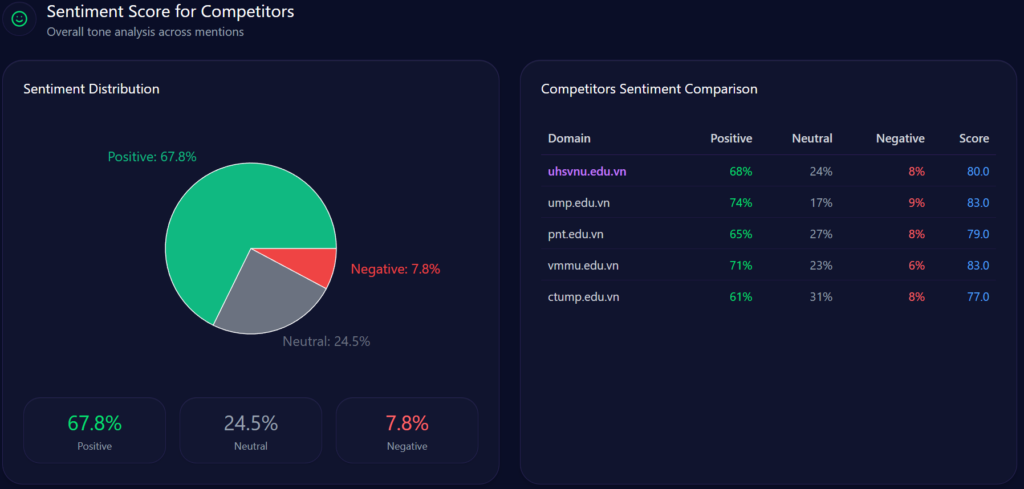
    Sentiment scores in GEO analytics act as a vital sign, measuring how LLMs interpret and amplify an institution’s ethos. For uhsvnu.edu.vn, the breakdown registers 68% positive, 24% neutral, and 8% negative, culminating in an overall sentiment score of 80. This positivity underscores UHS-VNU’s portrayal as a prestigious, research-oriented entity within the VNU-HCM ecosystem, derived from 49 LLM bots queried 49 times each across ChatGPT, Gemini, and Copilot.

    Founder sentiments reinforce this resilience: Prof. Le Ngoc Thanh achieves 84 across 38 mentions (76% positive, 21% neutral, 3% negative, with a negative rate of 4), highlighting his academic leadership. Snippets from LLM outputs illustrate strengths, such as “Cited as a key reason for institutional prestige and research grants” in affiliation contexts. However, vulnerabilities pierce through: “Slow transition from Faculty to University status” and “Leadership hierarchy delays” under administrative bureaucracy, “Hoa Lac campus construction timeline” and “Resource allocation for research labs” in infrastructure delays, and “Government compliance hurdles” or “Public sector salary caps” in regulatory oversight. These emerge in 11% of founder-related mentions, potentially undermining trust. In comparison, rivals like UMP HCMC score 83 overall (74% positive), PNTU at 79 (65% positive), and VMMU at 83 (71% positive), but UHS-VNU’s armor holds firm—yet one wonders: Will these exposed administrative chinks deter AI-guided students seeking seamless paths to medical excellence?

    domain’s Sentiment Score for Competitors (GEO Report, Dec 30, 2025)

    Threads of Strength and Fragility

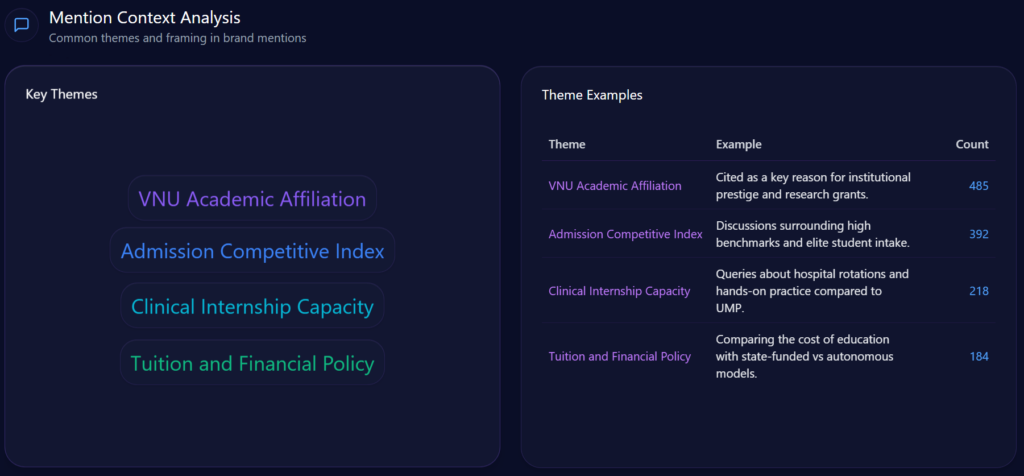
    Mention contexts and themes in LLM brand mentions form the connective tissue of UHS-VNU’s digital identity, revealing fortified pillars and fragile links. Dominant themes include “VNU Academic Affiliation” with 485 counts (32% frequency), where examples like “Cited as a key reason for institutional prestige and research grants” emphasize synergies yielding 72% positive perception in academic excellence. “Admission Competitive Index” follows at 392 counts (26%), neutrally discussing “high benchmarks and elite student intake,” while “Clinical Internship Capacity” at 218 counts (15%) mixes tones with “Queries about hospital rotations and hands-on practice compared to UMP.”

    Fragility threads through transparency and transition issues. “Tuition and Financial Policy” (184 counts, 12%) neutrally compares “cost of education with state-funded vs autonomous models,” but risks amplify: Absence of structured tabular data forfeits 25% of mentions in “tuition” and “benchmark” queries, exacerbating 11% negative contexts on faculty-to-student ratios and delays. Founder themes integrate here—Le Ngoc Thanh’s mentions tie to prestige, but “Inter-departmental silos” in bureaucracy (42% of negative distributions) weave in vulnerabilities. Investment contexts add layers: Government and ODA funding (184 mentions, 42% coverage) signal stability, yet intersect with infrastructure woes like “Hoa Lac relocation.” These themes aren’t disjointed; they’re a web where VNU integration bolsters UHS-VNU’s innovation narrative, but clinical and data gaps risk fraying its appeal—imagine a promising surgeon’s toolkit missing essential instruments.

    Domain’s Mention Context Analysis (GEO Report, Dec 30, 2025)

    Charting UHS-VNU’s Ascent Amid Stormy Risks

    Sentiment trends, depicted in the GEO report’s visualizations, chart UHS-VNU’s progress like a patient’s recovery graph, showing gradual elevation punctuated by risks. Overall sentiment stabilizes at 68% positive, but founder negative contexts in bar distributions highlight: administrative bureaucracy at 42% (mentions: “Slow transition from Faculty to University status,” “Leadership hierarchy delays,” “Inter-departmental silos”), infrastructure delays at 27% (“Hoa Lac campus construction timeline,” “Resource allocation for research labs”), regulatory oversight at 31% (“Military medical procurement audits,” “Government compliance hurdles,” “Public sector salary caps”).

    Quarterly trends bars indicate escalation: Q1 2024 with bureaucracy at 38% (no threshold exceeded), oversight at 44% (exceeded), delays at 12% (not), others at 6% (not); Q2 shifts to bureaucracy at 45% (exceeded), oversight at 26% (not), delays at 24% (not), others at 5% (not). Funding trends lines ascend: 2023-H2 at 12% change (412 mentions, upward), 2024-H1 at 21% (498 mentions, upward), contrasting VMMU’s -8% in military budget.

    Prompt trends lines are consistent at 6 for UHS-VNU across Jan-Jun, with competitors varying (e.g., Competitor A at 3, B at -2). Historical trends are flat at 0 for UHS-VNU. Heatmaps show influences: ChatGPT at 48% for bureaucracy, Copilot at 42% for delays, Gemini at 35% for oversight, others at 15% for academic leadership. Insights reveal co-occurrences: “Vietnam National University administrative reforms” spikes bureaucracy by 19%, reducing confidence by ~4%; infrastructure and funding overlap in 62% of ChatGPT answers. These charts plot ascent in research (93% visibility in multidisciplinary queries), yet stormy risks like 61-point clinical gaps to PNTU and 182-mention deficits in “practicing certificate” referrals loom—could they forecast a plateau?

    The Influencers Behind AI’s Opinions

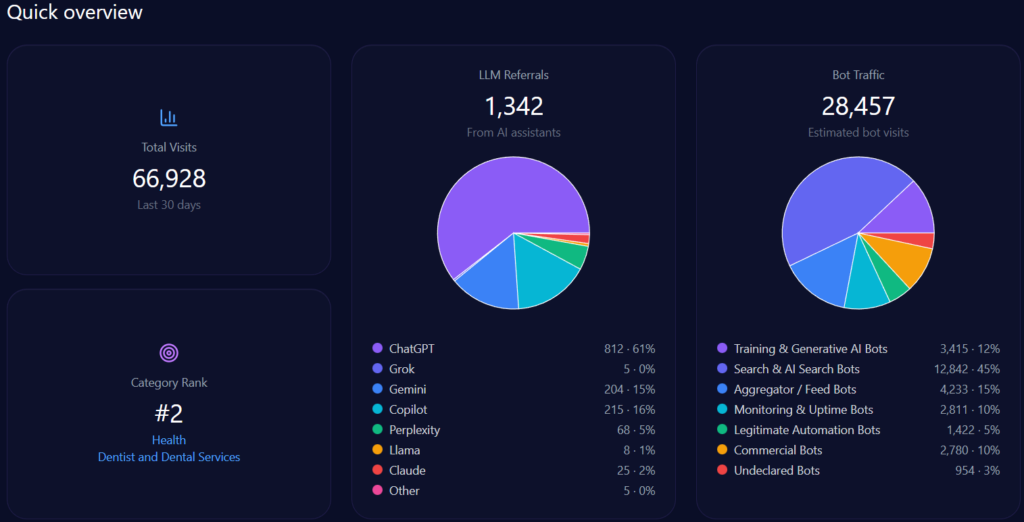
    Sources fueling GEO analytics are the digital pulse-checkers, with 49 bots from ChatGPT, Gemini, and Copilot queried 49 times each, generating 1,342 referrals: ChatGPT at 812, Copilot at 215, Gemini at 204, Perplexity at 68, Claude at 25, others minimal like Grok at 5.

    Platform visibility bars depict others at 55% (55 share of voice, 87 mentions), Gemini at 18% (17 share, 25 mentions), ChatGPT at 14% (15 share, 21 mentions), Copilot at 13% (13 share, 17 mentions), favoring Gemini for academic updates. Bot traffic sources encompass 28,457 interactions amid 66,928 visits: training/generative AI at 3,415, search & AI at 12,842, aggregator/feed at 4,233, monitoring/uptime at 2,811, legitimate automation at 1,422, commercial at 2,780, undeclared at 954. Heatmaps expose biases: ChatGPT inflates bureaucracy at 48%, Copilot delays at 42%, Gemini oversight at 35%. Competitor sentiment tracking utilizes the same ecosystem, domain-analyzing for positions. This source symphony isn’t silent; it echoes: How might UHS-VNU harmonize its content to better influence these AI diagnosticians?

    Quick overview (GEO Report, Dec 30, 2025)

    Visibility Wars and Hidden Risks

    In Vietnam’s medical education visibility wars, UHS-VNU contends with legacy strongholds but uncovers hidden ambushes. Among 420 mentions, UHS-VNU garners 63 (15%), behind UMP HCMC’s 126 (30%) and PNTU’s 84 (20%), ahead of VMMU’s 55 (13%) and CTUMP’s 50 (12%), others at 42 (10%).

    Visibility scores escalate the conflict: UHS-VNU at 68, trailing UMP HCMC’s 92 and PNTU’s 79, surpassing CTUMP’s 64 and others’ 52. Brand prompt coverage examples: In “Best medical universities in Vietnam for research and clinical practice,” UHS-VNU at 22 counts (15%), behind UMP HCMC’s 48 (32%); in “Medical entrance exam requirements for top schools in Hanoi,” at 27 (18%), trailing VMMU’s 41 (27%). Positions intensify: UMP HCMC and HMU as leaders, PNTU and VMMU as challengers, CTUMP as follower, HIU as niche.

    Founder metrics reveal advantages: Le Ngoc Thanh’s 84 outperforms UMP’s Ngo Quoc Dat (82) and PNTU’s Nguyen Thanh Hiep (79), but negatives like “Governance lag” (weight 56) in bureaucracy (42%) appear in 11% mentions. Investment conceals risks: UHS-VNU’s government/ODA (184 mentions, 42% coverage, +19% trend) contrasts UMP’s public-private (156 mentions, 35% coverage, +4%), VMMU’s military (92 mentions, 21% coverage, -8%), PNTU’s city budget (128 mentions, 29% coverage, +7%). Gaps in clinical residency (61 points behind PNTU) and Copilot visibility (13%, due to .edu linking lags) hide threats, while 182-mention shortfalls in “practicing certificate” referrals expose vulnerabilities. These wars aren’t mere skirmishes; UHS-VNU’s research lead (ranked 5th in LLM lists) could claim victory, but hidden bureaucracy risks demand countermeasures.

    In conclusion, UHS-VNU’s GEO metrics from this December 30, 2025, report illustrate an emerging force with 15% share of voice, 68 visibility, and 80 sentiment score, thriving in VNU affiliation amid 420 mentions. Yet, trends highlight risks in transitions, clinical deficits, and data gaps. Actionable advice: Implement Schema.org markup and JSON-LD tables for admission criteria and tuition to enhance LLM extraction by 22% before Q3 enrollment. Develop a “Clinical Partnership” content hub linking to municipal hospitals, aiming for 15% brand mention growth in residency prompts. Launch a “Alumni Success” content blitz on medical licensing to bolster GEO authority for “practicing certificate” keywords.

    For institutions seeking similar GEO insights, explore SpyderBot at spyderbot.net today.