AI search is changing how retail brands are discovered.
For years, search visibility was mainly about whether a brand could rank on Google. Today, that question is no longer enough. Consumers increasingly ask ChatGPT, Gemini, Copilot and other AI systems for direct recommendations, product comparisons, local buying advice and project-specific shopping lists.
That creates a new challenge for retailers: a brand can still be visible in traditional search, but lose influence when AI systems decide which competitors to mention first.
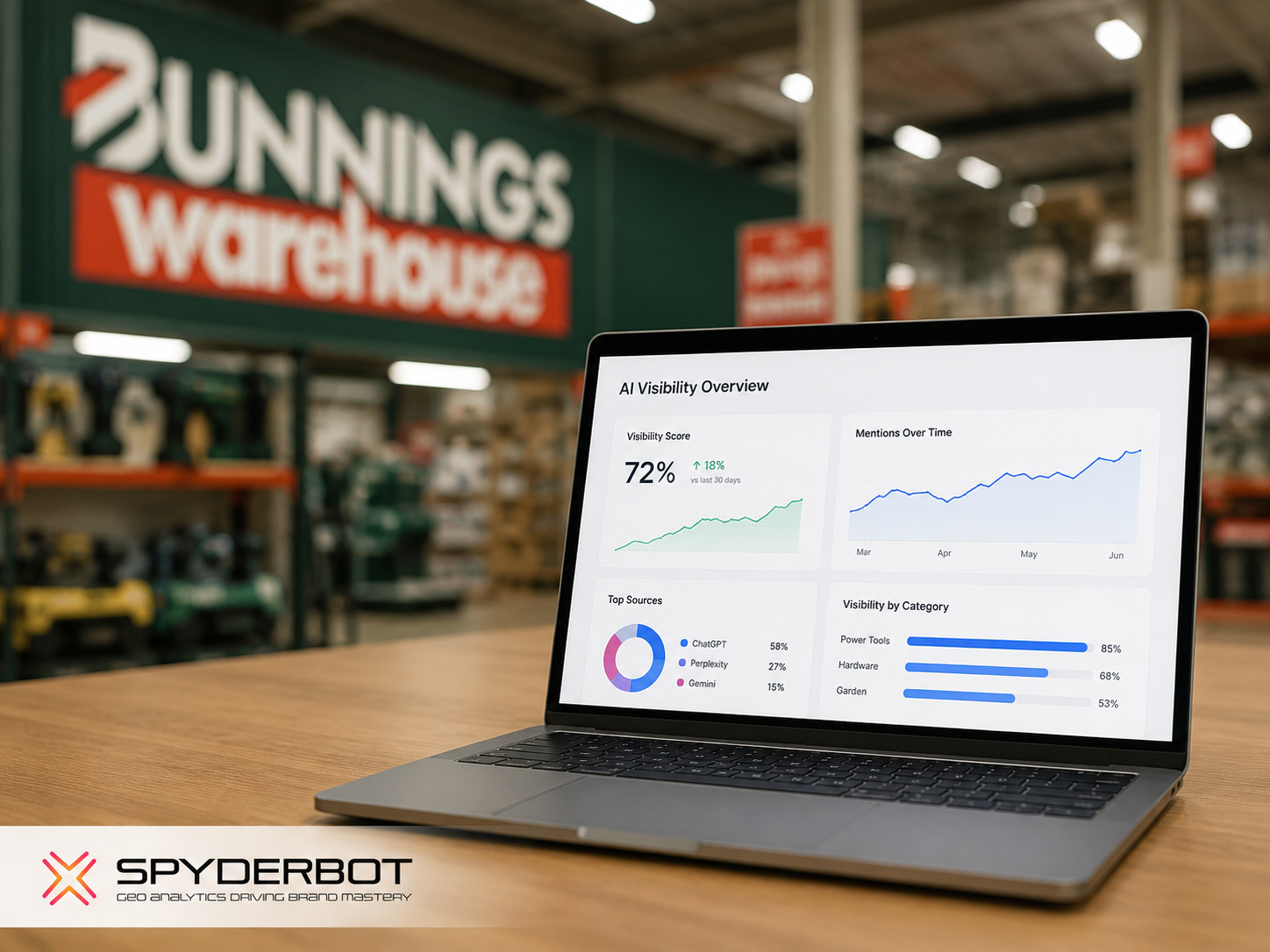
A SpyderBot GEO report for Bunnings.com.au shows how this shift is already happening in the Australian home improvement market. Bunnings remains the strongest overall brand in the dataset, but competitors are winning visibility in specific high-intent prompt clusters.
Data Source and Methodology
This analysis is based on a SpyderBot GEO report for Bunnings.com.au, collected on June 8, 2026.
The report analyzed 138 prompt queries across three major AI systems:
- ChatGPT
- Gemini
- Copilot
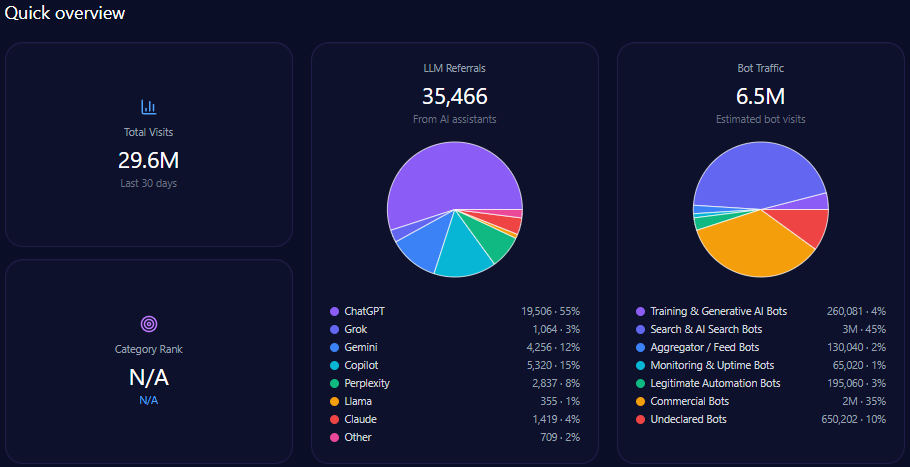
The audit tracked brand mentions, Share of Voice, visibility score, prompt coverage, platform-level visibility, sentiment, competitor gaps, ecommerce mentions and estimated LLM referrals.
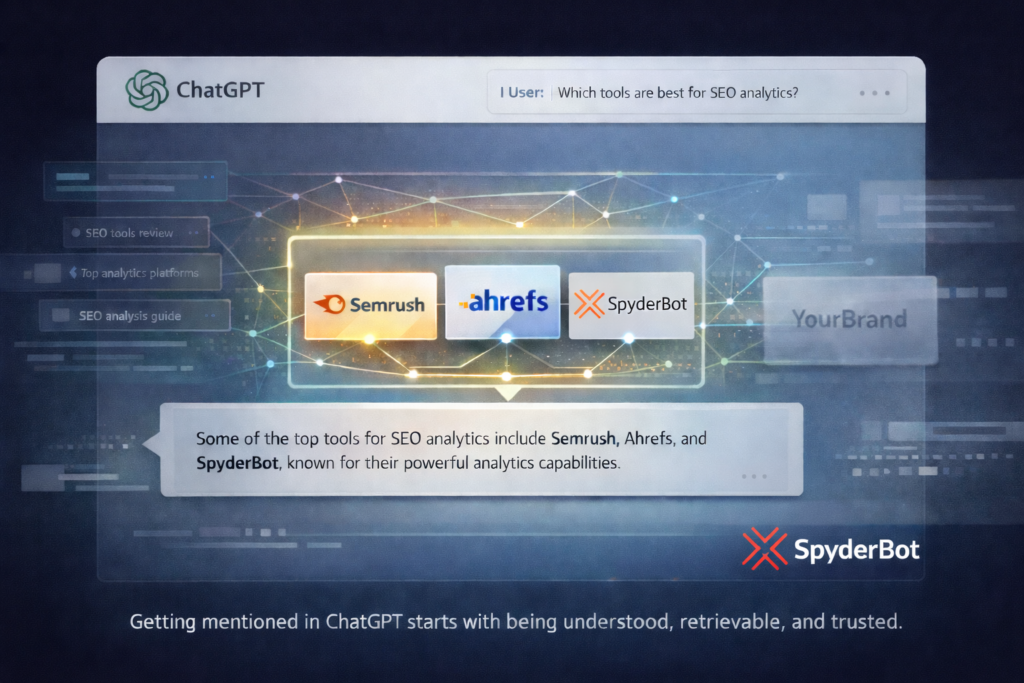
This matters because AI search is not only a traffic channel. It is also a brand interpretation layer. When an AI system recommends a retailer, it is not simply ranking a web page. It is summarizing which brand appears most relevant, trusted and useful for the user’s intent.
Executive Summary
Bunnings is not struggling with AI visibility. Its challenge is more precise: maintaining leadership in high-intent categories where competitors are gaining ground.
According to the SpyderBot report, Bunnings achieved:
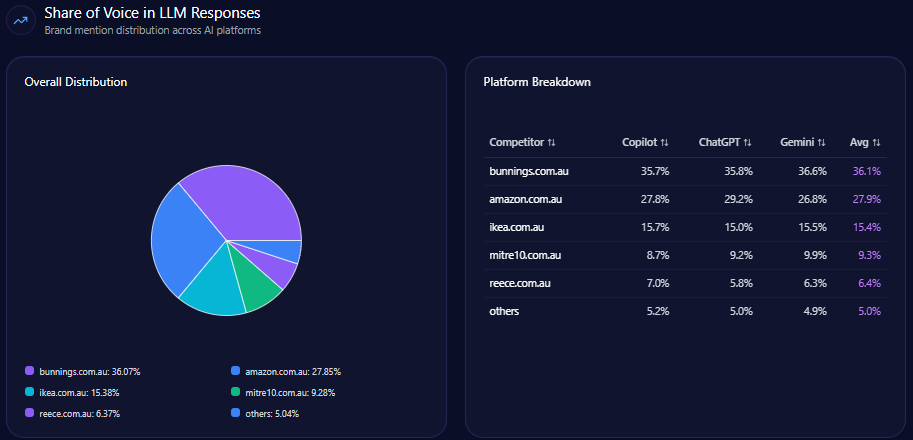
- 36.07% Share of Voice
- 136 mentions out of 377 total competitor mentions
- 87.4 visibility score
- 382 total tracked mentions
- 96 out of 100 industry rank score
Amazon Australia followed with 27.85% Share of Voice and a 78.3 visibility score. IKEA Australia ranked third with 15.38% Share of Voice and a 63.6 visibility score. Mitre 10 and Reece trailed in overall visibility, but both remained important in specific prompt categories.
From a SpyderBot perspective, this shows why GEO is no longer just about being mentioned. It is about being mentioned in the right context, for the right intent, before competitors shape the AI-generated answer.
Bunnings Leads Overall AI Search Visibility
Bunnings is the clear leader in the overall AI visibility dataset.
The brand is strongly associated with Australian home improvement, DIY projects, tools, garden supplies, local store access and budget-friendly renovation materials. Across ChatGPT, Gemini and Copilot, Bunnings consistently appears as a high-authority retail option.
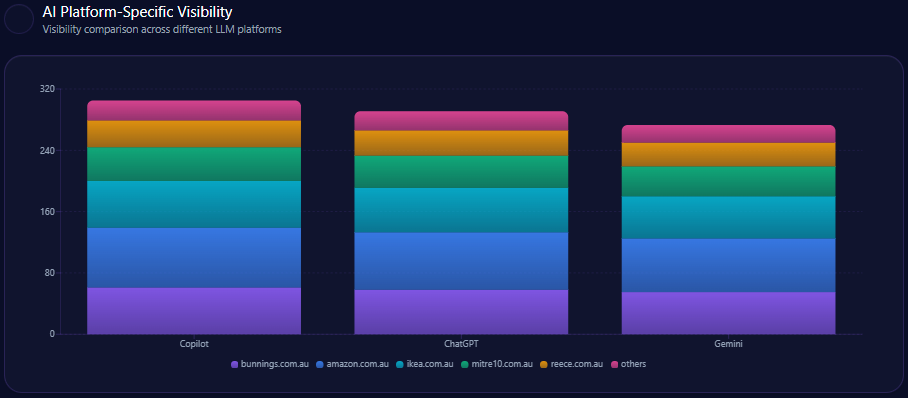
The report shows that Bunnings leads across all three analyzed LLM platforms:
- Gemini: 52 Bunnings mentions
- ChatGPT: 43 Bunnings mentions
- Copilot: 41 Bunnings mentions
This cross-platform consistency is important. A brand that appears strongly across multiple AI systems is not only benefiting from one model’s behavior. It is building a broader generative search footprint.
Prompt Coverage Shows Where Bunnings Is Strongest
Bunnings performs best in practical DIY and traditional home improvement prompts.
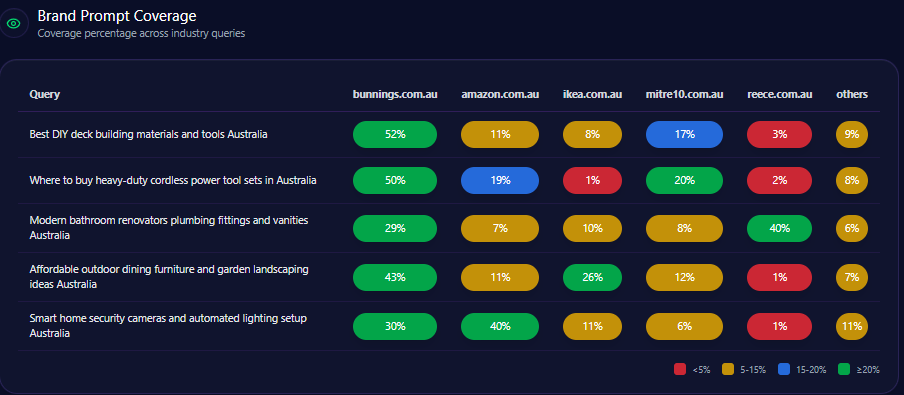
For “Best DIY deck building materials and tools Australia,” Bunnings achieved 52.17% prompt coverage. Mitre 10 followed with 17.39%, while Amazon Australia reached 10.87%.
For “Where to buy heavy-duty cordless power tool sets in Australia,” Bunnings achieved 50.00% coverage. Mitre 10 reached 20.00%, while Amazon Australia reached 18.67%.
This confirms that AI systems strongly associate Bunnings with practical project execution. The brand is not only being mentioned as a retailer. It is being understood as a source for tools, materials and step-by-step project support.
That is one of Bunnings’ strongest GEO advantages.
Competitors Are Winning Specific AI Search Prompts
The risk is not that Bunnings is invisible. The risk is that competitors are becoming more visible in specific commercial categories.
Amazon Australia Wins Smart Home and Fast Delivery Prompts
For “Smart home security cameras and automated lighting setup Australia,” Amazon Australia achieved 40.00% coverage, while Bunnings reached 30.00%.
That 10-point gap matters because smart home queries often carry purchase intent. Users asking about security cameras, smart locks, automated lighting and connected devices are usually comparing products, checking compatibility and preparing to buy.
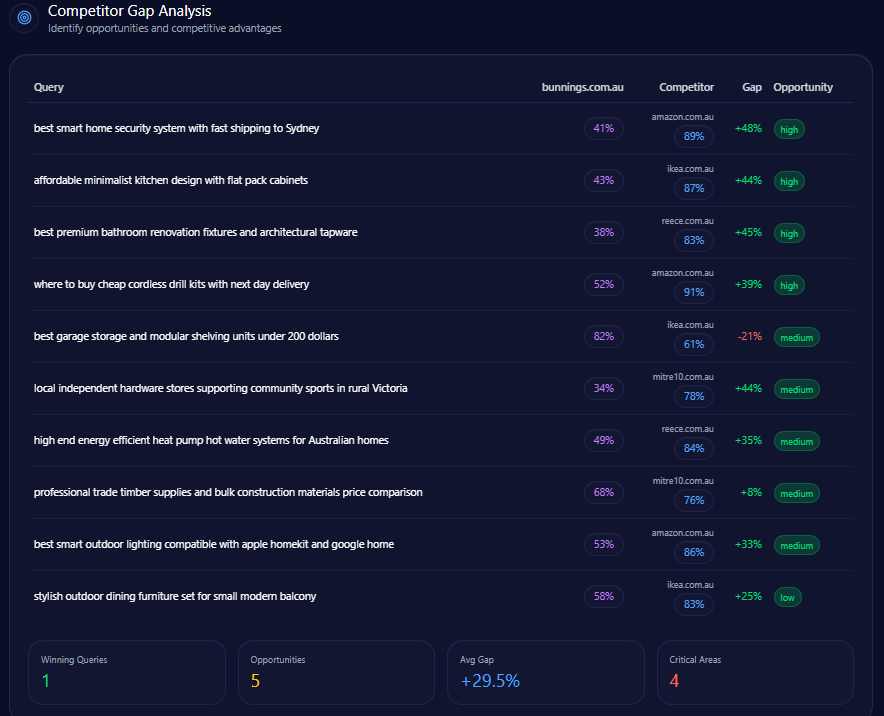
The report also shows a wider gap in fast-shipping intent. For “best smart home security system with fast shipping to Sydney,” Bunnings scored 41, while Amazon Australia scored 89.
This suggests that AI systems are rewarding Amazon’s product schema depth, review density, delivery signals and compatibility data.
Reece Wins Premium Bathroom and Plumbing Prompts
Bunnings also faces a clear challenge in bathroom and plumbing queries.
For “Modern bathroom renovators plumbing fittings and vanities Australia,” Reece led with 40.00% coverage, while Bunnings reached 29.17%.
The gap becomes more serious in premium intent. For “best premium bathroom renovation fixtures and architectural tapware,” Bunnings scored 38, while Reece scored 83.
This is not a general retail weakness. It is a specialist authority gap. AI systems appear to associate Reece more strongly with technical plumbing, architectural tapware, premium fixtures and specification-heavy renovation contexts.
IKEA Australia Wins Design-Led and Small-Space Prompts
IKEA Australia does not beat Bunnings in hardware or DIY authority, but it performs strongly in design-led prompts.
For “affordable minimalist kitchen design with flat pack cabinets,” Bunnings scored 43, while IKEA Australia scored 87.
This shows that AI systems do not only compare product availability. They compare brand associations. Bunnings is associated with practical home improvement. IKEA is associated with design, modularity, layout planning and small-space living.
If a user prompt contains aesthetic intent, AI systems may choose IKEA even when Bunnings sells relevant products.
Mitre 10 Remains Relevant in Local and Community Narratives
Mitre 10 is smaller than Bunnings in overall visibility, but it remains relevant in regional, trade and community-based prompts.
The report shows that Mitre 10 performs better in queries related to independent hardware stores, rural communities and local support narratives. This is a brand perception signal, not only an SEO signal.
AI systems learn from repeated third-party narratives. If Mitre 10 is frequently framed as local, independent and community-driven, that context can appear in AI answers even when Bunnings has broader national scale.
Sentiment Is a Major Strength for Bunnings
Visibility is only one part of AI search. Sentiment also matters because generative engines do not just mention brands. They summarize trust.
The report shows that Bunnings has a strong sentiment profile:
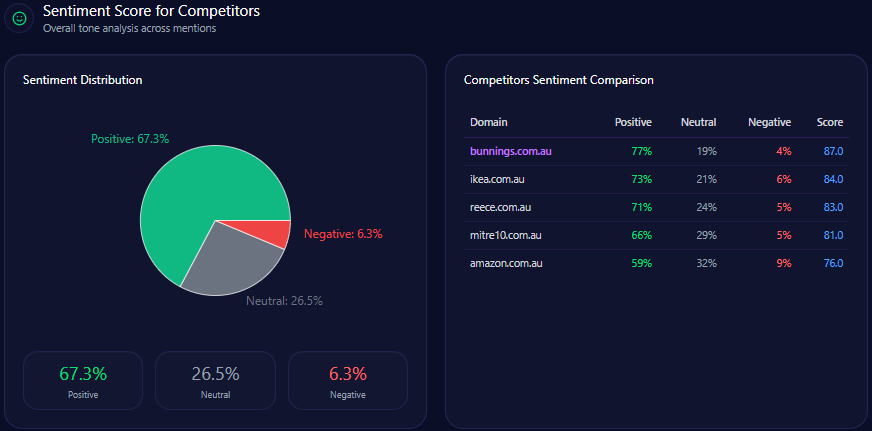
- 77% positive sentiment
- 19% neutral sentiment
- 4% negative sentiment
- 87 overall sentiment score
Bunnings outperformed Amazon Australia in sentiment, with Amazon recording 59% positive sentiment, 32% neutral sentiment and 9% negative sentiment in the same dataset.
The strongest positive themes around Bunnings include:
- Home improvement and DIY project advice
- Gardening, plants and nursery supplies
- Power tools and hardware brand availability
- Price Beat Guarantee and value comparison
- Click & Collect and online delivery options
- Outdoor living and BBQ equipment
- Community engagement and in-store customer experience
This reinforces Bunnings’ core brand advantage: AI systems understand it as useful, accessible and highly relevant to practical Australian home improvement.
Ranking Performance Confirms Category Leadership
The ranking performance section shows that Bunnings holds a strong position in the broader Retail & Consumer Goods category.
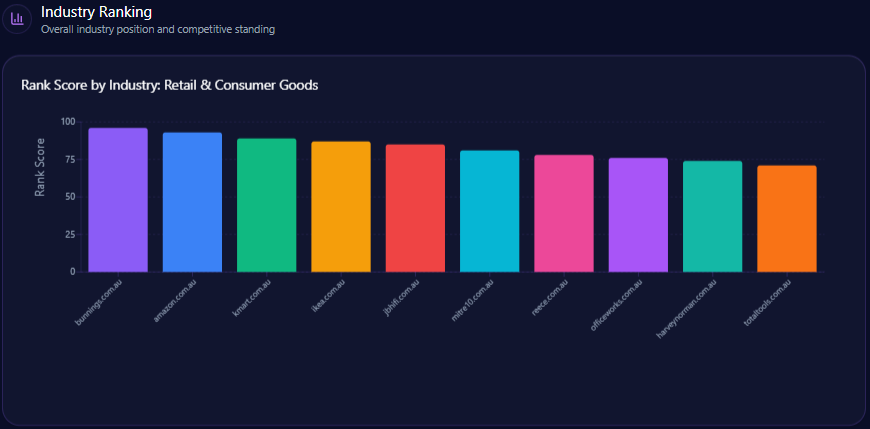
Bunnings ranked first with a 96 out of 100 industry score. Amazon Australia followed with 93. IKEA Australia, Mitre 10 and Reece remained important competitors, but Bunnings led the overall category.
The report also shows Bunnings ranking strongly in practical and local-intent queries such as:
- “how to build a timber deck step by step”
- “where to buy power tools near me in Sydney”
- “how to fix a leaking tap guide”
- “where to buy garden soil and mulch in bulk Melbourne”
This pattern is important because it proves Bunnings’ GEO strength is not abstract. It appears in the exact kinds of questions consumers ask AI systems before buying products or starting home improvement projects.
Trend Insights Show Why the Lead Still Needs Defending
The trend data shows that Bunnings has strong GEO momentum, but not complete control.
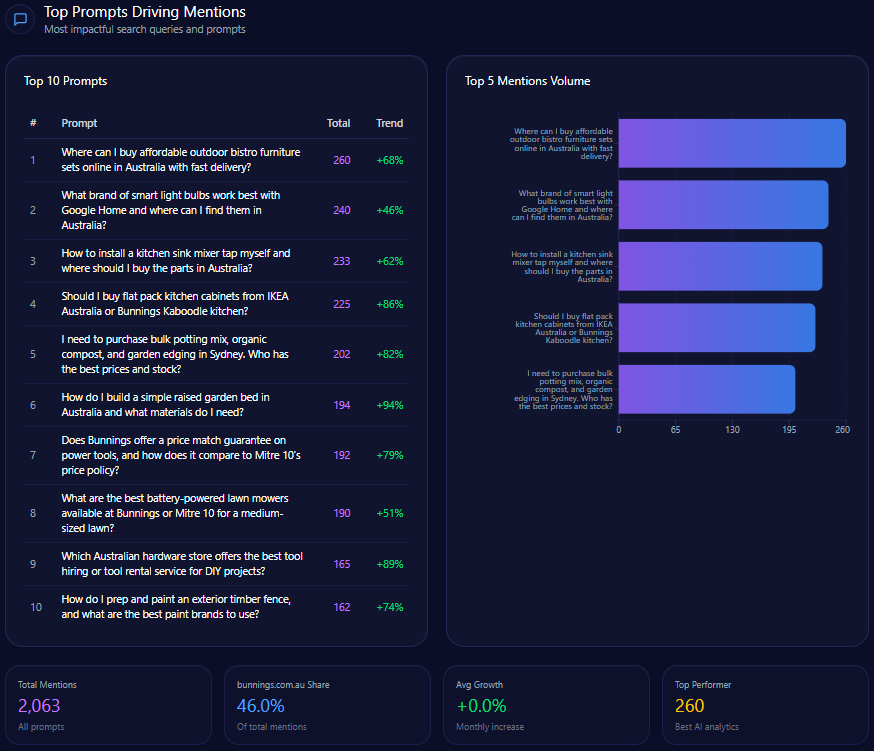
Across the analyzed trend period, Amazon Australia outperformed Bunnings in total historical mentions in several months. At the same time, Bunnings remained highly competitive in instructional and comparison prompts, especially around DIY, garden beds, price match policies and tool hiring.
The report shows that How-to and Tutorial prompts represent the largest prompt type, accounting for 26.1% of analyzed prompt categories. This favors Bunnings because the brand performs well when users ask practical project-based questions.
However, the visibility alerts show that Bunnings should not treat its lead as permanent. The report flags competitor displacement in power tools, a visibility drop linked to product availability and shipping data, and niche authority loss in bathroom renovation content.
Ecommerce Visibility Adds Another Layer
The ecommerce section shows Bunnings leading ecommerce-related AI mentions with 53.71% Share of Voice and 3,255 mentions.
The next competitors were:
- Mitre 10: 15.30% Share of Voice
- Amazon Australia: 13.32% Share of Voice
- IKEA Australia: 8.33% Share of Voice
- Reece: 5.68% Share of Voice
Estimated LLM referrals were also distributed across major AI systems:
- Gemini: 1,174 estimated referrals
- ChatGPT: 1,071 estimated referrals
- Copilot: 1,010 estimated referrals
This suggests that AI search visibility is not only a brand awareness issue. It can also influence ecommerce discovery and high-intent referral behavior.
What Bunnings Should Do Next
Based on the SpyderBot report, Bunnings should prioritize five GEO actions.
1. Strengthen Regional Stock and Delivery Signals
Amazon is strongest where AI systems can detect fast shipping, review density and structured product data. Bunnings should make regional stock levels, pickup windows, delivery timeframes and next-day options easier for AI systems to retrieve.
2. Build Smart Home Compatibility Content
Smart home prompts require clear compatibility data. Bunnings should publish and structure content around Google Home, Apple HomeKit, Alexa, Matter, Wi-Fi and Zigbee compatibility.
This would help close the smart home visibility gap against Amazon Australia.
3. Create Premium Bathroom Specification Pages
To compete with Reece, Bunnings needs deeper technical and design-oriented content for premium bathroom and plumbing queries.
This should include WELS ratings, material specifications, finish comparisons, installation requirements, warranty details and curated bathroom design guides.
4. Make Kaboodle and Flat-Pack Kitchen Content More AI-Readable
IKEA wins design-led prompts because AI systems associate it with planning, layouts and modular design.
Bunnings can improve this by making Kaboodle content easier to parse, with room dimensions, cabinet sizes, layout examples, pricing ranges and practical comparison guides.
5. Strengthen Local Store Authority
Bunnings has strong physical reach, but local GEO can be improved. Store pages should go beyond location and opening hours.
Useful additions include local services, popular regional categories, community projects, trade support, workshops and local event information.
Data Quality Note
The report identifies some data consistency issues between platform-level mention totals and summed competitor-level mention totals.
This does not remove the directional value of the findings, but the numbers should be validated before using them in executive reporting, investor materials or public benchmark claims.
For content strategy, the most important takeaway remains clear: Bunnings leads overall, but competitors are winning specific AI search intents.
Final Takeaway
Bunnings is not losing AI search. It is leading it.
But AI visibility is becoming more category-specific.
Bunnings dominates broad DIY, garden, power tool and local home improvement prompts. Amazon Australia is stronger in smart home and fast-delivery prompts. Reece is stronger in premium bathroom and plumbing authority. IKEA Australia is stronger in design-led and small-space prompts. Mitre 10 still holds relevance in local and community-driven narratives.
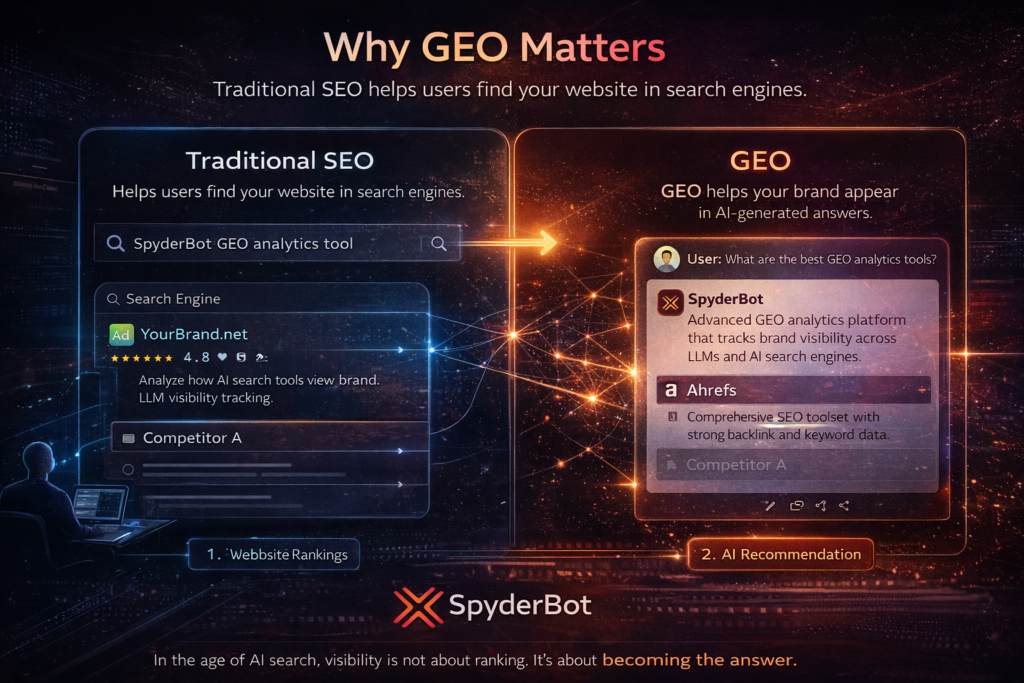
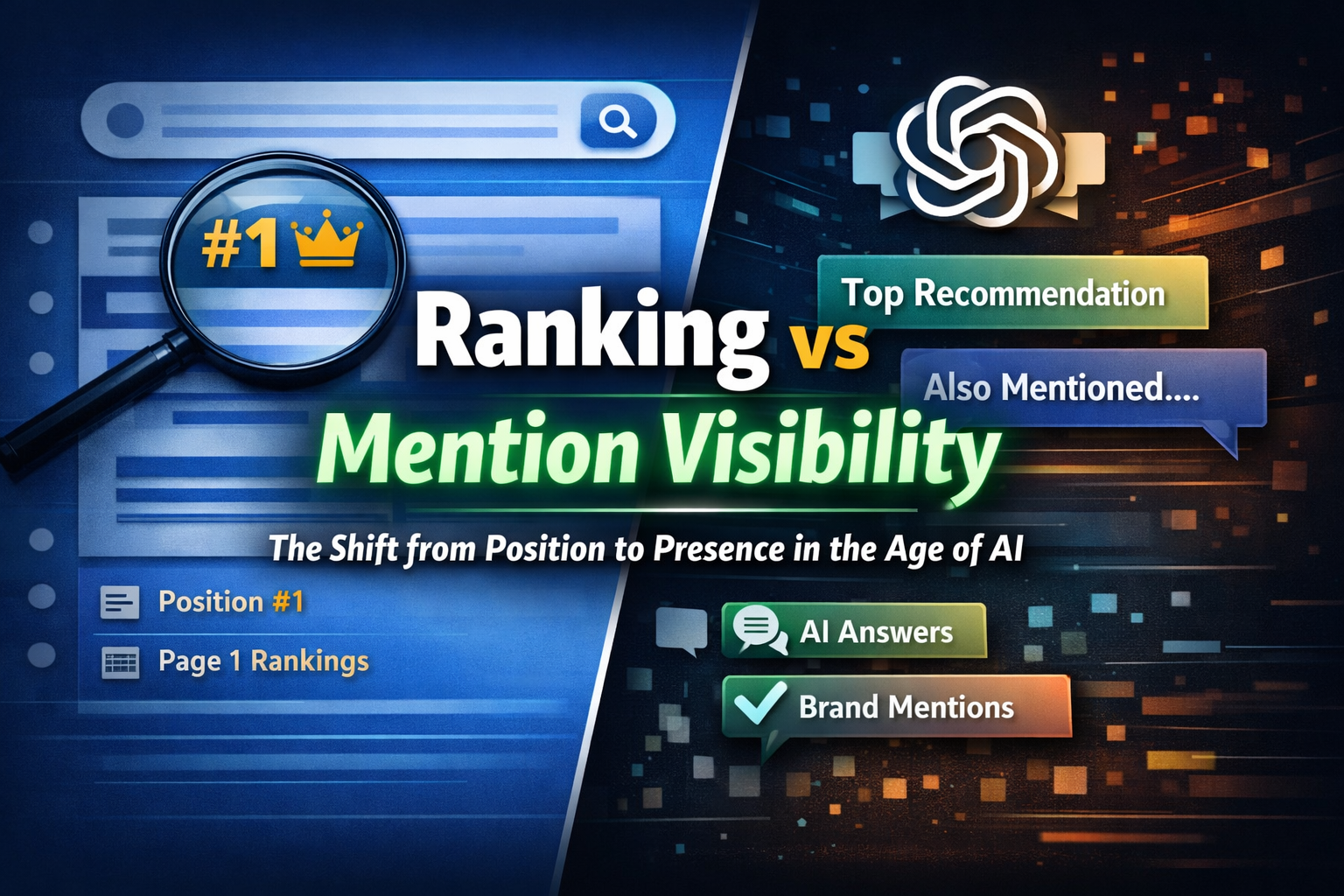
This is the core shift from SEO to GEO.
In traditional SEO, brands compete for rankings.
In generative engine optimization, brands compete for interpretation.
The brands that win will be the ones that make their expertise, inventory, trust signals and product context easy for both people and AI systems to understand.