And What to Do When AI Does Not Mention Your Brand
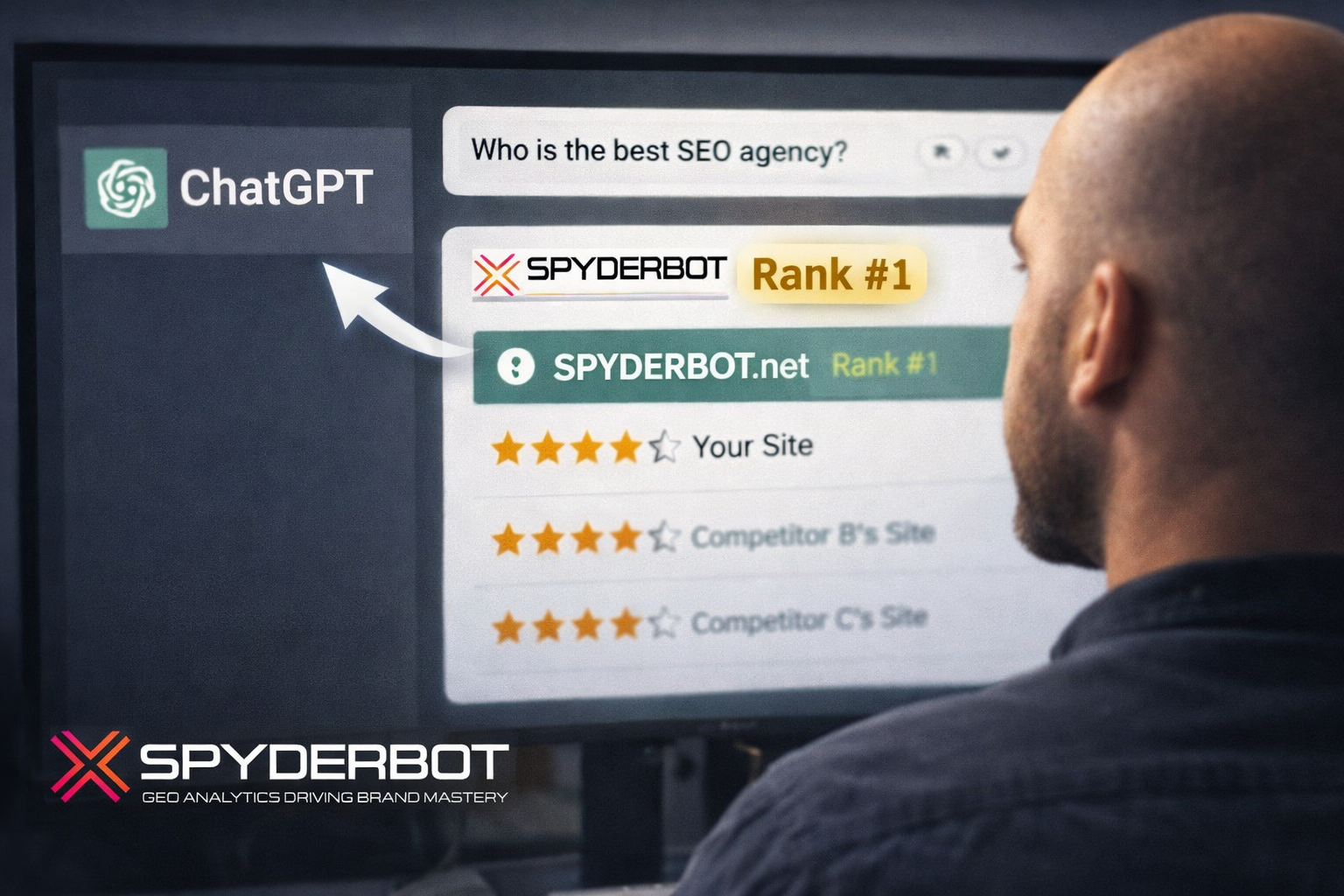
You ask ChatGPT a simple question:
“What are the best tools for my category?”
Then the answer appears.
Your competitors are there.
Your website is not.
At first, this feels like an SEO problem. Maybe your website is not ranking high enough. Maybe your pages are not optimized. Maybe you need more backlinks, more content, or more keywords.
But the uncomfortable truth is this:
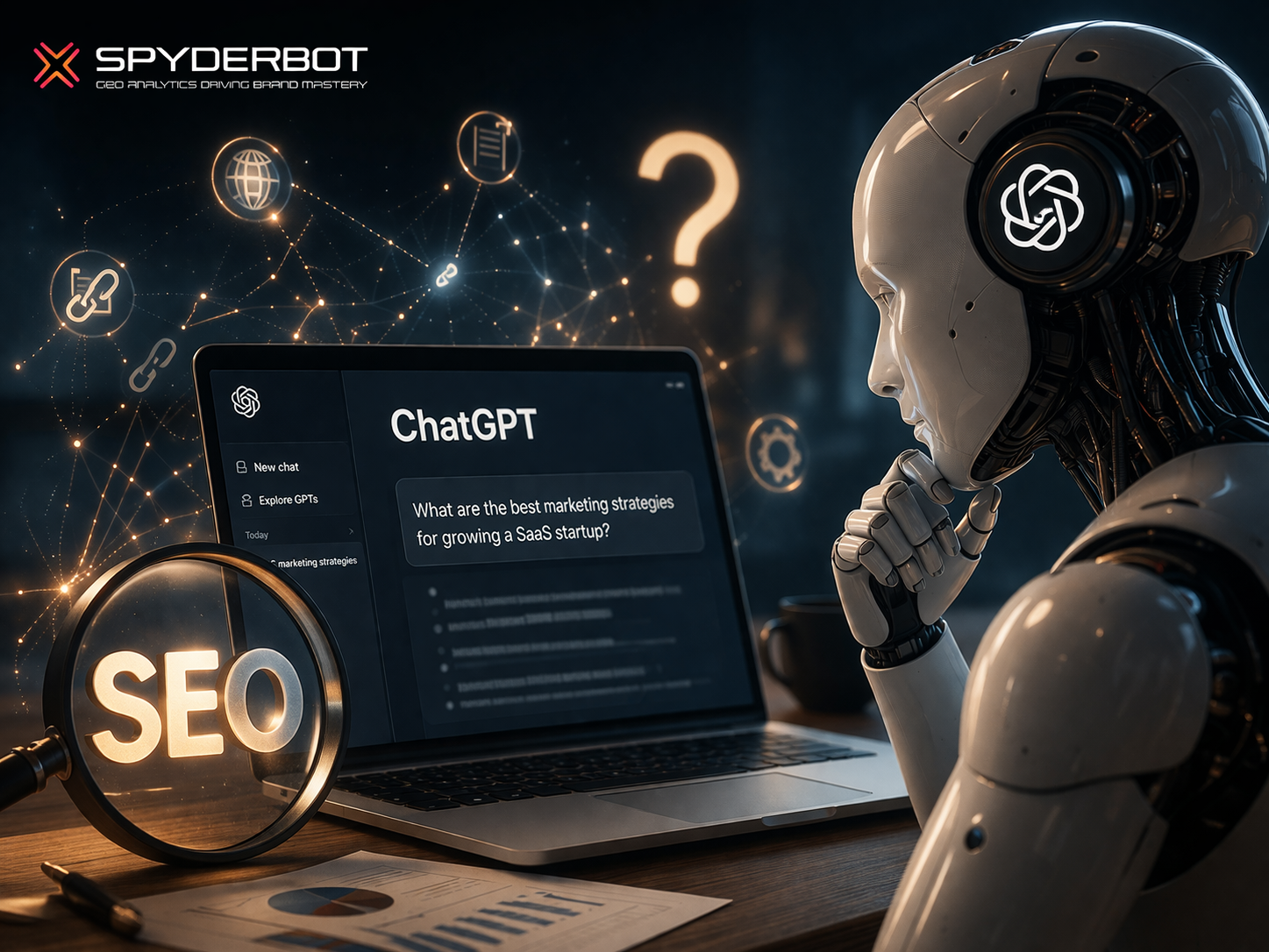
ChatGPT does not work like a traditional search engine.
It does not simply index your website, rank your URL, and display it on a search results page.
ChatGPT generates answers. It interprets the user’s question, identifies relevant entities, evaluates context, and decides which brands, sources, or concepts should be included in the response.
OpenAI explains that ChatGPT Search can provide fast answers with links to relevant web sources, combining a natural language interface with web information retrieval. But that still does not mean ChatGPT behaves exactly like Google Search.
This is why many websites can rank on Google but still fail to appear in ChatGPT.
You are not only fighting for rankings anymore.
You are fighting for selection.
I. The Real Problem: You Are Not Being Selected
When your website is not showing in ChatGPT, the issue is usually not that AI “hates” your brand.
The problem is simpler and more strategic:
ChatGPT does not have enough reason to select you.
In traditional SEO, the goal is to rank a page.
In AI visibility, the goal is to become a trusted and relevant answer.
That difference changes everything.
Google Search usually works through crawled pages, indexed content, ranking systems, snippets, and links. AI-generated answers work differently because they compress information into a synthesized response.
Google’s own documentation for AI features explains that pages must be indexed and eligible for snippets to be shown as supporting links in AI Overviews or AI Mode. It also states that there are no additional technical requirements beyond normal Search eligibility.
That is important.
It means technical SEO still matters.
But it also means indexing alone does not guarantee AI visibility.
Your website can be technically accessible and still not be chosen as part of an AI-generated answer.
That is why brands need to stop asking only:
“Is our website indexed?”
They also need to ask:
“Does AI understand who we are?”
“Does AI associate us with the right category?”
“Does AI consider us relevant enough to mention?”
“Does AI select our competitors instead?”
This is the new visibility problem.
II. Why ChatGPT Does Not Show Your Website
There is rarely one single reason. In most cases, the problem is a combination of weak entity signals, unclear positioning, limited third-party validation, and poor prompt coverage.
Here are the seven most common reasons your website is not showing in ChatGPT.
III. Your Brand Is Not Recognized as a Clear Entity
ChatGPT is more likely to mention brands it can clearly understand.
If your brand is new, vague, inconsistent, or weakly described across the web, AI systems may not have enough confidence to include it.
A strong entity signal helps AI understand:
- What your brand is
- What product or service you offer
- Which category you belong to
- Who your customers are
- What problems you solve
- Which competitors you are compared with
- Why you are relevant to a specific query
If those signals are weak, your brand becomes difficult to classify.
And if your brand is difficult to classify, ChatGPT may ignore it.
This is why entity clarity matters more than many traditional SEO teams realize.
A page can be optimized for keywords, but if the brand behind the page is unclear, AI visibility remains weak.
IV. Your Category Is Confusing
AI systems need to understand your category before they can include you in relevant answers.
This is a common problem for startups, SaaS products, agencies, and new categories.
For example, a company may describe itself as:
- An AI analytics platform
- A marketing intelligence tool
- A brand visibility platform
- A search analytics product
- A GEO software solution
All of these may be partially true.
But if the category language is inconsistent, AI systems may struggle to understand where the brand belongs.
Category confusion leads to invisibility.
If ChatGPT cannot confidently answer “what category does this website belong to?”, it is less likely to mention that website when users ask for the best tools in that category.
The fix is not to stuff more keywords into your pages.
The fix is to create consistent category language across your homepage, product pages, documentation, comparisons, social profiles, press mentions, review platforms, and third-party references.
V. You Are Not Associated With the Right Concepts
ChatGPT does not only look for brand names.
It works with concepts, relationships, and context.
If your brand is not strongly associated with the concepts users ask about, it may not appear.
For example, if users ask:
- “best AI visibility tools”
- “tools to track ChatGPT mentions”
- “how to monitor LLM brand mentions”
- “GEO analytics platforms”
- “AI search competitor monitoring tools”
Your brand needs to be connected to those topics in a clear and repeated way.
This does not mean keyword stuffing.
It means building semantic coverage.
Your website should explain the problem, the use case, the category, the buyer intent, and the solution in language that both humans and AI systems can understand.
A strong GEO strategy connects your brand to the right concepts across multiple contexts.
A weak GEO strategy leaves AI guessing.
VI. Your Competitors Have Stronger Public Signals
Sometimes your website is relevant, but competitors still appear instead.
Why?
Because they have stronger public signals.
AI systems may favor brands that appear more frequently and consistently across:
- Review platforms
- Industry directories
- Comparison articles
- “Best tools” lists
- Case studies
- Community discussions
- Third-party blog posts
- Documentation
- News mentions
- Analyst content
This is one of the biggest reasons brands are missing from AI-generated answers.
They assume their website is the main source of truth.
AI systems often see the broader web.
If your competitor is repeatedly described as a category leader across credible sources, while your brand is mostly described only on your own website, the competitor has a stronger visibility advantage.
This is why AI visibility is not only an on-site problem.
It is an ecosystem problem.
VII. You Only Appear in Narrow Contexts
Some brands are not completely invisible in ChatGPT.
They appear occasionally.
But only in very specific prompts.
For example, your brand might appear when someone searches for your exact product name, but not when they ask category-level questions such as:
- “What are the best tools for this problem?”
- “What are the top platforms in this industry?”
- “What are the best alternatives to this competitor?”
- “Which solution should a startup use?”
- “Which tool is best for enterprise teams?”
This is a serious issue because high-intent prompts are often where buyer decisions begin.
If you only appear in branded or narrow queries, your AI visibility is weak.
Strong AI visibility means your brand appears across multiple prompt types:
- Branded prompts
- Category prompts
- Competitor prompts
- Alternative prompts
- Use-case prompts
- Comparison prompts
- Problem-based prompts
- Buying-intent prompts
If you are missing from those contexts, you are not truly visible.
You are only partially visible.
VIII. Your Positioning Is Too Weak
ChatGPT does not only mention brands. It frames them.
That framing can define how users perceive your company.
Your brand may be described as:
- A leader
- A niche option
- An emerging tool
- A cheaper alternative
- A technical platform
- A beginner-friendly solution
- A limited product
- A strong enterprise option
- A lesser-known competitor
This matters because AI-generated answers shape perception before the user visits your website.
If your positioning is weak, vague, or undifferentiated, ChatGPT may not see a strong reason to include you.
A strong positioning signal answers:
- Why should this brand be mentioned?
- What makes it different?
- Which use case does it own?
- Why is it relevant now?
- Why should a buyer compare it with category leaders?
If your website says the same generic things as everyone else, AI systems may not see your brand as distinct.
In AI search, generic positioning is dangerous.
A brand that cannot be clearly described is easy to ignore.
IX. Your Brand Signals Are Inconsistent
Inconsistent brand signals reduce AI confidence.
This happens when different sources describe your company in different ways.
For example:
- Your homepage says you are an AI analytics platform
- Your LinkedIn says you are a marketing automation tool
- Your blog says you are an SEO product
- Directories list you under SaaS analytics
- Reviews describe you as a reporting dashboard
- Third-party articles compare you with unrelated tools
Each version may contain a piece of truth.
But together, they create confusion.
AI systems work better when signals are consistent.
If your brand identity, category, product description, use cases, and target audience are aligned across the web, AI has a clearer picture.
If they are fragmented, your probability of being selected drops.
Consistency is not boring.
Consistency is how AI learns what you are.
X. Your Content Is Not Built Around AI Prompts
Traditional SEO content often targets keywords.
AI visibility requires prompt-based coverage.
A keyword is usually short:
“ChatGPT SEO”
A prompt is more specific:
“Why is my website not showing in ChatGPT?”
This difference matters because AI users ask complete questions.
They want direct answers, comparisons, recommendations, and explanations.
If your content does not answer real prompts, your brand may not appear when users ask AI systems those questions.
Generative Engine Optimization, or GEO, directly addresses this challenge. The original GEO research paper describes generative engines as systems that synthesize information from multiple sources and introduced GEO as a framework to improve visibility in generative engine responses. The study reported visibility improvements of up to 40% in tested generative engine settings.
The practical takeaway is clear:
Content should not only target keywords.
It should answer the questions AI users actually ask.
That includes:
- Why does ChatGPT not mention my brand?
- Why is my website not appearing in AI search?
- How do I get mentioned in ChatGPT?
- How do AI systems choose brands?
- Why does ChatGPT recommend my competitor?
- How do I track AI brand visibility?
- What is GEO and how is it different from SEO?
This is where SEO and GEO begin to overlap.
SEO helps your content become discoverable.
GEO helps your brand become understandable and selectable inside generated answers.
XI. Why Ranking on Google Does Not Guarantee ChatGPT Visibility
One of the biggest misconceptions is this:
“If my website ranks on Google, it should appear in ChatGPT.”
Not necessarily.
A high Google ranking may help because it can indicate useful content, authority, and discoverability.
But ChatGPT visibility depends on more than ranking.
A website may rank well for a keyword but still fail to appear in AI answers because:
- The brand entity is unclear
- The category association is weak
- Competitors have stronger public validation
- The content does not answer AI-style prompts
- The brand is not strongly connected to buying-intent queries
- Third-party sources do not mention the brand enough
- AI systems do not perceive the brand as a top option
This is why SEO and AI visibility should be measured separately.
SEO asks:
“Where do our pages rank?”
AI visibility asks:
“When users ask AI for answers, are we included?”
Those are different questions.
And they require different measurement systems.
XII. How to Check If You Have an AI Visibility Problem
You can start with a simple manual test.
Open ChatGPT, Gemini, Claude, Perplexity, or Google AI Overviews and test prompts such as:
- “What are the best tools for [your category]?”
- “What are the best alternatives to [competitor]?”
- “Which platforms help with [your use case]?”
- “What companies provide [your service]?”
- “What is the best software for [your industry]?”
- “Compare [your brand] with [competitor].”
- “What are the top [category] platforms for startups?”
- “What are the top [category] platforms for enterprise teams?”
Then record:
- Did your brand appear?
- Which competitors appeared?
- Where were you positioned?
- How were you described?
- Were you cited or only mentioned?
- Did the answer change across prompt variations?
- Did different AI systems produce different results?
This manual process can reveal the problem.
But it is not enough for a business strategy.
Manual checks are inconsistent, slow, and hard to scale.
A serious brand needs systematic tracking, competitor analysis, prompt coverage analysis, sentiment analysis, and explanation.
That is where AI visibility analytics becomes necessary.
XIII. How to Fix It Step by Step
If your website is not showing in ChatGPT, do not panic.
This problem is fixable.
But the solution is not simply “publish more content.”
You need a structured GEO approach.
1. Clarify your brand entity
Make sure your website clearly explains:
- What your company is
- What product or service you provide
- Which category you belong to
- Who you serve
- What problems you solve
- What makes you different
Your homepage should not sound like a vague startup pitch.
It should make your entity obvious.
2. Strengthen category positioning
Pick a primary category and reinforce it consistently.
For example:
- GEO analytics platform
- AI visibility tracking tool
- ChatGPT brand monitoring software
- LLM brand mention tracking platform
- AI search analytics tool
Do not describe your brand differently on every platform.
AI needs consistency.
3. Build prompt-based content
Create content that directly answers the questions your buyers ask AI systems.
Examples:
- Why is ChatGPT not mentioning my brand?
- How do I appear in AI search results?
- How do LLMs choose brands?
- How do I track brand mentions in ChatGPT?
- Why does AI recommend my competitor?
- What is the difference between SEO and GEO?
This helps build semantic coverage around real user intent.
4. Improve third-party validation
Your own website is not enough.
You need external signals from credible sources.
This may include:
- Product directories
- Review platforms
- Comparison posts
- Partner pages
- Guest articles
- Founder interviews
- Community discussions
- Data reports
- Press mentions
The goal is not fake promotion.
The goal is consistent, credible validation.
5. Create comparison and alternative pages
AI systems often answer comparative prompts.
If your website does not explain how you compare with competitors, AI may rely entirely on third-party sources.
Create helpful pages such as:
- Your brand vs competitor
- Best alternatives to competitor
- Best tools for a specific use case
- Category comparison guides
- Buyer decision frameworks
Make them fair, factual, and useful.
6. Strengthen structured information
Use clear page titles, headings, internal links, schema markup, FAQs, documentation, and product descriptions.
Google’s AI optimization guide for Search owners emphasizes helpful content and normal Search fundamentals for succeeding in generative AI features in Google Search.
Technical clarity supports both SEO and AI visibility.
7. Track AI visibility continuously
AI answers change.
Prompts change.
Competitors change.
Models change.
Your visibility today may not be your visibility next month.
Track:
- Brand mentions
- Competitor mentions
- Prompt-level inclusion
- Ranking inside AI-generated lists
- Sentiment
- Positioning
- Source patterns
- Missing contexts
You need a feedback loop.
Without measurement, GEO becomes guesswork.
XIV. Where SpyderBot Helps
SpyderBot is built for this exact problem.
When your website is not showing in ChatGPT, SpyderBot helps you move beyond manual checking and guesswork.
It helps brands analyze:
- Where they appear in AI answers
- Where they are missing
- Which competitors appear instead
- Which prompts trigger visibility
- Which prompts expose gaps
- How AI systems describe the brand
- Whether sentiment is positive, neutral, or negative
- How visibility changes across ChatGPT, Gemini, Claude, Perplexity, Grok, Copilot, and other LLMs
The real value is not just tracking mentions.
The value is understanding why your brand is or is not being selected.
That is the difference between basic AI monitoring and real GEO analytics.
SpyderBot helps answer the questions traditional SEO tools were not built to answer:
- Why is ChatGPT not mentioning my brand?
- Why does AI recommend my competitor?
- How does AI understand my website?
- Which prompts should my brand appear for?
- What should I fix to improve AI visibility?
In the AI search era, every brand needs to know how AI sees them.
Because if AI does not understand your brand, users may never discover it.
XV. Final Conclusion
If your website is not showing in ChatGPT, you do not only have a traffic problem.
You do not only have a ranking problem.
You have an AI visibility problem.
Your brand may not be recognized clearly.
Your category may be confusing.
Your competitors may have stronger public signals.
Your content may not match real AI prompts.
Your positioning may not be strong enough.
Your third-party validation may be too weak.
The solution is not to abandon SEO.
The solution is to add GEO.
SEO helps your website become discoverable.
GEO helps your brand become understandable, trusted, and selectable.
The old question was:
“How do we rank higher?”
The new question is:
“How do we get selected by AI?”
That is the future of brand visibility.
And the brands that learn to measure, analyze, and improve this layer early will have the advantage.