Tag: how to appear in AI search results

  • The Future of Generative Engine Optimization (GEO)

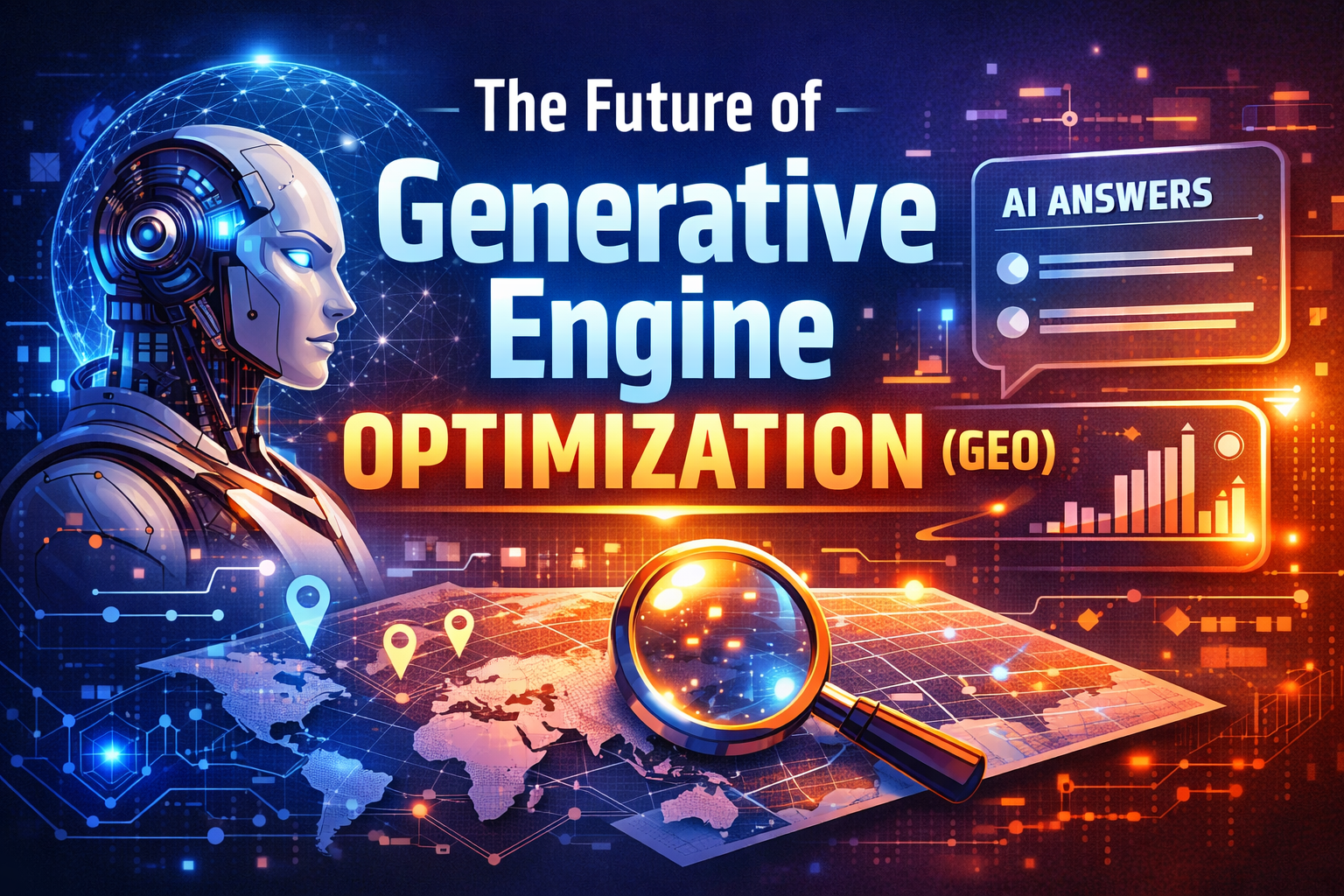
    The Future of Generative Engine Optimization (GEO)

    Most companies are still optimizing for search engines.

    That still matters. Google is not disappearing. SEO is not dead. Rankings, technical SEO, useful content, internal links, and authority signals will continue to shape how people discover information online.

    But the interface of the internet is changing.

    Users are no longer only typing short keywords into a search box, scanning ten links, and choosing which website to visit. More often, they are asking AI systems like ChatGPT, Gemini, Claude, Grok, Copilot, and AI-powered search experiences for direct answers.

    That change creates a new layer of competition.

    In traditional SEO, brands compete to rank.

    In Generative Engine Optimization, brands compete to be understood, selected, and included inside AI-generated answers.

    That is the future of GEO.

    What is Generative Engine Optimization?

    Generative Engine Optimization, or GEO, is the practice of improving how AI systems understand, interpret, mention, and compare brands inside generated answers.

    Traditional SEO focuses on search visibility. It helps webpages appear in search engine results.

    GEO focuses on AI visibility. It helps brands appear accurately and confidently when AI systems generate answers, recommendations, comparisons, and summaries.

    The difference is simple:

    SEO helps your website rank. GEO helps your brand get included in AI-generated answers.

    This distinction matters because users are increasingly asking questions like:

    • What are the best tools for AI brand monitoring?
    • Which GEO analytics platforms should I compare?
    • How can I track brand mentions in ChatGPT?
    • What are the best alternatives to a specific SEO platform?
    • Why does ChatGPT recommend my competitor instead of my brand?

    These questions are not always answered with a traditional list of links. They may be answered with a synthesized response that includes only a few brands.

    That is where GEO becomes important.

    The future of search is not only ranking

    For years, the digital marketing playbook was built around rankings.

    If you ranked higher, you had more visibility. If you had more visibility, you had more clicks. If you had more clicks, you had more chances to convert users.

    That model still works, but it is no longer complete.

    AI search changes the user journey.

    A user may ask a complex question, receive a summarized answer, compare options, and make a decision without opening ten different pages.

    This means brands need to think beyond ranking position.

    The future of visibility will depend on three things:

    1. Inclusion: Is your brand mentioned?
    2. Prominence: Is your brand presented clearly and near the top of the answer?
    3. Perception: Is your brand described accurately and positively?

    This is the core shift from SEO to GEO.

    Why AI visibility will become a core business metric

    AI visibility measures how often, how accurately, and how prominently a brand appears in AI-generated answers.

    Today, most companies track metrics like:

    • Organic traffic
    • Keyword rankings
    • Click-through rate
    • Backlinks
    • Impressions
    • Conversions

    These metrics are still useful.

    But they do not answer a critical new question:

    What do AI systems say about your brand when users ask for recommendations?

    That question matters because AI-generated answers can influence buying decisions before a user ever reaches your website.

    A company may have strong Google rankings but weak AI visibility. Another company may have weaker traditional SEO but stronger entity clarity, making it easier for AI systems to understand and mention it.

    That is why AI visibility will become a core metric for modern digital strategy.

    From SEO metrics to GEO metrics

    As AI search grows, companies will need a new measurement layer.

    SEO metrics answer questions like:

    • What keywords do we rank for?
    • How much organic traffic do we get?
    • Which pages receive impressions?
    • Which pages convert users?

    GEO metrics answer different questions:

    • Is our brand mentioned in AI-generated answers?
    • Which competitors are mentioned more often?
    • How does AI describe our product?
    • What category does AI associate with our brand?
    • Are we included for high-intent prompts?
    • Are we cited as a source?
    • Is the answer accurate?
    • Is our brand positioned as a leader, alternative, niche tool, or missing option?

    This shift is important because AI visibility is not only about traffic. It is also about perception.

    If an AI system describes your brand incorrectly, the user may form the wrong opinion before visiting your site.

    If a competitor appears repeatedly in AI answers and your brand does not, your market visibility is already being affected.

    The evolution of optimization

    Digital optimization is moving through three major phases.

    Phase 1: SEO

    SEO was built for search engines.

    The goal was to help search engines crawl, index, understand, and rank webpages. Brands optimized around keywords, technical structure, backlinks, page quality, and search intent.

    This phase is still important.

    Without good SEO fundamentals, your website may struggle to be discovered, indexed, and understood.

    Phase 2: GEO

    GEO is built for AI-generated answers.

    The goal is to help AI systems understand your brand as an entity, connect it to the right category, compare it correctly with competitors, and include it in relevant answers.

    GEO focuses on:

    • Entity clarity
    • Brand positioning
    • Contextual relevance
    • Structured explanations
    • Consistent external signals
    • AI answer monitoring
    • Competitor mention tracking

    Phase 3: AI-native optimization

    The next phase will be AI-native optimization.

    In this phase, companies will not only create content for human readers and search engines. They will also structure their digital presence so AI systems can interpret it more accurately.

    This means brands will need to think about:

    • How their company is described across the web
    • How their products are categorized
    • Which use cases they are associated with
    • Which competitors they are compared against
    • Whether AI systems understand their unique value
    • Whether their content answers real prompts users ask AI systems

    The future will reward brands that are easy for both humans and machines to understand.

    How AI search will reshape competition

    AI search will change how brands compete online.

    1. Smaller brands can become more visible

    In traditional SEO, larger brands often have an advantage because they have stronger domain authority, more backlinks, and more historical content.

    In AI-generated answers, authority still matters, but it is not the only factor.

    AI systems may include smaller brands when they have:

    • Clear positioning
    • Strong category relevance
    • Specific use cases
    • Consistent information
    • Distinct differentiation
    • Helpful explanatory content

    This creates an opportunity for emerging companies.

    A smaller brand may not outrank a large competitor on every Google keyword, but it may still appear in AI-generated answers for specific prompts if the brand is clearly understood.

    2. Categories will be shaped by AI systems

    Companies used to define their own categories through branding, messaging, and SEO content.

    In the AI search era, categories will also be shaped by how AI systems understand the market.

    For example, a company may describe itself as an “AI analytics platform,” but AI systems may classify it as:

    • SEO software
    • Brand monitoring software
    • AI visibility tracking
    • LLM analytics
    • Competitor intelligence
    • Marketing analytics

    If the category is unclear, the brand may appear in the wrong comparison set or be excluded from the right one.

    GEO helps companies reduce that ambiguity.

    3. Brand perception will become algorithmic

    AI systems do not only retrieve information. They summarize, frame, and explain it.

    That means users may see your brand described as:

    • A market leader
    • A niche alternative
    • A newer product
    • A competitor to another tool
    • A solution for a specific use case
    • An incomplete or unclear option

    This framing matters.

    If AI systems consistently position your competitor as the safer or more established choice, that can affect user perception.

    If they fail to explain your strongest advantage, you may lose high-intent users before they compare your website.

    This is why GEO is not only a content strategy. It is a brand strategy.

    The future of content in the GEO era

    Content will not disappear.

    But the role of content will change.

    In traditional SEO, many companies created content around individual keywords. That led to large libraries of similar articles targeting small variations of the same topic.

    In the GEO era, that approach becomes risky.

    AI systems need clarity, not repetition.

    Winning content will be:

    • Clear
    • Structured
    • Specific
    • Contextual
    • Useful
    • Consistent
    • Easy to interpret

    Instead of creating ten thin articles around similar terms, brands should create strong topic clusters.

    For example, a GEO content cluster could include:

    • What is Generative Engine Optimization?
    • GEO vs SEO
    • Why AI search ignores your website
    • How to track brand mentions in ChatGPT
    • How AI systems compare competitors
    • Best GEO analytics tools
    • AI visibility tracking for SaaS companies

    Each article should have a distinct purpose.

    One article should define the category. Another should solve a problem. Another should compare approaches. Another should help users evaluate tools.

    That structure is better for readers, search engines, and AI systems.

    The future of analytics: from traffic to interpretation

    Analytics has traditionally focused on what users do after they find you.

    GEO analytics focuses on what AI systems say before users find you.

    That is a major shift.

    Companies will need tools that can answer questions like:

    • How often is my brand mentioned in ChatGPT?
    • How often is my competitor mentioned?
    • Which prompts include my brand?
    • Which prompts exclude my brand?
    • How does Gemini describe my product?
    • Does Claude understand my category?
    • Does Grok compare me with the right competitors?
    • Are AI systems using outdated information?
    • Which sources are influencing AI-generated answers?
    • Has our visibility improved after publishing new content?

    This is why AI search analytics is becoming a new category.

    It is not the same as traditional SEO analytics. It measures how AI systems interpret, include, and frame brands across generated answers.

    The rise of GEO tools

    As GEO becomes more important, a new ecosystem of tools will emerge.

    These tools will help companies track:

    • AI brand mentions
    • LLM visibility
    • Competitor mentions
    • AI answer accuracy
    • Prompt-level performance
    • AI citation patterns
    • Brand perception
    • Category association
    • Changes across AI systems over time

    This new category will become increasingly important because manual testing is not enough.

    A marketing team can manually ask ChatGPT a few questions, but that does not create a reliable monitoring system.

    To understand AI visibility properly, companies need repeatable tracking across prompts, models, competitors, and time.

    That is where GEO analytics platforms become valuable.

    What companies should do now

    The future of GEO is already forming, but companies do not need to wait.

    They can start preparing now.

    Step 1: Audit your AI visibility

    Start by testing how AI systems describe your brand.

    Use prompts such as:

    • What does [your brand] do?
    • What are the best tools in [your category]?
    • What are the best alternatives to [competitor]?
    • Which companies help with [your use case]?
    • How does [your brand] compare with [competitor]?

    Then check:

    • Is your brand mentioned?
    • Is the description accurate?
    • Are your competitors mentioned more often?
    • Is your website cited?
    • Is your product category correct?
    • Is your unique value included?

    Step 2: Clarify your entity signals

    Your website should make your brand easy to understand.

    This includes:

    • A clear homepage description
    • A focused product category
    • Consistent messaging across pages
    • Strong about page information
    • Clear use case pages
    • Comparison pages
    • FAQ sections
    • Structured data where appropriate
    • Internal links between related articles

    For SpyderBot, the core entity signal should be clear:

    SpyderBot is a GEO analytics platform that helps brands understand how AI systems like ChatGPT, Gemini, Claude, and Grok mention, compare, and interpret their websites and competitors.

    That sentence works because it explains the brand, the category, the platforms, the function, and the business value.

    Step 3: Build content around real AI search questions

    Do not only target keywords.

    Target the questions users ask AI systems.

    Examples:

    • Why is ChatGPT not mentioning my brand?
    • How do LLMs choose which brands to mention?
    • How can I monitor AI brand visibility?
    • What is the difference between SEO and GEO?
    • How can SaaS companies appear in AI search results?
    • Why does my competitor appear in AI-generated answers?

    These questions are stronger than generic keyword variations because they match real user intent.

    Step 4: Monitor competitors inside AI answers

    GEO is not only about your brand.

    It is also about who appears instead of you.

    Track competitors across:

    • Recommendation prompts
    • Comparison prompts
    • Category prompts
    • Problem-based prompts
    • Alternative prompts
    • Buyer-intent prompts

    The goal is to understand not only whether your brand appears, but also how the market is being framed by AI systems.

    Step 5: Improve accuracy and consistency

    AI systems may misunderstand your brand if your public information is unclear.

    To reduce that risk, make sure your messaging is consistent across:

    • Website pages
    • Blog content
    • Schema markup
    • Social profiles
    • Product descriptions
    • Third-party profiles
    • Review platforms
    • Press mentions
    • Documentation pages

    Consistency helps AI systems connect your brand to the right category and context.

    Founder insight from SpyderBot

    While building SpyderBot, one insight became obvious:

    The next search battle is not only about who ranks. It is about who AI understands well enough to recommend.

    Traditional SEO tools are excellent at showing rankings, traffic, backlinks, and keyword performance.

    But they do not fully answer the new visibility questions:

    1. What do LLMs mention about your competitors to users?
    2. How are AI systems analyzing and tracking your website?
    3. Is your brand included in AI-generated recommendations?
    4. Is your brand being described accurately?
    5. Are competitors shaping the category before users even visit your site?

    These questions are becoming essential because AI systems are increasingly acting as interpreters between users and the web.

    That is why GEO is not just another marketing trend.

    It is a new layer of digital visibility.

    Common mistakes companies will make with GEO

    Mistake 1: Thinking SEO alone is enough

    SEO remains important, but SEO alone does not guarantee AI visibility.

    A page can rank well and still be absent from AI-generated answers.

    That means brands need both SEO and GEO.

    Mistake 2: Treating GEO as keyword stuffing

    Repeating terms like “AI visibility tracking” or “LLM brand monitoring” does not automatically improve AI visibility.

    AI systems need clear meaning, not repeated phrases.

    The focus should be on entity clarity, useful explanations, and consistent context.

    Mistake 3: Publishing too many similar articles

    Publishing many similar articles can weaken your site.

    For example, these topics may overlap if handled poorly:

    • What is GEO?
    • Why GEO matters
    • The future of GEO
    • GEO vs SEO
    • AI search optimization

    Each article needs a distinct purpose.

    This article focuses on the future of GEO. A separate “What is GEO?” article should define the concept. A “GEO vs SEO” article should compare the two disciplines. A “Why GEO matters” article should explain the business case.

    Clear separation helps avoid content cannibalization.

    Mistake 4: Ignoring how AI describes competitors

    If competitors are consistently mentioned and your brand is not, that is a serious signal.

    You need to know which competitors appear, how they are described, and what prompts trigger their inclusion.

    Mistake 5: Ignoring inaccurate AI answers

    AI visibility is not only about being mentioned.

    Accuracy matters.

    If AI systems describe your brand incorrectly, place you in the wrong category, or miss your strongest use case, your GEO strategy needs to fix that.

    The long-term future of GEO

    The long-term future of GEO will be shaped by three forces.

    1. AI-mediated discovery

    Users will increasingly rely on AI systems to filter information.

    Instead of visiting many websites, they will ask AI to summarize, compare, recommend, and explain.

    This will make AI visibility a key part of brand discovery.

    2. Entity-first marketing

    Brands will need to become clear entities in the digital ecosystem.

    That means consistent information, strong category association, and clear relationships between brand, product, audience, problem, and competitors.

    3. Continuous AI visibility monitoring

    Because AI answers change, GEO cannot be a one-time project.

    Companies will need to monitor how their brand appears across AI systems over time.

    This includes changes in:

    • Mention frequency
    • Competitor visibility
    • Answer accuracy
    • Citation patterns
    • Sentiment
    • Category association
    • Prompt-level performance

    The companies that build this monitoring layer early will understand the market faster than competitors who rely only on traditional search metrics.

    Final thought

    SEO was about being found.

    GEO is about being understood, selected, and included.

    That difference matters because the future of search is moving from pages to answers, from rankings to recommendations, and from traffic alone to AI-shaped perception.

    The companies that win the next decade of digital visibility will not only be the ones that rank on Google.

    They will be the ones that AI systems can clearly understand, accurately describe, and confidently include.

    That is the future of Generative Engine Optimization.


    SpyderBot helps brands understand how AI systems mention, compare, and interpret them across major LLMs.

    If your company wants to know whether AI systems are including your brand, ignoring your website, or recommending competitors instead, SpyderBot gives you a clearer view of your AI visibility and the signals shaping your position in AI-generated answers.
  • Why Generative Engine Optimization (GEO) Matters for AI Search Visibility

    Why Generative Engine Optimization (GEO) Matters for AI Search Visibility

    Search is no longer only about ranking on Google.

    For years, digital visibility followed a familiar pattern. A user searched for something, Google returned a list of links, and brands competed for the highest position on the results page. If your website ranked well, you had a chance to earn traffic, leads, and trust.

    That model still matters, but it is no longer the full picture.

    Users are now asking AI systems like ChatGPT, Gemini, Claude, Grok, and Copilot for direct answers. Instead of scanning multiple search results, they often receive a single synthesized response. That response may include a few brands, a few sources, or no external links at all.

    This creates a new visibility problem.

    A brand can rank on Google and still be absent when AI systems generate recommendations, comparisons, or category explanations. That gap is exactly why Generative Engine Optimization, or GEO, is becoming important.

    What is Generative Engine Optimization?

    Generative Engine Optimization is the practice of improving how AI systems understand, interpret, mention, and compare a brand inside generated answers.

    Traditional SEO focuses on helping search engines crawl, understand, and rank webpages. GEO focuses on helping AI systems recognize a brand as a clear, relevant, and trustworthy entity when users ask questions.

    In simple terms:

    SEO helps your pages rank in search results. GEO helps your brand appear in AI-generated answers.

    GEO includes several related activities:

    • Tracking brand mentions across AI systems
    • Monitoring how competitors are mentioned
    • Understanding how LLMs describe your brand
    • Improving entity clarity across your website and external sources
    • Structuring content so AI systems can understand products, categories, use cases, and comparisons
    • Measuring whether AI tools include, ignore, or misrepresent your brand

    This is not a replacement for SEO. It is an additional layer of visibility.

    Why GEO matters now

    1. AI is becoming a discovery layer

    AI tools are increasingly used for product research, vendor comparisons, software recommendations, technical explanations, and buying decisions.

    A user may no longer search:

    “best tools for AI brand monitoring”

    They may ask:

    “What are the best tools to monitor how ChatGPT mentions my brand?”

    That difference matters.

    In a traditional search result, a user can compare multiple pages. In an AI-generated answer, the system may summarize the market and mention only a handful of brands. If your brand is not included, the user may never know you exist.

    2. Google ranking does not guarantee AI visibility

    A website can have strong SEO and still perform poorly in AI answers.

    This happens because AI systems do not simply copy Google rankings into their responses. They generate answers based on many signals, including language patterns, entity relationships, source confidence, topic relevance, and the context of the user’s query.

    That means ranking for a keyword is not the same as being mentioned in an AI answer.

    This is the new AI visibility gap:

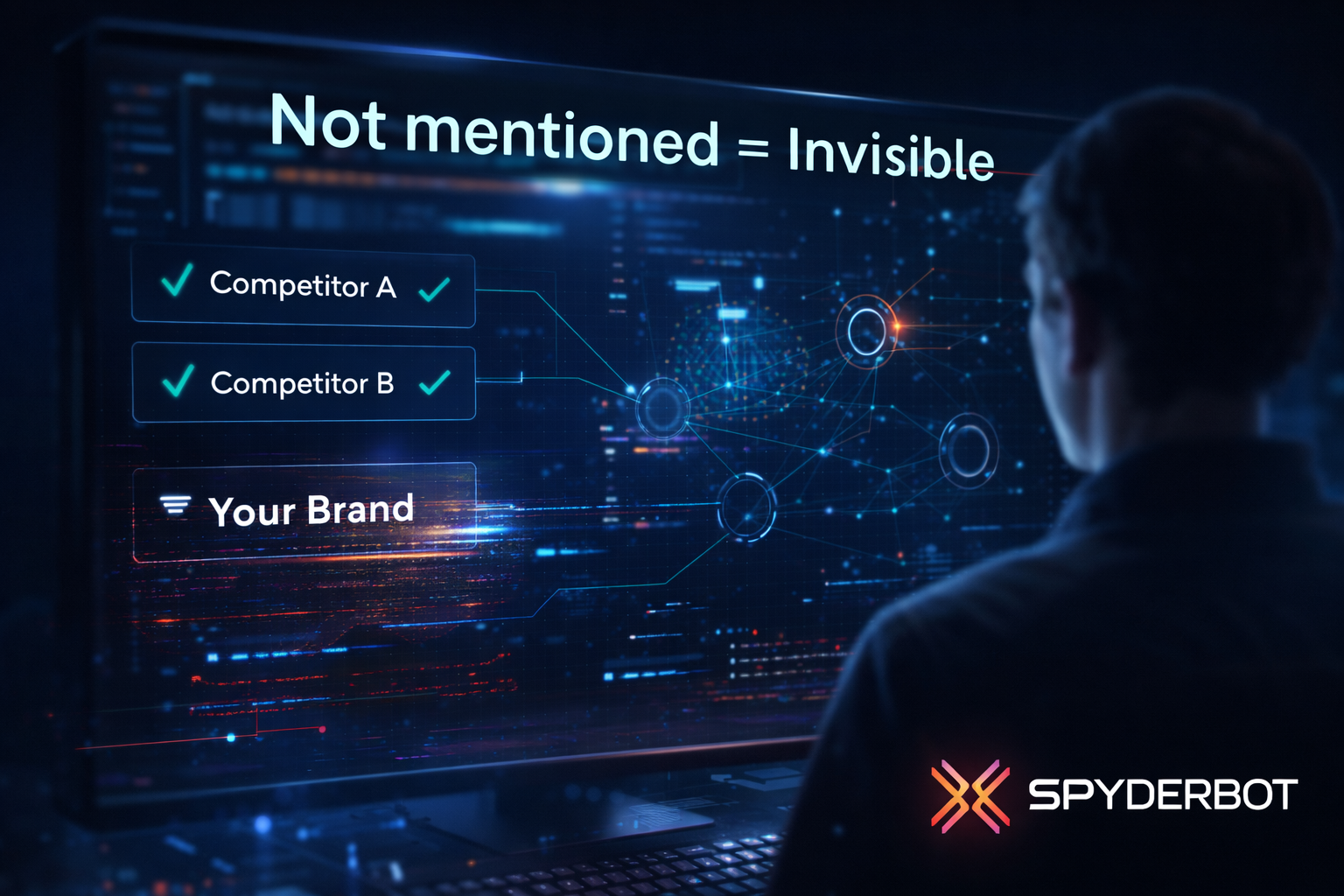
    Your website may be visible in search, but your brand may be invisible in AI-generated recommendations.

    3. AI systems shape brand perception

    AI tools do not only mention brands. They also explain them.

    They may describe what a company does, who it serves, what category it belongs to, what competitors it has, and whether it is suitable for a specific use case.

    That makes GEO important for more than traffic. It affects perception.

    If an AI system misunderstands your brand, places it in the wrong category, omits your strongest use case, or compares you against the wrong competitors, the damage is quiet but real.

    You may lose qualified users before they ever reach your website.

    4. Competitor visibility is becoming harder to see

    In SEO, you can usually see who ranks above you.

    In AI search, the competitive landscape is less visible. One brand may appear in ChatGPT. Another may appear in Gemini. A third may appear in Claude. The wording may change across prompts, regions, sessions, and user intent.

    This makes AI competitor monitoring important.

    Brands now need to know:

    • Which competitors are mentioned more often?
    • Which competitors are recommended for which use cases?
    • How does AI describe our brand compared with others?
    • Are we included in category-level answers?
    • Are we missing from high-intent prompts?
    • Are AI systems using outdated or incomplete information about us?

    Without tracking this, companies are making decisions in the dark.

    GEO vs SEO: what is the difference?

    SEO and GEO are connected, but they optimize for different outcomes.

    AreaSEOGEO
    Main goalRank webpages in search resultsGet brands included in AI-generated answers
    Core unitPageEntity, brand, product, category
    Main metricRanking, impressions, clicks, trafficMentions, inclusion, prominence, sentiment, accuracy
    Optimization focusKeywords, technical SEO, internal links, backlinks, content qualityEntity clarity, contextual signals, source consistency, AI answer patterns
    User experienceSearch result listDirect synthesized answer
    Competitive viewSERP competitorsMention competitors inside AI responses

    The key shift is this:

    SEO competes for position. GEO competes for inclusion.

    In search, being second or third can still bring traffic. In AI-generated answers, being excluded can mean total invisibility for that query.

    How AI systems decide what to mention

    No public AI system reveals a simple universal formula for brand inclusion. However, from observed AI behavior, search documentation, and practical testing, several patterns matter.

    AI systems tend to mention brands when they can clearly understand the following signals.

    Entity identity

    The system needs to understand who you are.

    This includes your brand name, website, product category, company description, target audience, and core use cases.

    If your website gives vague or inconsistent signals, AI systems may struggle to associate your brand with the right category.

    Category relevance

    The system needs to understand what market you belong to.

    For SpyderBot, for example, the category should be clear:

    • GEO analytics
    • AI search visibility
    • LLM brand monitoring
    • AI competitor mention tracking
    • AI brand analytics

    If the content only says “AI tool” or “analytics platform,” the category is too broad.

    Contextual consistency

    AI systems learn from repeated patterns.

    If your website, articles, social profiles, product pages, and third-party references describe your brand in different ways, the system may form an unclear understanding.

    A brand should consistently answer:

    • What does the company do?
    • Who is it for?
    • What problem does it solve?
    • What category does it belong to?
    • What makes it different?

    Source confidence

    AI systems are more likely to include information when it appears clear, consistent, and supported by reliable sources.

    This does not mean backlinks are irrelevant. It means backlinks alone are not enough. GEO requires stronger semantic clarity around the brand and its relationship to the topic.

    Prompt alignment

    AI answers change depending on how users ask questions.

    A brand may appear for:

    “best GEO analytics tools”

    but not appear for:

    “how to track ChatGPT brand mentions”

    That is why GEO measurement should test multiple prompt clusters, not only one keyword.

    The real cost of ignoring GEO

    Ignoring GEO does not always create an obvious drop in traffic immediately.

    That is what makes it dangerous.

    A brand may still see Google traffic, newsletter signups, or direct visits, while silently losing AI-driven discovery.

    The cost can show up in several ways:

    • Competitors are recommended before you
    • AI systems describe your category without mentioning your brand
    • Users receive outdated or incomplete information
    • Your strongest use cases are missing from AI answers
    • Your product is compared against the wrong alternatives
    • Your brand is excluded from high-intent recommendation prompts

    The biggest problem is that most teams cannot diagnose this with traditional SEO tools alone.

    Rank tracking tells you where your page appears in search. It does not tell you whether ChatGPT, Gemini, Claude, or Grok includes your brand in generated answers.

    How companies should approach GEO

    Step 1: Measure AI visibility

    Start by checking how often your brand appears across important prompts.

    For example:

    • What are the best tools for AI brand monitoring?
    • What are the best GEO analytics platforms?
    • How can I track brand mentions in ChatGPT?
    • Which tools help monitor AI search visibility?
    • What are the alternatives to a specific competitor?

    Do this across multiple AI systems, not just one.

    Track:

    • Whether your brand appears
    • Where it appears in the answer
    • How it is described
    • Which competitors are mentioned
    • Whether the answer is accurate
    • Whether your website or sources are cited

    Step 2: Map your entity signals

    Review whether your brand is described consistently across your website and external profiles.

    Your homepage, about page, product pages, blog posts, schema markup, social profiles, and third-party listings should reinforce the same core positioning.

    For SpyderBot, a strong entity description could be:

    SpyderBot is a GEO analytics platform that helps brands monitor how AI systems like ChatGPT, Gemini, Claude, and Grok mention, compare, and interpret their websites and competitors.

    That sentence is clear because it includes:

    • Brand name
    • Category
    • Core function
    • Platforms monitored
    • User benefit
    • Competitive context

    Step 3: Build content around AI search intent

    Do not create thin articles for every keyword variation.

    Instead, group related queries into strong topic clusters.

    For example, one strong article can cover:

    • What is Generative Engine Optimization?
    • Why GEO matters
    • GEO vs SEO
    • AI visibility tracking
    • How to appear in AI search results

    Then supporting articles can go deeper into specific problems:

    • Why ChatGPT is not mentioning your brand
    • How to track brand mentions in LLMs
    • How AI systems compare competitors
    • How to optimize your website for AI search
    • Best GEO analytics tools for SaaS companies

    This structure is better for readers and easier for search engines to understand.

    Step 4: Add evidence, examples, and original perspective

    Generic AI-written articles are easy to ignore.

    A stronger GEO article should include:

    • Real examples
    • Original observations
    • Founder insight
    • Frameworks
    • Definitions
    • Use cases
    • Comparison tables
    • Clear next steps
    • Links to authoritative sources

    This helps the article feel useful rather than automatically generated.

    Step 5: Monitor changes over time

    GEO is not a one-time optimization task.

    AI answers can change as models update, new sources are crawled, competitors publish new content, and user behavior shifts.

    A useful GEO workflow should monitor:

    • Mention frequency
    • Competitor inclusion
    • Prompt-level performance
    • Sentiment and framing
    • Citation patterns
    • Category association
    • Changes after content updates

    Founder insight from SpyderBot

    While building SpyderBot, one pattern became clear:

    The future of visibility is not only about being ranked. It is about being understood.

    Many brands still measure digital visibility through rankings, backlinks, and traffic. Those metrics still matter, but they do not fully explain how AI systems represent a brand.

    A company can have a strong website and still be missing from AI-generated recommendations. Another company can have weaker SEO but stronger category clarity, making it easier for AI systems to mention it in the right context.

    That is the core reason GEO matters.

    It helps brands answer two questions that traditional SEO tools were not designed to answer:

    1. What do AI systems mention about my competitors to users?
    2. How are AI systems analyzing and interpreting my website?

    Those questions are becoming central to modern search visibility.

    GEO checklist for brands

    Before investing in more content, check whether your brand has the basics in place.

    Brand clarity

    • Is your product category clear on your homepage?
    • Is your brand description consistent across key pages?
    • Do you clearly explain who your product is for?
    • Do you clearly explain what problem your product solves?

    AI search visibility

    • Does your brand appear in ChatGPT for core category prompts?
    • Does your brand appear in Gemini, Claude, Grok, and Copilot?
    • Are competitors mentioned more often than you?
    • Is your brand described accurately?

    Content structure

    • Do your articles answer specific user questions?
    • Are your H2 and H3 headings clear?
    • Do your articles include examples and frameworks?
    • Do you link related articles together?
    • Do you avoid publishing many thin articles with the same intent?

    Technical SEO

    • Is the article indexable?
    • Is the canonical URL correct?
    • Is the page included in the sitemap?
    • Are internal links crawlable?
    • Is the page accessible without login or blocking rules?

    Common GEO mistakes

    Mistake 1: Treating GEO as keyword stuffing

    Adding phrases like “AI search optimization,” “LLM visibility tracking,” and “ChatGPT brand monitoring” repeatedly does not make a page more useful.

    GEO requires semantic clarity, not keyword repetition.

    Mistake 2: Publishing too many similar articles

    If ten articles all explain “what GEO is” with slightly different titles, they may compete with each other.

    It is better to build one strong pillar page and support it with specific problem-based pages.

    Mistake 3: Ignoring competitor mentions

    GEO is not only about whether your brand appears. It is also about who appears instead.

    If competitors are repeatedly included in AI answers and your brand is not, that is a strategic signal.

    Mistake 4: Forgetting accuracy

    AI systems can misunderstand products, categories, and competitors.

    A GEO strategy should monitor whether the generated answer is accurate, not just whether the brand is mentioned.

    Final thought

    SEO helped brands compete for rankings.

    GEO helps brands compete for inclusion in AI-generated answers.

    That difference matters because AI systems increasingly influence what users discover, compare, trust, and choose.

    The brands that win the next stage of search will not only be the ones that rank. They will be the ones that AI systems can clearly understand, accurately describe, and confidently include.

    That is why Generative Engine Optimization matters.

    Soft CTA

    If you want to understand how AI systems currently mention your brand, compare you with competitors, and interpret your website, SpyderBot helps you monitor AI visibility across major LLMs and identify where your brand is being included, ignored, or misunderstood.

  • Why Is My Brand Not Showing in ChatGPT?

    Why Is My Brand Not Showing in ChatGPT?

    If your company is established, your website ranks in Google, and customers already know your brand, it can feel strange when ChatGPT barely mentions you at all.

    But this is now a common problem.

    Traditional SEO and AI visibility are related, but they are not the same thing. A brand can perform well in search engines and still remain weak inside AI-generated answers. That gap is exactly why more companies are starting to pay attention to GEO.

    If your brand is not showing in ChatGPT, the issue is usually not random. It is a signal.

    In most cases, one of three things is happening:

    • the model does not strongly associate your brand with the category
    • your competitors are easier to retrieve and validate
    • your website and off-site signals are too weak for AI systems to trust and surface

    This is where Generative Engine Optimization matters.

    GEO is the practice of improving how AI systems understand, retrieve, and mention your brand when users ask category, comparison, and buying-intent questions.


    1. Diagnosis: How to Tell Why Your Brand Is Missing

    Before you try to fix the problem, you need to diagnose it properly.

    A lot of teams see one ChatGPT answer, do not find their brand, and assume the model is simply wrong. Sometimes that happens. But often the real issue is that the brand is not sending strong enough signals for AI systems to understand, retrieve, and trust it in the right context.

    Start with these checks.

    1.1 Check Whether Your Brand Appears Only in Branded Prompts

    Ask prompts such as:

    • What is [Brand Name]?
    • Tell me about [Brand Name]
    • [Brand Name] pricing
    • [Brand Name] reviews

    Then compare them with discovery prompts such as:

    • best [category] software
    • top tools for [use case]
    • [your brand] vs [competitor]
    • alternatives to [competitor]
    • best solution for [problem]

    If your brand appears only when the user already knows your name, then you do not have strong discovery visibility. You have recognition, not recommendation.

    1.2 Identify Which Competitors Replace You

    This is one of the clearest signals.

    If ChatGPT consistently mentions the same competitors in prompts where your brand should logically appear, that means those competitors are easier for the model to understand, retrieve, and validate.

    That usually happens because they have stronger category-focused content, more comparison coverage, clearer positioning, and better third-party corroboration across the web.

    1.3 Look at Source Behavior, Not Just Mention Behavior

    Do not stop at asking whether your brand is mentioned.

    You should also ask:

    • Is your website being cited?
    • Is a third-party page cited instead of your own site?
    • Is your brand described correctly?
    • Is the model using outdated or weak language when it mentions you?

    A brand can appear in answers occasionally but still have poor AI visibility if it is rarely cited, inconsistently described, or overshadowed by stronger sources.

    1.4 Test Your Category Association

    Ask category-level prompts like:

    • What companies are best known for [category]?
    • Who are the leading [category] brands?
    • What tools are best for [specific use case]?

    If your brand is absent here, the issue is often category association. The model does not strongly connect your brand with the topic you want to own.

    That is usually a positioning problem, a content problem, or both.

    1.5 Review Your Own Website Honestly

    Most websites are written for internal stakeholders, not for AI retrieval.

    Look at your site and ask:

    • Does the homepage clearly explain what your company does?
    • Is your product category obvious?
    • Do you clearly state who the product is for?
    • Are use cases easy to understand?
    • Do comparison pages exist?
    • Do you answer high-intent questions directly?
    • Is your differentiation stated in simple language?

    If those answers are weak, your AI visibility will usually be weak too.


    2. The Most Common Reasons Your Brand Is Not Showing in ChatGPT

    2.1 Your Category Signals Are Vague

    If your messaging sounds polished but unclear, AI systems struggle to place your brand.

    A homepage that speaks in abstract language without clearly naming the product category, target audience, and use case is much harder for an LLM to use in answers.

    2.2 Your Competitors Have Denser Evidence

    AI systems tend to favor brands that are easier to validate from multiple directions.

    If competitors appear across review platforms, analyst roundups, comparison pages, industry blogs, media mentions, partner pages, documentation, and community discussions, they build a stronger evidence network than you do.

    2.3 Your Content Is Navigational, Not Answer-Oriented

    Users do not ask ChatGPT for your slogan.

    They ask things like:

    • what is the best tool for this problem
    • which brands are most trusted
    • what should I use instead of this platform
    • which option fits my budget or workflow

    If your content does not answer these patterns well, your brand becomes harder for the model to recommend.

    2.4 Your Pages May Be Indexable but Still Weak for AI Retrieval

    A page can be technically accessible and still fail to earn mention.

    Thin content, generic copy, weak headings, missing comparisons, shallow topical coverage, poor internal linking, and outdated claims all reduce the chance that your content gets surfaced and cited.

    2.5 Your Site and Off-Site Signals Are Too Weak

    AI visibility is not built from your website alone.

    If the only place making strong claims about your brand is your own site, your authority ceiling stays low. AI systems are more likely to trust brands that are supported by external mentions, reviews, expert commentary, and relevant third-party sources.


    3. Why It Happens: The LLM Mechanism Behind Brand Mentions

    This is the part many marketers miss.

    ChatGPT does not work like a traditional search engine that simply ranks web pages in a visible list. Large language models generate answers based on learned patterns, prompt interpretation, retrieval behavior, and source synthesis.

    That creates a very different brand selection process.

    Your brand is more likely to be mentioned when it wins across several layers at once.

    3.1 Pattern Familiarity

    The model is more likely to mention brands that it has repeatedly seen associated with a category, problem, or use case.

    If your brand rarely appears in strong category contexts, the model has less confidence in selecting it.

    3.2 Retrieval Eligibility

    Your content has to be retrievable.

    That means relevant pages need to be accessible, understandable, and strong enough to be surfaced when a prompt triggers search or retrieval behavior.

    3.3 Entity Clarity

    AI systems need to understand exactly who you are.

    If it is not obvious what your company does, who it serves, what category it belongs to, and how it differs from alternatives, the model is forced to guess. When it guesses, it usually defaults to brands with clearer signals.

    3.4 Evidence Density

    LLMs gain confidence when multiple credible sources support the same story.

    If many sources consistently connect your brand to a certain category or strength, the model is more likely to surface you in related prompts.

    3.5 Answer Usefulness

    Even if your brand is relevant, it still has to help complete the user’s question clearly and confidently.

    Brands that are easier to explain, compare, and justify tend to appear more often in AI-generated answers.

    This is why a company can be well known in its market and still disappear inside ChatGPT. The issue is often not brand size. It is how clearly and consistently the brand exists inside the logic of AI systems.


    4. What to Fix If You Want Your Brand to Appear More Often

    4.1 Strengthen Category Clarity

    Every core page should clearly answer:

    • what your product is
    • who it is for
    • what problem it solves
    • what makes it different
    • when someone should choose you instead of alternatives

    4.2 Build Pages for Prompt Intent

    You need content that matches how people actually ask AI systems questions.

    That includes:

    • comparison pages
    • alternatives pages
    • use-case pages
    • best-for pages
    • pricing explanation pages
    • problem-solution pages
    • well-written FAQs

    4.3 Improve Evidence Outside Your Website

    Your own website is not enough.

    You need external validation from places such as:

    • review sites
    • industry directories
    • media mentions
    • founder interviews
    • expert commentary
    • partner ecosystems
    • community discussions
    • research or benchmark content

    4.4 Make Your Site Easier to Retrieve and Cite

    Review the basics carefully:

    • robots and crawl access
    • page structure
    • heading clarity
    • schema markup
    • internal linking
    • duplicate content
    • outdated pages
    • thin landing pages
    • confusing copy

    4.5 Stop Relying on One Prompt

    AI visibility should never be judged from a single screenshot.

    You need to test across branded, non-branded, category, comparison, use-case, and problem-intent prompts over time. That is how you find the real pattern.


    5. Run GEO Audit

    If your brand is not showing in ChatGPT, guessing is a waste of time.

    You need to know:

    • which prompts exclude your brand
    • which competitors replace you
    • which pages are helping or hurting you
    • which sources are being cited instead
    • which category associations are weak
    • what signals AI systems are using to describe your company

    That is exactly what a GEO Audit is for.

    A proper GEO Audit does not just tell you that your brand is missing. It shows you why it is missing and what to fix first.

    Run a GEO Audit with Spyderbot to uncover why your brand is not showing in ChatGPT, identify the competitors taking your place, and map the exact visibility signals you need to improve.


    FAQ

    1. Why does my competitor appear in ChatGPT but not my brand?

    Because AI systems do not reward brand size alone. They tend to favor brands that are easier to understand, retrieve, validate, and explain across multiple sources.

    2. Can a strong Google presence guarantee visibility in ChatGPT?

    No. Traditional SEO and AI visibility overlap, but they are not the same system. A strong Google presence helps, but it does not guarantee that your brand will be recommended in AI-generated answers.

    3. Why are ChatGPT answers inconsistent across prompts?

    Because prompt wording changes context, retrieval behavior, and answer generation. Small changes in phrasing can lead to different brands, sources, and explanations appearing.

    4. What is the fastest way to improve AI visibility?

    Usually the fastest gains come from clearer category positioning, stronger comparison and use-case content, better retrieval-friendly page structure, and more third-party corroboration.

    5. What is a GEO Audit?

    A GEO Audit is a structured analysis of how AI systems mention, describe, rank, and cite your brand across relevant prompts. It helps identify visibility gaps, competitor displacement, weak content signals, and the actions needed to improve AI search presence.

  • Why We Built SpyderBot

    Why We Built SpyderBot

    Understanding How AI Sees the World

    Every generation of the internet creates a new layer of visibility.

    In the early web, visibility meant having a website.

    In the search era, visibility meant being discoverable through search engines.

    Today, visibility increasingly depends on something new:

    How AI systems understand, interpret, and recommend information.

    This shift inspired the creation of SpyderBot.


    The Question That Started Everything

    It began with a simple question:

    Why is AI recommending some brands but not others?

    As AI systems such as ChatGPT, Gemini, Claude, Grok, and Perplexity became part of everyday decision-making, we noticed something unusual.

    People were no longer relying solely on search engines to discover products, compare vendors, evaluate services, or research companies.

    Instead, they were increasingly asking AI.

    Questions that once generated pages of search results were now producing a single synthesized answer.

    And within those answers, AI systems were making choices.

    They were:

    • Mentioning certain brands
    • Recommending specific companies
    • Citing particular websites
    • Referencing selected sources
    • Omitting others entirely

    The more we studied these systems, the more obvious a new problem became.

    Organizations could measure search rankings.

    Organizations could measure website traffic.

    Organizations could measure advertising performance.

    Organizations could measure social engagement.

    But they had almost no visibility into how AI systems perceived and represented their business.


    Why Now?

    Several technology shifts are converging at the same time.

    AI assistants are becoming a primary interface for information discovery.

    Large language models are increasingly influencing purchasing decisions.

    AI-generated answers are replacing traditional search journeys.

    And AI-powered experiences are becoming part of everyday workflows for consumers and businesses alike.

    As a result, understanding AI visibility is no longer a future challenge.

    It is becoming a present business requirement.

    Organizations that ignore this shift risk losing visibility within one of the fastest-growing discovery channels on the internet.


    Search Engines Indexed the Web. AI Interprets It.

    For decades, search engines organized information.

    Their primary role was retrieval.

    Users searched.

    Search engines returned links.

    Organizations optimized for rankings.

    That model is changing.

    Modern AI systems do not simply retrieve information.

    They interpret information.

    They compare sources.

    They summarize content.

    They generate recommendations.

    They determine which entities appear in an answer.

    They increasingly influence what users discover and trust.

    Visibility is no longer only about being indexed.

    Increasingly, it is about being understood.


    Defining AI Visibility

    As we analyzed thousands of AI-generated responses, a new pattern emerged.

    Organizations were beginning to face a new type of visibility challenge.

    Not search visibility.

    AI visibility.

    We define AI Visibility as:

    The ability to understand how AI systems mention, recommend, cite, compare, and interpret brands, websites, products, organizations, and other digital entities.

    Just as SEO created a framework for understanding visibility within search engines, AI Visibility provides a framework for understanding visibility within AI-generated experiences.

    Traditional Search Visibility

    QuestionExample
    Can users find me?Search rankings
    How much traffic do I receive?Organic traffic
    Which keywords do I rank for?SEO metrics
    Which sites link to me?Backlinks

    AI Visibility

    QuestionExample
    Does AI mention my brand?Brand mentions
    Does AI recommend my company?AI recommendations
    Does AI cite my website?AI citations
    How does AI interpret my business?Entity understanding
    Which competitors are preferred by AI?Competitive visibility

    These questions cannot be answered with rankings, impressions, or backlinks alone.

    They require a new layer of intelligence.


    Understanding How AI Understands the Web

    SpyderBot was inspired by the growing network of AI bots, crawlers, retrieval systems, and large language models that increasingly shape how information is discovered, interpreted, and recommended online.

    For decades, the challenge was understanding the web.

    We believe the next challenge is understanding how AI understands the web.

    As AI systems become a new layer of discovery and decision-making, organizations need visibility into how they are perceived, mentioned, recommended, and cited across the AI ecosystem.

    SpyderBot exists to provide that visibility.


    A Founder Perspective

    When we first began analyzing AI-generated recommendations, we expected AI systems to behave similarly to search engines.

    They did not.

    One of the most surprising discoveries was that search visibility and AI visibility were often disconnected.

    We observed brands with strong SEO performance receiving limited exposure in AI-generated responses.

    At the same time, smaller or lesser-known organizations sometimes appeared repeatedly in AI recommendations.

    This suggested something important.

    AI systems were not simply ranking information.

    They were constructing understanding.

    And understanding creates visibility.

    That realization became one of the foundations behind SpyderBot.


    Building AI Visibility Intelligence

    Since launch, SpyderBot has analyzed more than:

    • 30,000 domains
    • 1,000,000 AI prompts and responses
    • 10,000 AI visibility reports

    Every analysis contributes to a growing understanding of how AI systems represent digital entities across the evolving AI ecosystem.

    We believe visibility data generated by AI systems will become increasingly important as organizations seek to understand how they are represented across AI-powered experiences.


    What We Believe

    We believe AI visibility will become a foundational layer of digital intelligence.

    In the same way organizations monitor:

    • Search rankings
    • Website traffic
    • Brand reputation
    • Advertising performance

    they will increasingly need to monitor:

    • AI mentions
    • AI recommendations
    • AI citations
    • AI perception
    • AI visibility

    The organizations that understand this shift early will have a significant advantage as AI-generated discovery becomes more influential.


    What SpyderBot Does

    SpyderBot helps organizations understand how AI systems:

    • Mention brands
    • Recommend products
    • Cite sources
    • Compare competitors
    • Interpret digital entities

    Through AI Visibility Analytics, AI Citation Intelligence, Competitor Monitoring, and Generative Search Insights, organizations can better understand their presence across AI-powered experiences.

    Today, we help organizations measure AI visibility.

    Tomorrow, we believe every organization will need infrastructure for understanding how AI systems represent their business.

    Our mission is to help build that future.


    Looking Ahead

    We believe AI visibility will become as important as search visibility became in the previous generation of the internet.

    A growing network of AI systems is influencing what people discover, what they trust, and what they choose.

    Understanding that ecosystem is becoming increasingly important.

    The companies that understand how AI systems perceive them will be better positioned to compete in a world increasingly shaped by AI-generated discovery.


    “The next generation of digital visibility will not be determined solely by rankings. It will be determined by how AI systems understand, recommend, and represent information.”

    — Jack Mai, Founder & CEO


    The Question We Continue to Ask

    For years, organizations asked:

    Can people find my brand?

    Increasingly, a new question matters:

    How does AI see my brand?

    SpyderBot was created to help answer that question.

    Key Takeaways

    • AI systems are becoming a new layer of discovery.

    • Visibility is increasingly about being understood, not just indexed.

    • AI Visibility helps organizations understand how AI systems mention, recommend, and cite brands.

    • SpyderBot was built to help organizations understand how AI understands the web.