I. Why this article was updated
This article was updated because more companies are asking a direct question:
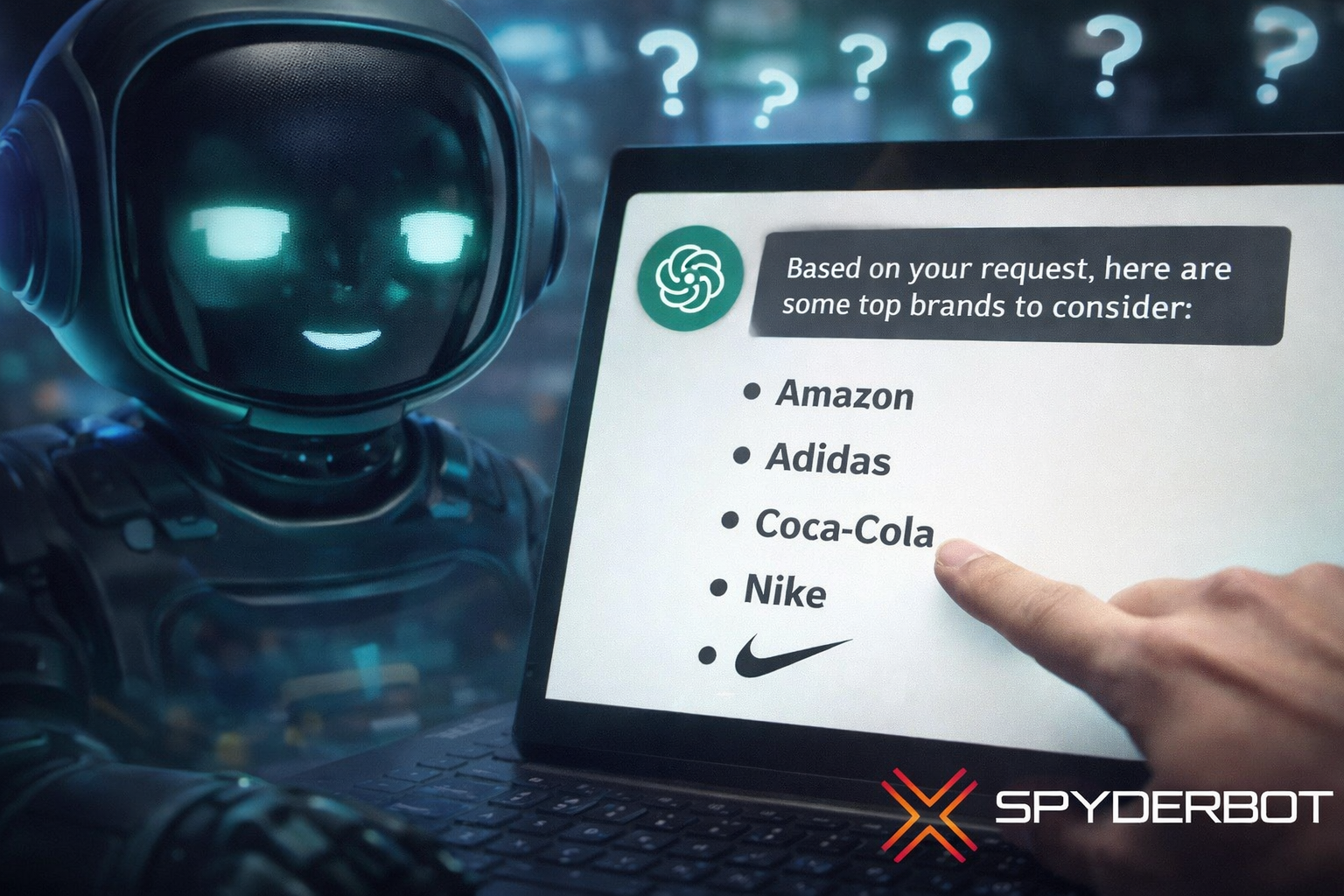
Why does ChatGPT mention my competitors but not my brand?
This question matters because ChatGPT is no longer just a tool for answering general questions. Many users now ask ChatGPT for product recommendations, software comparisons, vendor shortlists, and buying advice.
That means brand visibility is changing.
In Google, brands compete for rankings.
In ChatGPT, brands compete for inclusion inside generated answers.
This is why understanding how ChatGPT mentions brands is now important for SEO, GEO, AI visibility, and digital marketing strategy.
II. What does it mean when ChatGPT mentions a brand?
When ChatGPT mentions a brand, it means the model has included that brand inside a generated answer.
This can happen when users ask questions such as:
- What are the best tools for SEO?
- What are the best AI visibility platforms?
- What are the top alternatives to Ahrefs?
- Which software should I use for competitor analysis?
- What companies are known for this category?
A brand mention may appear as:
- A main recommendation
- A secondary option
- A comparison point
- An alternative
- A niche solution
- A category example
The important point is this:
ChatGPT does not mention brands the same way Google ranks websites.
ChatGPT generates an answer, then includes brands that appear relevant to the user’s question.
III. Does ChatGPT rank brands?
No. ChatGPT does not rank brands like Google.
Google usually shows a search result page with ranked links.
ChatGPT produces a synthesized answer.
There may be no fixed position, no SERP, and no traditional keyword ranking.
So the better question is not:
How do we rank in ChatGPT?
The better question is:
How do we become selected, mentioned, and correctly described in ChatGPT answers?
This is the foundation of AI visibility and Generative Engine Optimization.
IV. How ChatGPT mentions brands: the 4-step model
ChatGPT brand mentions can be understood through four practical stages:
- Query interpretation
- Candidate selection
- Implicit brand evaluation
- Answer construction
These stages help explain why some brands appear often, some appear only in specific contexts, and others do not appear at all.
V. Step 1: Query interpretation
The first step is query interpretation.
ChatGPT tries to understand what the user is really asking.
It interprets:
- User intent
- Topic category
- Level of specificity
- Desired output format
- Context
- Comparison need
- Recommendation need
For example, if a user asks:
What are the best SEO tools?
ChatGPT may interpret the query as:
- Category: SEO software
- Intent: recommendation
- Output: list of tools
- Context: general use
- Expected answer: known SEO platforms
If your brand is not clearly associated with the interpreted category, it may not be considered.
That is why category clarity matters.
VI. Step 2: Candidate selection
After understanding the query, ChatGPT forms a possible set of brands that may fit the answer.
This is not a public list and not a fixed ranking table.
It is more like a candidate pool.
Brands may enter this pool because they are strongly associated with:
- The category
- The use case
- The user intent
- The comparison context
- Similar examples
- Repeated patterns across public information
For example, in a query about SEO tools, ChatGPT may naturally consider brands that are commonly associated with SEO software.
If a brand is not strongly connected to that category, it may never enter the candidate pool.
This is why many companies are invisible in ChatGPT even if they have websites, blogs, and traffic.
VII. Step 3: Implicit brand evaluation
ChatGPT does not publicly assign a brand score.
But brand selection appears to depend on several signals.
Important factors include:
1. Entity clarity
Does ChatGPT understand what the brand is?
A clear entity has:
- A clear brand name
- A clear category
- A clear product description
- A clear target audience
- A clear use case
- Consistent positioning across sources
2. Context relevance
Does the brand fit the user’s question?
A brand may be known, but if it does not match the prompt context, it may not be mentioned.
3. Association strength
Is the brand strongly associated with the topic?
For example, if a brand is repeatedly connected with “AI visibility tracking,” it is more likely to appear in prompts related to AI visibility tools.
4. Competitor relationships
ChatGPT often mentions brands in relation to other brands.
If your competitors are more strongly associated with the category, they may appear more often.
5. Prominence patterns
Some brands appear often because they are widely referenced, compared, reviewed, or discussed in a category.
Prominence does not guarantee selection, but it can influence inclusion.
VIII. Step 4: Answer construction
After possible brands are selected, ChatGPT constructs the final answer.
This affects:
- Which brands are included
- Which brands are excluded
- Which brand appears first
- How much explanation each brand receives
- Whether the brand is framed as a leader, alternative, niche tool, or beginner option
- Whether the answer includes comparisons
This means being mentioned is only part of the battle.
How ChatGPT describes the brand also matters.
A brand can be mentioned but still framed weakly.
For example:
- “A smaller alternative”
- “Useful for basic needs”
- “Less established”
- “Good for niche use cases”
That framing can affect user perception.
IX. The ChatGPT Brand Mention Model
A practical model for understanding ChatGPT brand mentions is:
ChatGPT Brand Mentions = Query Interpretation + Candidate Selection + Association Strength + Answer Framing
This model helps explain why visibility is not random.
It also shows why traditional SEO alone may not be enough.
To improve ChatGPT visibility, a brand needs to be:
- Clearly understood
- Contextually relevant
- Strongly associated with the category
- Positioned well against competitors
- Mentioned in the right prompts
- Framed accurately in generated answers
X. Why some brands are not mentioned in ChatGPT
A brand may fail to appear in ChatGPT answers for several reasons.
Common causes include:
- The brand entity is unclear
- The product category is not obvious
- The website does not explain the brand well
- The brand is not associated with the query context
- Competitors have stronger category signals
- The brand lacks comparison content
- The brand is not mentioned across enough relevant sources
- The brand has inconsistent positioning
- The AI system does not connect the brand to the user’s intent
This is why a company can have strong SEO performance but still be missing from ChatGPT.
XI. The role of association strength
Association strength is one of the most important factors in ChatGPT brand mentions.
It refers to how strongly a brand is connected to a topic, product category, problem, or use case.
For example, a brand that is consistently associated with “AI search analytics” may have a better chance of appearing in prompts about AI visibility tools.
A brand with weak associations may be ignored even if it has content on the topic.
To strengthen associations, brands should create consistent signals around:
- Product category
- Main use cases
- Target audience
- Competitor alternatives
- Industry terms
- Problem-solution pages
- Comparison pages
- FAQs
- Third-party mentions
XII. Why context changes ChatGPT brand mentions
ChatGPT mentions are highly context-dependent.
A brand may appear in one prompt but disappear in another.
For example:
Prompt 1: What are the best SEO tools?
This may produce well-known SEO platforms.
Prompt 2: What are the best SEO tools for beginners?
This may produce a different list.
Prompt 3: What are the best AI visibility tools?
This may produce a completely different set of brands.
This means there is no universal ChatGPT visibility.
There is only contextual visibility.
A serious AI visibility strategy should track brand mentions across many prompt types, not just one query.
XIII. Types of brand mentions in ChatGPT
Not all brand mentions have equal value.
1. Primary mentions
The brand appears as a main recommendation.
This is usually the strongest visibility position.
2. Secondary mentions
The brand appears as one option among others.
This is useful, but less influential than a primary recommendation.
3. Comparative mentions
The brand is compared against competitors.
This can be powerful if the framing is accurate and favorable.
4. Contextual mentions
The brand appears only for specific use cases or narrow prompts.
This can still be valuable if those prompts match high-intent users.
5. Weak mentions
The brand appears, but the description is vague, inaccurate, or not persuasive.
This may not create strong user trust.
XIV. Why SEO success does not guarantee ChatGPT mentions
Traditional SEO can support AI visibility, but it does not guarantee it.
A company may have:
- High-ranking pages
- Strong backlinks
- Good organic traffic
- Optimized keywords
- Technical SEO strength
But ChatGPT may still not mention the brand.
Why?
Because ChatGPT visibility depends more on:
- Entity understanding
- Contextual relevance
- Category associations
- Competitor relationships
- Answer construction
- Brand framing
SEO helps make information available.
GEO helps improve how AI systems interpret and use that information.
XV. Common misconceptions about ChatGPT brand mentions
Misconception 1: ChatGPT simply searches the web and lists brands
Not exactly.
Depending on the mode and context, ChatGPT may use different sources or capabilities. But in generated answers, brand inclusion is not the same as a Google-style ranked list.
Misconception 2: More content automatically means more mentions
More content only helps if it improves clarity, relevance, and associations.
Low-quality or repetitive content may not improve AI visibility.
Misconception 3: Mentions are random
ChatGPT outputs can vary, but brand mentions often follow patterns.
Those patterns can be measured across prompts and contexts.
Misconception 4: Being mentioned is enough
Not enough.
A brand also needs strong framing.
A weak or inaccurate mention can reduce trust.
XVI. How to improve brand mentions in ChatGPT
1. Clarify your entity
Make it clear what your brand is.
Your website and public content should consistently explain:
- Brand name
- Product category
- Core features
- Main audience
- Use cases
- Differentiators
- Competitor alternatives
2. Strengthen category associations
Build repeated connections between your brand and your category.
For SpyderBot, examples include:
- AI visibility tracking
- GEO analytics
- LLM brand monitoring
- AI search analytics
- AI competitor monitoring
- Generative Engine Optimization
3. Expand contextual coverage
Create content for different user intents.
Examples:
- Best tools
- Alternatives
- Comparisons
- Use cases
- Problem-based pages
- Industry-specific pages
- FAQ pages
4. Improve comparison presence
AI systems often mention brands in comparison contexts.
Create clear comparison content that explains:
- What your brand does
- Who it is best for
- How it differs from competitors
- Where it is stronger
- Where it is not a replacement
5. Monitor prompt-level visibility
Do not track only one prompt.
Track visibility across different prompt types:
- General category prompts
- Competitor alternative prompts
- Problem-solving prompts
- Buying-intent prompts
- Beginner prompts
- Enterprise prompts
- Use-case prompts
XVII. Where SpyderBot fits
SpyderBot is designed to help companies understand how ChatGPT and other AI systems mention brands.
It helps analyze:
- Whether the brand appears
- How often it appears
- Which prompts trigger mentions
- Which competitors appear instead
- How the brand is described
- Whether the framing is accurate
- What visibility gaps exist
- How AI systems interpret the website
SpyderBot helps answer the deeper question:
Why does ChatGPT mention some brands and ignore others?
XVIII. Final conclusion
ChatGPT does not mention brands the way Google ranks pages.
It generates answers by interpreting user intent, selecting relevant entities, and constructing a response.
That means brands need to think beyond traditional SEO.
To improve ChatGPT visibility, companies need stronger entity clarity, better context coverage, stronger category associations, and consistent positioning.
The future of AI visibility is not only about ranking.
It is about being selected, described correctly, and trusted inside AI-generated answers.