Blog

  • LLM Brand Mentions

    LLM Brand Mentions

    I. What are LLM brand mentions?

    LLM brand mentions are the ways large language models such as ChatGPT, Gemini, Claude, Copilot, Grok, and Perplexity include, describe, compare, and recommend brands in generated answers.

    This includes:

    • Whether a brand is mentioned
    • How often the brand appears
    • Which prompts trigger the mention
    • How the brand is described
    • Whether the brand is recommended or only listed
    • Which competitors appear alongside it
    • Whether the brand is framed positively, neutrally, or weakly

    In traditional search, brands compete for rankings.

    In AI-generated answers, brands compete for inclusion.

    That is why LLM brand mentions are becoming an important part of AI visibility and Generative Engine Optimization.

    II. Why LLM brand mentions matter

    LLM brand mentions matter because AI systems increasingly influence how users discover products, compare companies, and make decisions.

    In traditional search, users see multiple links and decide what to click.

    In AI systems, users often receive a synthesized answer.

    That means the AI system may decide which brands are worth mentioning before the user visits any website.

    If your brand is not mentioned, you may be invisible at the decision stage.

    If your brand is mentioned poorly, users may misunderstand your positioning.

    If your brand is mentioned strongly, you can influence decisions before the click.

    III. LLM brand mentions vs SEO visibility

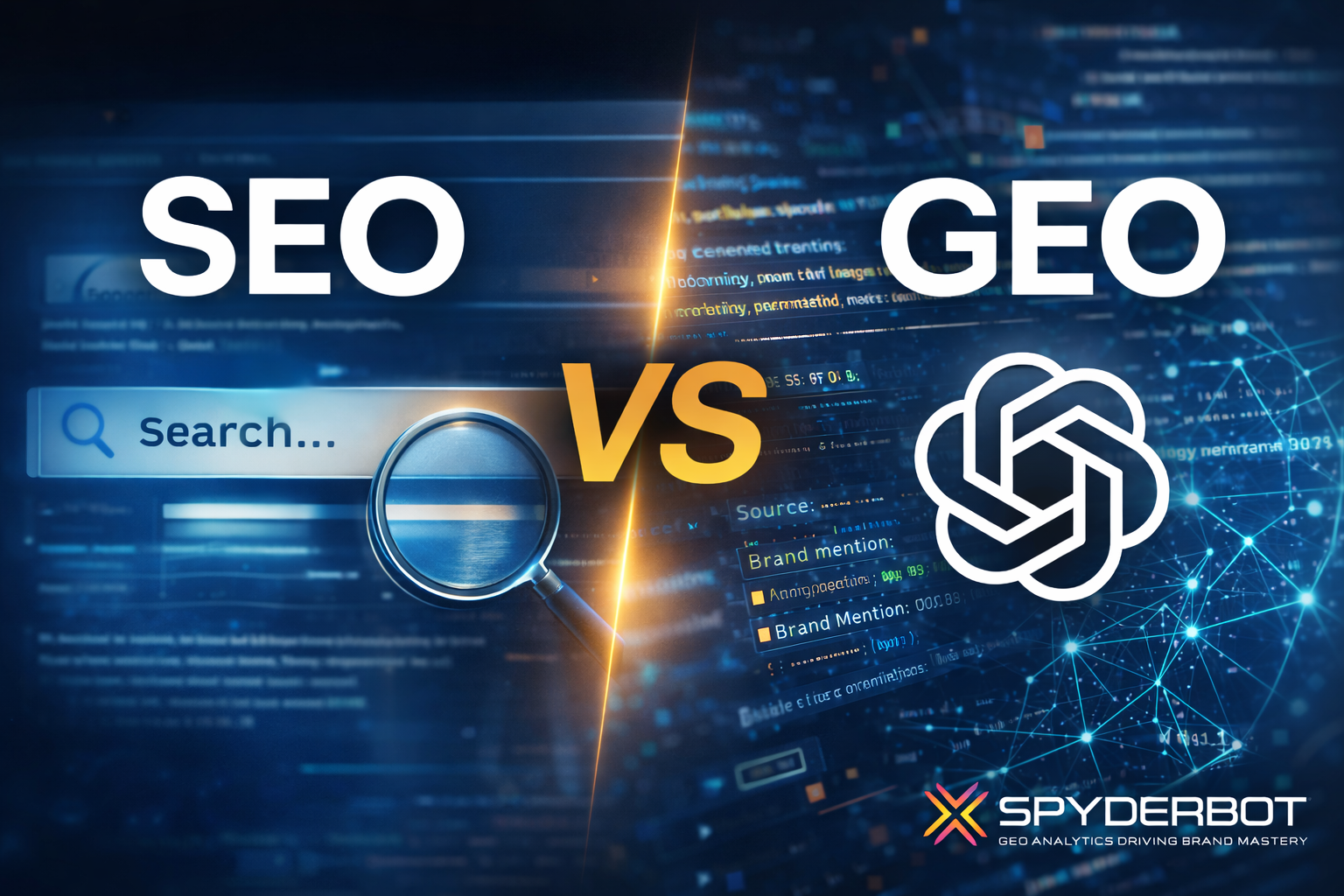
    LLM brand mentions are different from SEO rankings.

    SEO visibilityLLM brand mentions
    Based on rankingsBased on inclusion
    Focuses on pagesFocuses on entities
    Measures trafficMeasures AI visibility
    Uses keywordsUses context and meaning
    Competes on SERPsCompetes inside answers

    SEO asks:

    Where do we rank?

    LLM visibility asks:

    Are we included in the answer?

    This is a major shift.

    A company can rank well on Google but still be missing from ChatGPT answers.

    IV. The 4 dimensions of LLM brand mentions

    To understand LLM brand mentions properly, companies should analyze four dimensions:

    1. Inclusion
    2. Frequency
    3. Context
    4. Framing

    Together, these dimensions show whether a brand is visible, how often it appears, when it appears, and how AI systems position it.

    V. Inclusion: is your brand mentioned at all?

    Inclusion is the most basic layer of LLM brand visibility.

    It answers:

    Does your brand appear in AI-generated answers?

    Key questions include:

    • Is the brand mentioned in relevant prompts?
    • Does it appear when users ask for recommendations?
    • Does it appear in comparison prompts?
    • Does it appear in problem-based prompts?
    • Is it included alongside competitors?

    If the brand is not included, it has no AI visibility in that context.

    No inclusion means no presence in the AI-generated decision layer.

    VI. Frequency: how often does your brand appear?

    Frequency measures how consistently a brand appears across relevant prompts.

    It answers:

    How often does AI mention the brand?

    Useful metrics include:

    • Mention rate
    • Mention share
    • Prompt coverage
    • Competitor mention comparison
    • Visibility consistency across AI systems

    A brand mentioned once is not necessarily strong.

    A brand mentioned consistently across different prompts, categories, and use cases has stronger AI visibility.

    VII. Context: when does AI mention your brand?

    Context explains the situations where a brand appears.

    It answers:

    In what kinds of questions does AI include the brand?

    Examples of useful contexts include:

    • Best tools for a category
    • Alternatives to a competitor
    • Product comparisons
    • Use-case recommendations
    • Industry-specific solutions
    • Problem-solving prompts
    • Buying decision prompts

    Context matters because not all mentions are equally valuable.

    A brand appearing in irrelevant contexts may not drive meaningful visibility.

    A brand appearing in high-intent recommendation prompts is more valuable.

    VIII. Framing: how does AI describe your brand?

    Framing is one of the most important parts of LLM brand mentions.

    It answers:

    How does AI position the brand?

    AI may frame a brand as:

    • A market leader
    • A niche solution
    • A beginner-friendly option
    • A technical platform
    • A budget alternative
    • A premium solution
    • A competitor to another brand
    • A less complete option

    Framing influences perception.

    Being mentioned is not enough.

    The way AI describes the brand can shape whether users trust it, ignore it, or compare it seriously.

    IX. The LLM Brand Mention Model

    A simple way to understand AI brand visibility is:

    LLM Brand Mentions = Inclusion + Frequency + Context + Framing

    This model helps teams move beyond basic tracking.

    A brand should not only ask:

    Are we mentioned?

    It should also ask:

    • How often are we mentioned?
    • In which contexts?
    • How are we described?
    • Who appears beside us?
    • Are we framed better or worse than competitors?

    X. How LLMs generate brand mentions

    LLMs do not work like traditional search engines.

    They do not simply rank pages and display results.

    They generate answers based on patterns, context, entity relationships, and available information.

    Several factors may influence brand mentions:

    1. Entity understanding

    AI systems need to understand what the brand is.

    This includes:

    • Brand name
    • Product category
    • Core offering
    • Target audience
    • Main use cases
    • Competitor set
    • Market positioning

    If the entity is unclear, the brand is less likely to be mentioned correctly.

    2. Context relevance

    AI systems need to determine whether the brand fits the user’s question.

    A brand may be known, but if it is not clearly associated with a specific use case, it may not appear.

    3. Association strength

    Association strength refers to how strongly a brand is connected to a topic, category, or problem.

    For example, if AI systems strongly associate a competitor with “AI visibility tracking,” that competitor may appear more often in relevant answers.

    4. Answer construction

    AI systems structure answers based on what seems useful, relevant, and coherent.

    Some brands may appear as primary recommendations.

    Others may appear only as alternatives.

    Some may be excluded entirely.

    XI. Why some brands are never mentioned by AI

    A brand may be missing from LLM-generated answers for several reasons:

    • The brand entity is unclear
    • The website does not explain the product clearly
    • The category positioning is weak
    • Competitors have stronger associations
    • The brand is not connected to relevant use cases
    • There are few trusted references about the brand
    • The brand appears in the wrong context
    • The messaging is inconsistent across sources

    This is why more content does not always create more AI visibility.

    The content must improve understanding, relevance, and associations.

    XII. Types of LLM brand mentions

    Not all LLM brand mentions are equal.

    There are several types:

    1. Primary mentions

    The brand appears as a main recommendation.

    This is usually the strongest type of mention.

    2. Secondary mentions

    The brand appears as one option among several alternatives.

    This is useful, but less powerful than being a primary recommendation.

    3. Comparative mentions

    The brand is compared directly with competitors.

    This can be valuable if the framing is strong.

    4. Contextual mentions

    The brand appears only in specific use cases or niche contexts.

    This can be useful when the context matches high-intent users.

    5. Weak mentions

    The brand is mentioned but not clearly explained or recommended.

    This may create low influence despite visibility.

    XIII. Common misconceptions about LLM brand mentions

    Misconception 1: If we rank on Google, AI will mention us

    Not always.

    SEO rankings can help, but they do not guarantee AI visibility.

    A brand can rank well and still be excluded from AI-generated answers.

    Misconception 2: More content means more mentions

    Not necessarily.

    More content only helps if it improves entity clarity, context relevance, and association strength.

    Misconception 3: Mentions are random

    LLM mentions are probabilistic, but they are not purely random.

    Patterns can be tracked, compared, and improved over time.

    Misconception 4: Any mention is good

    Not always.

    A weak or inaccurate mention can damage positioning.

    The quality of framing matters.

    XIV. How to measure LLM brand mentions

    Companies can measure LLM brand mentions through several metrics:

    • Inclusion rate
    • Mention frequency
    • Mention share vs competitors
    • Context coverage
    • Prompt coverage
    • Framing quality
    • Sentiment or positioning
    • Primary vs secondary mention rate
    • Competitor co-mentions
    • AI system consistency

    These metrics help teams understand not just whether they appear, but how strong their AI visibility really is.

    XV. How to improve LLM brand mentions

    1. Improve entity clarity

    Make it easy for AI systems to understand what the brand is.

    Clarify:

    • Brand category
    • Core product
    • Target users
    • Main use cases
    • Key differentiators
    • Competitors and alternatives

    2. Strengthen contextual relevance

    Create content that connects the brand to real user problems and buying contexts.

    Cover:

    • Use cases
    • Comparisons
    • Alternatives
    • Industry applications
    • Problem-solution pages
    • FAQs
    • Category explanations

    3. Build stronger associations

    The brand should be consistently associated with the right topics.

    For example:

    • AI visibility
    • GEO analytics
    • LLM tracking
    • AI brand monitoring
    • AI search analytics
    • Competitor mention tracking

    4. Improve brand framing

    Make sure the brand is described consistently across website copy, articles, profiles, and third-party pages.

    Strong framing helps AI systems represent the brand more accurately.

    5. Compare against competitors

    AI visibility is competitive.

    Track which competitors appear more often, how they are described, and which prompts make them show up.

    XVI. Real-world example

    Imagine a SaaS company with strong SEO traffic.

    The company ranks well on Google and receives steady organic visits.

    But when users ask AI systems for the best tools in its category, competitors appear more often.

    The problem may not be traffic.

    The problem may be weak LLM brand visibility.

    Possible root causes include:

    • The brand is not clearly categorized
    • AI does not connect the brand to high-intent use cases
    • Competitors have stronger mention patterns
    • The website does not explain the product clearly enough
    • The brand is framed as generic rather than specialized

    This is why LLM brand mentions need to be measured separately from SEO.

    XVII. Where SpyderBot fits

    SpyderBot is designed to analyze LLM brand mentions across the dimensions that matter:

    • Inclusion
    • Frequency
    • Context
    • Framing
    • Competitor mentions
    • Prompt-level behavior
    • AI interpretation
    • Brand positioning

    SpyderBot helps answer:

    • Are we mentioned in AI answers?
    • How often are we mentioned?
    • Which competitors appear instead?
    • How does AI describe our brand?
    • Why are we missing from key prompts?
    • How can we improve AI visibility?

    This turns LLM brand mentions from a vague concept into a measurable visibility layer.

    XVIII. Final conclusion

    LLM brand mentions are becoming one of the most important signals in AI search visibility.

    They show whether AI systems understand, include, and recommend a brand in generated answers.

    Traditional SEO focuses on ranking pages.

    LLM visibility focuses on brand inclusion, context, and framing.

    The brands that win in AI search will not only rank well.

    They will be selected, understood, and positioned correctly inside AI-generated answers.
  • ChatGPT SEO Ranking

    ChatGPT SEO Ranking

    Can You Rank in ChatGPT? What Actually Matters Instead

    Many marketers, founders, and SEO teams are now asking the same question:

    “How do I rank in ChatGPT?”

    It sounds logical.

    For years, search visibility meant ranking. If your page ranked higher on Google, more people saw it. If you reached position one, you had a major advantage. SEO teams built strategies around keywords, pages, backlinks, traffic, and rankings.

    But ChatGPT changes the model.

    ChatGPT does not show a traditional search engine results page. It does not display ten blue links in a fixed order. It does not give every brand a stable position that can be tracked like a Google keyword ranking.

    Instead, ChatGPT generates answers.

    It may search the web when needed. OpenAI explains that ChatGPT Search can provide timely answers with links to relevant web sources, blending conversational interaction with web-based information retrieval.

    But even when ChatGPT uses web information, the user experience is still not the same as Google Search.

    The user does not always see a list of ranked pages.

    The user receives a synthesized answer.

    That means the real question is not:

    “How do I rank in ChatGPT?”

    The better question is:

    “How do I get selected, mentioned, trusted, and recommended in ChatGPT answers?”

    That is the shift from SEO ranking to AI visibility.


    I. The Short Answer: You Cannot Rank in ChatGPT Like Google

    Let’s be precise.

    You cannot rank in ChatGPT in the same way you rank on Google.

    There is no classic SERP.

    There is no fixed position one.

    There is no stable ranking table.

    There is no universal list of results that every user sees.

    ChatGPT generates a response based on the user’s prompt, context, available information, model behavior, and sometimes web retrieval. This means answers can change depending on how the question is asked.

    The uploaded draft states the core point correctly: ChatGPT does not have traditional rankings, does not show a list of results, and does not use positions like Google. What matters instead is whether your brand is included or excluded from the generated answer.

    That distinction matters.

    Google ranking is about position.

    ChatGPT visibility is about selection.

    In Google, you compete for a higher place on a results page.

    In ChatGPT, you compete to be included in the answer at all.


    II. Why the Idea of “Ranking in ChatGPT” Is Misleading

    The phrase “ChatGPT ranking” is popular because people are trying to understand AI search using familiar SEO language.

    But the language can create the wrong strategy.

    In Google Search, the typical model is:

    Query → ranked results → user clicks

    In ChatGPT, the model is closer to:

    Prompt → interpretation → selection → synthesized answer

    Google usually gives the user multiple ranked options.

    ChatGPT often compresses the answer into a smaller set of brands, tools, products, or sources.

    That compression changes the competition.

    If your brand is not included, the user may never consider it.

    If your competitor is included and you are not, the competitor enters the buyer’s mental shortlist before you do.

    This is why “ranking thinking” can be dangerous.

    When teams think only in rankings, they usually focus on:

    • Keywords
    • Landing pages
    • SERP positions
    • Backlinks
    • Organic traffic

    Those still matter in traditional search.

    But ChatGPT visibility depends more on:

    • Entity recognition
    • Category clarity
    • Context relevance
    • Brand associations
    • Competitive positioning
    • Third-party validation
    • Prompt-level inclusion
    • Consistent public signals

    Traditional SEO helps your content become discoverable.

    But AI visibility determines whether your brand becomes selectable.


    III. Ranking vs Selection: The Critical Difference

    The simplest way to understand ChatGPT visibility is to separate ranking from selection.

    ConceptGoogle SearchChatGPT
    OutputList of linksGenerated answer
    Core mechanismRankingSelection
    Visibility goalHigher positionInclusion
    Main objectWeb pageBrand, entity, source, concept
    CompetitionPage-levelBrand-level and context-level
    Main metricRanking positionInclusion rate and mention share
    User behaviorClick and compareRead and trust the answer

    This is why a brand can rank well on Google and still be invisible in ChatGPT.

    A page-level win does not automatically become a brand-level AI mention.

    That is the uncomfortable reality.

    SEO can help you enter the data environment.

    But ChatGPT still has to decide whether your brand deserves to be part of the answer.


    IV. What Actually Replaces Ranking in ChatGPT?

    The concept that replaces ranking is selection.

    Selection means:

    • Whether your brand is included
    • Which prompts trigger your brand
    • Which prompts exclude your brand
    • Which competitors appear instead
    • How your brand is described
    • Whether your brand is framed as a strong option
    • Whether your brand is mentioned consistently over time

    This is the new unit of competition.

    Instead of asking:

    “What position are we in?”

    Ask:

    “Are we selected when the user asks a relevant question?”

    Instead of asking:

    “What keyword do we rank for?”

    Ask:

    “What prompts include our brand?”

    Instead of asking:

    “How much traffic did we get?”

    Ask:

    “How often did AI place us in the buyer’s consideration set?”

    This is the new measurement layer.

    It is called AI visibility.


    V. The ChatGPT “Ranking Model”: What Actually Happens

    Even though ChatGPT does not have rankings like Google, there is still structure behind visibility.

    AI-generated answers are not random.

    ChatGPT evaluates the prompt, identifies relevant concepts, and produces an answer based on available patterns and information. When web search is used, it may include links to relevant sources. OpenAI’s documentation explains that ChatGPT can search the web automatically based on the user’s query, or users can manually choose web search.

    From a brand visibility perspective, the process can be simplified into five selection factors.

    1. Relevance

    Does your brand fit the user’s question?

    If the user asks for “best AI visibility tools,” your brand needs to be clearly relevant to AI visibility.

    If the user asks for “best ecommerce analytics platforms,” your brand needs to have a strong association with that use case.

    Relevance is prompt-specific.

    A brand can be relevant in one context and invisible in another.

    2. Recognition

    Does the AI system know your brand?

    Recognition depends on whether your brand is clearly represented across available information sources.

    A new or poorly described brand may not be recognized strongly enough to appear in generated answers.

    Recognition improves when your brand is consistently described across your website, social profiles, directories, reviews, articles, and third-party sources.

    3. Association

    Is your brand linked to the right topics?

    ChatGPT does not only understand names. It understands relationships.

    Your brand needs to be associated with the topics users ask about.

    For SpyderBot, important associations include:

    • GEO analytics platform
    • AI visibility tracking
    • ChatGPT brand monitoring
    • LLM brand mentions
    • AI search analytics
    • AI competitor tracking
    • Generative Engine Optimization

    The stronger the association, the more likely your brand can be selected in relevant prompts.

    4. Positioning

    Is your brand seen as a strong option?

    ChatGPT may recognize your brand but still not recommend it if stronger competitors dominate the category.

    Your positioning should make it clear why your brand deserves inclusion.

    Are you specialized?

    Are you trusted?

    Are you category-specific?

    Are you better for a particular use case?

    Are you clearly differentiated from alternatives?

    Weak positioning reduces selection probability.

    5. Competition

    Are there better-known or better-supported alternatives?

    ChatGPT often selects from a small set of brands.

    If competitors have stronger public signals, more third-party validation, clearer descriptions, and broader category recognition, they may be selected instead.

    That is why ChatGPT visibility is competitive.

    You are not only trying to be understood.

    You are trying to be understood better than the alternatives.


    VI. Why Ranking Success Does Not Equal ChatGPT Visibility

    One of the biggest misconceptions is this:

    “If we rank number one on Google, we should appear in ChatGPT.”

    Not necessarily.

    A company can rank well on Google and still be missing from ChatGPT answers.

    Why?

    Because Google ranking and ChatGPT selection are different systems.

    A page may rank because it satisfies a keyword query.

    But ChatGPT may exclude the brand because:

    • The brand entity is unclear
    • The category positioning is weak
    • The brand is not associated with the user’s prompt
    • Competitors have stronger public signals
    • Third-party sources mention competitors more often
    • The brand lacks comparison content
    • The brand is not framed as a top option
    • The answer requires a brand recommendation, not a page result

    Google also confirms that AI features such as AI Overviews and AI Mode are part of Search experiences from a site owner’s perspective, but their documentation still frames inclusion around normal Search eligibility and content quality, not a separate “rank number one in AI” system.

    This supports the broader point:

    SEO still matters.

    But AI-generated answer visibility needs its own measurement and optimization model.


    VII. What You Should Track Instead of Rankings

    If ChatGPT does not have traditional rankings, what should you measure?

    You should track AI visibility metrics.

    1. Inclusion Rate

    Inclusion rate measures how often your brand appears across a defined set of prompts.

    Formula:

    Inclusion Rate = Prompts where your brand appears / Total prompts tested × 100

    If you test 100 relevant prompts and your brand appears in 25, your inclusion rate is 25%.

    This is one of the most important ChatGPT visibility metrics.

    2. Mention Share

    Mention share compares your visibility with competitors.

    Formula:

    Mention Share = Your brand mentions / Total mentions across your tracked competitor set × 100

    This shows whether your brand is gaining or losing visibility against competitors.

    3. Context Coverage

    Context coverage measures where you appear.

    For example:

    • Category prompts
    • Competitor prompts
    • Alternative prompts
    • Use-case prompts
    • Industry prompts
    • Problem-based prompts
    • Buying-intent prompts

    A brand that appears only in branded prompts has weak AI visibility.

    A brand that appears across many high-intent contexts has stronger AI visibility.

    4. Positioning Strength

    Positioning strength measures how AI describes your brand.

    Are you described as:

    • A leader
    • A strong alternative
    • A specialized solution
    • An emerging platform
    • A basic tool
    • A niche option
    • A weak competitor

    A mention is not always positive.

    How you are framed matters.

    5. Consistency

    Consistency measures whether your brand appears reliably across prompt variations, AI systems, and time.

    A brand that appears once is not truly visible.

    A brand that appears repeatedly across relevant prompts has stronger selection signals.

    6. Competitor Co-occurrence

    This metric identifies which competitors appear with you or instead of you.

    It helps answer:

    • Who does AI think you compete with?
    • Which competitors dominate your category?
    • Are you grouped with the right companies?
    • Are you missing from competitor comparison prompts?

    This is one of the most practical metrics for AI visibility strategy.


    VIII. Can You Influence ChatGPT Selection?

    Yes, but not by trying to “game the ranking.”

    You improve ChatGPT visibility by making your brand easier to understand, verify, and select.

    Generative Engine Optimization, or GEO, is one framework for this new environment. The original GEO research paper describes a creator-centric framework for improving visibility in generative engine responses and reports visibility improvements of up to 40% in tested settings.

    In practice, improving ChatGPT selection usually means improving five areas.

    1. Entity Clarity

    Make sure your brand is clearly defined.

    Your website should explain:

    • What your company is
    • What your product does
    • Who it serves
    • What category it belongs to
    • What problem it solves
    • Why it is different

    A vague brand is hard to select.

    2. Category Positioning

    AI systems need to understand where you belong.

    Use consistent category language across your website and external profiles.

    For example:

    • GEO analytics platform
    • AI visibility tracking tool
    • ChatGPT brand monitoring software
    • LLM brand monitoring platform
    • AI search analytics tool

    Clear category positioning increases selection probability.

    3. Concept Associations

    Your brand should be connected to the concepts your buyers ask about.

    If people ask ChatGPT about AI visibility, ChatGPT brand monitoring, LLM brand mentions, or GEO analytics, your brand needs strong public associations with those concepts.

    4. Context Relevance

    Do not only optimize for one keyword.

    Build visibility across multiple prompt contexts:

    • “Best tools for…”
    • “Alternatives to…”
    • “How to…”
    • “Compare…”
    • “Which platform should I use for…”
    • “What are the top solutions for…”

    Prompt coverage matters.

    5. Competitive Strength

    AI often compares brands.

    Your public signals need to show why your brand is a strong option compared with competitors.

    This can come from:

    • Clear positioning
    • Use-case pages
    • Comparison pages
    • Third-party reviews
    • Industry mentions
    • Founder insights
    • Public reports
    • Original data
    • Helpful documentation

    The goal is not manipulation.

    The goal is clarity, credibility, and selection readiness.


    IX. The Biggest Misconception: “Better SEO Means We Rank in ChatGPT”

    Better SEO can help.

    But it does not create a ChatGPT ranking.

    There is nothing to rank in the traditional sense.

    A better mental model is:

    SEO improves discoverability.
    GEO improves selection.

    SEO helps your content become accessible.

    GEO helps AI understand when and why your brand belongs in an answer.

    SEO is still part of the system.

    But SEO is not the whole system.

    Google’s official AI optimization guidance for Search owners focuses on helpful, reliable, people-first content and normal Search fundamentals for succeeding in generative AI features in Search.

    That means you should not abandon SEO.

    But you should stop assuming that Google ranking automatically equals ChatGPT visibility.

    They are related layers, not identical outcomes.


    X. Where SpyderBot Fits

    SpyderBot is built for the visibility layer that traditional SEO tools do not fully measure.

    Most SEO tools track keywords, backlinks, pages, and traffic.

    SpyderBot focuses on AI visibility.

    It helps brands understand:

    • Whether they are included in AI answers
    • Which prompts mention them
    • Which prompts exclude them
    • Which competitors appear instead
    • How often they are mentioned
    • How they are described
    • Whether sentiment is positive, neutral, or negative
    • Which competitors co-occur with them
    • How visibility changes across AI systems and time

    This matters because ChatGPT ranking is the wrong metric.

    Selection is the right metric.

    SpyderBot helps brands move from:

    “What is our ranking?”

    To:

    “Are we being selected by AI?”

    That is the question modern SEO teams need to answer.


    XI. The Future: From Ranking Systems to Selection Systems

    Search is changing from ranking systems to selection systems.

    This does not mean rankings disappear everywhere.

    Google rankings still matter.

    Organic traffic still matters.

    Technical SEO still matters.

    But AI-generated answers create a new surface where visibility is compressed.

    A few brands may be mentioned.

    Many will be excluded.

    That makes selection more valuable.

    The future of SEO will include:

    • Traditional search rankings
    • AI-generated answer visibility
    • Brand mention tracking
    • AI citation tracking
    • Prompt-level visibility analysis
    • Competitor inclusion analysis
    • Entity and category optimization
    • AI positioning strategy

    The brands that understand this early will have an advantage.

    They will not waste time asking how to rank number one in ChatGPT.

    They will ask the better question:

    How do we become one of the brands AI consistently includes?


    Final Conclusion

    So, can you rank in ChatGPT?

    Not in the traditional Google sense.

    ChatGPT does not provide a standard ranking page, stable positions, or a universal number one result.

    What matters instead is selection.

    Are you included?

    Are you mentioned?

    Are you trusted?

    Are you described accurately?

    Are you recommended when users ask relevant questions?

    The old model was:

    Ranking → traffic

    The new model is:

    Selection → visibility → influence

    That is the real shift.

    You do not need to rank higher in ChatGPT.

    You need to be included, trusted, and recommended.

    And that requires a new strategy built around AI visibility, GEO, entity clarity, context relevance, and competitive positioning.

  • ChatGPT SEO Strategy

    ChatGPT SEO Strategy

    How to Get Your Brand Mentioned, Selected, and Recommended in AI Answers

    Most companies are asking the wrong question.

    They ask:

    “How do we do SEO for ChatGPT?”

    Then they apply the same playbook they have used for years:

    • Publish more blog posts
    • Add more keywords
    • Build more backlinks
    • Rewrite title tags
    • Check Google rankings
    • Wait for traffic to improve

    But nothing changes.

    Their brand is still missing from ChatGPT.

    Competitors still appear in AI-generated answers.

    The company may rank on Google, but it still does not get mentioned when users ask ChatGPT for recommendations.

    That is because ChatGPT visibility is not the same as Google ranking.

    ChatGPT does not simply display a search engine results page. It generates answers, interprets user intent, selects entities, compares options, and may mention brands directly. OpenAI explains that ChatGPT Search can provide fast, timely answers with links to relevant web sources, combining conversational search with web information retrieval.

    This creates a new strategic reality.

    The old model was:

    SEO → ranking → traffic

    The new model is:

    Data → AI interpretation → selection → generated answers → brand consideration

    That is why a real ChatGPT SEO strategy is not only about ranking.

    It is about being selected.


    I. What Is a ChatGPT SEO Strategy?

    A ChatGPT SEO strategy is a system for improving how your brand is recognized, interpreted, mentioned, positioned, and recommended inside AI-generated answers.

    It is not a keyword checklist.

    It is not a backlink campaign.

    It is not a trick to “rank number one” in ChatGPT.

    There is no traditional number one ranking in ChatGPT.

    A stronger definition is this:

    A ChatGPT SEO strategy is a GEO-driven strategy for improving AI visibility, brand selection, and competitive positioning across AI answer systems.

    GEO stands for Generative Engine Optimization.

    The original research paper on Generative Engine Optimization defines generative engines as systems that synthesize information from multiple sources to answer user queries, and it introduces GEO as a framework for improving visibility in generative engine responses. The paper also reports that GEO methods can improve visibility by up to 40% in tested generative engine settings.

    That matters because ChatGPT is not just another channel.

    It is part of a broader shift from search results to generated answers.

    The uploaded draft captures the core idea clearly: a ChatGPT SEO strategy should focus on entity recognition, context relevance, competitor positioning, and AI visibility rather than traditional rankings alone.

    That is the right foundation.

    Now let’s turn it into a practical strategy.


    II. Why Traditional SEO Strategy Is Not Enough

    Traditional SEO is still important.

    You still need crawlable pages, clear site structure, helpful content, technical quality, internal links, and credible external signals.

    Google’s documentation for AI features explains how AI Overviews and AI Mode work in Google Search from a site owner’s perspective, which confirms that AI-powered answers are now part of the search environment brands must understand.

    But traditional SEO alone does not fully explain ChatGPT visibility.

    Why?

    Because traditional SEO optimizes pages.

    ChatGPT often selects brands.

    Traditional SEO tracks rankings.

    ChatGPT visibility depends on inclusion.

    Traditional SEO targets keywords.

    AI systems interpret prompts, entities, relationships, and context.

    Traditional SEO asks:

    “Where does this URL rank?”

    ChatGPT SEO strategy asks:

    “Does AI understand this brand well enough to include it in the answer?”

    That difference changes the entire strategy.

    A brand can have strong SEO and still fail in ChatGPT if:

    • The brand entity is unclear
    • The category positioning is inconsistent
    • Competitors have stronger public signals
    • The brand is not associated with the right use cases
    • Third-party sources rarely mention the brand
    • AI systems describe the brand weakly
    • The company is missing from high-intent prompts

    This is why the goal is not only to do more SEO.

    The goal is to build a system that aligns with how AI systems understand and select brands.


    III. The ChatGPT SEO Strategy Framework

    A strong ChatGPT SEO strategy has eight parts:

    1. Entity foundation
    2. Category positioning
    3. Association building
    4. Context expansion
    5. Competitor alignment
    6. Positioning optimization
    7. Visibility tracking
    8. Continuous iteration

    Each part supports the same objective:

    Make your brand easier for AI systems to understand, trust, compare, and select.


    1. Entity Foundation: Does AI Understand Your Brand?

    Your first priority is entity clarity.

    Before ChatGPT can recommend your brand, it needs to understand what your brand is.

    This sounds basic, but many companies fail here.

    Their homepage is vague.

    Their product description is inconsistent.

    Their category language changes across platforms.

    Their brand name is not uniquely identifiable.

    Their website explains features but not the company’s actual role in the market.

    A strong entity foundation answers:

    • What is your company?
    • What does your product do?
    • Who is it for?
    • What problem does it solve?
    • What category does it belong to?
    • What makes it different?
    • Which alternatives is it compared with?

    For ChatGPT SEO strategy, this is not cosmetic.

    It is structural.

    If AI cannot clearly classify your brand, it is less likely to select it.

    What to do

    Start by rewriting your core brand definition.

    Make sure your homepage, About page, product pages, documentation, social profiles, directories, and review profiles all describe your brand consistently.

    For example:

    “SpyderBot is a GEO analytics platform that helps brands track how they are mentioned, positioned, and compared across AI systems such as ChatGPT, Gemini, Claude, Perplexity, Grok, and Copilot.”

    This type of description is clear because it defines:

    • The product
    • The category
    • The audience
    • The use case
    • The AI systems involved

    A vague description like “the future of AI-powered marketing intelligence” is not enough.

    AI visibility starts with clarity.


    2. Category Positioning: Where Do You Belong?

    Once your entity is clear, the next question is category positioning.

    AI systems need to know where your brand belongs.

    Are you an SEO platform?

    An AI search tool?

    A brand monitoring product?

    A GEO analytics platform?

    A competitor intelligence tool?

    A website analytics solution?

    If your category is unclear, AI may fail to include you in relevant prompts.

    This is especially important for emerging categories like GEO, AI visibility tracking, LLM brand monitoring, and ChatGPT SEO.

    When a category is new, AI systems need repeated, consistent signals to understand it.

    What to do

    Choose a primary category and reinforce it everywhere.

    For SpyderBot, the strongest category language should include:

    • GEO analytics platform
    • AI visibility tracking tool
    • LLM brand monitoring software
    • ChatGPT brand monitoring
    • AI search analytics platform
    • AI competitor mention tracking

    Then support the category with explainer content:

    • What is GEO?
    • GEO vs SEO
    • AI visibility vs organic visibility
    • ChatGPT SEO vs traditional SEO
    • How AI systems mention brands
    • Why competitors appear in AI answers

    The goal is to help AI connect your brand with the correct category and the correct buyer problem.

    Category clarity improves selection probability.


    3. Association Building: What Concepts Are You Connected To?

    ChatGPT does not only process brand names.

    It processes relationships.

    Your brand needs to be strongly associated with the concepts users ask about.

    For example, if users ask:

    • “How do I track ChatGPT mentions?”
    • “What are the best AI visibility tools?”
    • “How can I monitor LLM brand mentions?”
    • “Why does ChatGPT recommend my competitor?”
    • “What is the best GEO analytics platform?”
    • “How do I optimize for AI search?”

    Your brand should have public signals connecting it to those topics.

    This is not keyword stuffing.

    This is semantic association building.

    What to do

    Create content around high-intent problem areas:

    • ChatGPT brand monitoring
    • AI visibility tracking
    • LLM brand mentions
    • Generative Engine Optimization
    • AI search analytics
    • AI competitor tracking
    • AI citation tracking
    • AI brand sentiment
    • Prompt-based brand tracking
    • Entity optimization

    Each piece of content should answer a real question users may ask AI.

    Do not write only for search keywords.

    Write for prompts.

    That means using natural questions, direct answers, examples, comparisons, and clear definitions.

    A strong association strategy helps AI understand when your brand should be included.


    4. Context Expansion: Where Should You Appear?

    Many brands are partially visible in ChatGPT.

    They appear in narrow prompts but disappear in high-value contexts.

    For example, your brand might appear when someone asks directly:

    “What is [brand name]?”

    But it may not appear when someone asks:

    • “Best tools for [category]”
    • “Best alternatives to [competitor]”
    • “Best platform for [use case]”
    • “Which companies solve [problem]?”
    • “Top tools for startups”
    • “Top enterprise platforms”
    • “Best solution for ecommerce brands”

    That is not strong AI visibility.

    That is narrow recognition.

    A ChatGPT SEO strategy should expand the contexts where your brand appears.

    What to do

    Map your desired prompt universe.

    Group prompts into:

    • Branded prompts
    • Category prompts
    • Competitor prompts
    • Alternative prompts
    • Use-case prompts
    • Industry prompts
    • Problem-based prompts
    • Buying-intent prompts

    Then identify which contexts you are missing.

    For each missing context, create or improve supporting signals:

    • Website content
    • Use-case pages
    • Comparison pages
    • Case studies
    • Documentation
    • Third-party mentions
    • Reviews
    • Public reports
    • Founder insights
    • Social content
    • Community discussions

    The goal is to move from occasional visibility to broad contextual visibility.


    5. Competitor Alignment: Who Are You Competing With in AI?

    In traditional SEO, you may know your competitors from keyword overlap.

    In ChatGPT, your competitors are the brands that appear when users ask the prompts you want to own.

    Sometimes they are your direct business competitors.

    Sometimes they are not.

    AI may group your brand with unexpected tools because of overlapping descriptions, similar content, or weak category signals.

    That is why competitor alignment is critical.

    You need to know:

    • Who appears instead of you
    • Who appears with you
    • Who dominates high-intent prompts
    • Who is framed as the category leader
    • Who is recommended as the safer option
    • Which competitors are associated with which use cases

    What to do

    Track competitor co-occurrence.

    For every important prompt, record:

    • Which brands appear
    • Which brands appear first
    • Which brands are recommended
    • Which brands are described positively
    • Which brands are cited
    • Which competitors replace your brand

    Then compare how AI frames each company.

    If a competitor is consistently described as “enterprise-ready” while your brand is described as “emerging,” that is a positioning gap.

    If competitors appear in high-intent prompts and you only appear in informational prompts, that is a context gap.

    If you are not included in “alternatives to [competitor]” prompts, that is a comparison gap.

    Competitor alignment turns ChatGPT SEO from guesswork into strategy.


    6. Positioning Optimization: How Are You Described?

    Being mentioned is not enough.

    How ChatGPT describes your brand matters.

    AI-generated answers can frame your company as:

    • A leader
    • A trusted option
    • A specialized solution
    • A low-cost alternative
    • A niche product
    • A new entrant
    • A basic tool
    • A limited option
    • A risky or unclear brand

    This framing can influence user perception before the user ever visits your website.

    That makes positioning optimization one of the most important parts of ChatGPT SEO strategy.

    What to do

    Audit how AI describes your brand across prompts.

    Look for repeated phrases.

    Then compare them with how competitors are described.

    Ask:

    • Are we described accurately?
    • Are we described strongly?
    • Are we differentiated?
    • Are competitors framed as better?
    • Is our category clear?
    • Is our value proposition visible?
    • Are outdated descriptions still appearing?

    If AI describes your brand weakly, fix the public signals.

    Update your website.

    Improve comparison pages.

    Clarify use cases.

    Publish stronger category content.

    Earn better third-party references.

    Align external profiles.

    AI positioning improves when public brand signals become clearer and more consistent.


    7. Visibility Tracking: Are You Measuring Performance?

    A ChatGPT SEO strategy without tracking is just hope.

    You need a measurement system.

    Manual prompt testing can help at the beginning, but it is not enough for ongoing strategy.

    A real visibility tracking system should measure:

    • Inclusion rate
    • Mention share
    • Prompt coverage
    • Competitor presence
    • Competitor co-occurrence
    • Positioning strength
    • Sentiment
    • Missing contexts
    • Source patterns
    • Cross-model visibility
    • Changes over time

    OpenAI’s ChatGPT Search and Google’s AI Overviews both show that AI-powered answer environments are now connected to web discovery, but the experience is different from classic search results. Google describes AI Overviews as AI-generated snapshots with links for further exploration.

    That means brands need to measure not only whether they rank, but whether they are included in AI-generated answers.

    What to do

    Build a prompt set.

    Run it regularly.

    Compare results over time.

    Segment prompts by intent.

    Track competitors.

    Review sentiment and positioning.

    Then connect insights to action.

    Tracking is not the strategy.

    Tracking is the feedback loop that tells you whether the strategy is working.


    8. Continuous Iteration: Are You Improving Over Time?

    AI visibility is not static.

    Models change.

    Search experiences change.

    Competitors publish new content.

    Third-party sources update.

    Reviews accumulate.

    Your website evolves.

    That means ChatGPT SEO strategy must be iterative.

    You cannot optimize once and stop.

    What to do

    Build a monthly AI visibility workflow:

    1. Track your core prompt set
    2. Measure inclusion and mention share
    3. Identify competitor gains
    4. Review positioning changes
    5. Find missing contexts
    6. Update content and positioning
    7. Strengthen third-party signals
    8. Re-test and compare results

    The goal is continuous improvement.

    AI visibility is built through repeated signal alignment.


    IV. The 3 Phases of ChatGPT SEO Strategy

    A strong ChatGPT SEO strategy moves through three phases.


    Phase 1: Visibility

    The first goal is to get mentioned.

    At this stage, focus on:

    • Entity clarity
    • Category definition
    • Core associations
    • Website structure
    • Basic prompt tracking
    • Branded and category prompt visibility

    Questions to answer:

    • Does AI know who we are?
    • Does AI understand our category?
    • Are we appearing at all?
    • Which prompts include us?
    • Which prompts ignore us?

    Visibility is the first gate.

    If you are not mentioned, you are not considered.


    Phase 2: Positioning

    Once your brand appears, the next goal is to improve how you are described.

    At this stage, focus on:

    • Stronger differentiation
    • Better value proposition
    • Competitor comparisons
    • Sentiment improvement
    • Use-case clarity
    • Third-party validation

    Questions to answer:

    • Are we described accurately?
    • Are we positioned as a strong option?
    • Are competitors framed better than us?
    • Are we associated with the right use cases?
    • Do we appear as a leader, specialist, or alternative?

    Visibility gets you into the answer.

    Positioning influences whether users trust you.


    Phase 3: Dominance

    The final phase is competitive dominance.

    At this stage, focus on:

    • Increasing mention share
    • Expanding context coverage
    • Winning high-intent prompts
    • Improving cross-model consistency
    • Building stronger authority signals
    • Monitoring competitor movement

    Questions to answer:

    • Do we appear more often than competitors?
    • Do we dominate high-intent prompts?
    • Are we present across ChatGPT, Gemini, Claude, Perplexity, Grok, Copilot, and AI Overviews?
    • Are we consistently framed as a top option?
    • Are we improving over time?

    Dominance is not just appearing.

    It is becoming one of the brands AI consistently includes.


    V. Tactical Execution Plan

    Here is a practical execution plan.


    Week 1 to 2: Build the Baseline

    Start by measuring where you are now.

    Tasks:

    • Define your target prompt set
    • Run prompts across key AI systems
    • Record brand mentions
    • Record competitor mentions
    • Analyze positioning
    • Identify missing contexts
    • Identify competitor dominance
    • Review how AI describes your brand

    Output:

    • Baseline visibility report
    • Competitor map
    • Prompt gap list
    • Positioning diagnosis

    Week 3 to 4: Fix the Foundation

    Use the baseline to fix entity and category problems.

    Tasks:

    • Rewrite core brand description
    • Clarify homepage positioning
    • Improve About, Product, Feature, and Use Case pages
    • Align category language
    • Update external profiles
    • Remove conflicting descriptions
    • Improve FAQ sections
    • Add structured information where relevant

    Output:

    • Clearer entity foundation
    • Stronger category consistency
    • Better AI-readable positioning

    Month 2 to 3: Expand Coverage

    Now build content and signals around missing contexts.

    Tasks:

    • Create use-case pages
    • Create comparison pages
    • Create alternatives pages
    • Publish prompt-based articles
    • Build third-party mentions
    • Strengthen review platform presence
    • Add case studies or public examples
    • Improve documentation

    Output:

    • Wider context coverage
    • Stronger brand-concept associations
    • Better competitor alignment

    Ongoing: Optimize and Re-Test

    Repeat the cycle.

    Tasks:

    • Track visibility monthly
    • Compare prompt performance
    • Monitor competitor changes
    • Review sentiment shifts
    • Update weak pages
    • Improve external signals
    • Re-test after campaigns
    • Refine strategy based on data

    Output:

    • Continuous visibility improvement
    • Better prompt coverage
    • Stronger competitive position

    VI. Common Mistakes in ChatGPT SEO Strategy

    Most companies fail because they bring old assumptions into a new system.

    Mistake 1: Treating ChatGPT Like Google

    ChatGPT does not behave like a standard SERP.

    If your strategy is only about rankings, you will miss the AI visibility layer.

    Mistake 2: Focusing Only on Content

    More content is not always the answer.

    If the category is unclear or the positioning is weak, publishing more articles may simply create more confusion.

    Mistake 3: Ignoring Competitors

    AI visibility is competitive.

    You need to know who appears instead of you and why.

    Mistake 4: Not Tracking Visibility

    Without tracking, you are guessing.

    You need prompt-level measurement to know whether visibility is improving.

    Mistake 5: Expecting Instant Results

    AI visibility takes time because it depends on repeated, consistent signals across sources.

    GEO is not a one-day tactic.

    It is a visibility system.


    VII. A Realistic Scenario

    Imagine a company with strong traditional SEO.

    It has blog traffic, backlinks, and Google rankings.

    But when users ask ChatGPT for the best tools in its category, the company is rarely mentioned.

    A traditional team might respond by publishing more blog posts.

    But after deeper analysis, the real issues are different:

    • The brand category is unclear
    • Competitors have stronger third-party mentions
    • The company is missing from alternative prompts
    • AI describes the product as a general tool
    • There is weak association with high-intent use cases
    • The website lacks comparison content

    The right strategy is not just more content.

    The right strategy is:

    • Clarify the entity
    • Strengthen category positioning
    • Build use-case associations
    • Create comparison assets
    • Improve third-party validation
    • Track AI visibility over time

    That is ChatGPT SEO strategy done properly.


    VIII. Where SpyderBot Fits

    SpyderBot is designed for this new visibility layer.

    It helps brands understand how AI systems mention, compare, and represent them across platforms such as ChatGPT, Gemini, Claude, Perplexity, Grok, Copilot, and other LLMs.

    SpyderBot helps teams:

    • Track AI visibility
    • Monitor brand mentions
    • Compare competitors
    • Identify missing prompts
    • Analyze positioning and sentiment
    • Detect competitor dominance
    • Understand AI interpretation patterns
    • Turn visibility gaps into optimization actions

    This is where strategy becomes measurable.

    Without tools, teams often rely on manual prompt checks and screenshots.

    That is not enough.

    SpyderBot turns the workflow into:

    Strategy → Data → Insight → Action → Re-test

    That is how brands move from guessing to improving.

    The point is not to replace SEO.

    The point is to add the missing AI visibility layer.


    Final Conclusion

    A ChatGPT SEO strategy is not about forcing old SEO tactics into a new environment.

    It is about understanding how AI systems select brands.

    The old world was built around ranking.

    The new world is built around selection.

    The old question was:

    “How do we rank higher?”

    The new question is:

    “How do we become the answer?”

    To win in ChatGPT, brands need more than keywords and backlinks.

    They need entity clarity, category positioning, semantic associations, context coverage, competitor alignment, positioning strength, tracking, and continuous iteration.

    SEO still matters.

    But GEO is the layer that helps brands become visible inside AI-generated answers.

    In the AI search era, the brands that win will not only be the brands with the most content.

    They will be the brands that AI systems understand, trust, and select.

  • ChatGPT SEO Checklist

    ChatGPT SEO Checklist

    A Practical Checklist to Improve Your Brand Visibility in AI Answers

    Most companies are starting to ask a new kind of SEO question:

    “How do we optimize for ChatGPT?”

    It is a reasonable question.

    Users are now asking ChatGPT, Gemini, Claude, Perplexity, Copilot, Grok, and Google AI Overviews for answers, recommendations, comparisons, and buying advice. Instead of searching through a list of blue links, they often receive a direct answer.

    That changes the visibility game.

    Traditional SEO asks:

    “Can our page rank?”

    ChatGPT visibility asks:

    “Will AI mention our brand?”

    This is why a normal SEO checklist is no longer enough.

    You still need technical SEO, useful content, crawlability, structure, and authority. But if your goal is to appear inside AI-generated answers, you also need to think about entity clarity, category definition, context coverage, competitor alignment, and positioning.

    OpenAI explains that ChatGPT Search can provide timely answers with links to relevant web sources, while Google’s documentation explains how AI features such as AI Overviews and AI Mode work from a site owner’s perspective.

    So the question is not whether search still matters.

    It does.

    The real question is:

    Is your brand clear enough, relevant enough, and trusted enough to be selected by AI?

    This checklist helps you answer that question.


    I. Why a ChatGPT SEO Checklist Is Different From a Traditional SEO Checklist

    A traditional SEO checklist usually includes tasks like:

    • Keyword research
    • Title tag optimization
    • Meta descriptions
    • Internal links
    • Technical audits
    • Backlink building
    • Content freshness
    • Page speed
    • Schema markup

    These still matter.

    But ChatGPT does not behave like a standard search engine results page.

    There is no stable position number one.

    There is no normal SERP layout.

    There is no simple ranking report that tells you whether your brand is winning.

    ChatGPT generates answers. It may retrieve information from the web, but the final output is a synthesized response. It may mention your brand, ignore your brand, recommend your competitor, or describe your company in a way that shapes user perception before anyone visits your website.

    That means ChatGPT SEO is not really about “ranking in ChatGPT.”

    It is about improving AI visibility.

    AI visibility measures whether your brand is:

    • Recognized
    • Selected
    • Mentioned
    • Correctly described
    • Associated with the right category
    • Compared with the right competitors
    • Recommended in relevant prompts

    The original draft frames this correctly: there is no checklist for “ranking” in ChatGPT, but there is a checklist for improving AI visibility.

    That is the core shift.

    You are not optimizing only for pages.

    You are optimizing how AI understands your brand.


    II. The Complete ChatGPT SEO Checklist

    Use this checklist as a diagnostic tool, a roadmap, or a recurring monthly AI visibility audit.


    1. Entity Clarity: Does AI Understand Your Brand?

    The first question is simple:

    Can AI clearly understand what your brand is?

    If ChatGPT cannot identify your company as a clear entity, it is less likely to mention you in relevant answers.

    Your brand entity should answer:

    • What is the company?
    • What does it do?
    • What product or service does it provide?
    • Who does it serve?
    • What problem does it solve?
    • What category does it belong to?
    • How is it different from alternatives?

    Checklist

    • Clearly define your company on your homepage
    • Use one consistent brand description across key pages
    • Make your product or service easy to classify
    • Avoid vague language such as “next-generation platform” without explanation
    • Make your brand uniquely identifiable
    • Ensure your company name is not easily confused with unrelated brands
    • Add clear About, Product, Features, Use Cases, and FAQ pages

    Red flags

    • AI describes your brand inconsistently
    • AI confuses your company with another brand
    • Your website does not clearly explain what you do
    • Your homepage sounds impressive but unclear
    • Your product category is vague

    Entity clarity is the foundation of AI visibility.

    If AI cannot understand you, it cannot confidently select you.


    2. Category Definition: Does AI Know Where You Belong?

    A brand can be clear but still poorly categorized.

    That is a problem.

    AI systems need to understand not only who you are, but where you belong.

    For example, are you:

    • An SEO tool?
    • An AI analytics platform?
    • A GEO analytics platform?
    • A brand monitoring tool?
    • A ChatGPT visibility tracker?
    • A competitive intelligence platform?

    If your category is unclear, AI may not include you when users ask category-level questions.

    Checklist

    • Define your primary category clearly
    • Repeat your category language across important pages
    • Align your product with the correct market
    • Build category pages and use-case pages
    • Explain how your category differs from adjacent categories
    • Create comparison content to show where you fit
    • Make sure directory listings and social profiles use consistent category language

    Red flags

    • You appear in the wrong category
    • You do not appear in your actual category
    • Your competitors are clearly categorized, but your brand is not
    • Your website uses too many category labels
    • Different platforms describe your brand differently

    Category confusion creates invisibility.

    A brand that cannot be categorized is easy for AI to ignore.


    3. Core Associations: What Concepts Are You Linked To?

    ChatGPT does not only recognize brand names.

    It understands associations.

    Your brand must be connected to the right topics, problems, use cases, and buyer intents.

    For example, if your brand wants to appear for ChatGPT SEO and AI visibility prompts, it should be associated with concepts such as:

    • AI visibility tracking
    • ChatGPT brand monitoring
    • LLM brand mentions
    • Generative Engine Optimization
    • AI search analytics
    • Competitor visibility in AI answers
    • Entity optimization
    • AI brand positioning

    These are not random keywords.

    They are semantic associations.

    Checklist

    • Identify the main concepts your brand should own
    • Build content around those concepts
    • Use consistent terminology across your website
    • Connect product features to buyer problems
    • Publish explainers, guides, comparisons, and case studies
    • Reinforce associations through third-party mentions
    • Make sure your content answers real AI-style prompts

    Red flags

    • Your brand is not linked to important industry concepts
    • AI describes you in broad or generic terms
    • Your website focuses on features but not use cases
    • Your content does not answer the questions users ask AI
    • Competitors are strongly associated with your target topics

    This is where many brands fail.

    They optimize pages for keywords, but they do not build strong brand-concept associations.


    4. Context Coverage: Where Does Your Brand Appear?

    AI visibility is context-dependent.

    You may appear in one type of prompt but disappear in another.

    For example, your brand might appear when users ask your exact company name, but not when they ask:

    • “Best tools for [category]”
    • “Top platforms for [industry]”
    • “Best alternatives to [competitor]”
    • “Tools for [specific use case]”
    • “Best software for startups”
    • “Best enterprise solution for [problem]”

    That means your visibility is narrow.

    Strong ChatGPT SEO requires context coverage.

    Checklist

    • Identify key prompt categories
    • Test branded prompts
    • Test category prompts
    • Test competitor prompts
    • Test alternative prompts
    • Test use-case prompts
    • Test industry-specific prompts
    • Test buying-intent prompts
    • Build content for missing contexts
    • Expand use-case and comparison coverage

    Red flags

    • You appear only in branded prompts
    • You are missing from high-intent prompts
    • You appear in niche queries but not buying queries
    • Competitors dominate important contexts
    • AI does not connect your brand with key use cases

    A brand does not win AI visibility by appearing once.

    It wins by appearing across the contexts that influence buyers.


    5. Competitor Alignment: Who Are You Grouped With?

    AI systems often define your competitive set for you.

    When ChatGPT mentions your brand, look at who appears with you.

    Those co-occurring brands reveal how AI categorizes your company.

    Sometimes this is accurate.

    Sometimes it is not.

    If you are grouped with the wrong competitors, AI may misunderstand your positioning.

    Checklist

    • Track which competitors appear with your brand
    • Identify who appears instead of you
    • Compare your visibility with direct competitors
    • Check whether AI groups you with the right category leaders
    • Identify unexpected competitors
    • Analyze whether you are missing from key competitor sets
    • Create comparison pages where appropriate
    • Clarify your positioning against alternatives

    Red flags

    • You are grouped with low-value or irrelevant tools
    • Your real competitors appear, but you do not
    • AI compares you with the wrong category
    • Competitors are framed as leaders while you are ignored
    • Your brand is absent from “alternatives to competitor” prompts

    Competitor alignment matters because AI-generated answers shape buyer perception.

    If AI does not place you in the right competitive set, users may never consider you.


    6. Positioning Strength: How Are You Described?

    Being mentioned is not enough.

    How AI describes your brand matters.

    ChatGPT may describe your brand as:

    • A leading platform
    • A specialized tool
    • An emerging solution
    • A beginner-friendly product
    • An enterprise option
    • A cheaper alternative
    • A niche player
    • A limited product
    • An unclear brand

    Each frame creates a different perception.

    A weak mention can be almost as damaging as no mention.

    Checklist

    • Check how AI describes your brand
    • Identify repeated adjectives and phrases
    • Compare your framing with competitors
    • Clarify your differentiation on your website
    • Strengthen proof points, case studies, and use cases
    • Reinforce your value proposition across third-party sources
    • Avoid generic positioning language

    Red flags

    • AI describes you as “basic”
    • AI describes you only as an “alternative”
    • AI does not explain what makes you different
    • Competitors receive stronger positioning
    • Your brand is described with vague or outdated information

    Strong positioning improves selection.

    If AI sees a clear reason to recommend you, your chance of inclusion increases.


    7. Signal Consistency: Are Your Brand Signals Aligned?

    AI systems rely on patterns.

    If your brand is described differently across the web, the pattern becomes messy.

    For example:

    • Your homepage says you are a GEO analytics platform
    • Your LinkedIn says you are an AI marketing tool
    • Your directories say you are an SEO dashboard
    • Your blog says you are a brand monitoring platform
    • Third-party posts describe you as an analytics startup

    Some variation is normal.

    But too much inconsistency weakens AI confidence.

    Checklist

    • Audit brand descriptions across your website
    • Check social profiles
    • Check directory listings
    • Check review platforms
    • Check press mentions
    • Check author bios
    • Check product descriptions
    • Align category, value proposition, and use cases
    • Remove conflicting or outdated descriptions

    Red flags

    • Different sources describe your company differently
    • Your category changes from page to page
    • Old descriptions still appear online
    • Your brand is listed under irrelevant categories
    • AI gives inconsistent summaries of your company

    Consistency is not just a branding issue.

    It is an AI visibility issue.


    8. Visibility Tracking: Do You Measure Performance?

    You cannot improve what you do not measure.

    Many companies manually ask ChatGPT one or two questions and treat the answers as strategy.

    That is not enough.

    AI visibility tracking should measure:

    • Brand mentions
    • Inclusion rate
    • Mention share
    • Competitor presence
    • Context coverage
    • Positioning
    • Sentiment
    • Co-occurring brands
    • Prompt-level gaps
    • Visibility changes over time

    Checklist

    • Build a prompt set
    • Track prompts weekly or monthly
    • Measure inclusion rate
    • Compare against competitors
    • Track high-intent prompts separately
    • Record how your brand is described
    • Monitor multiple AI systems
    • Watch for visibility changes after content updates

    Red flags

    • You have no tracking system
    • You rely on screenshots
    • You test only one prompt
    • You do not compare competitors
    • You do not track changes over time

    Google’s AI features documentation makes clear that AI-powered search experiences are now part of the search environment for site owners. That makes visibility measurement more important, not less.


    9. Context Analysis: Do You Understand the Patterns?

    Tracking tells you what happened.

    Analysis explains why it happened.

    For ChatGPT SEO, you need to understand patterns across prompts.

    For example:

    • Where do you appear?
    • Where are you missing?
    • Which prompts favor competitors?
    • Which prompts produce weak positioning?
    • Which contexts show strong sentiment?
    • Which contexts show confusion?
    • Which competitor is most often replacing you?
    • Which category does AI associate with your brand?

    Checklist

    • Analyze visibility by prompt group
    • Separate branded and non-branded prompts
    • Compare high-intent and low-intent prompts
    • Identify missing use cases
    • Track competitor dominance by context
    • Review sentiment and wording
    • Identify category confusion
    • Turn insights into content and positioning actions

    Red flags

    • You only track frequency
    • You do not analyze prompt intent
    • You ignore competitor patterns
    • You do not know why you are missing
    • Your team has data but no action plan

    This is the difference between basic tracking and real GEO analytics.


    10. Iteration Process: Are You Improving Over Time?

    AI visibility is not a one-time project.

    Models change.

    Search features change.

    Competitors publish new content.

    Third-party mentions grow.

    Your positioning evolves.

    Your website changes.

    That means ChatGPT SEO needs an iteration process.

    Checklist

    • Review AI visibility regularly
    • Update weak pages
    • Add missing use-case content
    • Improve comparison pages
    • Strengthen entity clarity
    • Align external profiles
    • Build third-party validation
    • Re-test after changes
    • Monitor competitor movement
    • Document what improves visibility

    Red flags

    • You optimize once and stop
    • You never re-test prompts
    • You do not monitor competitors
    • You do not update outdated positioning
    • You do not connect insights to actions

    The original GEO research paper introduced Generative Engine Optimization as a framework for improving visibility in generative engine responses and reported visibility improvements of up to 40% in tested settings.

    The practical lesson is direct:

    AI visibility can be improved, but only if you measure, analyze, optimize, and repeat.


    III. Quick Self-Assessment

    Use this quick diagnostic.

    Answer yes or no.

    • Is your brand clearly defined?
    • Is your category consistent?
    • Is your product easy to understand?
    • Are you associated with the right concepts?
    • Do you appear in category prompts?
    • Do you appear in competitor prompts?
    • Do you appear in high-intent buying prompts?
    • Are you grouped with the right competitors?
    • Is your positioning strong?
    • Are your brand signals consistent across sources?
    • Do you track AI mentions regularly?
    • Do you analyze why competitors appear?
    • Do you update your strategy based on AI visibility data?

    If you answered “no” to most of these, your brand likely has weak AI visibility.

    If you answered “yes” to most, you are building a stronger foundation for being selected by AI.


    IV. The 3 Levels of ChatGPT SEO Maturity

    Not every company is at the same stage.

    Level 1: No Visibility

    At this level, your brand is rarely or never mentioned in ChatGPT.

    Common signs:

    • No tracking system
    • Weak entity clarity
    • Poor category definition
    • Competitors appear more often
    • AI does not know how to describe you

    Priority:

    Fix entity clarity, category language, and core positioning first.

    Level 2: Partial Visibility

    At this level, your brand appears sometimes, but not consistently.

    Common signs:

    • Appears in branded prompts
    • Missing from category prompts
    • Weak presence in competitor prompts
    • Inconsistent positioning
    • No clear visibility strategy

    Priority:

    Expand context coverage and analyze competitor patterns.

    Level 3: Optimized Visibility

    At this level, your brand has strong and consistent AI visibility.

    Common signs:

    • Appears across multiple prompt types
    • Strong category association
    • Clear positioning
    • Accurate competitor grouping
    • Consistent mentions across AI systems
    • Ongoing tracking and optimization process

    Priority:

    Maintain visibility, improve sentiment, expand use cases, and monitor competitors.


    V. What This Checklist Does Not Include

    This checklist is not about keyword stuffing.

    It is not about trying to manipulate ChatGPT.

    It is not about mass backlink tactics.

    It is not about copying traditional SEO tactics and hoping they work in AI answers.

    Those approaches miss the point.

    ChatGPT visibility is not won through shortcuts.

    It is improved through clarity, relevance, consistency, authority, and measurement.

    The goal is not to trick AI into mentioning your brand.

    The goal is to make your brand easier to understand, verify, and select.


    VI. A Realistic Example

    Imagine a SaaS company that wants to appear in ChatGPT for category-level prompts.

    The team runs an AI visibility audit and finds:

    • ChatGPT understands the company name
    • But the category is unclear
    • Competitors appear more often in high-intent prompts
    • The brand is missing from “best alternatives” prompts
    • AI describes the company as a “general analytics tool”
    • The website does not clearly explain the primary use case
    • Third-party sources use inconsistent descriptions

    At first, the team thought they needed more content.

    But the checklist shows a deeper problem.

    They need stronger category definition, better positioning, clearer associations, and more consistent third-party validation.

    After fixing those issues, they can track whether visibility improves across prompt groups.

    That is a real GEO workflow.

    Not guesswork.

    A system.


    VII. Where SpyderBot Fits

    SpyderBot helps turn this checklist into a measurable AI visibility workflow.

    Instead of manually checking prompts and guessing what happened, SpyderBot helps brands analyze how AI systems mention, compare, and represent them across major AI platforms.

    SpyderBot can help you:

    • Track brand mentions across AI prompts
    • Monitor inclusion rate
    • Compare visibility against competitors
    • Identify missing contexts
    • Analyze positioning and sentiment
    • Discover co-occurring competitors
    • Understand where AI misclassifies your brand
    • Track visibility across ChatGPT, Gemini, Claude, Perplexity, Grok, Copilot, and other LLMs
    • Turn visibility gaps into optimization actions

    This is where the checklist becomes practical.

    A checklist tells you what to inspect.

    SpyderBot helps you measure what is happening.

    The result is a clearer workflow:

    Checklist → Data → Analysis → Action → Re-test

    That is how brands move from guessing to improving.


    Final Conclusion

    There is no checklist for ranking number one in ChatGPT.

    Because ChatGPT does not work like a traditional search results page.

    But there is a checklist for improving your AI visibility.

    That checklist starts with entity clarity, category definition, concept associations, context coverage, competitor alignment, positioning strength, signal consistency, visibility tracking, context analysis, and continuous iteration.

    The old SEO question was:

    “How do we rank higher?”

    The new AI visibility question is:

    “How do we become selected?”

    That is the real shift.

    You do not win ChatGPT visibility by doing more random SEO.

    You win by aligning your brand with how AI systems understand, compare, and recommend companies.

    In the AI search era, the brands that are clearly understood will be the brands that are more likely to be mentioned.

    And the brands that are mentioned will have the first chance to be considered.

  • Is SEO Relevant for ChatGPT?

    Is SEO Relevant for ChatGPT?

    The Truth About SEO in AI-Powered Search

    For more than two decades, SEO has been the default language of digital visibility.

    If your website ranked high on Google, you had a chance to be discovered. If your content matched the right keywords, earned backlinks, and satisfied search intent, your brand could win traffic.

    But now users are not only searching.

    They are asking.

    They ask ChatGPT, Gemini, Claude, Perplexity, Copilot, and Google AI Overviews questions such as:

    “What is the best software for my business?”

    “Which brand should I choose?”

    “What are the top tools in this category?”

    “Is this company trustworthy?”

    And instead of showing a traditional list of blue links, AI systems generate direct answers.

    That creates a new question for every marketer, founder, SEO team, and brand owner:

    Is SEO still relevant for ChatGPT?

    The answer is yes.

    But not in the way most people think.

    SEO still matters. It is still part of the visibility system. It still helps your content become discoverable, structured, and accessible.

    But SEO alone is no longer enough to guarantee visibility in AI-generated answers.

    In the AI search era, the goal is no longer only to rank.

    The goal is to be understood, selected, mentioned, and correctly represented.

    That is where traditional SEO ends, and AI visibility begins.


    I. Why People Think SEO Should Work the Same Way in ChatGPT

    Most people assume SEO should automatically work for ChatGPT because they still think of ChatGPT as another search engine.

    That assumption is understandable.

    ChatGPT can now search the web and provide answers with links to relevant sources, according to OpenAI’s official ChatGPT Search documentation. OpenAI also explains that ChatGPT can use online sources such as news or search results when creating informed responses.

    Google also provides official guidance for how AI features such as AI Overviews and AI Mode work from a website owner’s perspective.

    So yes, there is overlap between search engines and AI systems.

    But they are not the same.

    Google Search traditionally works like this:

    • It crawls pages
    • It indexes content
    • It ranks URLs
    • It shows a list of results
    • The user chooses what to click

    ChatGPT works differently.

    It may retrieve information, but the final output is not a search result page. It is a generated answer. It synthesizes information, interprets context, and may choose which brands, entities, products, or sources to include.

    That difference is critical.

    Google ranks pages.

    ChatGPT selects answers.

    Google gives users options.

    ChatGPT often compresses options into a recommendation.

    Google visibility is page-level.

    ChatGPT visibility is often brand-level, entity-level, and context-level.

    This means SEO can help you enter the information ecosystem, but it does not fully control whether ChatGPT will mention your brand.

    That is the core shift.


    II. SEO Is Still Relevant, But It Has Become an Input Layer

    SEO is not dead.

    That idea is lazy and inaccurate.

    SEO still matters because AI systems are influenced by the broader web. Your content, documentation, reviews, citations, brand mentions, and structured information all contribute to how your brand is understood online.

    The real issue is this:

    SEO is now an input layer, not the final visibility layer.

    In traditional search, SEO could directly influence rankings.

    In AI search, SEO contributes to the data environment that AI systems may use, but the final answer depends on more than keyword position.

    SEO still helps with several important things.

    First, SEO improves content discoverability. If your website is not crawlable, not indexable, not structured, or not clear, you are weakening the foundation that AI systems may rely on.

    Second, SEO helps build topical authority. A brand with detailed, consistent, and high-quality content across its category has a stronger chance of being interpreted correctly.

    Third, SEO supports source availability. Retrieval-based AI experiences, such as ChatGPT Search or Google AI features, may use online sources to support answers. If your content cannot be found, it cannot easily contribute to those responses.

    Fourth, SEO improves technical hygiene. Clean site structure, schema markup, fast loading, internal linking, and strong content architecture still matter.

    But SEO has a limit.

    It can make your content available.

    It cannot guarantee that ChatGPT will select your brand.

    That is why companies can rank well on Google but still fail to appear in AI-generated recommendations.


    III. Where SEO Fails in ChatGPT

    The biggest mistake brands make is assuming that Google ranking equals ChatGPT visibility.

    It does not.

    A company can rank in the top five for important keywords and still be invisible in ChatGPT answers.

    Why?

    Because ChatGPT does not behave like a traditional SERP.

    There is no fixed position number one.

    There is no standard list of ten blue links.

    There is no guaranteed traffic loop.

    There is no keyword-only matching system.

    There is no simple equation where higher ranking means more AI mentions.

    AI systems work with meaning, context, entity relationships, and source patterns. They evaluate how a brand is represented across many signals, not just whether one landing page ranks for one keyword.

    This creates four common SEO failure points in ChatGPT.

    1. SEO optimizes pages, but AI often selects brands

    A page can rank well, but ChatGPT may still not understand the brand behind it clearly.

    For AI visibility, your brand needs to be recognized as an entity.

    That means the system should understand:

    • Who you are
    • What category you belong to
    • What problem you solve
    • Who you serve
    • How you compare to alternatives
    • Why you are relevant to a specific prompt

    If that entity layer is weak, page-level SEO may not be enough.

    2. SEO targets keywords, but AI interprets intent

    Traditional SEO often starts with keywords.

    AI search starts with prompts.

    A user may not ask:

    “best GEO analytics platform”

    They may ask:

    “Why does ChatGPT recommend my competitor instead of my company?”

    That is a different search behavior.

    The user is not typing a keyword. They are expressing a business problem.

    This is why AI visibility requires prompt-level thinking, not only keyword-level thinking.

    3. SEO measures traffic, but AI shapes decisions before the click

    In AI search, the user may receive a complete answer before visiting any website.

    That means brand perception can be shaped without a click.

    If ChatGPT says your competitor is a leading option, the user may trust that framing. If your brand is missing, the user may never know you exist.

    This changes the role of visibility.

    The question is no longer only:

    “How many users visited our website?”

    The better question is:

    “Did AI include us when buyers asked for recommendations?”

    4. SEO focuses on owned content, but AI relies heavily on broader signals

    Your website matters, but it is not the only source of truth.

    AI systems may be influenced by:

    • Review platforms
    • Third-party articles
    • Comparison pages
    • SaaS directories
    • Public reports
    • Documentation
    • Forum discussions
    • News coverage
    • Analyst content
    • Brand mentions across the open web

    This is why a competitor with stronger third-party presence can appear more often in AI answers, even if your website is technically optimized.


    IV. The New Layer: AI Visibility

    To understand ChatGPT visibility, brands need a new concept:

    AI visibility.

    AI visibility is the degree to which your brand is recognized, understood, selected, mentioned, and accurately represented in AI-generated answers.

    It is different from SEO visibility.

    SEO visibility asks:

    “Where does my page rank?”

    AI visibility asks:

    “How does AI understand and present my brand?”

    This distinction matters because AI visibility is not only about being found. It is about being selected.

    A brand with strong AI visibility is more likely to appear when users ask:

    • What is the best tool for this problem?
    • Which companies are leaders in this category?
    • What are the best alternatives to this product?
    • Which service should I use for my business?
    • What are the pros and cons of this brand?
    • Which brand is most trusted in this market?

    The attached draft already identifies this shift correctly: SEO is still important, but it is no longer sufficient because ChatGPT does not simply rank websites. It decides whether a brand should be included in an answer.

    That is the right foundation.

    But the stronger version is this:

    SEO gets your content into the ecosystem. AI visibility determines whether your brand enters the answer.


    V. GEO vs SEO: What Actually Changes?

    Generative Engine Optimization, or GEO, is the practice of improving how generative AI systems understand, cite, mention, and represent your brand or content.

    The academic paper “GEO: Generative Engine Optimization” describes GEO as a creator-centric framework for optimizing content visibility in generative engine responses. The paper also reports that GEO methods improved visibility by up to 40% in their tested generative engine settings.

    This does not mean GEO replaces SEO.

    It means GEO expands SEO into a new visibility environment.

    Here is the practical difference:

    Traditional SEOAI Visibility / GEO
    RankingsMentions
    KeywordsEntities
    PagesBrands
    SERPsGenerated answers
    ClicksConsideration
    BacklinksSource authority
    Search intentPrompt intent
    Organic trafficAI recommendation presence

    SEO asks:

    “How do we rank higher?”

    GEO asks:

    “How do we become a trusted answer?”

    SEO optimizes for search engines.

    GEO optimizes for generative engines.

    SEO improves discoverability.

    GEO improves inclusion, interpretation, and recommendation.

    Both matter.

    But they solve different layers of the modern search journey.


    VI. A Realistic Example

    Imagine a SaaS company that sells project management software.

    The company has:

    • Good blog content
    • Strong technical SEO
    • Several pages ranking on Google
    • A healthy backlink profile
    • Decent organic traffic

    From a traditional SEO perspective, the brand looks healthy.

    But when users ask ChatGPT:

    “What are the best project management tools for remote teams?”

    The brand does not appear.

    Instead, ChatGPT mentions competitors.

    Why?

    Possible reasons include:

    • Competitors are mentioned more often in third-party lists
    • Competitors have stronger review coverage
    • The brand category is unclear
    • The website does not explain use cases clearly
    • The brand lacks comparison content
    • There are weak public associations between the brand and the target problem
    • AI systems do not have enough confidence to include the brand

    This is not an SEO failure in the old sense.

    It is an AI visibility gap.

    The company is visible to Google but not visible enough to AI decision systems.

    That is the new problem.


    VII. What Companies Should Do Instead

    The wrong response is to say:

    “We just need more SEO.”

    More blog posts may help.

    More backlinks may help.

    Better technical SEO may help.

    But if the underlying problem is weak AI interpretation, then traditional SEO alone will not fix it.

    Companies need to add a GEO layer on top of SEO.

    1. Keep the SEO foundation strong

    Do not abandon SEO.

    Make sure your website is:

    • Crawlable
    • Indexable
    • Fast
    • Structured
    • Internally linked
    • Clear in its category
    • Supported by strong content
    • Built around real user intent

    Google’s own guidance for AI features emphasizes that site owners should continue focusing on helpful, unique, satisfying content as Search evolves into AI experiences.

    That means SEO best practices still matter.

    But they are the foundation, not the whole strategy.

    2. Strengthen entity clarity

    Your brand should be easy for AI systems to understand.

    Make your website clearly answer:

    • What is your company?
    • What category are you in?
    • What problems do you solve?
    • Who is your product for?
    • What makes you different?
    • What alternatives are you compared against?
    • What proof supports your claims?

    Vague positioning weakens AI visibility.

    Clear entity structure strengthens it.

    3. Build prompt-based content

    Do not only optimize for keywords.

    Optimize for the questions buyers actually ask AI tools.

    Examples:

    • “Why is my brand not mentioned in ChatGPT?”
    • “How do I get my company recommended by AI?”
    • “What are the best tools for AI brand monitoring?”
    • “How do LLMs choose which brands to mention?”
    • “How do I track brand mentions in ChatGPT?”
    • “What is the difference between SEO and GEO?”

    These themes match high-intent GEO and AI visibility keyword groups such as “why ChatGPT not mentioning my brand,” “how to appear in AI search results,” “LLM visibility tracking tool,” and “AI brand mention tracking.”

    4. Improve third-party validation

    AI systems do not rely only on your own claims.

    You need credible external signals.

    That can include:

    • Review platforms
    • Industry directories
    • Expert mentions
    • Comparison articles
    • Case studies
    • Product documentation
    • Public reports
    • Interviews
    • Thought leadership
    • Community discussions

    The more consistent your brand is across reliable sources, the easier it becomes for AI systems to understand and trust your positioning.

    5. Track AI mentions directly

    This is the step most companies still miss.

    They track rankings.

    They track backlinks.

    They track traffic.

    But they do not track whether ChatGPT, Gemini, Claude, Perplexity, Grok, or Copilot actually mention their brand.

    That creates a blind spot.

    You cannot optimize what you cannot observe.


    VIII. Where SpyderBot Fits

    SpyderBot is built for this new visibility layer.

    It helps brands understand how AI systems interpret, mention, compare, and represent them across major LLMs and AI search platforms.

    SpyderBot tracks AI visibility across systems such as ChatGPT, Grok, Gemini, Copilot, Perplexity, Llama, Claude, and other LLMs. Its platform focuses on mention visibility, sentiment analysis, ranking performance, competitor comparison, prompt insights, ecommerce mentions, founder and investment signals, bot traffic, and LLM referrals.

    That matters because AI visibility is not something teams should measure manually with one or two prompts.

    Manual testing is inconsistent.

    One prompt is not a strategy.

    One screenshot is not a report.

    One ChatGPT answer is not enough evidence.

    A brand needs to know:

    • When it appears
    • When it disappears
    • Which competitors are mentioned instead
    • Which prompts trigger visibility
    • Which AI systems understand the brand correctly
    • Which systems misclassify the brand
    • Which sources may influence the answer
    • Whether brand sentiment is positive, neutral, or negative

    This is where SpyderBot helps shift AI visibility from guessing to measurement.

    It gives brands a practical way to answer a question that traditional SEO tools were not designed to answer:

    How do AI systems see us compared with our competitors?


    IX. The Future: From Search Rankings to AI Representation

    The search journey is changing.

    Users are moving from keywords to prompts.

    Search engines are moving from links to answers.

    Visibility is moving from rankings to mentions.

    Competition is moving from page-level SEO to brand-level representation.

    This does not make SEO irrelevant.

    It makes SEO incomplete.

    The future of digital visibility will likely require both:

    SEO for discoverability.

    GEO for AI inclusion.

    SEO helps your content become available.

    GEO helps your brand become selectable.

    SEO helps search engines find your pages.

    GEO helps AI systems understand why your brand belongs in the answer.

    This is the strategic shift every brand needs to understand.


    Final Conclusion

    So, is SEO relevant for ChatGPT?

    Yes.

    But SEO is no longer enough.

    SEO helps your content enter the digital ecosystem, but ChatGPT visibility depends on whether AI systems understand, trust, and select your brand.

    The old game was:

    Search engine optimization → rankings → traffic

    The new game is:

    SEO → data layer → AI interpretation → generated answers → brand consideration

    That is why brands need to move beyond only asking:

    “Are we ranking?”

    They need to ask:

    “Are we being mentioned?”

    “Are we being recommended?”

    “Are we being represented correctly?”

    “Are competitors appearing where we should be?”

    SEO still gets you into the system.

    But GEO determines whether you are selected.

    And in AI-powered search, selection is the new visibility.

  • ChatGPT SEO vs GEO

    ChatGPT SEO vs GEO

    I. Why this article was updated

    This article was updated because more marketers are asking the same question:

    How do we rank in ChatGPT?

    The problem is that this question starts from the wrong assumption.

    ChatGPT does not work like Google.

    Google ranks pages.

    ChatGPT generates answers.

    That means traditional SEO thinking cannot be copied directly into AI search.

    The better framework is GEO, or Generative Engine Optimization.

    SEO helps websites become discoverable in search engines.

    GEO helps brands become selected, mentioned, and correctly represented in AI-generated answers.

    II. What is ChatGPT SEO?

    “ChatGPT SEO” is not an official discipline.

    It is a phrase people use when they try to apply SEO thinking to ChatGPT and other AI systems.

    Usually, people mean:

    • How to appear in ChatGPT answers
    • How to get mentioned by AI
    • How to make ChatGPT recommend their brand
    • How to optimize content for AI search
    • How to improve AI visibility

    The intent is valid.

    But the wording is misleading.

    ChatGPT does not have a traditional search results page.

    There is no fixed ranking position, no page one, and no classic SERP.

    So the goal is not to “rank” in ChatGPT.

    The real goal is to be selected in AI-generated answers.

    III. What is GEO?

    GEO stands for Generative Engine Optimization.

    It is the process of improving how AI systems understand, mention, compare, and recommend a brand.

    GEO focuses on:

    • Entity recognition
    • Brand clarity
    • Context relevance
    • AI mention visibility
    • Competitor comparison
    • Prompt-level behavior
    • Brand representation
    • AI-generated answer inclusion

    In simple terms:

    SEO optimizes pages for search engines.

    GEO optimizes brand visibility for AI-generated answers.

    IV. ChatGPT SEO vs GEO: the core difference

    FactorChatGPT SEO mindsetGEO mindset
    Main goalRank higherGet selected in answers
    OutputSearch positionsAI-generated responses
    Optimization unitKeywords and pagesEntities and brand context
    MeasurementRankings and clicksMentions and inclusion
    StrategyPage-basedBrand and entity-based
    User journeySearch, click, browseAsk, receive answer, decide

    The key point:

    You cannot optimize for ranking in a system that does not show rankings in the traditional way.

    V. Why traditional SEO does not fully work in ChatGPT

    Traditional SEO is built around search engine behavior.

    It focuses on:

    • Keywords
    • Rankings
    • Backlinks
    • Search intent
    • Technical optimization
    • Click-through rate
    • Organic traffic

    These still matter for Google.

    But ChatGPT works differently.

    AI systems generate answers by interpreting meaning, context, entities, and relationships.

    That means SEO signals may help indirectly, but they do not guarantee AI visibility.

    A website can rank well on Google and still be missing from ChatGPT answers.

    VI. Ranking vs selection

    SEO is built around ranking.

    The goal is to appear higher than competitors in search results.

    GEO is built around selection.

    The goal is to be included when AI generates an answer.

    This is a major shift.

    In Google, users may see 10 blue links.

    In ChatGPT, users may see one synthesized response.

    That response may include only a few brands, or sometimes no links at all.

    So the question changes from:

    How do we rank higher?

    To:

    Why does AI choose to mention us or ignore us?

    VII. Keywords vs entities

    SEO often starts with keywords.

    GEO starts with entities.

    An entity is a recognized concept, brand, product, person, company, category, or relationship that AI systems can understand.

    For example, a brand needs to be clearly associated with:

    • What it does
    • Who it serves
    • What category it belongs to
    • What problems it solves
    • Which competitors it is compared with
    • Why it is relevant in a specific context

    If AI does not understand your entity clearly, it may not mention you, even if your pages are keyword-optimized.

    VIII. Traffic vs influence

    SEO is designed to drive traffic.

    GEO is designed to influence decisions.

    This is important because users may now ask AI systems before visiting any website.

    If AI recommends your competitor first, the user may never search again.

    That means AI visibility can affect demand before traffic appears in analytics.

    SEO measures what happens after users search and click.

    GEO measures whether your brand appears before the click happens.

    IX. Pages vs brand representation

    Traditional SEO usually optimizes individual pages.

    GEO optimizes brand representation.

    That includes how AI systems describe your company, your product, your category, and your competitive position.

    A brand may have many optimized pages, but if the overall brand meaning is unclear, AI systems may still fail to recommend it.

    GEO asks:

    • Is the brand understood correctly?
    • Is the category clear?
    • Is the positioning consistent?
    • Are competitors framed more strongly?
    • Does AI connect the brand to the right use cases?

    X. Why a brand can rank on Google but not appear in ChatGPT

    This is one of the most important GEO problems.

    A company may have:

    • Strong backlinks
    • High-ranking pages
    • Good technical SEO
    • Optimized content
    • Strong organic traffic

    But still not appear in ChatGPT answers.

    Why?

    Possible reasons include:

    • Weak entity clarity
    • Poor brand associations
    • Unclear product category
    • Limited contextual relevance
    • Stronger competitor signals
    • Weak comparison presence
    • Inconsistent brand positioning
    • Lack of clear authoritative explanations

    This is why SEO success does not automatically become AI visibility.

    XI. Does SEO still matter?

    Yes.

    SEO is not dead.

    SEO still matters because AI systems may rely on public web content, trusted sources, brand mentions, structured information, and indexed pages.

    SEO can support GEO by improving:

    • Content availability
    • Crawlability
    • Technical structure
    • Topic coverage
    • Source clarity
    • Brand consistency
    • Search visibility

    But SEO is only one input.

    It is not the final layer.

    The new model looks like this:

    SEO creates discoverable information.

    GEO improves how AI systems interpret and use that information.

    XII. How to transition from SEO to GEO

    1. Stop thinking only in rankings

    In ChatGPT, there is no traditional position number.

    The question is not “Are we ranked number one?”

    The question is “Are we included in the answer?”

    2. Start thinking in entities

    Make the brand easier for AI systems to understand.

    Clarify:

    • What the brand is
    • What category it belongs to
    • What problem it solves
    • Who it is for
    • Why it is different
    • Which use cases it should be associated with

    3. Build stronger context

    AI systems respond based on context.

    Your content should clearly explain:

    • Use cases
    • Comparisons
    • Problems solved
    • Customer types
    • Industry relevance
    • Product positioning

    4. Analyze competitor mentions

    GEO is competitive.

    You need to know:

    • Which competitors AI mentions
    • Why they appear
    • How they are described
    • What prompts trigger them
    • Where your brand is missing

    5. Track AI visibility

    You cannot improve what you do not measure.

    Track:

    • Brand mentions
    • Competitor mentions
    • Prompt coverage
    • Answer context
    • Sentiment and framing
    • Category alignment
    • AI interpretation consistency

    XIII. Where SpyderBot fits

    SpyderBot helps teams move from SEO thinking to GEO strategy.

    It helps answer questions like:

    • Does AI mention our brand?
    • How does ChatGPT understand our company?
    • Why are competitors recommended instead of us?
    • Which prompts include or exclude our brand?
    • What does AI think our website is about?
    • How can we improve AI visibility?

    SpyderBot is not just about tracking mentions.

    It is about understanding how AI systems interpret brands and make recommendations.

    XIV. ChatGPT SEO vs GEO: practical summary

    QuestionSEO answerGEO answer
    How do we get found?Rank in GoogleGet included in AI answers
    What do we optimize?Pages and keywordsEntities and context
    What do we measure?Rankings and trafficMentions and visibility
    What is the output?SERP resultsGenerated answers
    What is the risk?Losing clicksLosing recommendation influence
    What tool layer is needed?SEO analyticsAI visibility analytics

    XV. Final conclusion

    ChatGPT SEO is a useful phrase, but it is not the most accurate framework.

    ChatGPT does not work like a traditional search engine.

    It does not simply rank pages and send users to websites.

    It generates answers.

    That means brands need to stop thinking only about rankings and start thinking about selection, entity clarity, context, and AI visibility.

    SEO is still important.

    But GEO is the framework built for AI-generated answers.

    The future of search visibility is not only about ranking on Google.

    It is about being selected, trusted, and recommended by AI.

  • How to Track ChatGPT SEO

    How to Track ChatGPT SEO

    A Complete Guide to Measuring Brand Visibility in AI Answers

    Many marketers are now searching for one question:

    How do you track ChatGPT SEO?

    At first, the question sounds familiar. In traditional SEO, tracking means monitoring rankings, keywords, impressions, clicks, and traffic.

    But ChatGPT does not work like a traditional search engine.

    There is no fixed search results page.

    There is no stable position number one.

    There is no classic SERP with ten blue links.

    There is no simple keyword ranking report that tells you whether you are winning.

    That is why the phrase “ChatGPT SEO tracking” can be misleading.

    What you are really trying to track is not SEO in the traditional sense.

    You are trying to track AI visibility.

    AI visibility measures whether your brand is mentioned, how often it appears, where it appears, how it is described, and how it compares with competitors inside AI-generated answers.

    The difference is important.

    Traditional SEO tracking asks:

    “Where do we rank?”

    ChatGPT visibility tracking asks:

    “Are we selected by AI when users ask relevant questions?”

    That shift changes how brands need to measure visibility in the AI search era.


    I. Why ChatGPT SEO Tracking Is Different From Google SEO Tracking

    Google Search and ChatGPT are both part of the modern discovery journey, but they do not operate in the same way.

    Google traditionally crawls pages, indexes content, ranks URLs, and displays links.

    ChatGPT generates answers.

    It may search the web when needed. OpenAI explains that ChatGPT Search can provide fast, timely answers with links to relevant web sources and that ChatGPT may choose to search the web depending on what the user asks.

    This means ChatGPT can interact with web information, but the final experience is still different from a traditional search results page.

    The user does not always browse through multiple links.

    They often receive a synthesized answer.

    That answer may mention brands, compare tools, recommend options, summarize sources, or explain a category.

    So if you try to track ChatGPT the same way you track Google, you will measure the wrong thing.

    You should not only ask:

    • What keyword do we rank for?
    • What is our average position?
    • What page gets the most traffic?

    You should ask:

    • Are we mentioned in AI-generated answers?
    • Which prompts trigger our brand?
    • Which prompts exclude us?
    • Which competitors appear instead?
    • How is our brand described?
    • Are we framed as a leader, alternative, niche option, or unknown brand?
    • Is our visibility consistent across prompt variations?
    • Does our visibility improve over time?

    This is the foundation of ChatGPT SEO tracking.

    It is not about rankings.

    It is about selection.


    II. What “Tracking ChatGPT SEO” Actually Means

    Tracking ChatGPT SEO means measuring your brand presence across AI-generated answers.

    More precisely, it means measuring:

    • Whether your brand is mentioned
    • How often your brand appears
    • Which prompts trigger your brand
    • Which prompts do not include your brand
    • Which competitors appear more often
    • How your brand is positioned
    • Whether sentiment is positive, neutral, or negative
    • Whether your visibility changes across time
    • Whether different AI systems describe your brand differently

    The uploaded draft is directionally correct: tracking ChatGPT SEO is not about tracking rankings, because ChatGPT has no traditional rankings, positions, or SERP. It is about tracking AI visibility, brand mentions, context, positioning, and competitor presence.

    That is the key idea.

    But to make it useful, you need a structured framework.

    One prompt is not tracking.

    One screenshot is not tracking.

    One manual test is not tracking.

    Real tracking requires a system.


    III. The ChatGPT SEO Tracking Framework

    To track ChatGPT SEO properly, you need five layers.

    1. Query layer: what users are asking

    The first layer is the query layer.

    This is where you define the questions users may ask AI systems.

    These are not just keywords.

    They are prompts.

    Examples include:

    • “What are the best tools for [category]?”
    • “What are the top platforms for [industry]?”
    • “What are the best alternatives to [competitor]?”
    • “Which software helps with [specific use case]?”
    • “What is the best solution for [business problem]?”
    • “Compare [your brand] with [competitor].”
    • “Which companies are leaders in [category]?”

    The goal is to map how real users ask AI systems for recommendations, comparisons, explanations, and buying advice.

    A good tracking system should include several prompt types:

    • Category prompts
    • Competitor prompts
    • Alternative prompts
    • Use-case prompts
    • Problem-based prompts
    • Comparison prompts
    • Industry-specific prompts
    • Buying-intent prompts

    If you only track one or two prompts, your visibility data will be shallow.

    You need prompt coverage.

    2. Prompt layer: how questions are executed

    Small prompt changes can produce different answers.

    For example:

    • “best SEO tools”
    • “top SEO platforms”
    • “best SEO software for startups”
    • “best SEO tools for technical audits”
    • “alternatives to Semrush”
    • “AI tools for SEO analysis”

    These prompts may look similar, but they can trigger different brands, different rankings inside the answer, and different levels of detail.

    That is why ChatGPT SEO tracking must include prompt variations.

    You should vary:

    • Wording
    • Intent
    • Audience
    • Industry
    • Use case
    • Competitor reference
    • Geographic context
    • Budget context
    • Business size

    This helps you understand whether your brand is broadly visible or only visible in narrow contexts.

    3. Output layer: what ChatGPT returns

    The output layer captures the actual AI response.

    This is where you record:

    • Which brands are mentioned
    • Whether your brand appears
    • Which competitors appear
    • The order of appearance
    • How each brand is described
    • Whether sources or links are included
    • Whether the response is confident or vague
    • Whether your brand is recommended or merely listed

    This matters because a mention alone is not enough.

    Being mentioned as “a leading platform for enterprise teams” is very different from being mentioned as “a lesser-known alternative.”

    The wording shapes perception.

    AI visibility is not only about presence.

    It is also about framing.

    4. Aggregation layer: patterns across prompts

    A single ChatGPT answer is not reliable enough for strategy.

    AI answers can vary by prompt wording, model behavior, web retrieval, user context, and time.

    That is why you need aggregation.

    Instead of looking at one response, you should analyze patterns across many prompts.

    For example:

    • You appear in 20% of category prompts
    • You appear in 60% of branded prompts
    • You appear in 10% of competitor alternative prompts
    • Competitor A appears in 75% of high-intent prompts
    • Competitor B appears mostly in enterprise prompts
    • Your brand is frequently described as “emerging” but rarely as “leading”

    This is where tracking becomes useful.

    You start seeing patterns.

    You start understanding where you win, where you lose, and where AI misunderstands your brand.

    5. Insight layer: what the data means

    The final layer is the most important.

    Tracking data should lead to insight.

    A good ChatGPT SEO tracking system should help answer:

    • Why are we appearing in some prompts but not others?
    • Which competitors dominate the most valuable contexts?
    • Which use cases are missing from our AI visibility?
    • Is our positioning strong enough?
    • Are we being grouped with the right competitors?
    • Which brand signals need improvement?
    • What content should we create next?
    • What third-party signals should we strengthen?

    This is where many tools fail.

    They show data but do not explain what to do next.

    But the point of tracking is not just measurement.

    The point is optimization.


    IV. Step-by-Step: How to Track ChatGPT SEO

    Here is a practical workflow.

    Step 1: Define your core prompt set

    Start with prompts that match real buyer intent.

    Group them into categories.

    Category prompts

    • “Best [category] tools”
    • “Top [category] platforms”
    • “Best software for [industry]”
    • “Most trusted [category] companies”

    Competitor prompts

    • “Best alternatives to [competitor]”
    • “Compare [your brand] and [competitor]”
    • “[Competitor] vs [your brand]”
    • “Tools similar to [competitor]”

    Use-case prompts

    • “Best tools for [specific problem]”
    • “Software to help with [workflow]”
    • “Platforms for [team type]”
    • “Best tools for [industry use case]”

    Problem-based prompts

    • “Why is my brand not showing in ChatGPT?”
    • “How do I track AI brand mentions?”
    • “How do I monitor AI visibility?”
    • “How do I know if ChatGPT recommends my competitor?”

    The goal is to test the actual questions that matter for business visibility.

    Step 2: Expand prompt variations

    Do not stop at one version of each prompt.

    Create variations.

    For example, instead of tracking only:

    “best AI visibility tools”

    Also test:

    • “best tools to monitor AI brand visibility”
    • “best ChatGPT brand monitoring tools”
    • “software to track LLM brand mentions”
    • “AI search analytics platforms”
    • “tools for generative engine optimization”
    • “best GEO analytics platform”
    • “how to track brand mentions in ChatGPT”

    Prompt variation helps uncover hidden visibility gaps.

    A brand may appear in one phrasing but disappear in another.

    That difference matters.

    Step 3: Run prompts consistently

    Tracking must be repeatable.

    Use the same prompt groups over time so you can compare changes.

    Do not randomly test one prompt today and a different prompt next month.

    Set a tracking schedule.

    For example:

    • Weekly for fast-moving categories
    • Monthly for stable categories
    • Before and after major content campaigns
    • Before and after PR campaigns
    • Before and after website changes
    • Before and after new third-party mentions

    The goal is not only to capture one moment.

    The goal is to monitor visibility movement.

    Step 4: Measure inclusion rate

    Inclusion rate is one of the most important ChatGPT visibility metrics.

    It measures the percentage of prompts where your brand appears.

    Formula:

    Inclusion Rate = Prompts where your brand appears / Total prompts tested × 100

    Example:

    If you test 100 prompts and your brand appears in 28, your inclusion rate is 28%.

    But do not stop there.

    Break inclusion rate down by prompt type:

    • Category inclusion rate
    • Competitor prompt inclusion rate
    • Use-case inclusion rate
    • Problem-based inclusion rate
    • Industry-specific inclusion rate
    • Branded inclusion rate

    This tells you where your visibility is strong and where it is weak.

    Step 5: Measure mention share

    Mention share compares your visibility with competitors.

    Formula:

    Mention Share = Your mentions / Total mentions across tracked competitors × 100

    Example:

    Across 100 prompts:

    • Your brand appears 25 times
    • Competitor A appears 60 times
    • Competitor B appears 40 times
    • Competitor C appears 30 times

    Your mention share is much weaker than Competitor A.

    This metric helps you understand whether you are truly competitive in AI-generated answers.

    Step 6: Track competitor dominance

    It is not enough to know that you are missing.

    You need to know who appears instead.

    Track:

    • Which competitors appear most often
    • Which competitors appear in high-intent prompts
    • Which competitors are grouped with your brand
    • Which competitors replace you in alternative queries
    • Which competitors are described as category leaders

    This reveals your real AI competitors.

    Sometimes they are not the same competitors you track in SEO.

    AI systems may group your brand with unexpected companies because of semantic associations, third-party content, or category confusion.

    That insight is valuable.

    Step 7: Analyze context coverage

    Context coverage measures how many relevant use cases your brand appears in.

    For example, a SaaS brand may want visibility across:

    • Startup prompts
    • Enterprise prompts
    • Agency prompts
    • Ecommerce prompts
    • B2B software prompts
    • Technical SEO prompts
    • AI search prompts
    • Competitor alternative prompts

    If your brand appears only in one context, your visibility is narrow.

    If it appears across many contexts, your AI visibility is broader and more resilient.

    Step 8: Analyze positioning

    Positioning analysis answers:

    “How does AI describe us?”

    Look for patterns.

    Are you described as:

    • A leader
    • A strong alternative
    • A niche tool
    • A beginner-friendly option
    • An enterprise platform
    • A low-cost solution
    • A technical product
    • An emerging brand
    • A weak or limited option

    This matters because AI answers influence perception before users visit your website.

    A weak mention can still damage your positioning.

    A strong mention can increase consideration.

    Step 9: Measure sentiment

    Sentiment analysis evaluates whether AI frames your brand positively, neutrally, or negatively.

    Positive framing may include words like:

    • Trusted
    • Leading
    • Comprehensive
    • Reliable
    • Useful
    • Specialized
    • Scalable

    Neutral framing may simply describe what you do.

    Negative framing may mention limitations, confusion, lack of maturity, poor fit, or weak coverage.

    Sentiment matters because AI does not only answer questions.

    It shapes trust.

    Step 10: Track consistency over time

    AI visibility changes.

    Models update.

    Web sources change.

    Competitors publish new content.

    Reviews accumulate.

    Press mentions appear.

    Your website changes.

    That is why consistency is a key metric.

    Track whether your brand appears reliably or only occasionally.

    A brand that appears once is not truly visible.

    A brand that appears consistently across prompt variations, models, and time periods has stronger AI visibility.


    V. The Metrics That Actually Matter

    Forget traditional rankings for a moment.

    For ChatGPT SEO tracking, these metrics matter more.

    1. Inclusion Rate

    How often does your brand appear across tracked prompts?

    This is the baseline visibility metric.

    2. Mention Share

    How often does your brand appear compared with competitors?

    This shows competitive strength.

    3. Context Coverage

    How many important prompt categories include your brand?

    This shows whether your visibility is broad or narrow.

    4. Positioning Strength

    How strong is your framing inside AI answers?

    This shows whether AI sees you as a leader, alternative, niche option, or unclear brand.

    5. Sentiment

    Is your brand described positively, neutrally, or negatively?

    This shows how AI may influence user trust.

    6. Competitor Co-occurrence

    Which brands appear with you most often?

    This reveals your AI-defined competitive set.

    7. Prompt Gap Score

    Which high-intent prompts exclude your brand?

    This helps prioritize content, positioning, and external signal improvements.

    8. Consistency Score

    How stable is your visibility across time and prompt variations?

    This shows whether your AI visibility is durable or fragile.

    These metrics are more useful than trying to force traditional ranking logic onto ChatGPT.


    VI. Common Mistakes When Tracking ChatGPT SEO

    Most companies make the same mistakes.

    Mistake 1: Tracking too few prompts

    Testing five or ten prompts is not enough.

    It can lead to false conclusions.

    A brand may look visible in a small sample but disappear across broader use cases.

    Mistake 2: Treating ChatGPT like Google

    ChatGPT does not have stable SERP rankings.

    The correct unit of measurement is not position.

    It is inclusion, context, and selection.

    Mistake 3: Ignoring competitors

    If you only track your own brand, you do not know whether you are winning or losing.

    You need a benchmark.

    Mistake 4: Measuring frequency without meaning

    A mention is not automatically valuable.

    You need to know how the brand is framed.

    A weak mention may not drive trust.

    Mistake 5: Ignoring prompt intent

    Not all prompts have equal value.

    A mention in a low-intent informational prompt may matter less than a mention in a high-intent buying prompt.

    Mistake 6: Not tracking over time

    AI visibility is dynamic.

    One-time analysis quickly becomes outdated.


    VII. A Realistic Example

    Imagine a company that sells AI analytics software.

    The team tests ten ChatGPT prompts and appears in three.

    They conclude:

    “We have 30% visibility.”

    That sounds useful, but it is incomplete.

    A deeper analysis may reveal:

    • The brand appears only in broad AI analytics prompts
    • It does not appear in high-intent buying prompts
    • It is missing from competitor alternative prompts
    • Competitors dominate prompts related to enterprise teams
    • ChatGPT describes the brand as “emerging” rather than “leading”
    • The brand is not strongly associated with AI search analytics
    • Third-party mentions are weaker than competitors

    Now the conclusion changes.

    The problem is not simply 30% visibility.

    The problem is weak visibility in the prompts that matter most.

    That insight changes the strategy.

    Instead of publishing random blog posts, the company should improve category positioning, build use-case content, strengthen comparison pages, earn third-party mentions, and track prompt-level changes over time.

    This is the difference between tracking and strategy.


    VIII. How GEO Changes ChatGPT SEO Tracking

    Generative Engine Optimization, or GEO, is the practice of improving visibility in AI-generated answers.

    The original GEO research paper introduced a framework for optimizing content visibility in generative engines and reported that GEO methods improved visibility by up to 40% across tested queries, domains, and generative engines.

    This matters because ChatGPT SEO tracking should not stop at measurement.

    It should lead to optimization.

    A GEO-driven tracking workflow looks like this:

    Track → Analyze → Optimize → Re-test

    You track where your brand appears.

    You analyze where competitors win.

    You optimize content, entity clarity, third-party signals, and positioning.

    Then you re-test to see whether visibility improves.

    This creates a feedback loop.

    That feedback loop is what most traditional SEO tracking tools were not built to provide.


    IX. Where Google AI Search Fits Into the Picture

    ChatGPT is not the only AI visibility environment.

    Google is also integrating AI-generated experiences into Search.

    Google explains that AI Overviews provide snapshots of key information with links to explore more on the web.

    Google’s Search Central documentation also provides official guidance for AI features like AI Overviews and AI Mode from a site owner’s perspective.

    This reinforces a broader trend.

    Search is becoming more conversational, more generative, and more answer-driven.

    So brands should not track only Google rankings.

    They should also track visibility across AI-generated answer environments, including:

    • ChatGPT
    • Gemini
    • Claude
    • Perplexity
    • Copilot
    • Grok
    • Google AI Overviews
    • Google AI Mode

    The future of visibility will not be measured by one search engine alone.

    It will be measured across AI answer systems.


    X. Where SpyderBot Helps

    SpyderBot is built for this new measurement layer.

    It helps brands move beyond manual prompt testing and basic mention tracking.

    SpyderBot helps teams track and analyze:

    • Brand mentions across prompts
    • Inclusion rate
    • Mention share versus competitors
    • Context coverage
    • Competitor co-occurrence
    • Positioning and sentiment
    • Prompt-level visibility gaps
    • AI interpretation patterns
    • Visibility changes across multiple AI systems

    The value is not only that SpyderBot shows whether your brand appears.

    The value is that it helps explain what the pattern means.

    That is the difference between counting mentions and understanding AI behavior.

    For example, SpyderBot can help answer:

    • Why does ChatGPT mention competitors instead of us?
    • Which prompts should we appear for but do not?
    • Which competitors dominate our category?
    • How does AI describe our brand?
    • Are we positioned as a leader or just an alternative?
    • Which contexts are missing from our visibility?
    • What should we optimize next?

    This is what makes AI visibility tracking strategic.

    The goal is not to collect screenshots.

    The goal is to build a measurable AI visibility system.


    XI. The Future of ChatGPT SEO Tracking

    The future of SEO tracking is not just keyword position monitoring.

    It is AI visibility intelligence.

    Brands will need to know:

    • How AI systems understand them
    • How often they are mentioned
    • Which competitors appear more often
    • Which prompts trigger their brand
    • Which sources influence their representation
    • Whether their positioning is improving
    • Whether AI-generated answers are helping or hurting brand perception

    The companies that win this shift will not be the ones that only track rankings.

    They will be the ones that understand how AI systems select brands.

    That is the new competitive layer.

    Traditional SEO will continue to matter.

    But AI visibility tracking will become a core part of modern search strategy.


    Final Conclusion

    So, how do you track ChatGPT SEO?

    You do not track it like Google.

    You track AI visibility.

    That means measuring inclusion, mention share, context coverage, positioning, sentiment, competitor presence, and consistency across prompt variations and AI systems.

    The old tracking model was:

    Keywords → rankings → traffic

    The new tracking model is:

    Prompts → AI answers → brand mentions → selection → influence

    This is not just a measurement change.

    It is a strategic change.

    In the AI search era, brands do not only need to rank.

    They need to be selected.

    And to be selected, they first need to understand how AI sees them.

  • Why Your Website Is Not Showing in ChatGPT

    Why Your Website Is Not Showing in ChatGPT

    And What to Do When AI Does Not Mention Your Brand

    You ask ChatGPT a simple question:

    “What are the best tools for my category?”

    Then the answer appears.

    Your competitors are there.

    Your website is not.

    At first, this feels like an SEO problem. Maybe your website is not ranking high enough. Maybe your pages are not optimized. Maybe you need more backlinks, more content, or more keywords.

    But the uncomfortable truth is this:

    ChatGPT does not work like a traditional search engine.

    It does not simply index your website, rank your URL, and display it on a search results page.

    ChatGPT generates answers. It interprets the user’s question, identifies relevant entities, evaluates context, and decides which brands, sources, or concepts should be included in the response.

    OpenAI explains that ChatGPT Search can provide fast answers with links to relevant web sources, combining a natural language interface with web information retrieval. But that still does not mean ChatGPT behaves exactly like Google Search.

    This is why many websites can rank on Google but still fail to appear in ChatGPT.

    You are not only fighting for rankings anymore.

    You are fighting for selection.


    I. The Real Problem: You Are Not Being Selected

    When your website is not showing in ChatGPT, the issue is usually not that AI “hates” your brand.

    The problem is simpler and more strategic:

    ChatGPT does not have enough reason to select you.

    In traditional SEO, the goal is to rank a page.

    In AI visibility, the goal is to become a trusted and relevant answer.

    That difference changes everything.

    Google Search usually works through crawled pages, indexed content, ranking systems, snippets, and links. AI-generated answers work differently because they compress information into a synthesized response.

    Google’s own documentation for AI features explains that pages must be indexed and eligible for snippets to be shown as supporting links in AI Overviews or AI Mode. It also states that there are no additional technical requirements beyond normal Search eligibility.

    That is important.

    It means technical SEO still matters.

    But it also means indexing alone does not guarantee AI visibility.

    Your website can be technically accessible and still not be chosen as part of an AI-generated answer.

    That is why brands need to stop asking only:

    “Is our website indexed?”

    They also need to ask:

    “Does AI understand who we are?”

    “Does AI associate us with the right category?”

    “Does AI consider us relevant enough to mention?”

    “Does AI select our competitors instead?”

    This is the new visibility problem.


    II. Why ChatGPT Does Not Show Your Website

    There is rarely one single reason. In most cases, the problem is a combination of weak entity signals, unclear positioning, limited third-party validation, and poor prompt coverage.

    Here are the seven most common reasons your website is not showing in ChatGPT.


    III. Your Brand Is Not Recognized as a Clear Entity

    ChatGPT is more likely to mention brands it can clearly understand.

    If your brand is new, vague, inconsistent, or weakly described across the web, AI systems may not have enough confidence to include it.

    A strong entity signal helps AI understand:

    • What your brand is
    • What product or service you offer
    • Which category you belong to
    • Who your customers are
    • What problems you solve
    • Which competitors you are compared with
    • Why you are relevant to a specific query

    If those signals are weak, your brand becomes difficult to classify.

    And if your brand is difficult to classify, ChatGPT may ignore it.

    This is why entity clarity matters more than many traditional SEO teams realize.

    A page can be optimized for keywords, but if the brand behind the page is unclear, AI visibility remains weak.


    IV. Your Category Is Confusing

    AI systems need to understand your category before they can include you in relevant answers.

    This is a common problem for startups, SaaS products, agencies, and new categories.

    For example, a company may describe itself as:

    • An AI analytics platform
    • A marketing intelligence tool
    • A brand visibility platform
    • A search analytics product
    • A GEO software solution

    All of these may be partially true.

    But if the category language is inconsistent, AI systems may struggle to understand where the brand belongs.

    Category confusion leads to invisibility.

    If ChatGPT cannot confidently answer “what category does this website belong to?”, it is less likely to mention that website when users ask for the best tools in that category.

    The fix is not to stuff more keywords into your pages.

    The fix is to create consistent category language across your homepage, product pages, documentation, comparisons, social profiles, press mentions, review platforms, and third-party references.


    V. You Are Not Associated With the Right Concepts

    ChatGPT does not only look for brand names.

    It works with concepts, relationships, and context.

    If your brand is not strongly associated with the concepts users ask about, it may not appear.

    For example, if users ask:

    • “best AI visibility tools”
    • “tools to track ChatGPT mentions”
    • “how to monitor LLM brand mentions”
    • “GEO analytics platforms”
    • “AI search competitor monitoring tools”

    Your brand needs to be connected to those topics in a clear and repeated way.

    This does not mean keyword stuffing.

    It means building semantic coverage.

    Your website should explain the problem, the use case, the category, the buyer intent, and the solution in language that both humans and AI systems can understand.

    A strong GEO strategy connects your brand to the right concepts across multiple contexts.

    A weak GEO strategy leaves AI guessing.


    VI. Your Competitors Have Stronger Public Signals

    Sometimes your website is relevant, but competitors still appear instead.

    Why?

    Because they have stronger public signals.

    AI systems may favor brands that appear more frequently and consistently across:

    • Review platforms
    • Industry directories
    • Comparison articles
    • “Best tools” lists
    • Case studies
    • Community discussions
    • Third-party blog posts
    • Documentation
    • News mentions
    • Analyst content

    This is one of the biggest reasons brands are missing from AI-generated answers.

    They assume their website is the main source of truth.

    AI systems often see the broader web.

    If your competitor is repeatedly described as a category leader across credible sources, while your brand is mostly described only on your own website, the competitor has a stronger visibility advantage.

    This is why AI visibility is not only an on-site problem.

    It is an ecosystem problem.


    VII. You Only Appear in Narrow Contexts

    Some brands are not completely invisible in ChatGPT.

    They appear occasionally.

    But only in very specific prompts.

    For example, your brand might appear when someone searches for your exact product name, but not when they ask category-level questions such as:

    • “What are the best tools for this problem?”
    • “What are the top platforms in this industry?”
    • “What are the best alternatives to this competitor?”
    • “Which solution should a startup use?”
    • “Which tool is best for enterprise teams?”

    This is a serious issue because high-intent prompts are often where buyer decisions begin.

    If you only appear in branded or narrow queries, your AI visibility is weak.

    Strong AI visibility means your brand appears across multiple prompt types:

    • Branded prompts
    • Category prompts
    • Competitor prompts
    • Alternative prompts
    • Use-case prompts
    • Comparison prompts
    • Problem-based prompts
    • Buying-intent prompts

    If you are missing from those contexts, you are not truly visible.

    You are only partially visible.


    VIII. Your Positioning Is Too Weak

    ChatGPT does not only mention brands. It frames them.

    That framing can define how users perceive your company.

    Your brand may be described as:

    • A leader
    • A niche option
    • An emerging tool
    • A cheaper alternative
    • A technical platform
    • A beginner-friendly solution
    • A limited product
    • A strong enterprise option
    • A lesser-known competitor

    This matters because AI-generated answers shape perception before the user visits your website.

    If your positioning is weak, vague, or undifferentiated, ChatGPT may not see a strong reason to include you.

    A strong positioning signal answers:

    • Why should this brand be mentioned?
    • What makes it different?
    • Which use case does it own?
    • Why is it relevant now?
    • Why should a buyer compare it with category leaders?

    If your website says the same generic things as everyone else, AI systems may not see your brand as distinct.

    In AI search, generic positioning is dangerous.

    A brand that cannot be clearly described is easy to ignore.


    IX. Your Brand Signals Are Inconsistent

    Inconsistent brand signals reduce AI confidence.

    This happens when different sources describe your company in different ways.

    For example:

    • Your homepage says you are an AI analytics platform
    • Your LinkedIn says you are a marketing automation tool
    • Your blog says you are an SEO product
    • Directories list you under SaaS analytics
    • Reviews describe you as a reporting dashboard
    • Third-party articles compare you with unrelated tools

    Each version may contain a piece of truth.

    But together, they create confusion.

    AI systems work better when signals are consistent.

    If your brand identity, category, product description, use cases, and target audience are aligned across the web, AI has a clearer picture.

    If they are fragmented, your probability of being selected drops.

    Consistency is not boring.

    Consistency is how AI learns what you are.


    X. Your Content Is Not Built Around AI Prompts

    Traditional SEO content often targets keywords.

    AI visibility requires prompt-based coverage.

    A keyword is usually short:

    “ChatGPT SEO”

    A prompt is more specific:

    “Why is my website not showing in ChatGPT?”

    This difference matters because AI users ask complete questions.

    They want direct answers, comparisons, recommendations, and explanations.

    If your content does not answer real prompts, your brand may not appear when users ask AI systems those questions.

    Generative Engine Optimization, or GEO, directly addresses this challenge. The original GEO research paper describes generative engines as systems that synthesize information from multiple sources and introduced GEO as a framework to improve visibility in generative engine responses. The study reported visibility improvements of up to 40% in tested generative engine settings.

    The practical takeaway is clear:

    Content should not only target keywords.

    It should answer the questions AI users actually ask.

    That includes:

    • Why does ChatGPT not mention my brand?
    • Why is my website not appearing in AI search?
    • How do I get mentioned in ChatGPT?
    • How do AI systems choose brands?
    • Why does ChatGPT recommend my competitor?
    • How do I track AI brand visibility?
    • What is GEO and how is it different from SEO?

    This is where SEO and GEO begin to overlap.

    SEO helps your content become discoverable.

    GEO helps your brand become understandable and selectable inside generated answers.


    XI. Why Ranking on Google Does Not Guarantee ChatGPT Visibility

    One of the biggest misconceptions is this:

    “If my website ranks on Google, it should appear in ChatGPT.”

    Not necessarily.

    A high Google ranking may help because it can indicate useful content, authority, and discoverability.

    But ChatGPT visibility depends on more than ranking.

    A website may rank well for a keyword but still fail to appear in AI answers because:

    • The brand entity is unclear
    • The category association is weak
    • Competitors have stronger public validation
    • The content does not answer AI-style prompts
    • The brand is not strongly connected to buying-intent queries
    • Third-party sources do not mention the brand enough
    • AI systems do not perceive the brand as a top option

    This is why SEO and AI visibility should be measured separately.

    SEO asks:

    “Where do our pages rank?”

    AI visibility asks:

    “When users ask AI for answers, are we included?”

    Those are different questions.

    And they require different measurement systems.


    XII. How to Check If You Have an AI Visibility Problem

    You can start with a simple manual test.

    Open ChatGPT, Gemini, Claude, Perplexity, or Google AI Overviews and test prompts such as:

    • “What are the best tools for [your category]?”
    • “What are the best alternatives to [competitor]?”
    • “Which platforms help with [your use case]?”
    • “What companies provide [your service]?”
    • “What is the best software for [your industry]?”
    • “Compare [your brand] with [competitor].”
    • “What are the top [category] platforms for startups?”
    • “What are the top [category] platforms for enterprise teams?”

    Then record:

    • Did your brand appear?
    • Which competitors appeared?
    • Where were you positioned?
    • How were you described?
    • Were you cited or only mentioned?
    • Did the answer change across prompt variations?
    • Did different AI systems produce different results?

    This manual process can reveal the problem.

    But it is not enough for a business strategy.

    Manual checks are inconsistent, slow, and hard to scale.

    A serious brand needs systematic tracking, competitor analysis, prompt coverage analysis, sentiment analysis, and explanation.

    That is where AI visibility analytics becomes necessary.


    XIII. How to Fix It Step by Step

    If your website is not showing in ChatGPT, do not panic.

    This problem is fixable.

    But the solution is not simply “publish more content.”

    You need a structured GEO approach.

    1. Clarify your brand entity

    Make sure your website clearly explains:

    • What your company is
    • What product or service you provide
    • Which category you belong to
    • Who you serve
    • What problems you solve
    • What makes you different

    Your homepage should not sound like a vague startup pitch.

    It should make your entity obvious.

    2. Strengthen category positioning

    Pick a primary category and reinforce it consistently.

    For example:

    • GEO analytics platform
    • AI visibility tracking tool
    • ChatGPT brand monitoring software
    • LLM brand mention tracking platform
    • AI search analytics tool

    Do not describe your brand differently on every platform.

    AI needs consistency.

    3. Build prompt-based content

    Create content that directly answers the questions your buyers ask AI systems.

    Examples:

    • Why is ChatGPT not mentioning my brand?
    • How do I appear in AI search results?
    • How do LLMs choose brands?
    • How do I track brand mentions in ChatGPT?
    • Why does AI recommend my competitor?
    • What is the difference between SEO and GEO?

    This helps build semantic coverage around real user intent.

    4. Improve third-party validation

    Your own website is not enough.

    You need external signals from credible sources.

    This may include:

    • Product directories
    • Review platforms
    • Comparison posts
    • Partner pages
    • Guest articles
    • Founder interviews
    • Community discussions
    • Data reports
    • Press mentions

    The goal is not fake promotion.

    The goal is consistent, credible validation.

    5. Create comparison and alternative pages

    AI systems often answer comparative prompts.

    If your website does not explain how you compare with competitors, AI may rely entirely on third-party sources.

    Create helpful pages such as:

    • Your brand vs competitor
    • Best alternatives to competitor
    • Best tools for a specific use case
    • Category comparison guides
    • Buyer decision frameworks

    Make them fair, factual, and useful.

    6. Strengthen structured information

    Use clear page titles, headings, internal links, schema markup, FAQs, documentation, and product descriptions.

    Google’s AI optimization guide for Search owners emphasizes helpful content and normal Search fundamentals for succeeding in generative AI features in Google Search.

    Technical clarity supports both SEO and AI visibility.

    7. Track AI visibility continuously

    AI answers change.

    Prompts change.

    Competitors change.

    Models change.

    Your visibility today may not be your visibility next month.

    Track:

    • Brand mentions
    • Competitor mentions
    • Prompt-level inclusion
    • Ranking inside AI-generated lists
    • Sentiment
    • Positioning
    • Source patterns
    • Missing contexts

    You need a feedback loop.

    Without measurement, GEO becomes guesswork.


    XIV. Where SpyderBot Helps

    SpyderBot is built for this exact problem.

    When your website is not showing in ChatGPT, SpyderBot helps you move beyond manual checking and guesswork.

    It helps brands analyze:

    • Where they appear in AI answers
    • Where they are missing
    • Which competitors appear instead
    • Which prompts trigger visibility
    • Which prompts expose gaps
    • How AI systems describe the brand
    • Whether sentiment is positive, neutral, or negative
    • How visibility changes across ChatGPT, Gemini, Claude, Perplexity, Grok, Copilot, and other LLMs

    The real value is not just tracking mentions.

    The value is understanding why your brand is or is not being selected.

    That is the difference between basic AI monitoring and real GEO analytics.

    SpyderBot helps answer the questions traditional SEO tools were not built to answer:

    • Why is ChatGPT not mentioning my brand?
    • Why does AI recommend my competitor?
    • How does AI understand my website?
    • Which prompts should my brand appear for?
    • What should I fix to improve AI visibility?

    In the AI search era, every brand needs to know how AI sees them.

    Because if AI does not understand your brand, users may never discover it.


    XV. Final Conclusion

    If your website is not showing in ChatGPT, you do not only have a traffic problem.

    You do not only have a ranking problem.

    You have an AI visibility problem.

    Your brand may not be recognized clearly.

    Your category may be confusing.

    Your competitors may have stronger public signals.

    Your content may not match real AI prompts.

    Your positioning may not be strong enough.

    Your third-party validation may be too weak.

    The solution is not to abandon SEO.

    The solution is to add GEO.

    SEO helps your website become discoverable.

    GEO helps your brand become understandable, trusted, and selectable.

    The old question was:

    “How do we rank higher?”

    The new question is:

    “How do we get selected by AI?”

    That is the future of brand visibility.

    And the brands that learn to measure, analyze, and improve this layer early will have the advantage.

  • ChatGPT SEO Analysis Tools

    ChatGPT SEO Analysis Tools

    How to analyze your brand in ChatGPT (and why tracking is not enough)


    The problem: tracking alone doesn’t tell you anything

    Most companies start with:

    • Checking if they appear in ChatGPT
    • Using basic “tracking tools”

    Then they realize:

    • “We are mentioned sometimes… but why?”
    • “Why are competitors showing more?”
    • “Why do results change?”

    The real problem

    Tracking shows what happens
    But not why it happens


    What you actually need

    You don’t just need tracking.

    You need:

    Analysis


    What are ChatGPT SEO analysis tools?

    ChatGPT SEO analysis tools are:

    Tools that help you understand how AI systems interpret, position, and compare your brand


    They go beyond:

    • Mentions
    • Frequency

    And analyze:

    • Context
    • Positioning
    • Competitors
    • Patterns

    The key shift

    From “Are we visible?”
    To
    “Why are we (or aren’t we) visible?”


    Tracking vs Analysis (critical difference)

    TrackingAnalysis
    MentionsMeaning
    FrequencyContext
    DataInsight
    SurfaceDepth

    Key insight

    Tracking tells you if you have a problem
    Analysis tells you how to fix it


    What should a ChatGPT SEO analysis tool do?


    1. Context analysis

    “When do you appear?”


    A good tool shows:

    • In which queries you appear
    • In which you don’t

    Why this matters:

    Visibility is context-dependent


    2. Competitor analysis

    “Who appears instead of you?”


    You need to know:

    • Who dominates
    • Who replaces you
    • Who is grouped with you

    Key insight

    You don’t lose visibility randomly — you lose it to competitors


    3. Positioning analysis

    “How are you described?”


    Not just:

    • Are you mentioned

    But:

    • Are you positioned as leader?
    • Or alternative?


    4. Co-occurrence analysis

    “Who appears with you?”


    This defines:

    • Your real competitors
    • Your category in AI


    5. Sentiment analysis

    “How does AI perceive you?”


    You need to know:

    • Positive vs neutral vs negative framing


    6. Gap analysis

    “Where are you missing?”


    This includes:

    • Missing contexts
    • Weak positioning
    • Coverage gaps


    7. Explanation layer (most important)

    A good tool answers:

    • Why you are not mentioned
    • What signals are missing
    • What to fix

    Key insight

    Without explanation, analysis is incomplete


    Types of ChatGPT SEO analysis tools


    1. Basic trackers (not real analysis tools)


    What they do:

    • Show mentions
    • Count frequency

    Problem:

    No real analysis


    2. Semi-analysis tools


    What they do:

    • Add some comparisons
    • Basic insights

    Problem:

    • Shallow
    • Not actionable


    3. AI visibility analytics platforms


    What they do:

    • Deep analysis
    • Context + competitor + positioning
    • Explain behavior

    Value:

    Strategic insights


    Best ChatGPT SEO analysis tools (honest view)


    1. SpyderBot

    Best for: Full AI visibility analysis


    What it analyzes:

    • Brand mentions across prompts
    • Context coverage
    • Competitor co-occurrence
    • Positioning and sentiment
    • AI interpretation patterns

    What makes it different:

    • Focus on why, not just what
    • Designed for GEO (not SEO)
    • Connects data → strategy

    Limitations:

    • Not beginner-friendly
    • Requires understanding of AI systems

    Verdict:

    Best choice for serious analysis and optimization


    2. Monitoring-based tools

    Best for: Surface-level analysis


    What they analyze:

    • Mentions
    • Frequency

    Strengths:

    • Easy to understand

    Limitations:

    • No depth
    • No explanation

    Verdict:

    Useful starting point — not enough for strategy


    3. Manual analysis (DIY)


    What it involves:

    • Running prompts
    • Comparing outputs manually

    Strengths:

    • Flexible

    Limitations:

    • Time-consuming
    • Not scalable
    • No consistency

    Verdict:

    Good for experiments — not for business


    Why most companies fail at ChatGPT SEO


    They:

    • Track mentions
    • See data

    But:

    • Don’t understand patterns
    • Don’t analyze competitors
    • Don’t fix positioning


    Result:

    No improvement


    A realistic scenario

    A company tracks:

    • Appears in 30% of prompts

    They think:

    “We are doing okay”


    But analysis shows:

    • Missing key use cases
    • Competitors dominate high-intent queries
    • Weak positioning


    Result:

    Lost opportunities


    How to analyze your ChatGPT SEO (step-by-step)


    Step 1: Define key prompts

    • “best tools”
    • “alternatives”
    • “for [use case]”


    Step 2: Run across variations

    • Different wording
    • Different intent


    Step 3: Measure inclusion

    • Do you appear?
    • How often?


    Step 4: Map competitors

    • Who appears instead?
    • Who dominates?


    Step 5: Analyze positioning

    • How are you described?
    • What role do you play?


    Step 6: Identify gaps

    • Missing contexts
    • Weak categories


    Step 7: Optimize

    • Strengthen entity signals
    • Improve positioning
    • Expand coverage


    The shift: tracking → analysis → optimization


    StageWhat you do
    TrackingSee mentions
    AnalysisUnderstand patterns
    OptimizationImprove visibility


    Key insight

    Most tools stop at tracking
    Winning companies go to analysis


    Final conclusion

    ChatGPT SEO analysis tools are not about:

    • Counting mentions

    They are about:

    Understanding how AI systems interpret your brand


    Final insight

    You don’t improve what you track
    You improve what you understand

  • Best ChatGPT SEO Trackers (2026)

    Best ChatGPT SEO Trackers (2026)

    What actually works for tracking your brand in ChatGPT


    The problem: you can’t track ChatGPT like Google

    If you’re searching for:

    • “best ChatGPT SEO trackers”
    • “chatgpt seo tracking tools”

    You’re probably trying to answer:

    “Why is my brand not showing up in ChatGPT?”


    The uncomfortable truth

    There is no such thing as “SEO tracking” in ChatGPT

    Because:

    • No rankings
    • No positions
    • No SERP

    What you actually need

    You’re not looking for SEO tracking.

    You’re looking for:

    AI visibility tracking


    This means:

    • Tracking mentions
    • Understanding context
    • Comparing competitors
    • Analyzing positioning

    Types of ChatGPT SEO trackers

    Before we list tools, you need to understand:

    Not all “trackers” are the same.


    1. Prompt testing tools

    • Run queries manually
    • Check outputs

    👉 Low value


    2. Monitoring tools

    • Track mentions across prompts

    👉 Medium value


    3. AI visibility analytics platforms

    • Analyze context, competitors, positioning

    👉 High value


    Key insight

    Most “trackers” only show data
    Very few explain what’s happening


    Best ChatGPT SEO trackers (honest comparison)


    1. SpyderBot

    Best for: Deep AI visibility analytics


    What it does:

    • Tracks brand mentions across AI systems
    • Analyzes context and positioning
    • Identifies co-occurring competitors
    • Explains why you are (or aren’t) mentioned

    Strengths:

    • Built specifically for GEO
    • Goes beyond tracking → explains behavior
    • Strong competitor intelligence

    Limitations:

    • Not a traditional SEO tool
    • Requires strategic thinking

    Verdict:

    Best choice if you want to actually understand and improve AI visibility


    2. Prompt-based trackers (manual / lightweight tools)

    Best for: Quick checks


    What they do:

    • Run prompts
    • Show outputs

    Strengths:

    • Easy to use
    • Low cost

    Limitations:

    • No scalability
    • No aggregation
    • No insights

    Verdict:

    Useful for testing — not for tracking


    3. Basic AI monitoring tools

    Best for: Surface-level visibility tracking


    What they do:

    • Track mentions across prompts
    • Show frequency

    Strengths:

    • Better than manual testing
    • Some visibility trends

    Limitations:

    • No context analysis
    • No explanation
    • Limited strategic value

    Verdict:

    Good starting point — but not enough


    4. Traditional SEO tools (misused for ChatGPT)

    Best for: Not this use case


    What they do:

    • Track rankings
    • Analyze keywords

    Strengths:

    • Strong for Google

    Limitations:

    • Cannot see AI outputs
    • Cannot track mentions
    • Irrelevant for ChatGPT

    Verdict:

    Not suitable for AI visibility


    Comparison summary

    Tool TypeTracks MentionsContextCompetitorsActionable Insights
    Prompt toolsLimitedNoNoNo
    Monitoring toolsYesLimitedLimitedLow
    Analytics platformsYesYesYesHigh
    SEO toolsNoNoNoNo


    What makes a “good” ChatGPT SEO tracker?


    1. Coverage

    • Many prompts
    • Multiple contexts
    • Diverse scenarios


    2. Context awareness

    • When you appear
    • When you don’t


    3. Competitor visibility

    • Who appears instead of you
    • Who dominates


    4. Positioning analysis

    • How you are described
    • What role you play


    5. Explanation layer

    • Why results happen
    • What to improve


    The biggest mistake buyers make

    They choose tools that:

    • Look simple
    • Show numbers

    Instead of tools that:

    Help them understand AI systems


    A realistic scenario

    You use a basic tracker:

    • See your brand 20% of the time

    Conclusion:

    “We have some visibility”


    Reality:

    • Missing key contexts
    • Competitors dominate elsewhere
    • Positioning is weak


    How to choose the right tool


    If you want…


    Quick checks:

    → Use prompt tools


    Basic tracking:

    → Use monitoring tools


    Real insights:

    → Use analytics platforms


    Why SpyderBot is different

    Most tools answer:

    “Are you mentioned?”


    SpyderBot answers:

    • Why you are not mentioned
    • Where competitors win
    • How AI interprets your brand
    • What to fix

    Key insight

    Tracking is not enough — understanding is everything


    Final conclusion

    There are many “ChatGPT SEO trackers”

    But very few actually help you:

    Improve your AI visibility


    Final insight

    You don’t win by tracking more data

    You win by:

    Understanding how AI systems select brands