Tag: AI search ranking factors

  • How Gemini Mentions Brands

    How Gemini Mentions Brands

    Google Gemini is not just another AI chatbot. For brands, it represents a different kind of visibility system: one that sits between traditional search, AI reasoning, source selection, and answer generation.

    This matters because users no longer discover brands only through blue links on Google. They now ask AI systems direct questions such as:

    “What is the best software for tracking AI visibility?”

    “Which brands are leading in generative engine optimization?”

    “What tools can help monitor ChatGPT or Gemini mentions?”

    In these moments, the user may never visit a search results page. The AI answer itself becomes the discovery layer.

    That is why understanding how Gemini mentions brands is now a serious marketing, SEO, and GEO issue.

    Google explains that AI features in Search help users explore information with AI-generated responses and links to the web, while site owners should still focus on helpful, reliable, people-first content.

    I. What Is a Brand Mention in Gemini?

    A Gemini brand mention happens when Google Gemini includes a brand, company, product, website, or platform inside an AI-generated answer.

    This can appear in several ways:

    • A direct brand recommendation
    • A comparison between brands
    • A cited source or related link
    • A contextual mention inside an explanation
    • A list of tools, companies, or examples
    • A summary of what a brand does

    For example, if a user asks Gemini, “What are the best GEO analytics tools?”, Gemini may mention several platforms based on relevance, available sources, perceived authority, and how clearly each brand is positioned online.

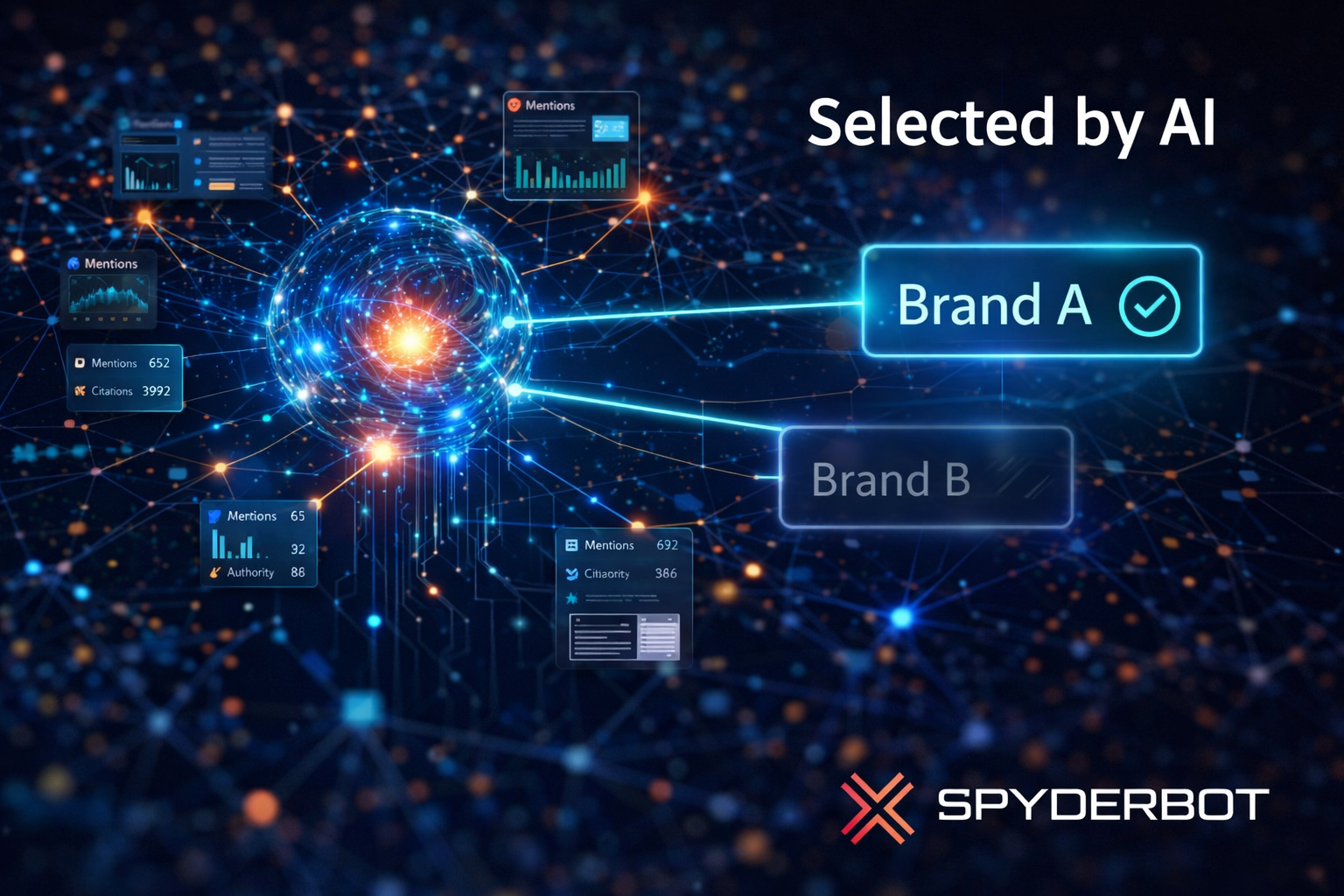
    A brand mention is not the same as a Google ranking. Ranking is about where your page appears in search results. Mention visibility is about whether AI systems include your brand inside generated answers.

    That distinction is critical.

    In traditional SEO, the question is:

    “Does my page rank?”

    In Gemini visibility, the question becomes:

    “Does Gemini understand, trust, and select my brand as part of the answer?”

    II. Why Gemini Is Different From ChatGPT

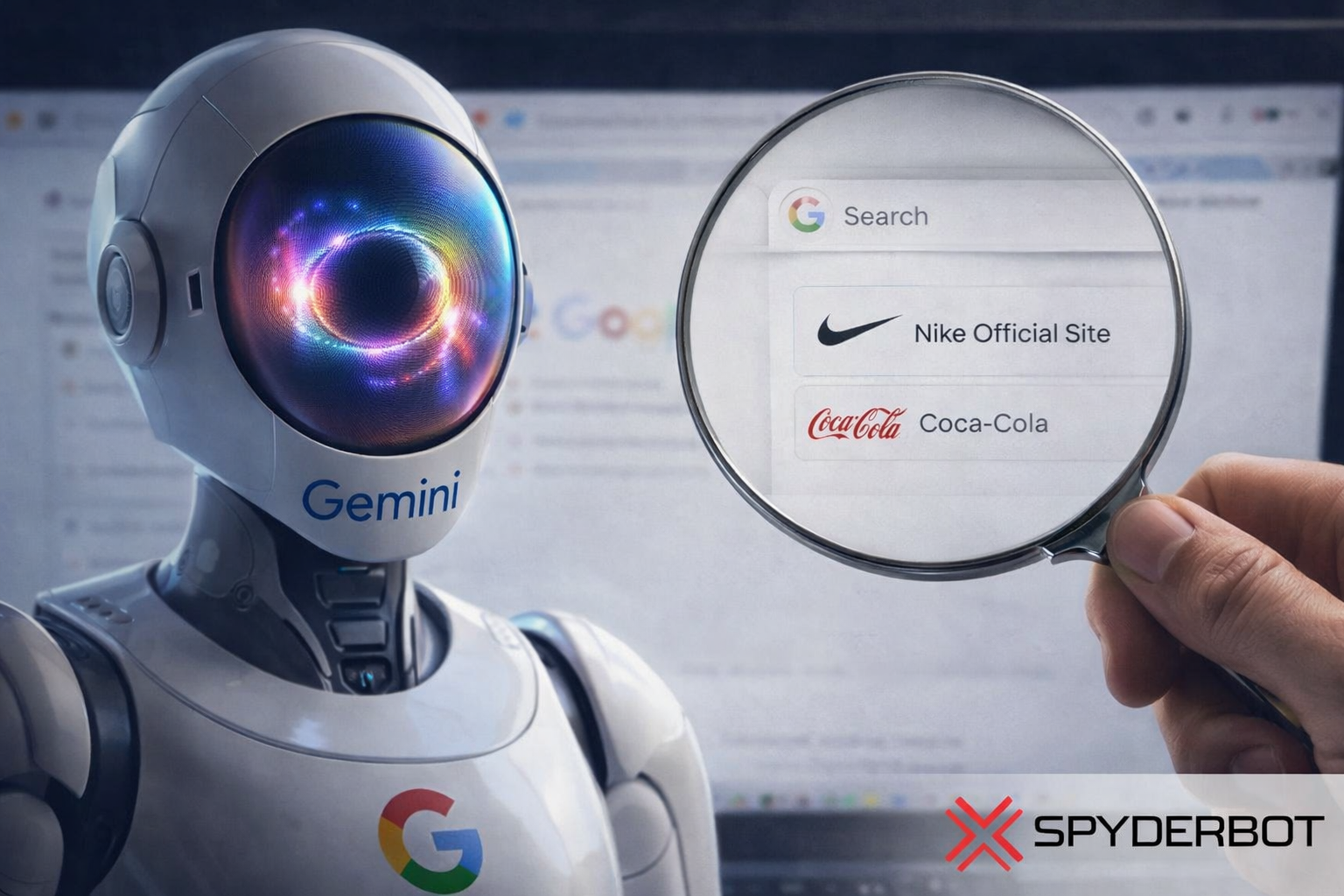
    Gemini is different because it is closely connected to Google’s search ecosystem.

    ChatGPT often relies on model knowledge, learned associations, browsing behavior when available, and response generation patterns. Gemini, especially inside Google products and Search experiences, is more directly connected to Google’s broader information retrieval environment.

    Google’s Gemini Apps may show sources and related links, and the double-check feature uses Google Search to find content that is likely similar to or different from parts of a Gemini response.

    That means Gemini visibility is shaped by both:

    • AI understanding
    • Search visibility

    This does not mean Google rankings automatically control Gemini answers. They do not. But it does mean that if your content is poorly indexed, unclear, weak, or disconnected from relevant search intent, Gemini has fewer reasons to mention your brand.

    The practical difference is simple:

    ChatGPT visibility is often more association-driven.

    Gemini visibility is more search-and-entity-driven.

    III. The Gemini Brand Mention Model

    A useful way to understand Gemini brand mentions is this model:

    Gemini Brand Mentions = Search Visibility × Relevance × Entity Clarity × Source Confidence × Answer Fit

    Each part matters.

    1. Search Visibility

    Gemini is more likely to surface brands that are visible across the web, indexed properly, and connected to relevant search queries.

    This includes:

    • Indexed pages
    • Clear landing pages
    • Strong topical coverage
    • Search-visible brand references
    • Consistent mentions from credible third-party sources

    If your website is not visible in Google Search, Gemini may still know your brand in some cases, but your chances of being cited or included are weaker.

    Google also recommends using canonical URLs and sitemaps to help indicate which pages site owners consider important, especially when duplicate or similar content exists.

    2. Relevance

    Gemini does not mention brands randomly. It tries to answer the user’s intent.

    If a user asks about “AI SEO tools,” Gemini may select a different set of brands than if the user asks about “LLM brand monitoring software” or “Gemini citation tracking.”

    This is why broad homepage messaging is not enough.

    A brand needs content that clearly matches specific user problems, such as:

    • How to track brand mentions in Gemini
    • How to improve AI search visibility
    • Why AI tools recommend competitors
    • How to monitor LLM citations
    • How to compare SEO visibility with AI visibility

    The more directly your content maps to real user questions, the easier it becomes for AI systems to understand when your brand is relevant.

    3. Entity Clarity

    Entity clarity means Gemini can understand what your brand is, what category it belongs to, who it serves, and how it differs from alternatives.

    Weak entity clarity happens when a website uses vague positioning such as:

    “We help brands grow with AI.”

    Strong entity clarity sounds more like:

    “SpyderBot is a GEO analytics platform that helps brands track how AI systems such as ChatGPT, Gemini, Claude, Grok, and Copilot mention, cite, and compare their brand against competitors.”

    That sentence gives AI systems clearer signals:

    • Brand name: SpyderBot
    • Category: GEO analytics platform
    • Use case: AI brand visibility tracking
    • Platforms covered: ChatGPT, Gemini, Claude, Grok, Copilot
    • Competitive angle: brand comparison and competitor monitoring

    Clear entities are easier to retrieve, classify, and mention.

    4. Source Confidence

    Gemini may provide sources or related links for some responses, but not every answer includes citations. Google’s own help documentation states that Gemini Apps may show sources and related content, and users can double-check responses when available.

    For brands, this creates a new layer of competition.

    It is not enough to be mentioned. You want to be mentioned with confidence.

    Source confidence can come from:

    • Clear website content
    • Authoritative pages
    • Consistent brand descriptions
    • Third-party references
    • Structured data
    • Case studies
    • Product pages
    • Comparison pages
    • Documentation
    • Reviews
    • High-quality educational content

    The stronger your source ecosystem, the easier it is for Gemini to connect your brand to a topic.

    5. Answer Fit

    Even if your brand is relevant, Gemini still has to decide whether it fits the final answer.

    For example, if the user asks for “free SEO tools,” a paid enterprise GEO platform may not be the best answer. If the user asks for “AI visibility tracking for brands,” that same platform becomes more relevant.

    Answer fit depends on:

    • User intent
    • Query specificity
    • Market category
    • Brand positioning
    • Competing options
    • Available sources
    • The format of the answer

    This is why brands should not optimize only for keywords. They should optimize for answer scenarios.

    IV. Why Some Brands Appear in Gemini More Than Others

    Some brands appear more often in Gemini because they have stronger digital signals across multiple layers.

    They are not just ranking for one keyword. They are consistently present in the broader information environment around a topic.

    Common reasons include:

    • Their pages are indexed properly
    • Their content is easy to parse
    • Their category is clear
    • Their brand is mentioned by other websites
    • Their product pages answer specific questions
    • Their comparisons are visible
    • Their content uses consistent language
    • Their website has strong internal linking
    • Their brand is connected to relevant entities

    In other words, Gemini visibility is not only about SEO ranking. It is about whether the AI can understand why your brand belongs in the answer.

    V. Why Some Brands Do Not Appear in Gemini

    A brand can rank on Google and still fail to appear in Gemini.

    This is one of the biggest misunderstandings in AI search.

    Ranking gives visibility. It does not guarantee selection.

    A brand may be excluded from Gemini answers because:

    • The content is too generic
    • The page does not clearly define the product category
    • The brand is not associated with the user’s intent
    • The website lacks supporting pages
    • Competitors have clearer use-case content
    • The content is not structured for AI extraction
    • Google has indexed the page, but the page is not useful enough
    • The brand lacks third-party validation
    • The page overlaps too much with existing content

    Google’s helpful content guidance emphasizes creating content for people first, not content made primarily to attract search engine traffic.

    That is important because many AI visibility articles fail for the same reason: they repeat definitions without adding operational value.

    VI. How SEO Influences Gemini Visibility

    SEO still matters in Gemini, but it works differently.

    Traditional SEO asks:

    “Can Google crawl, index, and rank this page?”

    Gemini visibility asks:

    “Can Google’s AI understand, retrieve, trust, and use this information in an answer?”

    That means SEO supports Gemini visibility through:

    • Crawlability
    • Indexability
    • Page quality
    • Internal linking
    • Structured headings
    • Topical authority
    • Entity consistency
    • Query relevance
    • Source quality

    But SEO alone is not enough.

    A page can rank and still not be selected if it does not provide a clear answer, a clear entity, or a strong reason for Gemini to include the brand.

    The stronger strategy is to combine SEO with GEO.

    SEO helps your content become discoverable.

    GEO helps your brand become selectable in AI-generated answers.

    VII. How to Improve Brand Mentions in Gemini

    1. Build pages around real AI search questions

    Do not only create broad pages like “AI SEO platform.”

    Create problem-based pages such as:

    • Why is Gemini not mentioning my brand?
    • How does Gemini choose sources?
    • How do I track brand mentions in Gemini?
    • Why does Gemini recommend my competitor?
    • How can I improve AI visibility in Google Gemini?

    These pages match real user intent and give AI systems clearer context.

    2. Define your brand clearly on every important page

    Every important page should make it easy to understand:

    • What your brand is
    • What problem it solves
    • Who it is for
    • What category it belongs to
    • What makes it different
    • Which AI platforms or search systems it relates to

    Avoid vague positioning. AI systems need specificity.

    3. Use structured headings

    Gemini and search systems benefit from content that is easy to parse.

    Use direct headings such as:

    • What is a Gemini brand mention?
    • Does SEO affect Gemini visibility?
    • Why does Gemini mention competitors?
    • How can brands improve Gemini visibility?

    This improves readability and helps the page align with question-based search behavior.

    4. Add original insight

    Generic AI SEO content is everywhere. To improve indexability and usefulness, add something specific.

    For example:

    • A model
    • A framework
    • A workflow
    • A checklist
    • A case scenario
    • A diagnostic table
    • A comparison
    • A founder insight
    • A practical example

    For this topic, the useful framework is:

    Search Visibility × Relevance × Entity Clarity × Source Confidence × Answer Fit

    That gives the article a stronger original structure.

    5. Strengthen internal linking

    A Gemini brand mention article should link internally to related pages such as:

    • GEO strategy
    • AI search analytics
    • LLM brand monitoring
    • ChatGPT brand mentions
    • Claude brand mentions
    • AI visibility audit
    • Competitor mention tracking
    • AI citation tracking

    Internal links help Google understand the topical cluster and reduce the chance that the article appears isolated.

    6. Add FAQ schema

    FAQ schema can help clarify the page’s question-answer structure. Google states that structured data helps Google understand the content of a page and information about entities on the web.

    FAQ schema should not be abused. It should reflect real questions answered on the page.

    VIII. Gemini vs ChatGPT for Brand Mentions

    Gemini and ChatGPT can mention different brands for the same query.

    This happens because their systems, data access, retrieval behavior, and answer construction patterns are different.

    FactorChatGPTGemini
    Main influenceModel knowledge and learned associationsAI reasoning plus Google-connected search context
    Search dependencyVaries by mode and availabilityStronger in Google ecosystem
    CitationsDepends on product experienceSources and related links may appear in Gemini Apps
    SEO impactIndirectMore direct
    Entity clarityImportantVery important
    Indexed contentHelpfulMore important
    Brand selectionBased on relevance, patterns, and available contextBased on relevance, search visibility, entity signals, and answer fit

    The key point is this:

    A brand should not assume that success in Google rankings automatically means success in Gemini answers.

    The two are connected, but they are not identical.

    IX. Where SpyderBot Fits

    SpyderBot helps brands understand how AI systems see them.

    Instead of only asking whether a page ranks on Google, SpyderBot focuses on deeper AI visibility questions:

    • Does Gemini mention your brand?
    • Does Gemini mention your competitors instead?
    • Does Gemini cite your website?
    • What context does Gemini use when describing your brand?
    • Which prompts trigger your brand visibility?
    • Which prompts exclude your brand?
    • How does Gemini visibility differ from ChatGPT visibility?
    • Are you visible in AI answers even when you rank on Google?
    • Are competitors dominating AI-generated recommendations?

    This matters because AI visibility is becoming a separate layer of brand discovery.

    A company may have strong SEO but weak AI mentions.

    Another company may have weaker rankings but stronger AI answer inclusion because its positioning is clearer, its content is easier to extract, or its brand is better associated with a specific use case.

    SpyderBot helps identify that gap.

    X. The Main Takeaway

    Gemini brand mentions are not random. They are shaped by search visibility, relevance, entity clarity, source confidence, and answer fit.

    For brands, this changes the SEO playbook.

    The goal is no longer only to rank.

    The goal is to become understandable, retrievable, trustworthy, and selectable by AI systems.

    In the old search model, users compared websites.

    In the AI search model, users compare answers.

    If your brand is not inside the answer, you may be invisible at the most important moment of decision.

    That is why Gemini visibility should be treated as part of a modern GEO strategy, not just a traditional SEO task.
  • LLM Brand Mentions

    LLM Brand Mentions

    I. What are LLM brand mentions?

    LLM brand mentions are the ways large language models such as ChatGPT, Gemini, Claude, Copilot, Grok, and Perplexity include, describe, compare, and recommend brands in generated answers.

    This includes:

    • Whether a brand is mentioned
    • How often the brand appears
    • Which prompts trigger the mention
    • How the brand is described
    • Whether the brand is recommended or only listed
    • Which competitors appear alongside it
    • Whether the brand is framed positively, neutrally, or weakly

    In traditional search, brands compete for rankings.

    In AI-generated answers, brands compete for inclusion.

    That is why LLM brand mentions are becoming an important part of AI visibility and Generative Engine Optimization.

    II. Why LLM brand mentions matter

    LLM brand mentions matter because AI systems increasingly influence how users discover products, compare companies, and make decisions.

    In traditional search, users see multiple links and decide what to click.

    In AI systems, users often receive a synthesized answer.

    That means the AI system may decide which brands are worth mentioning before the user visits any website.

    If your brand is not mentioned, you may be invisible at the decision stage.

    If your brand is mentioned poorly, users may misunderstand your positioning.

    If your brand is mentioned strongly, you can influence decisions before the click.

    III. LLM brand mentions vs SEO visibility

    LLM brand mentions are different from SEO rankings.

    SEO visibilityLLM brand mentions
    Based on rankingsBased on inclusion
    Focuses on pagesFocuses on entities
    Measures trafficMeasures AI visibility
    Uses keywordsUses context and meaning
    Competes on SERPsCompetes inside answers

    SEO asks:

    Where do we rank?

    LLM visibility asks:

    Are we included in the answer?

    This is a major shift.

    A company can rank well on Google but still be missing from ChatGPT answers.

    IV. The 4 dimensions of LLM brand mentions

    To understand LLM brand mentions properly, companies should analyze four dimensions:

    1. Inclusion
    2. Frequency
    3. Context
    4. Framing

    Together, these dimensions show whether a brand is visible, how often it appears, when it appears, and how AI systems position it.

    V. Inclusion: is your brand mentioned at all?

    Inclusion is the most basic layer of LLM brand visibility.

    It answers:

    Does your brand appear in AI-generated answers?

    Key questions include:

    • Is the brand mentioned in relevant prompts?
    • Does it appear when users ask for recommendations?
    • Does it appear in comparison prompts?
    • Does it appear in problem-based prompts?
    • Is it included alongside competitors?

    If the brand is not included, it has no AI visibility in that context.

    No inclusion means no presence in the AI-generated decision layer.

    VI. Frequency: how often does your brand appear?

    Frequency measures how consistently a brand appears across relevant prompts.

    It answers:

    How often does AI mention the brand?

    Useful metrics include:

    • Mention rate
    • Mention share
    • Prompt coverage
    • Competitor mention comparison
    • Visibility consistency across AI systems

    A brand mentioned once is not necessarily strong.

    A brand mentioned consistently across different prompts, categories, and use cases has stronger AI visibility.

    VII. Context: when does AI mention your brand?

    Context explains the situations where a brand appears.

    It answers:

    In what kinds of questions does AI include the brand?

    Examples of useful contexts include:

    • Best tools for a category
    • Alternatives to a competitor
    • Product comparisons
    • Use-case recommendations
    • Industry-specific solutions
    • Problem-solving prompts
    • Buying decision prompts

    Context matters because not all mentions are equally valuable.

    A brand appearing in irrelevant contexts may not drive meaningful visibility.

    A brand appearing in high-intent recommendation prompts is more valuable.

    VIII. Framing: how does AI describe your brand?

    Framing is one of the most important parts of LLM brand mentions.

    It answers:

    How does AI position the brand?

    AI may frame a brand as:

    • A market leader
    • A niche solution
    • A beginner-friendly option
    • A technical platform
    • A budget alternative
    • A premium solution
    • A competitor to another brand
    • A less complete option

    Framing influences perception.

    Being mentioned is not enough.

    The way AI describes the brand can shape whether users trust it, ignore it, or compare it seriously.

    IX. The LLM Brand Mention Model

    A simple way to understand AI brand visibility is:

    LLM Brand Mentions = Inclusion + Frequency + Context + Framing

    This model helps teams move beyond basic tracking.

    A brand should not only ask:

    Are we mentioned?

    It should also ask:

    • How often are we mentioned?
    • In which contexts?
    • How are we described?
    • Who appears beside us?
    • Are we framed better or worse than competitors?

    X. How LLMs generate brand mentions

    LLMs do not work like traditional search engines.

    They do not simply rank pages and display results.

    They generate answers based on patterns, context, entity relationships, and available information.

    Several factors may influence brand mentions:

    1. Entity understanding

    AI systems need to understand what the brand is.

    This includes:

    • Brand name
    • Product category
    • Core offering
    • Target audience
    • Main use cases
    • Competitor set
    • Market positioning

    If the entity is unclear, the brand is less likely to be mentioned correctly.

    2. Context relevance

    AI systems need to determine whether the brand fits the user’s question.

    A brand may be known, but if it is not clearly associated with a specific use case, it may not appear.

    3. Association strength

    Association strength refers to how strongly a brand is connected to a topic, category, or problem.

    For example, if AI systems strongly associate a competitor with “AI visibility tracking,” that competitor may appear more often in relevant answers.

    4. Answer construction

    AI systems structure answers based on what seems useful, relevant, and coherent.

    Some brands may appear as primary recommendations.

    Others may appear only as alternatives.

    Some may be excluded entirely.

    XI. Why some brands are never mentioned by AI

    A brand may be missing from LLM-generated answers for several reasons:

    • The brand entity is unclear
    • The website does not explain the product clearly
    • The category positioning is weak
    • Competitors have stronger associations
    • The brand is not connected to relevant use cases
    • There are few trusted references about the brand
    • The brand appears in the wrong context
    • The messaging is inconsistent across sources

    This is why more content does not always create more AI visibility.

    The content must improve understanding, relevance, and associations.

    XII. Types of LLM brand mentions

    Not all LLM brand mentions are equal.

    There are several types:

    1. Primary mentions

    The brand appears as a main recommendation.

    This is usually the strongest type of mention.

    2. Secondary mentions

    The brand appears as one option among several alternatives.

    This is useful, but less powerful than being a primary recommendation.

    3. Comparative mentions

    The brand is compared directly with competitors.

    This can be valuable if the framing is strong.

    4. Contextual mentions

    The brand appears only in specific use cases or niche contexts.

    This can be useful when the context matches high-intent users.

    5. Weak mentions

    The brand is mentioned but not clearly explained or recommended.

    This may create low influence despite visibility.

    XIII. Common misconceptions about LLM brand mentions

    Misconception 1: If we rank on Google, AI will mention us

    Not always.

    SEO rankings can help, but they do not guarantee AI visibility.

    A brand can rank well and still be excluded from AI-generated answers.

    Misconception 2: More content means more mentions

    Not necessarily.

    More content only helps if it improves entity clarity, context relevance, and association strength.

    Misconception 3: Mentions are random

    LLM mentions are probabilistic, but they are not purely random.

    Patterns can be tracked, compared, and improved over time.

    Misconception 4: Any mention is good

    Not always.

    A weak or inaccurate mention can damage positioning.

    The quality of framing matters.

    XIV. How to measure LLM brand mentions

    Companies can measure LLM brand mentions through several metrics:

    • Inclusion rate
    • Mention frequency
    • Mention share vs competitors
    • Context coverage
    • Prompt coverage
    • Framing quality
    • Sentiment or positioning
    • Primary vs secondary mention rate
    • Competitor co-mentions
    • AI system consistency

    These metrics help teams understand not just whether they appear, but how strong their AI visibility really is.

    XV. How to improve LLM brand mentions

    1. Improve entity clarity

    Make it easy for AI systems to understand what the brand is.

    Clarify:

    • Brand category
    • Core product
    • Target users
    • Main use cases
    • Key differentiators
    • Competitors and alternatives

    2. Strengthen contextual relevance

    Create content that connects the brand to real user problems and buying contexts.

    Cover:

    • Use cases
    • Comparisons
    • Alternatives
    • Industry applications
    • Problem-solution pages
    • FAQs
    • Category explanations

    3. Build stronger associations

    The brand should be consistently associated with the right topics.

    For example:

    • AI visibility
    • GEO analytics
    • LLM tracking
    • AI brand monitoring
    • AI search analytics
    • Competitor mention tracking

    4. Improve brand framing

    Make sure the brand is described consistently across website copy, articles, profiles, and third-party pages.

    Strong framing helps AI systems represent the brand more accurately.

    5. Compare against competitors

    AI visibility is competitive.

    Track which competitors appear more often, how they are described, and which prompts make them show up.

    XVI. Real-world example

    Imagine a SaaS company with strong SEO traffic.

    The company ranks well on Google and receives steady organic visits.

    But when users ask AI systems for the best tools in its category, competitors appear more often.

    The problem may not be traffic.

    The problem may be weak LLM brand visibility.

    Possible root causes include:

    • The brand is not clearly categorized
    • AI does not connect the brand to high-intent use cases
    • Competitors have stronger mention patterns
    • The website does not explain the product clearly enough
    • The brand is framed as generic rather than specialized

    This is why LLM brand mentions need to be measured separately from SEO.

    XVII. Where SpyderBot fits

    SpyderBot is designed to analyze LLM brand mentions across the dimensions that matter:

    • Inclusion
    • Frequency
    • Context
    • Framing
    • Competitor mentions
    • Prompt-level behavior
    • AI interpretation
    • Brand positioning

    SpyderBot helps answer:

    • Are we mentioned in AI answers?
    • How often are we mentioned?
    • Which competitors appear instead?
    • How does AI describe our brand?
    • Why are we missing from key prompts?
    • How can we improve AI visibility?

    This turns LLM brand mentions from a vague concept into a measurable visibility layer.

    XVIII. Final conclusion

    LLM brand mentions are becoming one of the most important signals in AI search visibility.

    They show whether AI systems understand, include, and recommend a brand in generated answers.

    Traditional SEO focuses on ranking pages.

    LLM visibility focuses on brand inclusion, context, and framing.

    The brands that win in AI search will not only rank well.

    They will be selected, understood, and positioned correctly inside AI-generated answers.

  • Why SEO Metrics Fail in AI Systems

    Why SEO Metrics Fail in AI Systems

    The gap between ranking, traffic, and real visibility in AI


    The uncomfortable truth

    You can have:

    • #1 rankings on Google
    • Strong backlinks
    • High organic traffic

    And still:

    Not be mentioned in AI-generated answers


    This is not a bug — it’s a system mismatch

    SEO metrics were designed for:

    Search engines that rank pages

    AI systems operate on:

    Generating answers


    The core problem

    SEO metrics measure retrieval performance
    AI visibility depends on selection and generation


    The biggest misconception

    Many companies assume:

    “If we rank well, AI will mention us”

    But in reality:

    Ranking ≠ inclusion


    Why SEO metrics fail in AI systems


    1. Rankings measure position — not inclusion

    SEO tracks:

    • Position on SERP
    • Visibility in search results

    But AI works differently:

    There is no:

    • Page 1
    • Position #1
    • List of results

    Instead:

    AI decides:

    • Which brands to include
    • Which to exclude

    Key insight

    In AI, if you are not included, you are invisible


    2. Traffic does not equal influence

    SEO success often means:

    • High traffic
    • Many visitors

    But in AI:

    Users:

    • Ask a question
    • Get an answer
    • Make a decision

    No click required


    Key insight

    Traffic measures visits
    AI measures influence


    3. Keywords are not the primary unit anymore

    SEO is built on:

    • Keywords
    • Search queries

    AI systems rely on:

    • Entities
    • Relationships
    • Context

    Key insight

    Matching keywords does not guarantee being selected


    4. Backlinks do not translate directly to AI visibility

    Backlinks signal:

    • Authority
    • Trust
    • Popularity

    But AI does not “count links”

    It learns:

    • Patterns
    • Associations
    • Contextual relevance

    Key insight

    Authority in SEO ≠ authority in AI


    5. SEO metrics ignore context variability

    In SEO:

    • Ranking is relatively stable
    • Position is predictable

    In AI:

    • Output changes per prompt
    • Context matters heavily
    • Results are probabilistic

    Key insight

    Visibility in AI is dynamic, not fixed


    6. SEO tools cannot see AI outputs

    Traditional SEO tools:

    • Track rankings
    • Track traffic
    • Analyze pages

    But they cannot:

    • See ChatGPT answers
    • Analyze AI responses
    • Track brand mentions in AI

    Key insight

    You cannot optimize what you cannot measure


    The real gap: visibility vs inclusion

    SEO MetricWhat it measuresWhat it misses
    RankingPositionInclusion
    TrafficVisitsInfluence
    KeywordsMatchingUnderstanding
    BacklinksAuthorityAssociations

    The shift in visibility

    We are moving from:

    • Ranking-based visibility

    To:

    • Inclusion-based visibility

    The new problem companies face

    You may have:

    • Strong SEO performance

    But:

    • Zero AI visibility

    This creates a hidden risk

    You are losing influence without realizing it


    What replaces SEO metrics in AI?

    AI systems require new metrics:


    1. Inclusion rate

    • How often are you mentioned?

    2. Mention share

    • How often vs competitors?

    3. Context coverage

    • In how many scenarios do you appear?

    4. Positioning

    • How are you described?

    5. Consistency

    • Do you appear across prompts?

    The key insight

    AI visibility is multi-dimensional — not a single ranking


    A realistic scenario

    A company:

    • Ranks #1 for “best tools”
    • Has strong SEO metrics

    But in ChatGPT:

    • Not mentioned
    • Competitors dominate

    Result:

    • SEO → strong
    • AI influence → zero

    Why this matters now

    User behavior is changing:

    • Less searching
    • More asking

    Which means:

    Decisions are shifting from Google to AI


    What companies should do


    1. Keep SEO — but understand its limits

    SEO still drives:

    • Traffic
    • Discovery

    2. Add AI visibility tracking

    You need to measure:

    • Mentions
    • Inclusion
    • Context

    3. Shift from keywords to entities

    Focus on:

    • What you are
    • How AI understands you

    4. Optimize for inclusion

    Not just:

    • Ranking

    But:

    • Being selected

    Where SpyderBot fits

    SpyderBot is designed to measure:

    • Inclusion
    • AI visibility
    • Brand positioning
    • LLM behavior

    It answers:

    • Why you are not mentioned
    • Where you lose to competitors
    • How AI interprets your brand

    The honest conclusion

    SEO metrics are not wrong.

    They are:

    Incomplete for the AI era


    Final insight

    Ranking tells you where you stand in search

    But:

    Inclusion determines whether you exist in AI


    The shift

    We are moving from:

    • Measuring clicks

    To:

    • Measuring influence
  • How ChatGPT Selects Brands

    How ChatGPT Selects Brands

    A practical model for understanding how AI systems decide what to recommend


    The wrong assumption most companies make

    Most companies believe:

    “If we rank well or have good content, AI will mention us.”

    But in reality:

    ChatGPT does not “rank” brands — it selects them


    The real question

    “How does ChatGPT decide which brands to include in an answer?”


    The short answer

    ChatGPT selects brands based on:

    Probability of inclusion driven by entity understanding, context relevance, and learned associations


    The ChatGPT Brand Selection Framework

    We can break this into 4 core layers:

    1. Entity Understanding
    2. Context Matching
    3. Association Strength
    4. Response Construction

    1. Entity Understanding

    “What is this brand?”

    Before anything else, ChatGPT needs to understand:

    • What your company is
    • What category you belong to
    • What problem you solve

    If this fails:

    • You will not be considered
    • You may be misclassified
    • You may be ignored entirely

    Example:

    If AI thinks your product is:

    • “analytics tool” instead of “AI visibility platform”

    → You won’t appear in the right queries


    Key insight

    If AI cannot clearly define you, it cannot select you


    2. Context Matching

    “Is this brand relevant to the question?”

    ChatGPT evaluates:

    • User intent
    • Query context
    • Problem being solved

    It asks (implicitly):

    • Does this brand fit this scenario?
    • Is it relevant to this use case?

    If this fails:

    • You may be known
    • But not selected

    Key insight

    Visibility is contextual, not global


    3. Association Strength

    “How strongly is this brand linked to this context?”

    This is one of the most important layers.

    ChatGPT relies on:

    • Learned relationships
    • Repeated co-occurrence
    • Strong category signals

    It evaluates:

    • Is this brand commonly associated with this use case?
    • Is it a “default example” in this category?

    If this fails:

    • Competitors will dominate
    • You will be secondary or absent

    Key insight

    AI selects brands with the strongest associations, not just the best products


    4. Response Construction

    “How does ChatGPT build the final answer?”

    Even if you pass all previous layers:

    ChatGPT still needs to:

    • Choose how many brands to include
    • Decide ordering
    • Frame each brand

    This includes:

    • Mention priority
    • Description style
    • Comparative positioning

    If this fails:

    • You may be mentioned
    • But not prominently

    Key insight

    Being included is not enough — positioning matters


    The complete model

    Brand Selection = Entity Clarity × Context Relevance × Association Strength × Response Positioning


    Why some brands never appear

    Because they fail at one or more layers:


    Case 1: Poor entity clarity

    • AI doesn’t understand what you are

    Case 2: Weak context relevance

    • Not aligned with user queries

    Case 3: Weak associations

    • Not strongly linked to the category

    Case 4: Low response priority

    • Mentioned but not prominent

    The most important shift

    ChatGPT does not search for brands
    It reconstructs answers from learned patterns


    This is fundamentally different from SEO

    SEOChatGPT
    Ranking pagesSelecting entities
    Keyword matchingContext matching
    BacklinksAssociations
    SERP positionInclusion & positioning

    The biggest misconception

    “If we optimize content, we will be selected”

    Not necessarily.

    Because:

    Selection depends on how AI understands you — not just what you publish


    What companies should focus on


    1. Entity clarity

    • Define your category clearly
    • Avoid ambiguity
    • Maintain consistent positioning

    2. Context coverage

    • Appear across relevant use cases
    • Align with user intents
    • Expand contextual presence

    3. Association building

    • Strengthen links to key concepts
    • Appear alongside competitors
    • Reinforce category relevance

    4. Positioning in answers

    • Aim for primary mention
    • Improve prominence
    • Shape narrative

    Why most GEO strategies fail

    Because they focus only on:

    • Content optimization
    • Surface-level tactics

    But ignore:

    How AI actually selects brands


    Where SpyderBot fits

    SpyderBot is designed to analyze:

    • Entity understanding
    • Context relevance
    • Association strength
    • AI response behavior

    It helps answer:

    • Why you are not selected
    • Where the breakdown happens
    • What needs to be fixed

    The honest conclusion

    There is no single “ranking factor” in ChatGPT.

    Instead, there is:

    A multi-layer selection process


    Final insight

    AI visibility is not about ranking higher

    It is about:

    Being understood, associated, and selected


    The future

    We are moving toward:

    • Ranking systems → selection systems
    • Keywords → entities
    • Traffic → influence
  • SEO for AI Search

    SEO for AI Search

    How to optimize for AI systems like ChatGPT, Gemini, and the future of search


    I. The question behind the shift

    As AI becomes the interface of the internet, a new question is emerging:

    “How do we do SEO for AI search?”

    It’s a natural question.

    But like “SEO for ChatGPT,” it hides a deeper reality:

    AI search does not work like traditional search


    II. AI search is fundamentally different

    Traditional search engines:

    • Index pages
    • Rank results
    • Return links

    AI search systems:

    • Interpret intent
    • Generate answers
    • Select and combine information

    This creates a new paradigm:

    You are not optimizing for ranking
    You are optimizing for inclusion


    III. What is “SEO for AI search”?

    “SEO for AI search” refers to:

    • Optimizing content for AI-generated answers
    • Increasing brand visibility in LLMs
    • Influencing how AI systems interpret your business

    The more accurate term is:

    Generative Engine Optimization (GEO)


    IV. From SEO to AI search optimization

    SEO helps you:

    Get discovered through search engines

    AI search optimization helps you:

    Get included in generated answers


    V. The new visibility model

    In AI search:

    • There are no result pages
    • There are no positions
    • There is no click competition

    There is only:

    Whether your brand appears in the answer


    VI. Why traditional SEO is not enough

    You can:

    • Rank #1 on Google
    • Have strong SEO
    • Own your keywords

    And still:

    Not appear in AI search

    This is the AI visibility gap


    VII. How AI search systems work

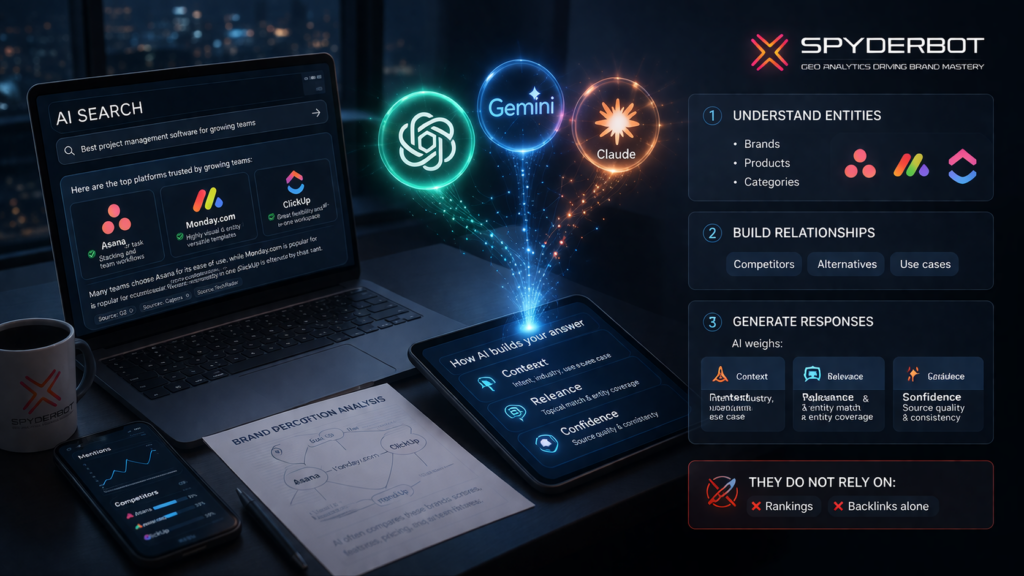
    AI systems like ChatGPT, Gemini, and Claude:

    1. Understand entities

    • Brands
    • Products
    • Categories

    2. Build relationships

    • Competitors
    • Alternatives
    • Use cases

    3. Generate responses based on:

    • Context
    • Relevance
    • Confidence

    They do not rely on:

    • Rankings
    • Backlinks alone

    VIII. What AI search actually optimizes for

    AI systems prioritize:

    1. Entity clarity

    Is your brand clearly defined?


    2. Contextual relevance

    Does your brand match the user’s intent?


    3. Semantic consistency

    Is your positioning consistent across content?


    4. Knowledge structure

    Is your content easy for AI to interpret?


    IX. SEO vs AI Search Optimization

    SEOAI Search Optimization
    KeywordsEntities
    RankingsMentions
    PagesConcepts
    BacklinksContext
    TrafficAI visibility

    X. The new metric: AI visibility

    AI visibility is:

    The presence and positioning of your brand in AI-generated answers

    It includes:

    • Brand mentions
    • Recommendation frequency
    • Position inside responses
    • Comparative context

    XI. How to do SEO for AI search (framework)

    1. Define your entity clearly

    Make it easy for AI to answer:

    “What is this company?”


    2. Own your category

    Ensure AI understands:

    “What category do you belong to?”


    3. Build contextual coverage

    Your brand should appear in:

    • Use cases
    • Alternatives
    • Comparisons

    4. Structure content for AI

    Focus on:

    • Clear definitions
    • Logical structure
    • Entity relationships

    5. Monitor AI visibility

    Track:

    • Mentions in ChatGPT
    • Competitor presence
    • AI interpretation

    XII. The biggest misconception

    Most companies think:

    “More SEO = more AI visibility”

    That’s not true.

    AI visibility depends on:

    • How AI understands you
    • Not how Google ranks you

    XIII. What winning companies are doing

    They:

    • Treat AI as a new channel
    • Optimize for understanding, not just ranking
    • Invest in AI search analytics

    XIV. The future of SEO for AI search

    We are moving toward:

    AI-first discovery

    Where:

    • AI systems are the interface
    • Answers replace results
    • Inclusion replaces ranking

    XV. Final insight

    SEO for AI search is not an extension of SEO.

    It is:

    A new layer of optimization

    And that layer is:

    Generative Engine Optimization (GEO)