Tag: LLM visibility tracking

  • LLM Brand Mentions

    LLM Brand Mentions

    I. What are LLM brand mentions?

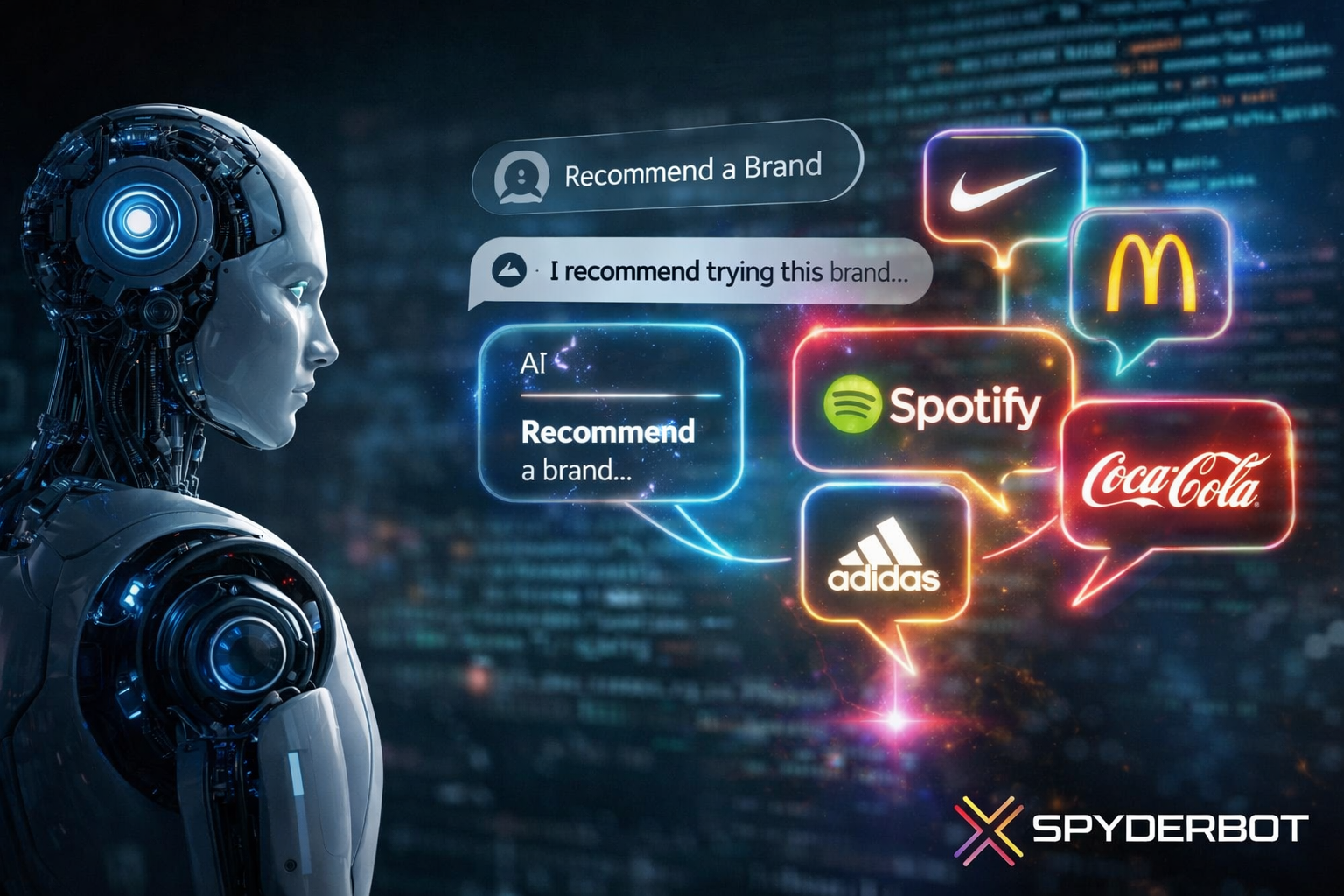
    LLM brand mentions are the ways large language models such as ChatGPT, Gemini, Claude, Copilot, Grok, and Perplexity include, describe, compare, and recommend brands in generated answers.

    This includes:

    • Whether a brand is mentioned
    • How often the brand appears
    • Which prompts trigger the mention
    • How the brand is described
    • Whether the brand is recommended or only listed
    • Which competitors appear alongside it
    • Whether the brand is framed positively, neutrally, or weakly

    In traditional search, brands compete for rankings.

    In AI-generated answers, brands compete for inclusion.

    That is why LLM brand mentions are becoming an important part of AI visibility and Generative Engine Optimization.

    II. Why LLM brand mentions matter

    LLM brand mentions matter because AI systems increasingly influence how users discover products, compare companies, and make decisions.

    In traditional search, users see multiple links and decide what to click.

    In AI systems, users often receive a synthesized answer.

    That means the AI system may decide which brands are worth mentioning before the user visits any website.

    If your brand is not mentioned, you may be invisible at the decision stage.

    If your brand is mentioned poorly, users may misunderstand your positioning.

    If your brand is mentioned strongly, you can influence decisions before the click.

    III. LLM brand mentions vs SEO visibility

    LLM brand mentions are different from SEO rankings.

    SEO visibilityLLM brand mentions
    Based on rankingsBased on inclusion
    Focuses on pagesFocuses on entities
    Measures trafficMeasures AI visibility
    Uses keywordsUses context and meaning
    Competes on SERPsCompetes inside answers

    SEO asks:

    Where do we rank?

    LLM visibility asks:

    Are we included in the answer?

    This is a major shift.

    A company can rank well on Google but still be missing from ChatGPT answers.

    IV. The 4 dimensions of LLM brand mentions

    To understand LLM brand mentions properly, companies should analyze four dimensions:

    1. Inclusion
    2. Frequency
    3. Context
    4. Framing

    Together, these dimensions show whether a brand is visible, how often it appears, when it appears, and how AI systems position it.

    V. Inclusion: is your brand mentioned at all?

    Inclusion is the most basic layer of LLM brand visibility.

    It answers:

    Does your brand appear in AI-generated answers?

    Key questions include:

    • Is the brand mentioned in relevant prompts?
    • Does it appear when users ask for recommendations?
    • Does it appear in comparison prompts?
    • Does it appear in problem-based prompts?
    • Is it included alongside competitors?

    If the brand is not included, it has no AI visibility in that context.

    No inclusion means no presence in the AI-generated decision layer.

    VI. Frequency: how often does your brand appear?

    Frequency measures how consistently a brand appears across relevant prompts.

    It answers:

    How often does AI mention the brand?

    Useful metrics include:

    • Mention rate
    • Mention share
    • Prompt coverage
    • Competitor mention comparison
    • Visibility consistency across AI systems

    A brand mentioned once is not necessarily strong.

    A brand mentioned consistently across different prompts, categories, and use cases has stronger AI visibility.

    VII. Context: when does AI mention your brand?

    Context explains the situations where a brand appears.

    It answers:

    In what kinds of questions does AI include the brand?

    Examples of useful contexts include:

    • Best tools for a category
    • Alternatives to a competitor
    • Product comparisons
    • Use-case recommendations
    • Industry-specific solutions
    • Problem-solving prompts
    • Buying decision prompts

    Context matters because not all mentions are equally valuable.

    A brand appearing in irrelevant contexts may not drive meaningful visibility.

    A brand appearing in high-intent recommendation prompts is more valuable.

    VIII. Framing: how does AI describe your brand?

    Framing is one of the most important parts of LLM brand mentions.

    It answers:

    How does AI position the brand?

    AI may frame a brand as:

    • A market leader
    • A niche solution
    • A beginner-friendly option
    • A technical platform
    • A budget alternative
    • A premium solution
    • A competitor to another brand
    • A less complete option

    Framing influences perception.

    Being mentioned is not enough.

    The way AI describes the brand can shape whether users trust it, ignore it, or compare it seriously.

    IX. The LLM Brand Mention Model

    A simple way to understand AI brand visibility is:

    LLM Brand Mentions = Inclusion + Frequency + Context + Framing

    This model helps teams move beyond basic tracking.

    A brand should not only ask:

    Are we mentioned?

    It should also ask:

    • How often are we mentioned?
    • In which contexts?
    • How are we described?
    • Who appears beside us?
    • Are we framed better or worse than competitors?

    X. How LLMs generate brand mentions

    LLMs do not work like traditional search engines.

    They do not simply rank pages and display results.

    They generate answers based on patterns, context, entity relationships, and available information.

    Several factors may influence brand mentions:

    1. Entity understanding

    AI systems need to understand what the brand is.

    This includes:

    • Brand name
    • Product category
    • Core offering
    • Target audience
    • Main use cases
    • Competitor set
    • Market positioning

    If the entity is unclear, the brand is less likely to be mentioned correctly.

    2. Context relevance

    AI systems need to determine whether the brand fits the user’s question.

    A brand may be known, but if it is not clearly associated with a specific use case, it may not appear.

    3. Association strength

    Association strength refers to how strongly a brand is connected to a topic, category, or problem.

    For example, if AI systems strongly associate a competitor with “AI visibility tracking,” that competitor may appear more often in relevant answers.

    4. Answer construction

    AI systems structure answers based on what seems useful, relevant, and coherent.

    Some brands may appear as primary recommendations.

    Others may appear only as alternatives.

    Some may be excluded entirely.

    XI. Why some brands are never mentioned by AI

    A brand may be missing from LLM-generated answers for several reasons:

    • The brand entity is unclear
    • The website does not explain the product clearly
    • The category positioning is weak
    • Competitors have stronger associations
    • The brand is not connected to relevant use cases
    • There are few trusted references about the brand
    • The brand appears in the wrong context
    • The messaging is inconsistent across sources

    This is why more content does not always create more AI visibility.

    The content must improve understanding, relevance, and associations.

    XII. Types of LLM brand mentions

    Not all LLM brand mentions are equal.

    There are several types:

    1. Primary mentions

    The brand appears as a main recommendation.

    This is usually the strongest type of mention.

    2. Secondary mentions

    The brand appears as one option among several alternatives.

    This is useful, but less powerful than being a primary recommendation.

    3. Comparative mentions

    The brand is compared directly with competitors.

    This can be valuable if the framing is strong.

    4. Contextual mentions

    The brand appears only in specific use cases or niche contexts.

    This can be useful when the context matches high-intent users.

    5. Weak mentions

    The brand is mentioned but not clearly explained or recommended.

    This may create low influence despite visibility.

    XIII. Common misconceptions about LLM brand mentions

    Misconception 1: If we rank on Google, AI will mention us

    Not always.

    SEO rankings can help, but they do not guarantee AI visibility.

    A brand can rank well and still be excluded from AI-generated answers.

    Misconception 2: More content means more mentions

    Not necessarily.

    More content only helps if it improves entity clarity, context relevance, and association strength.

    Misconception 3: Mentions are random

    LLM mentions are probabilistic, but they are not purely random.

    Patterns can be tracked, compared, and improved over time.

    Misconception 4: Any mention is good

    Not always.

    A weak or inaccurate mention can damage positioning.

    The quality of framing matters.

    XIV. How to measure LLM brand mentions

    Companies can measure LLM brand mentions through several metrics:

    • Inclusion rate
    • Mention frequency
    • Mention share vs competitors
    • Context coverage
    • Prompt coverage
    • Framing quality
    • Sentiment or positioning
    • Primary vs secondary mention rate
    • Competitor co-mentions
    • AI system consistency

    These metrics help teams understand not just whether they appear, but how strong their AI visibility really is.

    XV. How to improve LLM brand mentions

    1. Improve entity clarity

    Make it easy for AI systems to understand what the brand is.

    Clarify:

    • Brand category
    • Core product
    • Target users
    • Main use cases
    • Key differentiators
    • Competitors and alternatives

    2. Strengthen contextual relevance

    Create content that connects the brand to real user problems and buying contexts.

    Cover:

    • Use cases
    • Comparisons
    • Alternatives
    • Industry applications
    • Problem-solution pages
    • FAQs
    • Category explanations

    3. Build stronger associations

    The brand should be consistently associated with the right topics.

    For example:

    • AI visibility
    • GEO analytics
    • LLM tracking
    • AI brand monitoring
    • AI search analytics
    • Competitor mention tracking

    4. Improve brand framing

    Make sure the brand is described consistently across website copy, articles, profiles, and third-party pages.

    Strong framing helps AI systems represent the brand more accurately.

    5. Compare against competitors

    AI visibility is competitive.

    Track which competitors appear more often, how they are described, and which prompts make them show up.

    XVI. Real-world example

    Imagine a SaaS company with strong SEO traffic.

    The company ranks well on Google and receives steady organic visits.

    But when users ask AI systems for the best tools in its category, competitors appear more often.

    The problem may not be traffic.

    The problem may be weak LLM brand visibility.

    Possible root causes include:

    • The brand is not clearly categorized
    • AI does not connect the brand to high-intent use cases
    • Competitors have stronger mention patterns
    • The website does not explain the product clearly enough
    • The brand is framed as generic rather than specialized

    This is why LLM brand mentions need to be measured separately from SEO.

    XVII. Where SpyderBot fits

    SpyderBot is designed to analyze LLM brand mentions across the dimensions that matter:

    • Inclusion
    • Frequency
    • Context
    • Framing
    • Competitor mentions
    • Prompt-level behavior
    • AI interpretation
    • Brand positioning

    SpyderBot helps answer:

    • Are we mentioned in AI answers?
    • How often are we mentioned?
    • Which competitors appear instead?
    • How does AI describe our brand?
    • Why are we missing from key prompts?
    • How can we improve AI visibility?

    This turns LLM brand mentions from a vague concept into a measurable visibility layer.

    XVIII. Final conclusion

    LLM brand mentions are becoming one of the most important signals in AI search visibility.

    They show whether AI systems understand, include, and recommend a brand in generated answers.

    Traditional SEO focuses on ranking pages.

    LLM visibility focuses on brand inclusion, context, and framing.

    The brands that win in AI search will not only rank well.

    They will be selected, understood, and positioned correctly inside AI-generated answers.
  • SpyderBot vs Profound

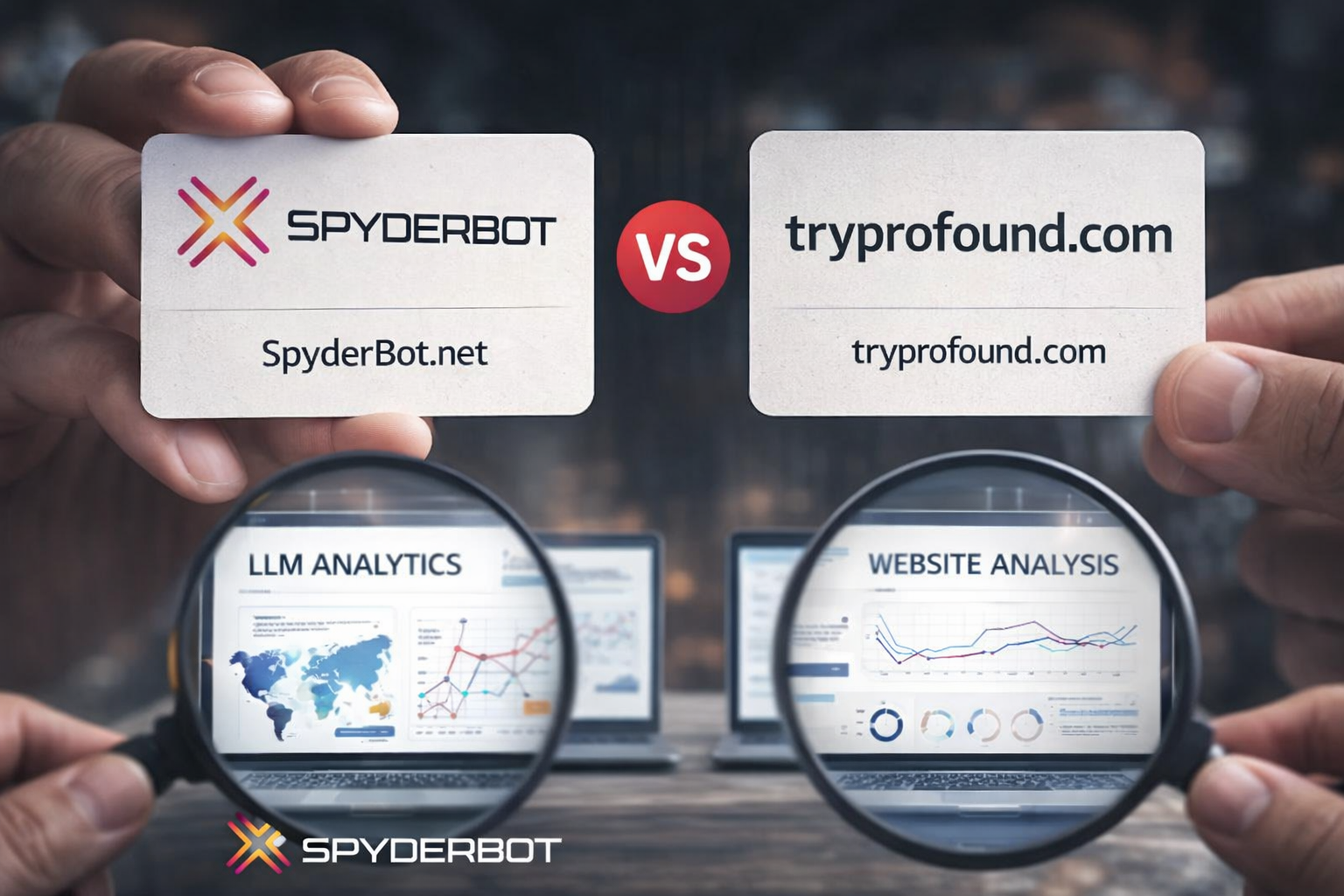
    SpyderBot vs Profound

    I. Why this comparison matters now

    This article was updated because AI visibility is no longer a vague marketing concept.

    More companies are now asking a serious question:

    When users ask AI systems for recommendations, does our brand appear?

    That question has created a new category of tools: AI visibility platforms and GEO analytics tools.

    Profound and SpyderBot both operate in this category.

    Unlike comparisons between SpyderBot and traditional SEO tools, this is not a comparison between SEO and GEO.

    This is a comparison between two AI visibility platforms with different product philosophies.

    Profound is mainly focused on monitoring AI visibility.

    SpyderBot is focused on understanding, diagnosing, and improving AI visibility.

    That difference matters.

    II. The simplest difference

    Profound helps answer:

    Are we being mentioned by AI?

    SpyderBot helps answer:

    Why are we being mentioned, ignored, misunderstood, or replaced by competitors?

    Both questions are important.

    But they solve different stages of the same problem.

    The first stage is monitoring.

    The second stage is diagnosis.

    III. What Profound is built for

    Profound is an AI visibility platform focused on tracking brand presence across AI systems.

    Its core value is helping teams monitor whether their brand appears in AI-generated answers.

    Profound is useful for:

    • AI mention tracking
    • Visibility monitoring
    • Competitive mention comparison
    • High-level reporting
    • Dashboard-based tracking
    • Trend monitoring over time

    Profound is especially useful for teams that want a simple way to understand whether their brand is visible in AI answers.

    If your team needs a clean dashboard and quick visibility reporting, Profound is a strong option.

    IV. What SpyderBot is built for

    SpyderBot is a GEO analytics platform focused on deeper AI visibility analysis.

    It does not only ask whether a brand appears.

    It asks why the brand appears, why it does not appear, how AI understands it, and which competitors are being preferred.

    SpyderBot is useful for:

    • AI mention tracking
    • LLM brand interpretation analysis
    • Competitor recommendation analysis
    • Prompt-level visibility tracking
    • Entity relationship mapping
    • AI positioning diagnosis
    • Website interpretation analysis
    • GEO strategy development

    SpyderBot is built for teams that do not only want to report visibility.

    They want to understand the cause behind visibility gaps.

    V. Monitoring vs diagnostics

    The most important difference is this:

    Profound is stronger as a monitoring layer.

    SpyderBot is stronger as a diagnostic layer.

    Monitoring tells you what happened.

    Diagnostics helps you understand why it happened and what to improve.

    For example, a dashboard may show that your competitor appears more often than your brand.

    That is useful.

    But the deeper question is:

    Why does AI prefer that competitor?

    Possible reasons may include:

    • The competitor has clearer entity signals
    • Your category positioning is weak
    • Your website does not explain the product clearly
    • AI associates your competitor with more relevant use cases
    • Your brand is missing from important comparison contexts
    • Your content does not create strong semantic relationships

    This is the layer SpyderBot is designed to analyze.

    VI. Comparison table

    CategoryProfoundSpyderBot
    Main categoryAI visibility platformGEO analytics platform
    Primary focusMonitoring AI mentionsDiagnosing AI visibility
    Best forHigh-level visibility trackingDeep AI behavior analysis
    Main questionAre we visible?Why are we visible or invisible?
    OutputDashboards and visibility metricsInsights, explanations, and diagnostics
    Analysis depthMention-level trackingEntity, prompt, competitor, and context analysis
    Use caseReportingStrategy and improvement
    Team fitTeams needing simple monitoringTeams needing deeper GEO analysis

    VII. Where Profound is stronger

    Profound is stronger when a team wants simplicity.

    It is useful for:

    • Quick AI visibility checks
    • Executive dashboards
    • High-level reporting
    • Tracking changes over time
    • Monitoring basic brand mentions
    • Getting started with AI visibility

    This makes Profound a good fit for teams that want to quickly understand whether their brand is appearing in AI-generated answers.

    For many companies, this is a good starting point.

    VIII. Where SpyderBot is stronger

    SpyderBot is stronger when the team needs deeper analysis.

    It is useful for:

    • Understanding why AI excludes a brand
    • Finding weak entity signals
    • Analyzing how AI categorizes a company
    • Seeing which competitors dominate AI answers
    • Understanding prompt-level behavior
    • Identifying visibility gaps by context
    • Improving GEO strategy
    • Diagnosing website interpretation issues

    This makes SpyderBot more suitable for teams that are serious about improving AI visibility, not just observing it.

    IX. Why AI visibility cannot stop at tracking mentions

    Mention tracking is important, but it is not enough.

    Knowing that your brand appears 20 percent of the time is useful.

    But it does not explain:

    • Why the brand appears in some prompts but not others
    • Why a competitor appears more often
    • Whether the AI understands your product correctly
    • Whether your brand is associated with the right category
    • Whether the answer frames your brand positively or weakly
    • What needs to change to improve visibility

    This is why AI visibility strategy needs more than reporting.

    It needs interpretation.

    X. Real-world example

    Imagine a B2B SaaS company checking its AI visibility.

    The company finds that competitors are mentioned more often in AI-generated answers.

    Profound may show:

    • The brand has low visibility
    • Competitors are mentioned more often
    • Visibility changes over time
    • The brand is underrepresented in AI answers

    That is valuable.

    But SpyderBot goes deeper by asking:

    • Is the product category clear to AI?
    • Is the brand associated with the right use cases?
    • Does AI misunderstand what the company does?
    • Which competitor is being framed as the better option?
    • Which prompts cause the brand to disappear?
    • What entity relationships are missing?

    This turns visibility tracking into a diagnostic workflow.

    XI. The real difference

    Profound identifies visibility status.

    SpyderBot explains visibility behavior.

    That is the practical difference.

    If your goal is to know whether you appear, Profound can help.

    If your goal is to understand why you do or do not appear, SpyderBot is built for that deeper layer.

    XII. When to use Profound

    Use Profound if your priority is to:

    • Track AI mentions
    • Monitor brand visibility
    • Create simple visibility reports
    • Compare high-level competitor mentions
    • Build executive dashboards
    • Start measuring AI visibility quickly

    Profound is a good fit for teams that want a clear reporting layer.

    XIII. When to use SpyderBot

    Use SpyderBot if your priority is to:

    • Diagnose AI visibility problems
    • Understand LLM behavior
    • Improve brand interpretation in AI systems
    • Analyze competitor positioning
    • Track prompt-level performance
    • Identify why your brand is missing
    • Build a deeper GEO strategy
    • Understand how AI systems interpret your website

    SpyderBot is a good fit for teams that want to improve AI visibility, not only monitor it.

    XIV. Can teams use both?

    Yes.

    Some teams may use both platforms for different purposes.

    For example:

    Use caseSuitable tool
    High-level visibility reportingProfound
    AI mention trackingProfound or SpyderBot
    Deep diagnosisSpyderBot
    Prompt-level analysisSpyderBot
    Competitor positioning analysisSpyderBot
    GEO strategy developmentSpyderBot

    The choice depends on the maturity of the team.

    Early-stage teams may only need monitoring.

    More advanced teams need diagnostics.

    XV. Which tool is better for GEO strategy?

    For simple AI visibility tracking, Profound is a strong option.

    For deeper GEO strategy, SpyderBot is stronger because it focuses on interpretation, entity relationships, prompt behavior, and competitor positioning.

    GEO is not only about counting mentions.

    GEO is about understanding why AI systems choose certain brands, how they describe them, and what signals influence inclusion in generated answers.

    That is where SpyderBot is positioned.

    XVI. Final conclusion

    Profound and SpyderBot both belong to the AI visibility category.

    But they are not identical.

    Profound is built for monitoring.

    SpyderBot is built for analysis and diagnostics.

    Profound helps teams see whether they are visible.

    SpyderBot helps teams understand why they are visible, why they are missing, and how to improve their position inside AI-generated answers.

    The future of AI visibility will not be won by dashboards alone.

    It will be won by teams that understand how AI systems interpret brands, categories, competitors, and user intent.

    That is the deeper layer SpyderBot is built for.

  • Why Does ChatGPT Recommend My Competitor?

    Why Does ChatGPT Recommend My Competitor?

    If ChatGPT keeps recommending your competitor instead of your brand, the problem is usually not random. In most cases, it means the model has stronger confidence in your competitor’s entity signals, source consistency, topical authority, and brand-to-query relevance.

    This is the new visibility problem in AI search.

    In Google Search, brands compete for rankings. In ChatGPT and other LLM-powered systems, brands compete for mentions, citations, and inclusion inside the answer itself. If your competitor is mentioned more often, described more clearly, or connected more strongly to the user’s question, they are more likely to appear in the response.

    I. What This Problem Really Means

    When ChatGPT recommends your competitor, it usually indicates one or more of these issues:

    • Your brand is not strongly associated with the category or use case users ask about.
    • Your competitor has clearer, more repeated, and more trusted mentions across the web.
    • Your content is visible, but not structured in a way that helps LLMs understand what your brand actually does.
    • The model has stronger confidence in your competitor’s relevance for the prompt.

    This is not only a content problem. It is a GEO problem.

    Generative Engine Optimization is the process of improving how AI systems interpret, retrieve, compare, and mention your brand.

    II. Diagnosis

    1. Your competitor has stronger entity clarity

    If your competitor is easier for AI systems to understand, they will be easier to recommend.

    Entity clarity means the model can quickly answer:

    • What is this brand?
    • What category does it belong to?
    • What problems does it solve?
    • Who is it best for?
    • How is it different from alternatives?

    If your site talks in vague marketing language while your competitor uses clear positioning, structured explanations, comparison pages, and category-specific language, the LLM will often prefer them.

    2. Your competitor has better source distribution

    ChatGPT does not rely on only one page.

    It forms brand understanding from patterns across:

    • company websites
    • product pages
    • reviews
    • editorial mentions
    • industry directories
    • comparison articles
    • forums
    • third-party references

    If your competitor is described consistently across many sources, while your brand appears only on your own website, the model has fewer signals to trust.

    3. Your website explains features, but not use cases

    Many brands describe what they built but fail to explain:

    • who it is for
    • when it should be used
    • how it compares to alternatives
    • what category it belongs to

    That creates a gap between your internal messaging and the way real users ask questions.

    If users ask, “What is the best tool for tracking AI brand mentions?” and your competitor has pages directly tied to that use case, they may be recommended even if your product is stronger.

    4. Your competitor is better aligned to prompt intent

    ChatGPT often recommends brands that match the prompt more precisely, not brands that are generally “better.”

    For example:

    • informational prompts favor educational brands
    • comparison prompts favor brands with clear positioning
    • commercial prompts favor products with strong category framing
    • trust-sensitive prompts favor brands with stronger third-party validation

    If your competitor has content mapped to those intents and you do not, they will appear more often.

    5. Your brand lacks comparison visibility

    If your competitor is included in “best tools,” “alternatives,” “vs” pages, analyst summaries, and review ecosystems, they gain repeated comparative exposure.

    That matters because LLMs frequently generate answers by synthesizing comparative language. If your brand is absent from the comparison layer of the web, it becomes easier for the model to ignore you.

    III. Why It Happens (LLM Mechanism)

    1. LLMs do not think like traditional search engines

    Google ranks pages. LLMs generate answers.

    That means ChatGPT is not simply choosing the “highest ranked website.” It is predicting which brands, facts, and sources are most relevant to include in the response.

    This is a major shift.

    A brand can rank well in Google and still be weak inside ChatGPT if the model does not strongly connect that brand to the user’s question.

    2. LLMs compress the web into patterns

    Large language models learn from repeated relationships between terms, entities, categories, and sources.

    If the web repeatedly connects your competitor with phrases like:

    • best platform for X
    • trusted tool for Y
    • leading provider in Z

    then the model may internalize that competitor as a more natural answer.

    If your brand signals are inconsistent, sparse, or too generic, your probability of being mentioned drops.

    3. Retrieval systems reward accessible, structured evidence

    In many AI experiences, the model is not relying only on memory. It may also use retrieval, browsing, or cited sources.

    When that happens, pages with the following tend to perform better:

    • strong topical headers
    • clear category definitions
    • direct answers
    • comparison-friendly structure
    • schema and supporting context
    • brand-service-query alignment

    If your competitor publishes content that is easier to retrieve and summarize, the system has a better chance of surfacing them.

    4. AI models prefer confidence over ambiguity

    LLMs are probabilistic systems. When faced with uncertainty, they lean toward the brand with stronger evidence and cleaner associations.

    That is why weak positioning hurts.

    If your homepage says you “redefine innovation across digital ecosystems,” but your competitor says they are “an AI search analytics platform for tracking brand mentions in ChatGPT, Gemini, and Claude,” the second brand is far easier for the model to use.

    5. Mention frequency compounds visibility

    Once a brand is repeatedly associated with a topic, that mention advantage can reinforce itself.

    More mentions lead to:

    • stronger category association
    • more comparison inclusion
    • more confidence in future answers
    • broader prompt coverage

    This is why LLM visibility often feels unfair. The model is not trying to be fair. It is trying to generate the most likely helpful answer.

    IV. How to Fix It

    1. Tighten your brand positioning

    Make your core message explicit across your site:

    • what your product is
    • who it is for
    • what category it belongs to
    • which problems it solves
    • how it differs from competitors

    Do not assume AI systems will infer your positioning correctly.

    2. Build pages for prompt intent

    Create pages that match the actual questions users ask:

    • why ChatGPT is not mentioning my brand
    • how to appear in AI search results
    • how to optimize website for ChatGPT
    • best tool to track ChatGPT mentions
    • competitor alternatives pages
    • category definition pages

    This helps connect your brand to real LLM query patterns.

    3. Strengthen off-site validation

    You need more than a good homepage.

    Build consistent references across:

    • industry articles
    • software directories
    • founder and company profiles
    • product comparisons
    • podcast or interview mentions
    • community discussions

    The goal is not just traffic. The goal is machine-readable brand reinforcement.

    4. Add structured comparison content

    Publish content that helps the model place you in the competitive landscape:

    • X vs Y
    • alternatives to competitor
    • best tools for specific use cases
    • category roundups
    • buyer guides

    If you are not present in comparative content, your competitor will own the recommendation layer.

    5. Measure your LLM visibility

    You cannot fix what you do not measure.

    Track:

    • where your brand is mentioned
    • which competitors are recommended instead
    • which prompts trigger exclusion
    • which use cases you dominate or lose
    • which sources are influencing outcomes

    That is how you move from guessing to diagnosing.

    V. Why This Matters for Revenue

    If ChatGPT recommends your competitor, the issue is not just branding.

    It can affect:

    • top-of-funnel discovery
    • product consideration
    • perceived authority
    • buyer trust
    • competitive conversion paths

    As AI interfaces become part of research and buying behavior, being absent from recommendations becomes a visibility loss with commercial consequences.

    VI. Run GEO Audit

    If ChatGPT recommends your competitor more often than your brand, do not treat it as a mystery.

    Treat it as a measurable visibility problem.

    A GEO Audit helps you identify:

    • which competitors are being mentioned instead of you
    • which prompts expose your weakness
    • how AI systems describe your brand
    • where your entity positioning is unclear
    • which content and source gaps are reducing your inclusion

    Run GEO Audit to see how LLMs analyze your brand, where competitors are outperforming you, and what to fix first.

    VII. FAQ

    1. Is ChatGPT ranking my competitor above my brand?

    Not in the same way Google ranks websites. ChatGPT generates answers by selecting the brands and sources it considers most relevant, useful, and trustworthy for the prompt.

    2. Can I optimize my website for ChatGPT?

    Yes. You can improve your chances of being mentioned by clarifying your positioning, aligning pages to prompt intent, creating comparison content, and strengthening source consistency across the web.

    3. Why does my competitor appear in ChatGPT even when I rank higher in Google?

    Because Google rankings and LLM mentions are not the same thing. A strong search ranking does not automatically translate into strong AI visibility.

    4. Do reviews and third-party mentions affect ChatGPT recommendations?

    Yes. Repeated and consistent third-party references help strengthen brand credibility and category association in AI-generated answers.

    5. How do I know which prompts favor my competitor?

    You need prompt-level monitoring and LLM visibility tracking to see where your brand is missing, where competitors dominate, and which categories or use cases need optimization.

  • GEO vs AEO

    GEO vs AEO

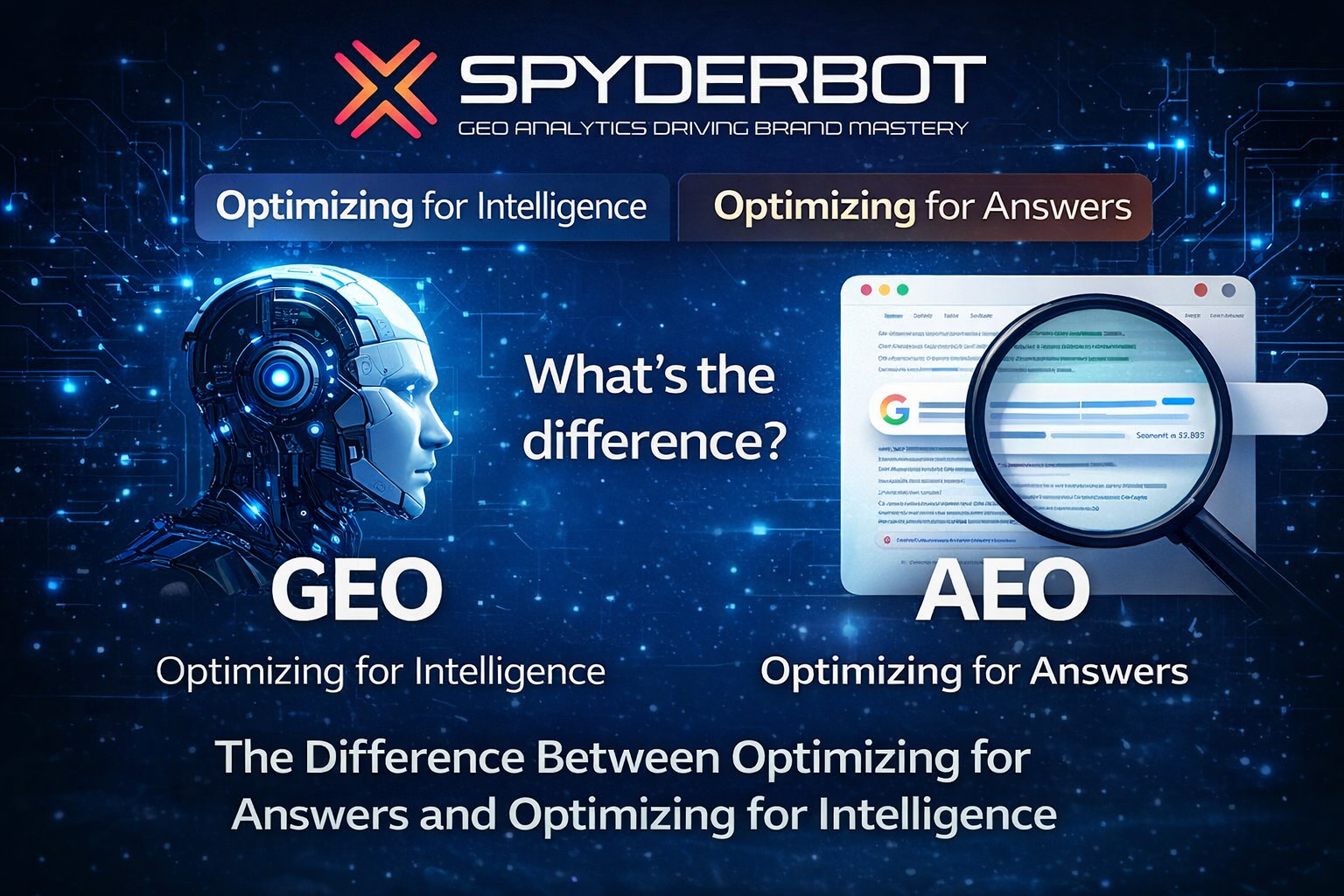
    What Is the Difference Between Generative Engine Optimization and Answer Engine Optimization?

    As AI search grows, marketers are using more terms to describe the future of visibility.

    SEO.
    AEO.
    GEO.
    AI SEO.
    LLM optimization.
    AI visibility tracking.

    The terms are related, but they are not the same.

    One of the most common points of confusion is the difference between AEO, or Answer Engine Optimization, and GEO, or Generative Engine Optimization.

    At first, they sound similar.

    Both deal with answers instead of only links. Both matter in an AI-driven search environment. Both push brands beyond traditional keyword rankings.

    But they solve different problems.

    AEO helps content become a direct answer.

    GEO helps brands become understood, included, and represented inside AI-generated answers.

    That distinction matters because modern AI systems do not only retrieve answers. They generate responses, compare options, interpret brands, and shape user perception.

    What is AEO?

    AEO stands for Answer Engine Optimization.

    It is the practice of structuring content so it can be selected as a direct answer to a specific question.

    AEO became important during the rise of:

    • Featured snippets
    • Voice search
    • People Also Ask results
    • FAQ-style content
    • Direct answer boxes
    • Search assistants

    The goal of AEO is simple:

    Answer the user’s question clearly enough to be selected as the answer.

    For example, if someone searches:

    “What is Answer Engine Optimization?”

    AEO-focused content would aim to provide a short, clear, structured answer that search engines or answer systems can easily extract.

    AEO is useful because many users want quick answers.

    It works especially well for:

    • Definitions
    • Simple explanations
    • How-to questions
    • FAQ content
    • Factual queries
    • Step-by-step answers
    • Voice search responses

    AEO is usually query-level.

    It asks:

    How can this piece of content become the answer to this question?

    What is GEO?

    GEO stands for Generative Engine Optimization.

    It is the process of improving how AI systems understand, mention, compare, and represent a brand inside generated answers.

    GEO is broader than answering one question.

    It focuses on AI visibility across many prompts, contexts, competitors, and generated responses.

    GEO asks questions like:

    • Does ChatGPT mention our brand?
    • Does Gemini understand our product category?
    • Does Claude compare us with the right competitors?
    • Does Grok describe our brand accurately?
    • Are we included in high-intent AI answers?
    • Are competitors recommended before us?
    • Are AI systems misrepresenting our website?
    • Are we visible across multiple prompt variations?

    In practical terms:

    AEO is about being selected as an answer. GEO is about being consistently included and correctly positioned inside AI-generated answers.

    GEO vs AEO: the simple difference

    The simplest way to separate AEO and GEO is this:

    AEO optimizes content for direct answers.

    GEO optimizes brand visibility inside generative AI responses.

    AEO is usually focused on a specific question.

    GEO is focused on how AI systems understand the brand across many questions.

    AEO is content-snippet oriented.

    GEO is entity and brand oriented.

    AEO helps you win a direct answer.

    GEO helps you build visibility, prominence, and perception inside AI-generated answers.

    GEO vs AEO comparison table

    DimensionAEOGEO
    Full nameAnswer Engine OptimizationGenerative Engine Optimization
    Main focusDirect answersAI-generated brand visibility
    Core unitContent snippet, answer block, FAQBrand, entity, product, category
    ScopeQuery-levelSystem-level and prompt-level
    GoalBecome the answer to a specific questionBe included, described, and positioned across generated answers
    Common use casesFeatured snippets, voice search, FAQ answersChatGPT mentions, Gemini visibility, Claude comparisons, AI competitor monitoring
    Main metricAnswer selectionAI visibility, mention frequency, prominence, sentiment, accuracy
    StrategyStructure clear answersImprove entity clarity, context, positioning, and consistency
    Main riskNot being selected as the direct answerBeing ignored, misrepresented, or ranked behind competitors

    Why AEO and GEO are often confused

    AEO and GEO are often confused because both respond to the same shift: users want answers faster.

    Traditional SEO was built around search results.

    AEO emerged because search engines started showing direct answers.

    GEO emerged because generative AI systems started producing synthesized responses that can include multiple brands, sources, comparisons, and recommendations.

    The overlap is real.

    Both AEO and GEO benefit from:

    • Clear content
    • Structured information
    • Helpful answers
    • Question-based headings
    • Strong topical relevance
    • Consistent terminology
    • Good SEO fundamentals

    Google also says its AI features are part of Search and that site owners should continue following SEO fundamentals, including making content helpful, accessible, crawlable, and eligible for Search experiences.

    But the difference is still important.

    AEO focuses on answering.

    GEO focuses on being understood and included.

    AEO is query-level. GEO is system-level.

    AEO is usually tied to one question.

    For example:

    “What is GEO?”

    AEO asks:

    How can we structure a concise answer that explains GEO clearly?

    GEO asks a broader question:

    How do AI systems understand our brand, category, competitors, and relevance across many prompts?

    That means GEO goes beyond one answer box.

    It looks at patterns.

    For example:

    • Are we mentioned across different AI systems?
    • Are we mentioned for category-level prompts?
    • Are we mentioned for competitor prompts?
    • Are we positioned as a leader or a secondary option?
    • Are our use cases described correctly?
    • Are competitors appearing more often?
    • Are AI systems citing the right sources?

    This is why GEO needs monitoring and analytics, not just better answer formatting.

    Example: AEO vs GEO in action

    Imagine a user asks:

    “What is AI brand monitoring?”

    An AEO strategy would help your content provide a clear answer:

    “AI brand monitoring is the process of tracking how AI systems mention, describe, and compare a brand across generated answers.”

    That can help your content become a direct answer.

    Now imagine users ask:

    • What are the best AI brand monitoring tools?
    • Which platforms track ChatGPT brand mentions?
    • What are the best GEO analytics platforms?
    • How does SpyderBot compare with other AI visibility tools?
    • What tools help monitor LLM brand visibility?
    • Why does ChatGPT recommend one competitor over another?

    This is where GEO becomes more important.

    The goal is not only to answer one definition.

    The goal is to make sure your brand is included, accurately described, and positioned strongly across multiple AI-generated answers.

    Why AEO alone is no longer enough

    AEO is still useful.

    But it is not enough for modern AI search.

    AEO works well when the user needs a clear answer to a specific question.

    But AI systems now handle more complex tasks:

    • Comparing products
    • Recommending vendors
    • Explaining trade-offs
    • Summarizing categories
    • Creating buyer shortlists
    • Personalizing answers
    • Combining multiple sources
    • Generating follow-up explanations

    In those cases, there may not be a single answer slot.

    Instead, the AI system may generate a response that includes several entities, competitors, sources, and recommendations.

    That means visibility becomes more complex.

    The question is no longer only:

    Did we get the answer?

    The question becomes:

    How often are we included, where do we appear, and how are we described?

    That is GEO.

    GEO expands beyond AEO

    GEO includes some AEO tactics, but it goes further.

    AEO tactics include:

    • Using clear headings
    • Answering questions directly
    • Writing concise definitions
    • Structuring FAQ content
    • Using schema where appropriate
    • Matching question-based intent

    GEO strategy includes:

    • Improving brand entity clarity
    • Strengthening category association
    • Monitoring AI brand mentions
    • Tracking competitor visibility
    • Analyzing AI answer framing
    • Improving contextual consistency
    • Building comparison and use case content
    • Measuring prompt-level inclusion
    • Detecting misrepresentation
    • Tracking AI citations and source patterns

    AEO can help make content easier to extract.

    GEO helps make the brand easier to understand and recommend.

    The shift from answers to narratives

    AEO is about winning answers.

    GEO is about shaping narratives.

    This matters because AI systems do not only tell users what something means.

    They also tell users which brands matter, which options are trustworthy, which competitors are relevant, and which products fit a specific use case.

    For example, an AI answer may describe a brand as:

    • A market leader
    • A newer alternative
    • A budget option
    • An enterprise solution
    • A niche tool
    • A strong choice for SaaS teams
    • A less established competitor

    That framing affects perception.

    A brand may be mentioned, but still lose if the description is weak or if competitors are framed more confidently.

    This is why GEO is not only a content tactic. It is a visibility and brand strategy.

    GEO vs AEO vs SEO

    To understand the full picture, it helps to compare SEO, AEO, and GEO together.

    DimensionSEOAEOGEO
    Main interfaceSearch resultsDirect answersAI-generated responses
    Main goalRank webpagesBecome the answerBe included and accurately represented
    Core unitPageSnippet or answerEntity, brand, product, category
    ScopePage-levelQuery-levelPrompt-level and system-level
    Main metricRankings, impressions, clicksAnswer selectionAI visibility, mention frequency, prominence, accuracy
    User behaviorSearch, compare, clickAsk, receive answerAsk, compare, decide
    Main riskRanking below competitorsNot being selected as the answerBeing ignored, misrepresented, or positioned behind competitors

    The best strategy is not SEO vs AEO vs GEO.

    It is SEO plus AEO plus GEO.

    SEO helps users and search engines find your pages.

    AEO helps your content answer specific questions clearly.

    GEO helps AI systems understand, include, and describe your brand across generated answers.

    How companies should use AEO

    AEO should remain part of your content strategy.

    Use AEO when you want to answer specific questions clearly.

    For example:

    • What is Generative Engine Optimization?
    • What is Answer Engine Optimization?
    • What is AI visibility?
    • How does AI search work?
    • What is LLM brand monitoring?

    To improve AEO, companies should:

    • Use question-based headings
    • Answer the question directly near the top
    • Keep definitions clear
    • Add examples
    • Use bullet points when helpful
    • Structure FAQ sections
    • Match visible content with structured data if using schema

    Google explains that structured data helps Google understand page content, but the markup should reflect visible content on the page.

    How companies should build GEO

    GEO requires a broader strategy.

    To build GEO, companies should:

    1. Clarify the brand entity

    Make it clear who you are, what you do, who you serve, what category you belong to, and what makes you different.

    For example:

    SpyderBot is a GEO analytics platform that helps brands understand how AI systems like ChatGPT, Gemini, Claude, and Grok mention, compare, and interpret their websites and competitors.

    That sentence is strong because it gives AI systems a clear brand-category-use case relationship.

    2. Track AI visibility

    Monitor whether your brand appears across important prompt clusters.

    Examples:

    • Best GEO analytics platforms
    • Tools to track ChatGPT brand mentions
    • AI search competitor monitoring tools
    • How to monitor LLM brand visibility
    • Alternatives to [competitor]
    • How to improve AI visibility

    3. Compare competitor mentions

    GEO is competitive.

    You need to know which competitors appear, where they appear, and how they are described.

    Track:

    • Mention frequency
    • Mention order
    • Recommendation strength
    • Competitor framing
    • Use case association
    • Citation patterns

    4. Improve contextual consistency

    Your brand should be described consistently across your website, social profiles, product directories, articles, documentation, and third-party mentions.

    If AI systems see inconsistent descriptions, they may struggle to classify your brand correctly.

    5. Build content around AI-style prompts

    AI users ask specific, conversational questions.

    Create content around prompts like:

    • Why is ChatGPT not mentioning my brand?
    • Why does AI recommend my competitor?
    • How do LLMs choose which brands to mention?
    • How can brands improve AI visibility?
    • What is the difference between GEO and AEO?
    • How do I track brand mentions in AI answers?

    Where SpyderBot fits

    SpyderBot focuses on the GEO layer.

    AEO can help you structure content to answer questions.

    SEO can help your website get discovered and indexed.

    But SpyderBot helps answer a deeper question:

    How are AI systems actually interpreting your brand and competitors?

    SpyderBot helps brands monitor:

    • AI brand mentions
    • Competitor mentions
    • Prompt-level visibility
    • AI answer positioning
    • Brand perception
    • LLM interpretation patterns
    • AI visibility gaps
    • Changes across AI systems over time

    That matters because companies cannot improve what they cannot see.

    If ChatGPT mentions your competitor more often, Gemini describes your brand incorrectly, or Claude places your company in the wrong category, traditional SEO tools may not show that clearly.

    SpyderBot is built to reveal that layer.

    Common mistakes when comparing GEO and AEO

    Mistake 1: Thinking AEO and GEO are the same

    They overlap, but they are not identical.

    AEO focuses on direct answers.

    GEO focuses on generated answer visibility, brand inclusion, and AI interpretation.

    Mistake 2: Treating GEO as only FAQ optimization

    FAQ content can support GEO, but GEO is much broader.

    It includes entity clarity, competitor analysis, prompt monitoring, AI perception, and visibility tracking.

    Mistake 3: Ignoring brand positioning

    AEO may help you answer a question.

    But GEO asks whether AI systems understand your brand strongly enough to recommend it.

    That requires clear positioning.

    Mistake 4: Measuring only answer selection

    Getting one answer box is useful, but it does not show full AI visibility.

    You need to measure how often and how accurately your brand appears across many generated responses.

    Mistake 5: Ignoring competitors

    In AI-generated answers, your competitor may appear before you, be described better, or be recommended more confidently.

    GEO requires competitor monitoring.

    Final answer: Is GEO the same as AEO?

    No.

    GEO and AEO are related, but they are not the same.

    AEO helps content become a direct answer to a specific question.

    GEO helps brands become understood, included, and accurately represented across AI-generated answers.

    AEO is a useful tactic.

    GEO is a broader visibility strategy.

    As AI search becomes more important, companies need both.

    AEO helps you answer questions.

    GEO helps you become part of the answer.


    SpyderBot helps brands monitor the GEO side of AI search.

    If your company wants to know whether ChatGPT, Gemini, Claude, or Grok is mentioning your brand, recommending competitors, or misunderstanding your website, SpyderBot gives you the visibility layer needed to compete inside AI-generated answers.

  • The Future of Generative Engine Optimization (GEO)

    The Future of Generative Engine Optimization (GEO)

    Most companies are still optimizing for search engines.

    That still matters. Google is not disappearing. SEO is not dead. Rankings, technical SEO, useful content, internal links, and authority signals will continue to shape how people discover information online.

    But the interface of the internet is changing.

    Users are no longer only typing short keywords into a search box, scanning ten links, and choosing which website to visit. More often, they are asking AI systems like ChatGPT, Gemini, Claude, Grok, Copilot, and AI-powered search experiences for direct answers.

    That change creates a new layer of competition.

    In traditional SEO, brands compete to rank.

    In Generative Engine Optimization, brands compete to be understood, selected, and included inside AI-generated answers.

    That is the future of GEO.

    What is Generative Engine Optimization?

    Generative Engine Optimization, or GEO, is the practice of improving how AI systems understand, interpret, mention, and compare brands inside generated answers.

    Traditional SEO focuses on search visibility. It helps webpages appear in search engine results.

    GEO focuses on AI visibility. It helps brands appear accurately and confidently when AI systems generate answers, recommendations, comparisons, and summaries.

    The difference is simple:

    SEO helps your website rank. GEO helps your brand get included in AI-generated answers.

    This distinction matters because users are increasingly asking questions like:

    • What are the best tools for AI brand monitoring?
    • Which GEO analytics platforms should I compare?
    • How can I track brand mentions in ChatGPT?
    • What are the best alternatives to a specific SEO platform?
    • Why does ChatGPT recommend my competitor instead of my brand?

    These questions are not always answered with a traditional list of links. They may be answered with a synthesized response that includes only a few brands.

    That is where GEO becomes important.

    The future of search is not only ranking

    For years, the digital marketing playbook was built around rankings.

    If you ranked higher, you had more visibility. If you had more visibility, you had more clicks. If you had more clicks, you had more chances to convert users.

    That model still works, but it is no longer complete.

    AI search changes the user journey.

    A user may ask a complex question, receive a summarized answer, compare options, and make a decision without opening ten different pages.

    This means brands need to think beyond ranking position.

    The future of visibility will depend on three things:

    1. Inclusion: Is your brand mentioned?
    2. Prominence: Is your brand presented clearly and near the top of the answer?
    3. Perception: Is your brand described accurately and positively?

    This is the core shift from SEO to GEO.

    Why AI visibility will become a core business metric

    AI visibility measures how often, how accurately, and how prominently a brand appears in AI-generated answers.

    Today, most companies track metrics like:

    • Organic traffic
    • Keyword rankings
    • Click-through rate
    • Backlinks
    • Impressions
    • Conversions

    These metrics are still useful.

    But they do not answer a critical new question:

    What do AI systems say about your brand when users ask for recommendations?

    That question matters because AI-generated answers can influence buying decisions before a user ever reaches your website.

    A company may have strong Google rankings but weak AI visibility. Another company may have weaker traditional SEO but stronger entity clarity, making it easier for AI systems to understand and mention it.

    That is why AI visibility will become a core metric for modern digital strategy.

    From SEO metrics to GEO metrics

    As AI search grows, companies will need a new measurement layer.

    SEO metrics answer questions like:

    • What keywords do we rank for?
    • How much organic traffic do we get?
    • Which pages receive impressions?
    • Which pages convert users?

    GEO metrics answer different questions:

    • Is our brand mentioned in AI-generated answers?
    • Which competitors are mentioned more often?
    • How does AI describe our product?
    • What category does AI associate with our brand?
    • Are we included for high-intent prompts?
    • Are we cited as a source?
    • Is the answer accurate?
    • Is our brand positioned as a leader, alternative, niche tool, or missing option?

    This shift is important because AI visibility is not only about traffic. It is also about perception.

    If an AI system describes your brand incorrectly, the user may form the wrong opinion before visiting your site.

    If a competitor appears repeatedly in AI answers and your brand does not, your market visibility is already being affected.

    The evolution of optimization

    Digital optimization is moving through three major phases.

    Phase 1: SEO

    SEO was built for search engines.

    The goal was to help search engines crawl, index, understand, and rank webpages. Brands optimized around keywords, technical structure, backlinks, page quality, and search intent.

    This phase is still important.

    Without good SEO fundamentals, your website may struggle to be discovered, indexed, and understood.

    Phase 2: GEO

    GEO is built for AI-generated answers.

    The goal is to help AI systems understand your brand as an entity, connect it to the right category, compare it correctly with competitors, and include it in relevant answers.

    GEO focuses on:

    • Entity clarity
    • Brand positioning
    • Contextual relevance
    • Structured explanations
    • Consistent external signals
    • AI answer monitoring
    • Competitor mention tracking

    Phase 3: AI-native optimization

    The next phase will be AI-native optimization.

    In this phase, companies will not only create content for human readers and search engines. They will also structure their digital presence so AI systems can interpret it more accurately.

    This means brands will need to think about:

    • How their company is described across the web
    • How their products are categorized
    • Which use cases they are associated with
    • Which competitors they are compared against
    • Whether AI systems understand their unique value
    • Whether their content answers real prompts users ask AI systems

    The future will reward brands that are easy for both humans and machines to understand.

    How AI search will reshape competition

    AI search will change how brands compete online.

    1. Smaller brands can become more visible

    In traditional SEO, larger brands often have an advantage because they have stronger domain authority, more backlinks, and more historical content.

    In AI-generated answers, authority still matters, but it is not the only factor.

    AI systems may include smaller brands when they have:

    • Clear positioning
    • Strong category relevance
    • Specific use cases
    • Consistent information
    • Distinct differentiation
    • Helpful explanatory content

    This creates an opportunity for emerging companies.

    A smaller brand may not outrank a large competitor on every Google keyword, but it may still appear in AI-generated answers for specific prompts if the brand is clearly understood.

    2. Categories will be shaped by AI systems

    Companies used to define their own categories through branding, messaging, and SEO content.

    In the AI search era, categories will also be shaped by how AI systems understand the market.

    For example, a company may describe itself as an “AI analytics platform,” but AI systems may classify it as:

    • SEO software
    • Brand monitoring software
    • AI visibility tracking
    • LLM analytics
    • Competitor intelligence
    • Marketing analytics

    If the category is unclear, the brand may appear in the wrong comparison set or be excluded from the right one.

    GEO helps companies reduce that ambiguity.

    3. Brand perception will become algorithmic

    AI systems do not only retrieve information. They summarize, frame, and explain it.

    That means users may see your brand described as:

    • A market leader
    • A niche alternative
    • A newer product
    • A competitor to another tool
    • A solution for a specific use case
    • An incomplete or unclear option

    This framing matters.

    If AI systems consistently position your competitor as the safer or more established choice, that can affect user perception.

    If they fail to explain your strongest advantage, you may lose high-intent users before they compare your website.

    This is why GEO is not only a content strategy. It is a brand strategy.

    The future of content in the GEO era

    Content will not disappear.

    But the role of content will change.

    In traditional SEO, many companies created content around individual keywords. That led to large libraries of similar articles targeting small variations of the same topic.

    In the GEO era, that approach becomes risky.

    AI systems need clarity, not repetition.

    Winning content will be:

    • Clear
    • Structured
    • Specific
    • Contextual
    • Useful
    • Consistent
    • Easy to interpret

    Instead of creating ten thin articles around similar terms, brands should create strong topic clusters.

    For example, a GEO content cluster could include:

    • What is Generative Engine Optimization?
    • GEO vs SEO
    • Why AI search ignores your website
    • How to track brand mentions in ChatGPT
    • How AI systems compare competitors
    • Best GEO analytics tools
    • AI visibility tracking for SaaS companies

    Each article should have a distinct purpose.

    One article should define the category. Another should solve a problem. Another should compare approaches. Another should help users evaluate tools.

    That structure is better for readers, search engines, and AI systems.

    The future of analytics: from traffic to interpretation

    Analytics has traditionally focused on what users do after they find you.

    GEO analytics focuses on what AI systems say before users find you.

    That is a major shift.

    Companies will need tools that can answer questions like:

    • How often is my brand mentioned in ChatGPT?
    • How often is my competitor mentioned?
    • Which prompts include my brand?
    • Which prompts exclude my brand?
    • How does Gemini describe my product?
    • Does Claude understand my category?
    • Does Grok compare me with the right competitors?
    • Are AI systems using outdated information?
    • Which sources are influencing AI-generated answers?
    • Has our visibility improved after publishing new content?

    This is why AI search analytics is becoming a new category.

    It is not the same as traditional SEO analytics. It measures how AI systems interpret, include, and frame brands across generated answers.

    The rise of GEO tools

    As GEO becomes more important, a new ecosystem of tools will emerge.

    These tools will help companies track:

    • AI brand mentions
    • LLM visibility
    • Competitor mentions
    • AI answer accuracy
    • Prompt-level performance
    • AI citation patterns
    • Brand perception
    • Category association
    • Changes across AI systems over time

    This new category will become increasingly important because manual testing is not enough.

    A marketing team can manually ask ChatGPT a few questions, but that does not create a reliable monitoring system.

    To understand AI visibility properly, companies need repeatable tracking across prompts, models, competitors, and time.

    That is where GEO analytics platforms become valuable.

    What companies should do now

    The future of GEO is already forming, but companies do not need to wait.

    They can start preparing now.

    Step 1: Audit your AI visibility

    Start by testing how AI systems describe your brand.

    Use prompts such as:

    • What does [your brand] do?
    • What are the best tools in [your category]?
    • What are the best alternatives to [competitor]?
    • Which companies help with [your use case]?
    • How does [your brand] compare with [competitor]?

    Then check:

    • Is your brand mentioned?
    • Is the description accurate?
    • Are your competitors mentioned more often?
    • Is your website cited?
    • Is your product category correct?
    • Is your unique value included?

    Step 2: Clarify your entity signals

    Your website should make your brand easy to understand.

    This includes:

    • A clear homepage description
    • A focused product category
    • Consistent messaging across pages
    • Strong about page information
    • Clear use case pages
    • Comparison pages
    • FAQ sections
    • Structured data where appropriate
    • Internal links between related articles

    For SpyderBot, the core entity signal should be clear:

    SpyderBot is a GEO analytics platform that helps brands understand how AI systems like ChatGPT, Gemini, Claude, and Grok mention, compare, and interpret their websites and competitors.

    That sentence works because it explains the brand, the category, the platforms, the function, and the business value.

    Step 3: Build content around real AI search questions

    Do not only target keywords.

    Target the questions users ask AI systems.

    Examples:

    • Why is ChatGPT not mentioning my brand?
    • How do LLMs choose which brands to mention?
    • How can I monitor AI brand visibility?
    • What is the difference between SEO and GEO?
    • How can SaaS companies appear in AI search results?
    • Why does my competitor appear in AI-generated answers?

    These questions are stronger than generic keyword variations because they match real user intent.

    Step 4: Monitor competitors inside AI answers

    GEO is not only about your brand.

    It is also about who appears instead of you.

    Track competitors across:

    • Recommendation prompts
    • Comparison prompts
    • Category prompts
    • Problem-based prompts
    • Alternative prompts
    • Buyer-intent prompts

    The goal is to understand not only whether your brand appears, but also how the market is being framed by AI systems.

    Step 5: Improve accuracy and consistency

    AI systems may misunderstand your brand if your public information is unclear.

    To reduce that risk, make sure your messaging is consistent across:

    • Website pages
    • Blog content
    • Schema markup
    • Social profiles
    • Product descriptions
    • Third-party profiles
    • Review platforms
    • Press mentions
    • Documentation pages

    Consistency helps AI systems connect your brand to the right category and context.

    Founder insight from SpyderBot

    While building SpyderBot, one insight became obvious:

    The next search battle is not only about who ranks. It is about who AI understands well enough to recommend.

    Traditional SEO tools are excellent at showing rankings, traffic, backlinks, and keyword performance.

    But they do not fully answer the new visibility questions:

    1. What do LLMs mention about your competitors to users?
    2. How are AI systems analyzing and tracking your website?
    3. Is your brand included in AI-generated recommendations?
    4. Is your brand being described accurately?
    5. Are competitors shaping the category before users even visit your site?

    These questions are becoming essential because AI systems are increasingly acting as interpreters between users and the web.

    That is why GEO is not just another marketing trend.

    It is a new layer of digital visibility.

    Common mistakes companies will make with GEO

    Mistake 1: Thinking SEO alone is enough

    SEO remains important, but SEO alone does not guarantee AI visibility.

    A page can rank well and still be absent from AI-generated answers.

    That means brands need both SEO and GEO.

    Mistake 2: Treating GEO as keyword stuffing

    Repeating terms like “AI visibility tracking” or “LLM brand monitoring” does not automatically improve AI visibility.

    AI systems need clear meaning, not repeated phrases.

    The focus should be on entity clarity, useful explanations, and consistent context.

    Mistake 3: Publishing too many similar articles

    Publishing many similar articles can weaken your site.

    For example, these topics may overlap if handled poorly:

    • What is GEO?
    • Why GEO matters
    • The future of GEO
    • GEO vs SEO
    • AI search optimization

    Each article needs a distinct purpose.

    This article focuses on the future of GEO. A separate “What is GEO?” article should define the concept. A “GEO vs SEO” article should compare the two disciplines. A “Why GEO matters” article should explain the business case.

    Clear separation helps avoid content cannibalization.

    Mistake 4: Ignoring how AI describes competitors

    If competitors are consistently mentioned and your brand is not, that is a serious signal.

    You need to know which competitors appear, how they are described, and what prompts trigger their inclusion.

    Mistake 5: Ignoring inaccurate AI answers

    AI visibility is not only about being mentioned.

    Accuracy matters.

    If AI systems describe your brand incorrectly, place you in the wrong category, or miss your strongest use case, your GEO strategy needs to fix that.

    The long-term future of GEO

    The long-term future of GEO will be shaped by three forces.

    1. AI-mediated discovery

    Users will increasingly rely on AI systems to filter information.

    Instead of visiting many websites, they will ask AI to summarize, compare, recommend, and explain.

    This will make AI visibility a key part of brand discovery.

    2. Entity-first marketing

    Brands will need to become clear entities in the digital ecosystem.

    That means consistent information, strong category association, and clear relationships between brand, product, audience, problem, and competitors.

    3. Continuous AI visibility monitoring

    Because AI answers change, GEO cannot be a one-time project.

    Companies will need to monitor how their brand appears across AI systems over time.

    This includes changes in:

    • Mention frequency
    • Competitor visibility
    • Answer accuracy
    • Citation patterns
    • Sentiment
    • Category association
    • Prompt-level performance

    The companies that build this monitoring layer early will understand the market faster than competitors who rely only on traditional search metrics.

    Final thought

    SEO was about being found.

    GEO is about being understood, selected, and included.

    That difference matters because the future of search is moving from pages to answers, from rankings to recommendations, and from traffic alone to AI-shaped perception.

    The companies that win the next decade of digital visibility will not only be the ones that rank on Google.

    They will be the ones that AI systems can clearly understand, accurately describe, and confidently include.

    That is the future of Generative Engine Optimization.


    SpyderBot helps brands understand how AI systems mention, compare, and interpret them across major LLMs.

    If your company wants to know whether AI systems are including your brand, ignoring your website, or recommending competitors instead, SpyderBot gives you a clearer view of your AI visibility and the signals shaping your position in AI-generated answers.