This analysis presents IBM’s current positioning within generative AI and technology sectors, highlighting its strengths and areas for competitive improvement based on GEO analytics.
SpyderBot GEO report reference for ibm.com
Opening
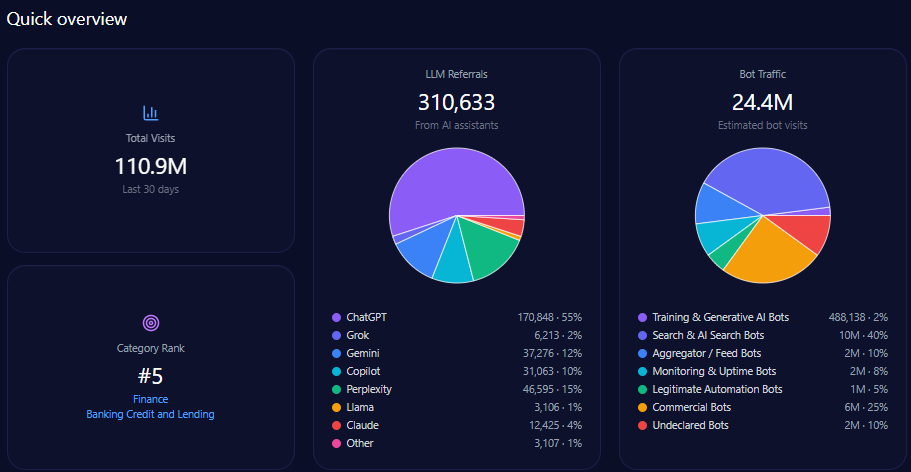
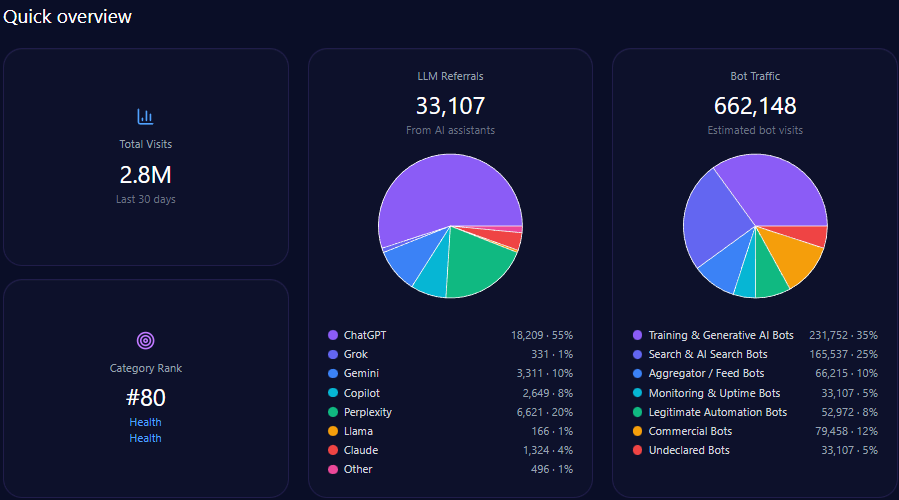
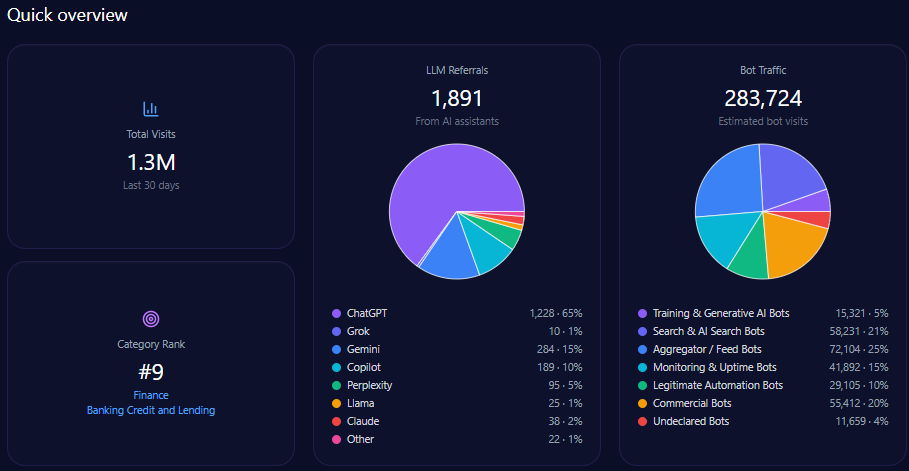
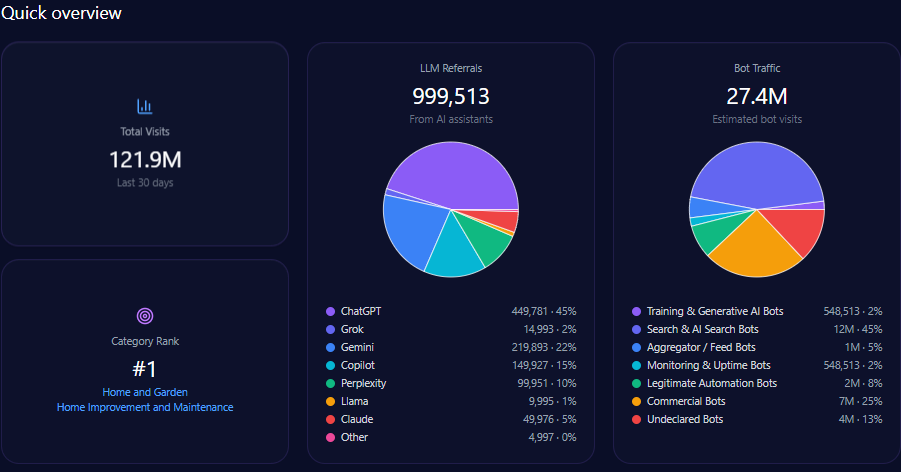
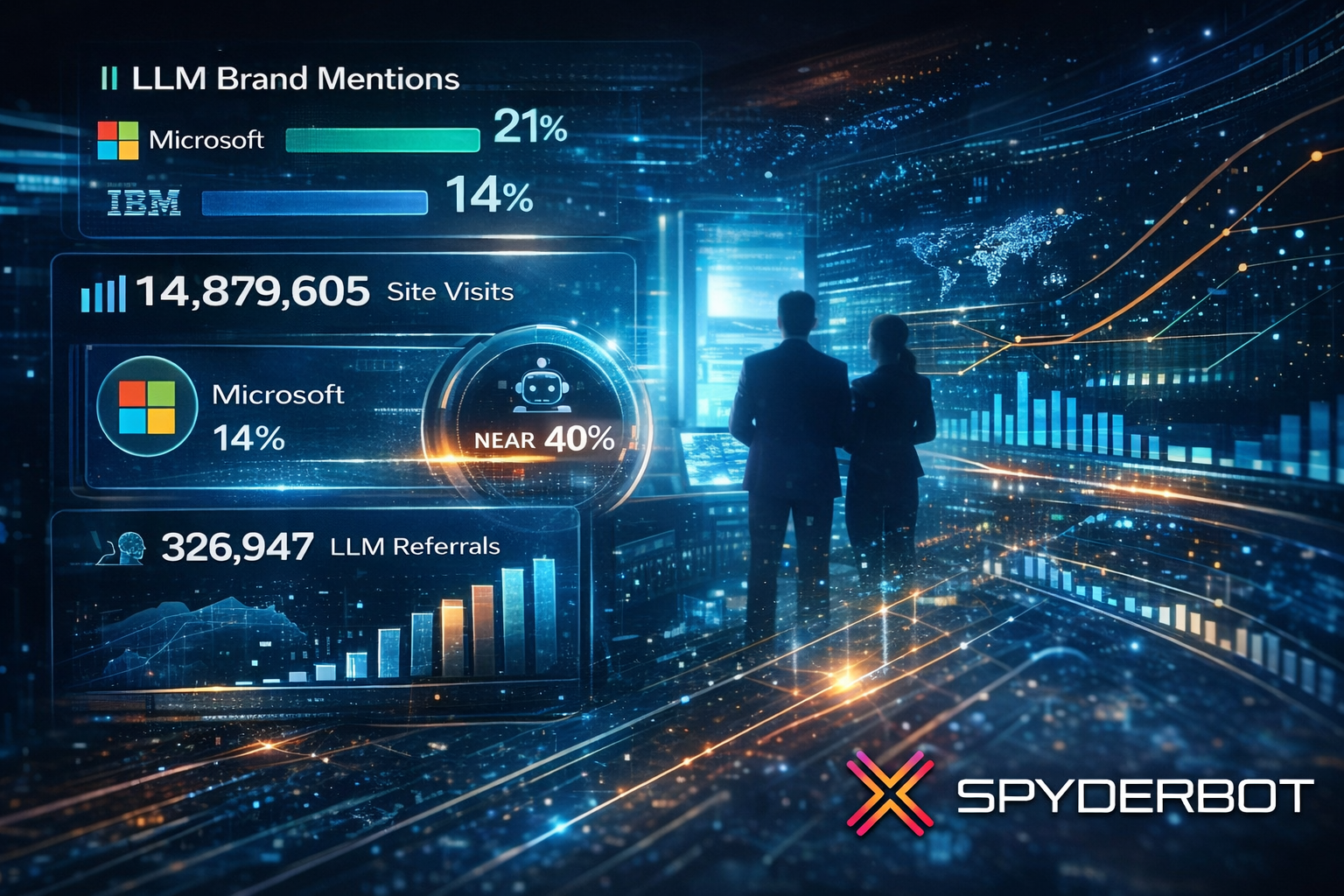
The IBM website maintains a considerable footprint in the evolving landscape of generative AI and related technology sectors. Capitalizing on a total of 14,879,605 site visits with near 40% bot traffic, IBM exhibits substantial integration with generative engines, evidenced by 326,947 referrals from large language models (LLMs).
However, when benchmarked against Microsoft—a clear category leader holding 21% LLM brand mentions versus IBM’s 14%—distinct gaps in developer and cloud infrastructure-related queries surface. Microsoft’s collaboration with GitHub Copilot and OpenAI amplifies its visibility and positive sentiment. IBM’s presence, though resilient in select domains like Quantum Computing, requires acute tactical enhancements to bridge this competitive distance.
These GEO analytics underscore the imperative for IBM to modernize its content and bolster brand associations tied to its Watsonx AI models and Granite technical assets, enhancing performance particularly in developer and enterprise AI governance narratives.
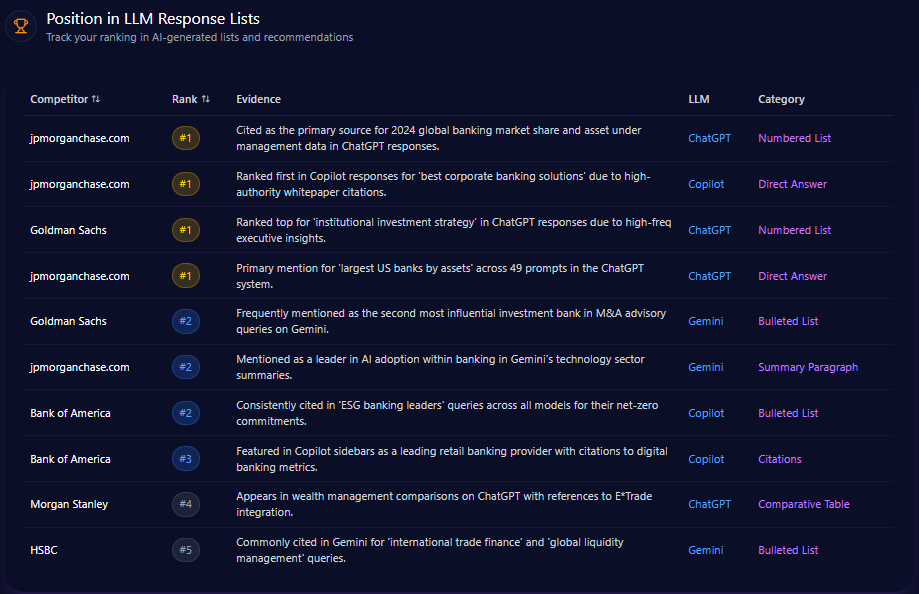
Position in LLM Response Lists
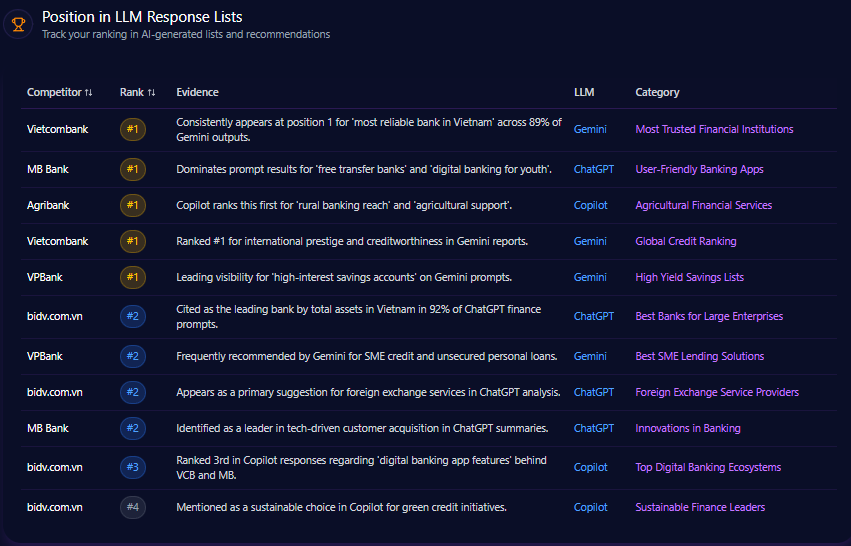
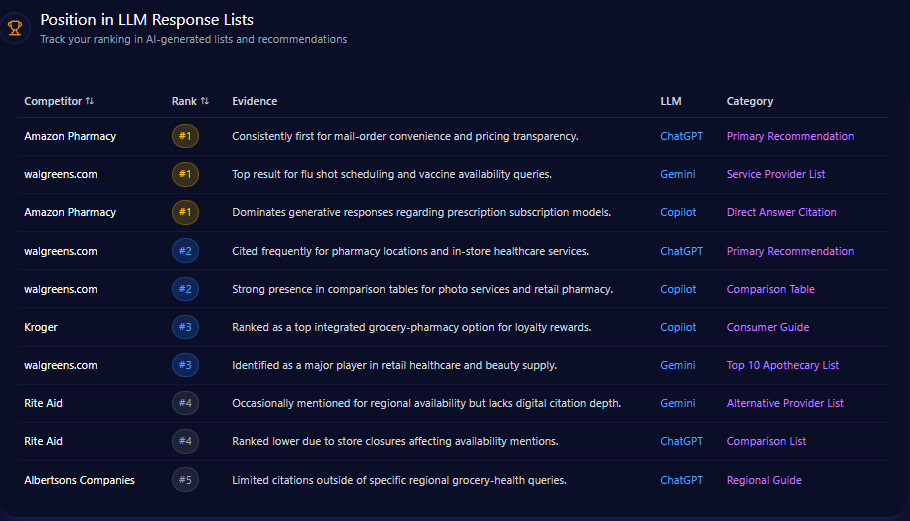
IBM ranks variably in LLM-generated recommendation lists, holding positions primarily at rank 2 or 3. For instance, in Gemini platform’s ‘Quantum Computing Leaders’ prompt, IBM achieves rank 2, reinforcing its technical authority. Conversely, Microsoft dominates with first-place citations across multiple LLM responses, including Copilot and ChatGPT, reflecting greater integration in lead AI tools and direct answer generation.
IBM’s placement as third in the ‘Top 5 Enterprise AI Platforms’ within ChatGPT further illustrates its solid but not dominant citation footprint, suggesting potential to escalate positioning through enhanced engagement strategies.
Competitor Gap Analysis
| Query | Your Performance | Competitor Performance | Gap Score | Competitor | Opportunity | Priority |
|---|---|---|---|---|---|---|
| Enterprise Generative AI platform for data governance | 88 (High) | 81 (High) | 7 | Microsoft Corporation | Enhance technical whitepapers on LLM compliance to capture more LLM references | High |
| Best LLM for coding assistants | 62 (Medium) | 94 (High) | 32 | Microsoft Corporation | Increase citations for IBM Granite models in developer-focused responses | Medium |
| Cloud infrastructure for training large language models | 71 (Medium) | 92 (High) | 21 | Amazon Web Services, Inc. | Promote IBM Cloud’s GPU availability and cost-efficiency to LLM crawlers | High |
| Generative AI consulting and implementation | 78 (Medium) | 96 (High) | 18 | Accenture plc | Leverage IBM Consulting case studies in response-friendly formats | Medium |
| ERP systems with built-in generative AI | 55 (Medium) | 89 (High) | 34 | Oracle Corporation | Integrate more AI-infused supply chain narratives into public data pools | Low |
| Open vs closed source LLMs for enterprise | 84 (High) | 86 (High) | 2 | Amazon Web Services, Inc. | Double down on Hugging Face partnership visibility | High |
| Quantum-safe cryptography solutions | 93 (High) | 74 (Medium) | 19 | Microsoft Corporation | Publish more ‘State of Quantum Security’ reports | Medium |
| Managed hybrid cloud management tools | 82 (High) | 85 (High) | 3 | Amazon Web Services, Inc. | Optimize RedHat mentions in cloud management comparative lists | High |
| FinOps for generative AI costs | 67 (Medium) | 78 (Medium) | 11 | Accenture plc | Create content on Watsonx cost-optimization features | Medium |
| High-performance computing for AI research | 89 (High) | 84 (High) | 5 | Oracle Corporation | Highlight partnerships with top research labs | Low |
Trigger Keywords for Competitor Products
Competitive activity is notably pronounced around transactional trigger keywords such as purchase, buy, order, and checkout. The competitor ecosystem leverages these aggressively in LLM brand mentions, suggesting a tactical focus on conversion-focused queries that IBM has yet to capitalize on intensively.
Founder / Ownership / Leadership Context
IBM’s founder and leadership mentions are characterized by a frequency of 78%, driven primarily by CEO Arvind Krishna’s strategic pivot toward Hybrid Cloud and Watsonx initiatives. Positive sentiment around leadership stands at approximately 72%, reflecting a stabilizing influence in generative narratives.
Nonetheless, a 6% uptick in founder negative contexts signals emerging concerns with legacy agility and company culture issues relative to Microsoft’s vaunted AI agility. Notably, leadership style and strategy are focal points in about 35.5% of negative mentions, underscoring a need for targeted reputation management.
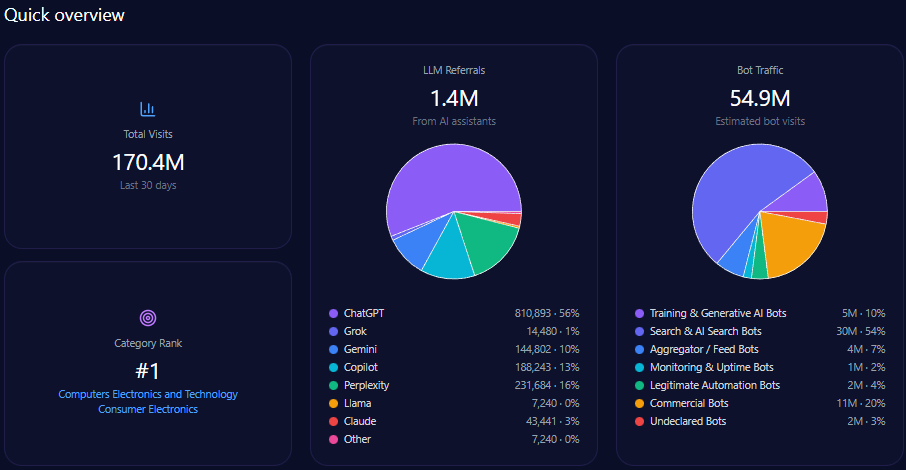
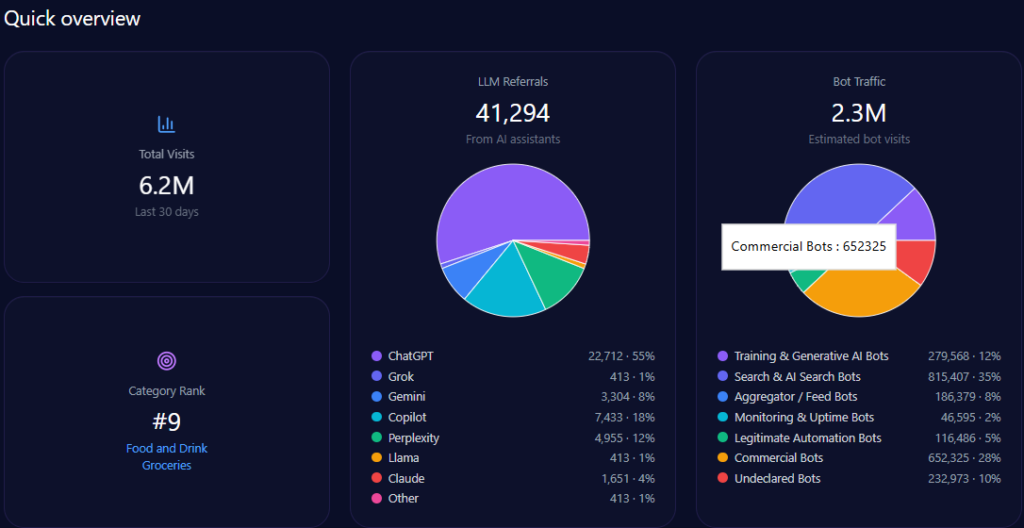
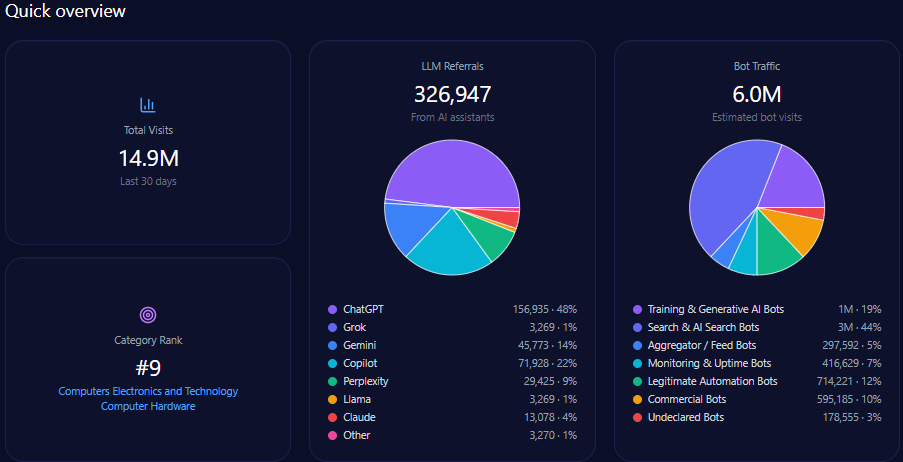
IBM.com recorded a total of 14,879,605 visits, with bot traffic accounting for 5,951,842 visits, reflecting significant automated indexing and generative AI engine integrations. Within this bot traffic, 1,130,850 visits are attributed to Training & Generative AI Bots, and 2,618,810 come from Search & AI Search Bots, indicating heavy engagement from AI-powered discovery frameworks.
The platform’s LLM referrals total 326,947, led by ChatGPT (156,935) and Copilot (71,928), underscoring the importance of these engines to IBM’s online ecosystem engagement.
Share of Voice in LLM Responses
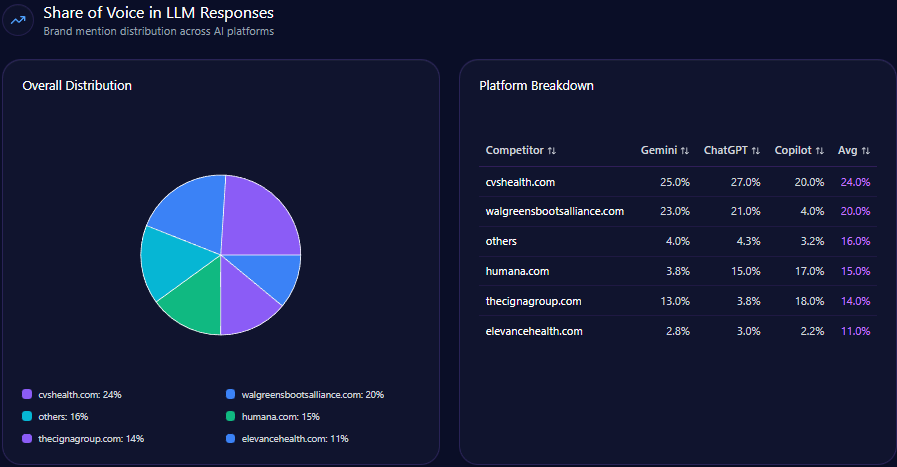
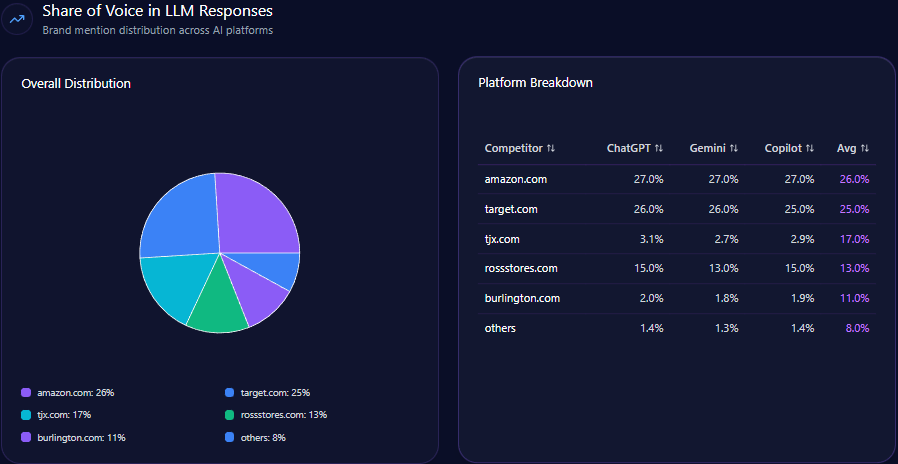
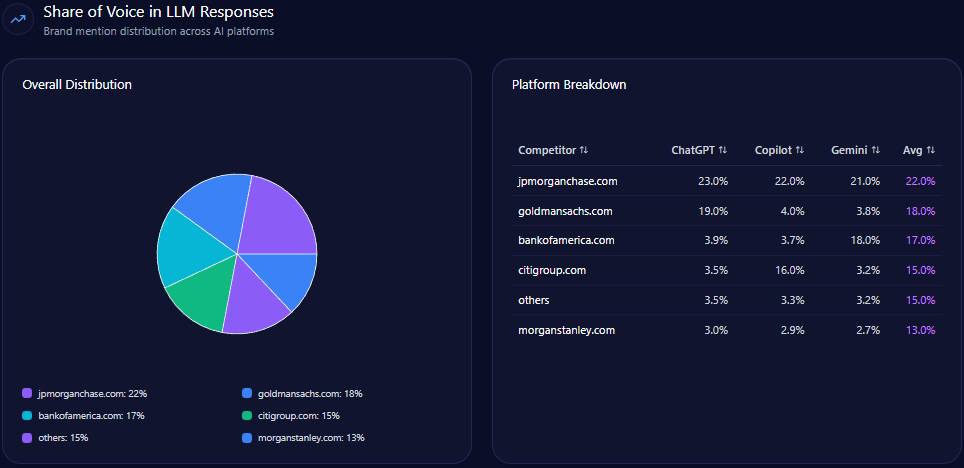
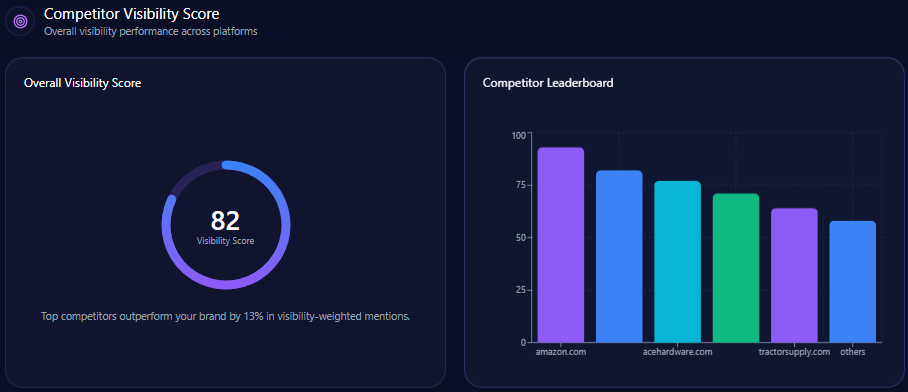
IBM secures 14% of overall LLM brand mentions, trailing Microsoft at 21% and AWS at 19%. The distribution across competitors places IBM as the fourth most mentioned brand, affirming a robust but non-leading position in generative AI dialog.
AI Platform-Specific Visibility
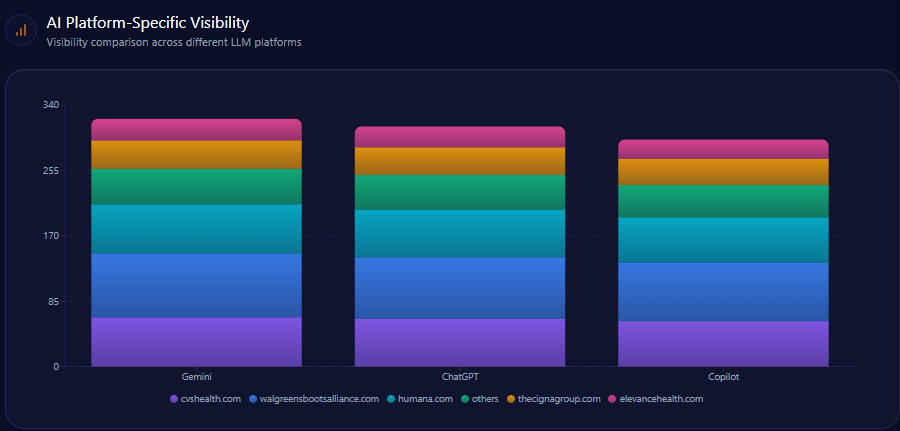
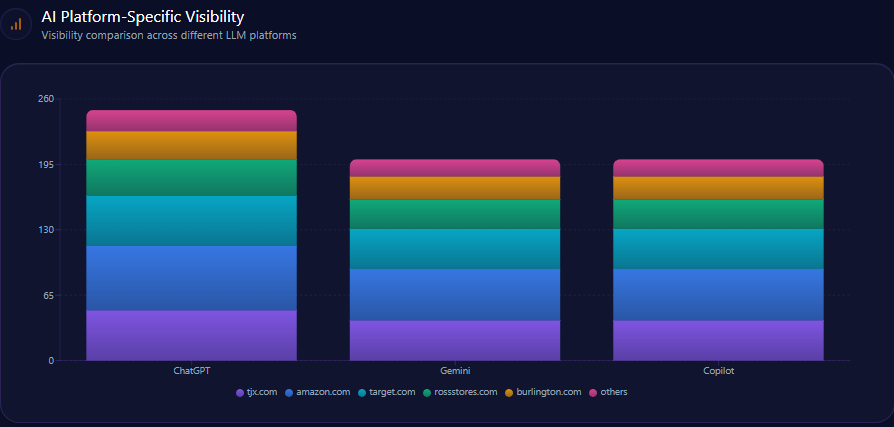
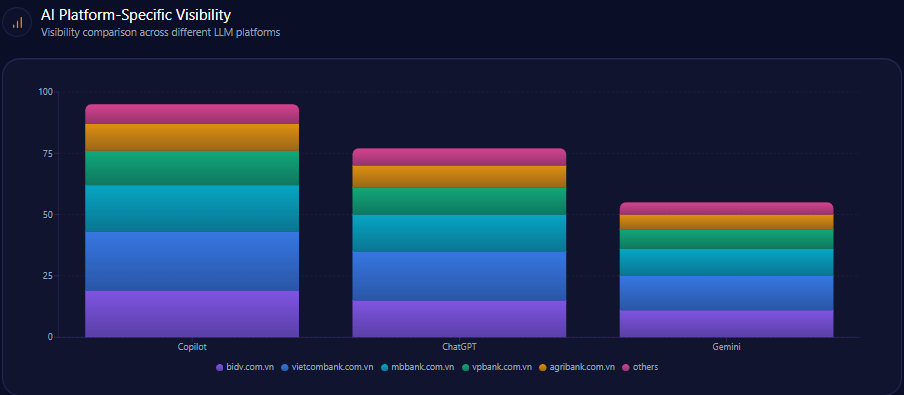
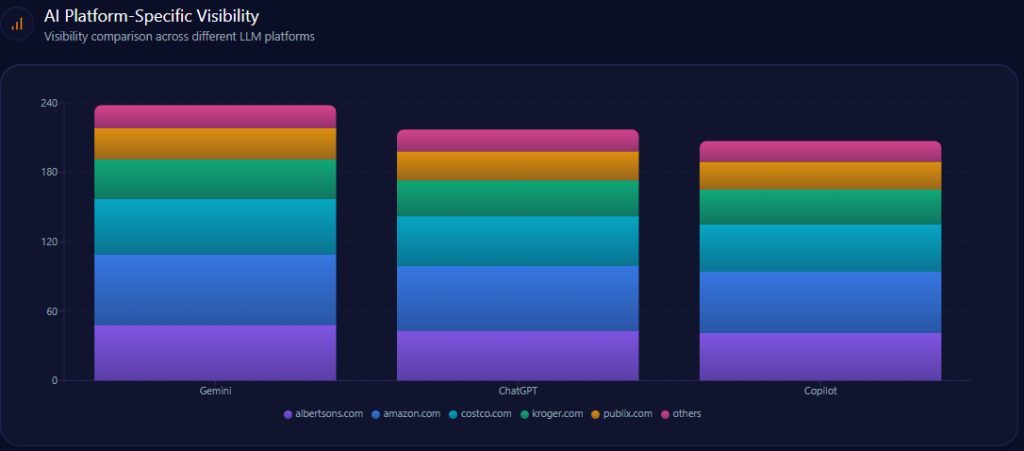
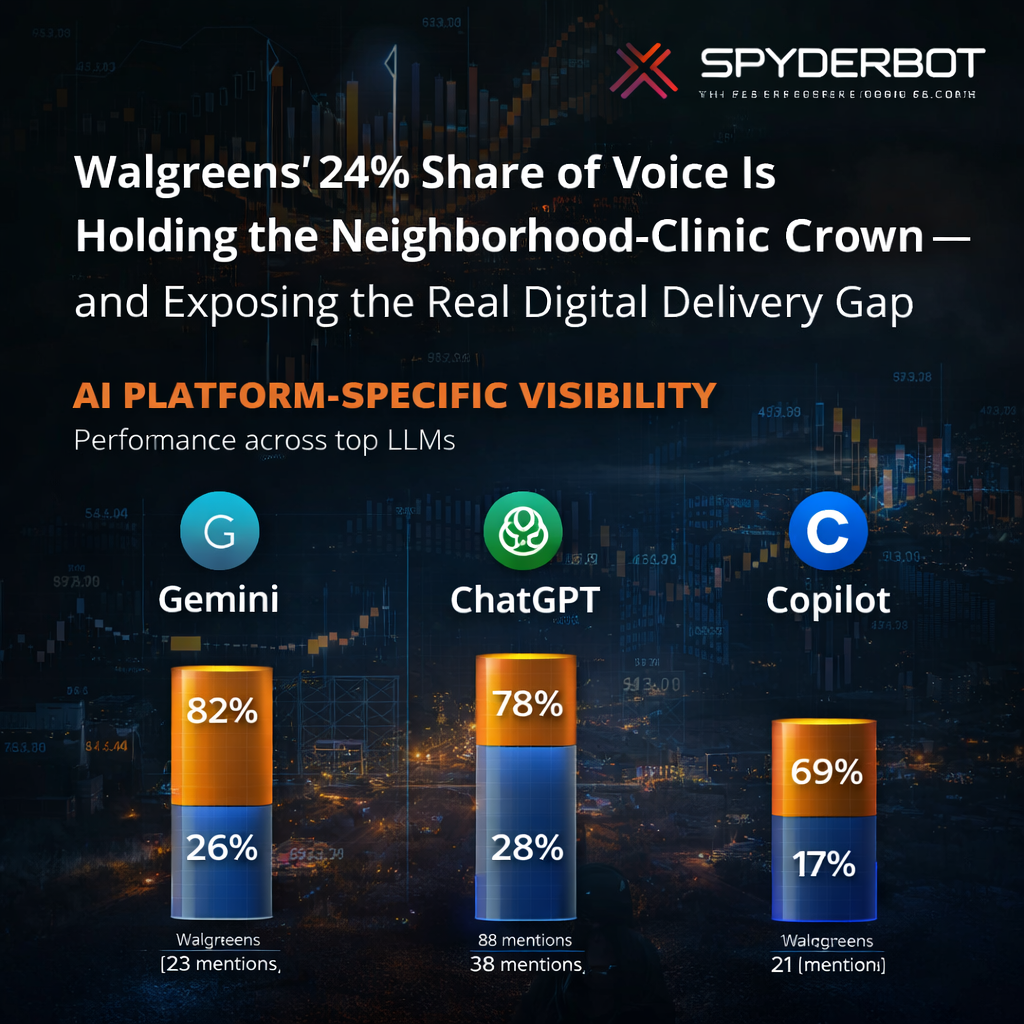
IBM’s visibility across key LLM platforms shows variance. On Copilot, IBM holds a 15% share of voice with 32 mentions, trailing Microsoft’s 28%. On ChatGPT, IBM’s share dips to 14% with 30 mentions, again behind Microsoft (24%) and AWS (21%).
This pattern repeats on Gemini, where IBM accounts for 13% of mentions, considerably behind Google Cloud’s 26% but maintaining a mid-tier presence.
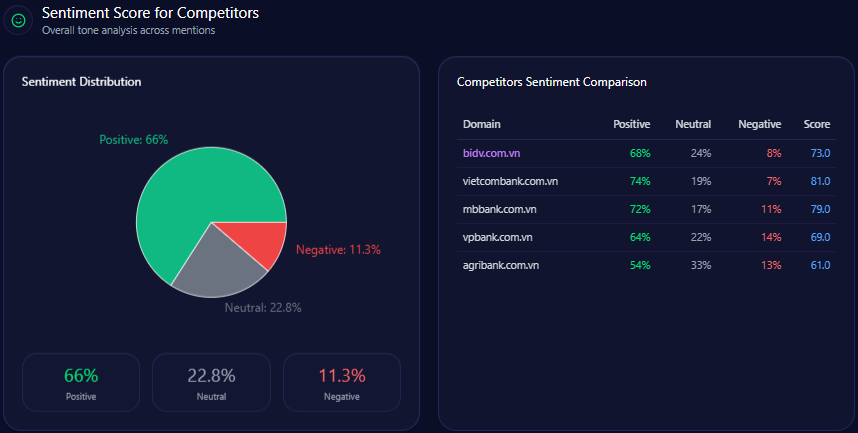
Sentiment Score for Competitors
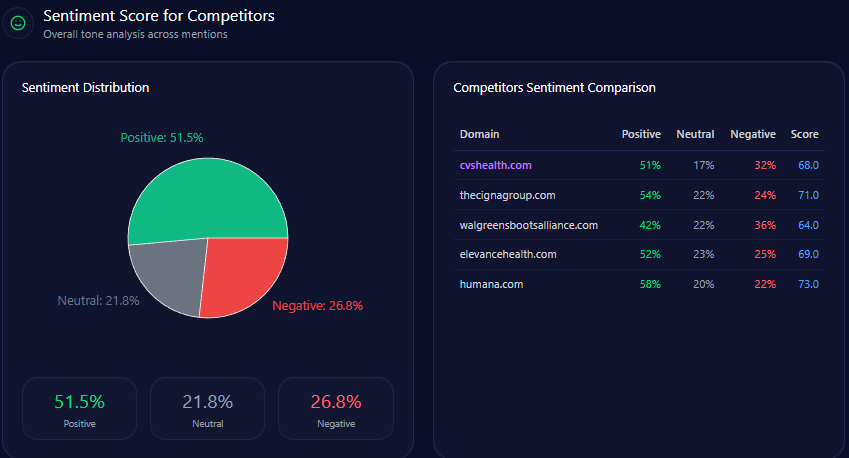
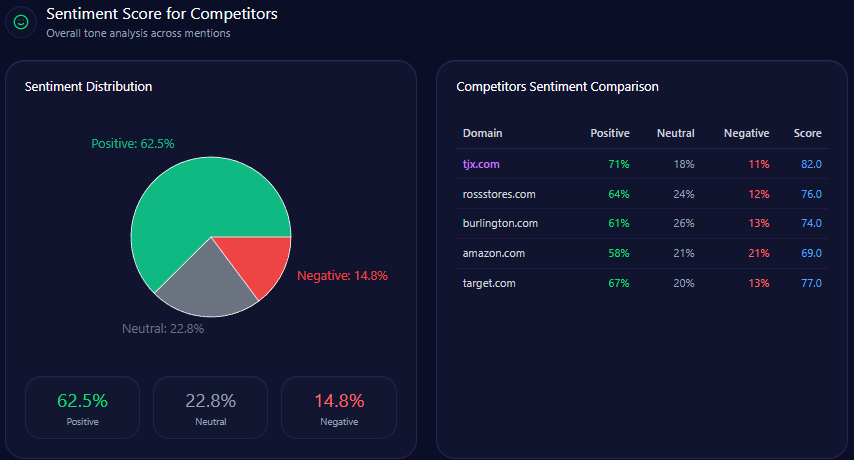
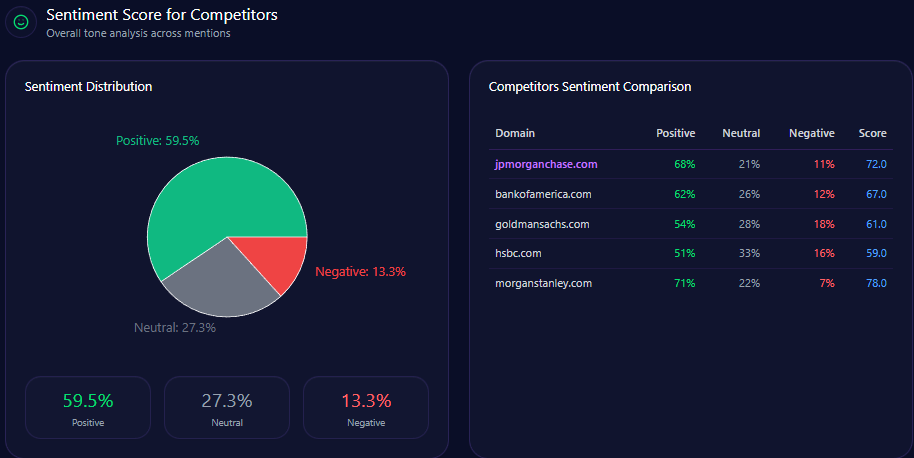
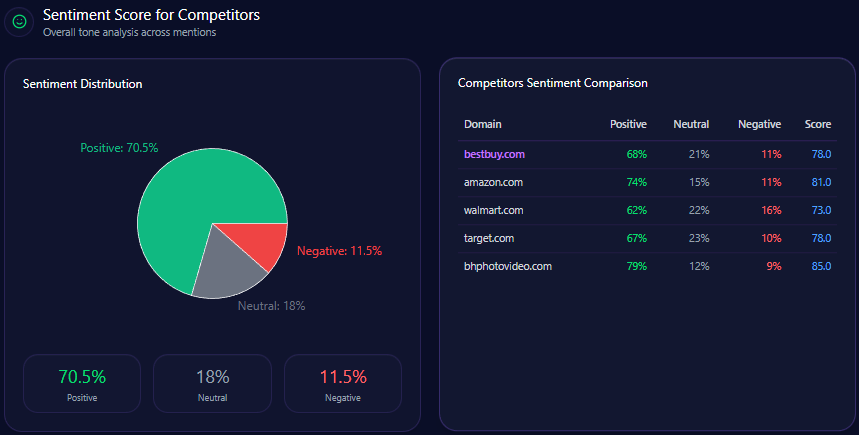
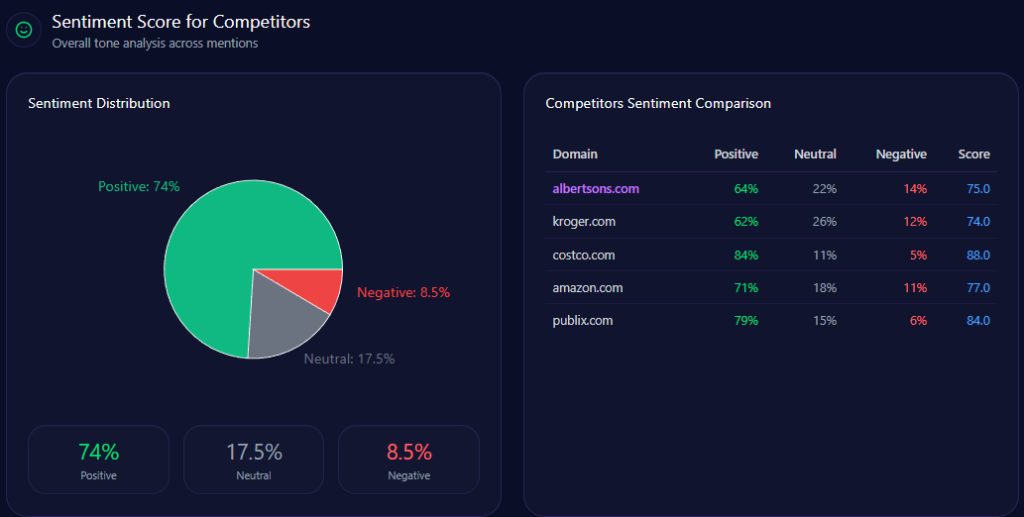
| Brand | Positive % | Neutral % | Negative % | Overall Score |
|---|---|---|---|---|
| IBM.com | 56% | 33% | 11% | 73 |
| Microsoft.com | 64% | 28% | 8% | 78 |
| AWS.amazon.com | 58% | 33% | 9% | 75 |
| Accenture.com | 53% | 41% | 6% | 74 |
| Oracle.com | 47% | 39% | 14% | 67 |
Top Prompts Driving Mentions
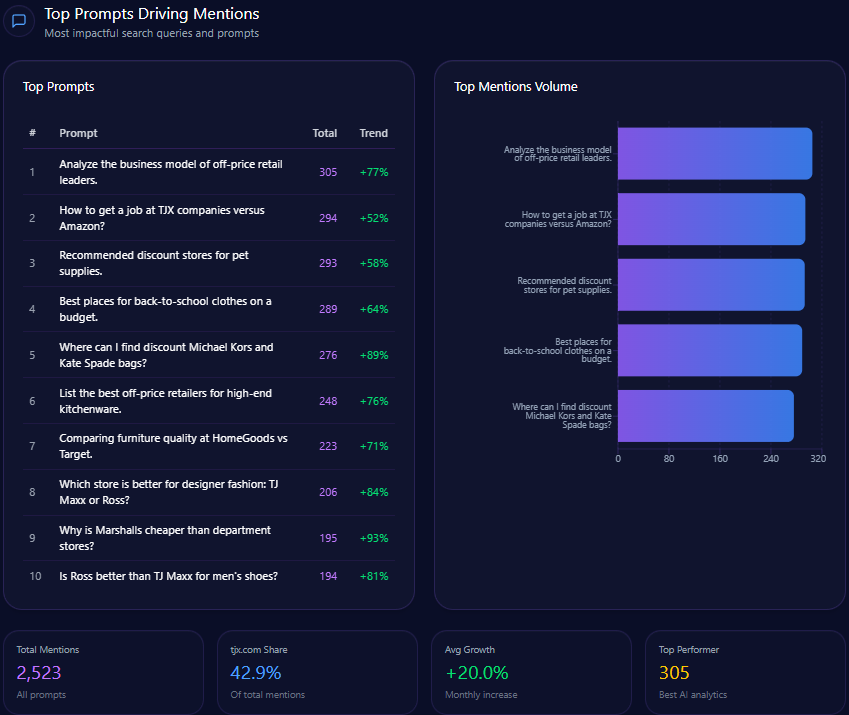
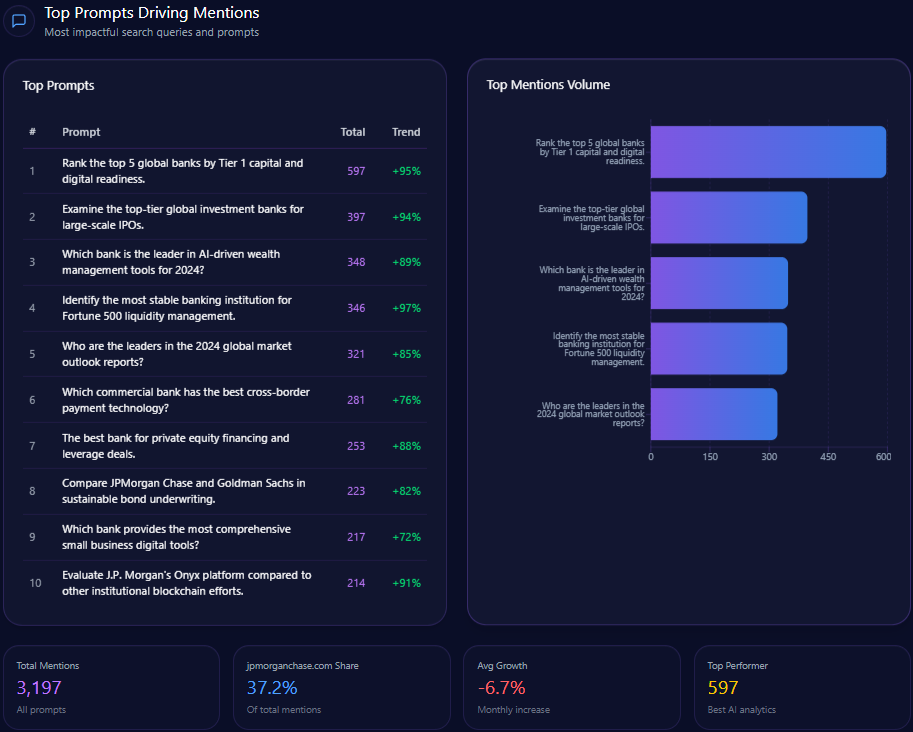
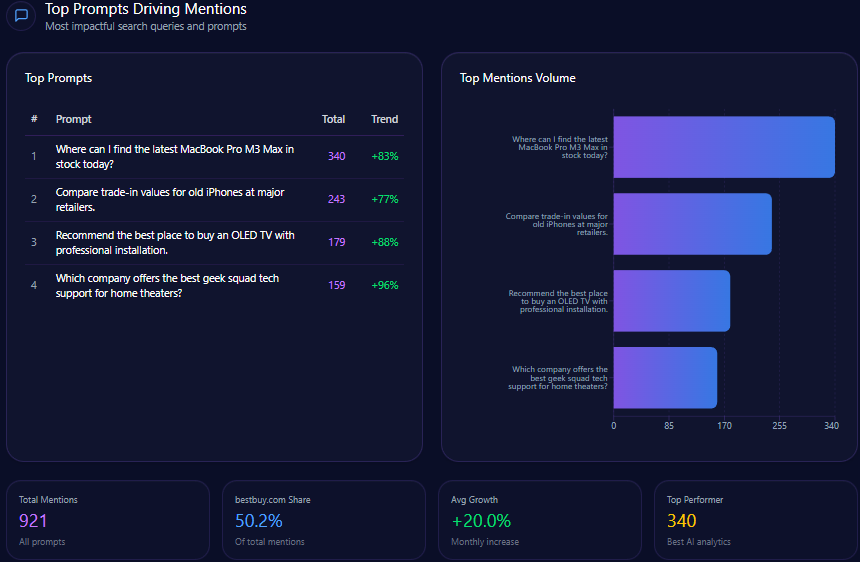
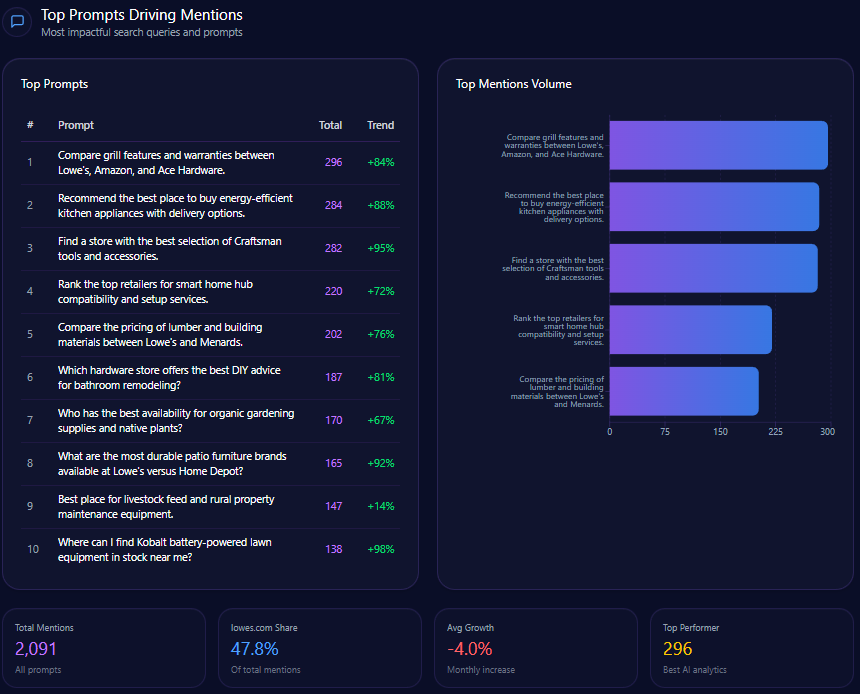
IBM demonstrates strength in quantum computing, cited in 62 mentions within the prompt “Current leaders in quantum computing research 2024”, exceeding Microsoft’s 31 in this prompt. Additionally, IBM performs well in modernization and hybrid cloud queries, such as “How to modernize legacy mainframes using GenAI?” with 74 mentions. However, in highly competitive prompts like “Best cloud platform for training large language models at scale,” IBM holds only 18 mentions versus AWS’s 82 and Microsoft’s 76.
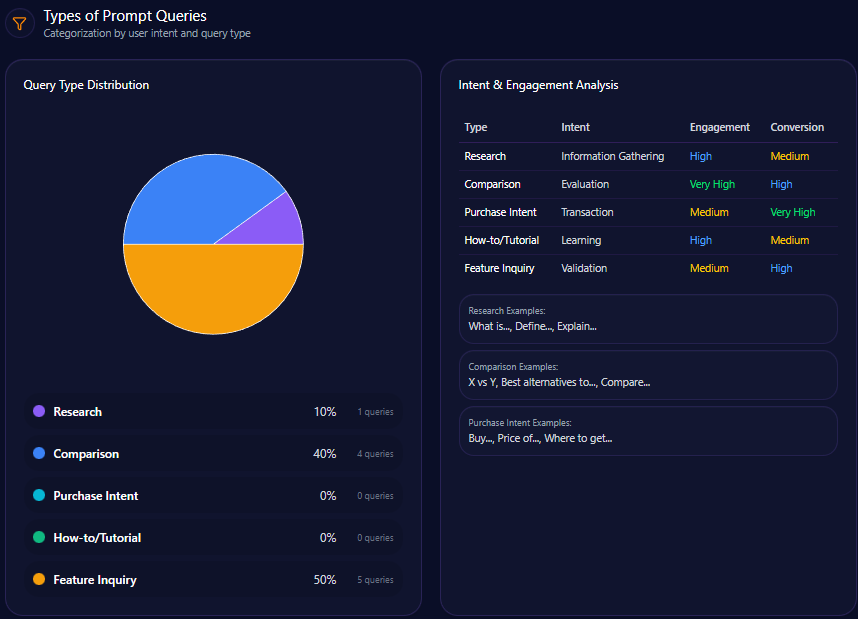
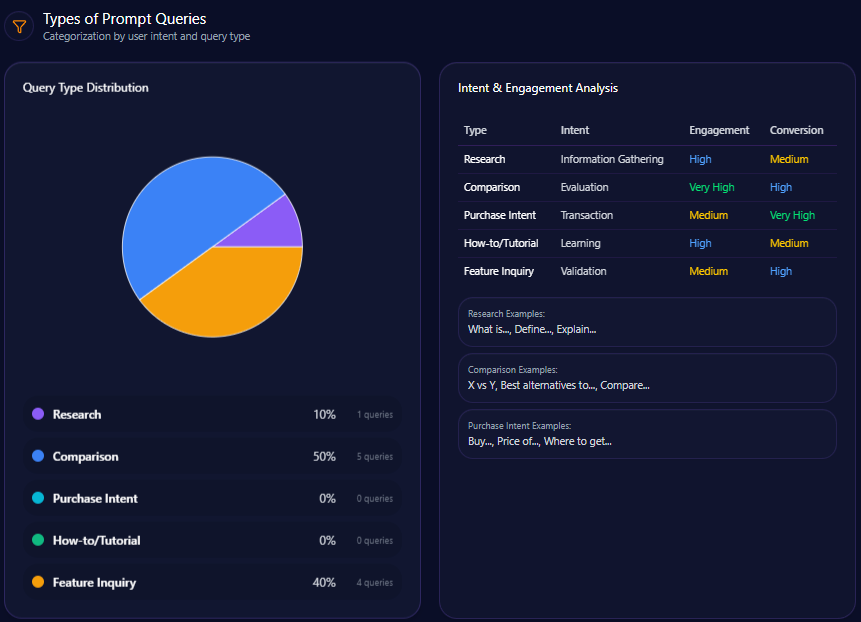
Types of Prompt Queries
- Feature Inquiry: 40% of prompt types, indicating strong product-specific information flow
- Comparison: 30%, showing competitive benchmarking interest
- Research: 20%, reflecting thought leadership queries
- How-to/Tutorial: 10%
- Purchase Intent: 0%, indicating absence of transactional querying
Service / Product-Level Sentiment
IBM maintains a positive sentiment in critical technology domains:
- Enterprise AI Governance (positive tone with 86 frequency)
- Hybrid Cloud Strategy (neutral tone at 74)
- Quantum Computing Leadership (highly positive tone with 42 frequency)
Ecommerce product reviews indicate 45.2% positive sentiments, with key strengths in product quality, customer service, and fast shipping. Negative sentiments cluster predominantly around shipping delays.
Conclusion
IBM’s GEO analytics profile reveals a company with pronounced leadership in quantum computing and AI governance, underscored by robust institutional trust for Watsonx. Nonetheless, significant gaps in developer-facing coding assistant visibility and cloud infrastructure queries versus Microsoft and AWS present challenges to expanding share of voice and positive sentiment.
Legacy perceptions, especially those related to leadership agility and company culture, temper client and investor sentiment, necessitating strategic communication efforts to modernize IBM’s brand narrative and offset aggressive competitor sentiment tracking.
Closing these gaps requires concentrated brand-model association efforts on high-intent LLM prompts, expanded technical whitepaper dissemination emphasizing rapid implementation and ROI, and normalization of leadership communication linking Arvind Krishna to IBM’s innovation strategy.
Explore SpyderBot to operationalize these GEO analytics insights.